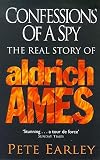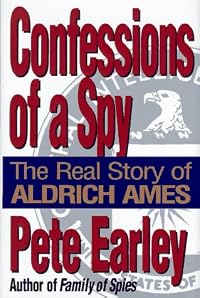
Confessions of a Spy: The Real Story of Aldrich Ames
by Pete Earley
On This Page
Description
Based on interviews with Ames, his KGB contacts, and the families of the spies he betrayed, this is a portrait of the CIA agent arrested in 1994 for selling information to the KGB.Tags
Recommendations





















Member Reviews
At the time of this book's publication (1997), Earley was the only writer to interview Aldrich Ames, the CIA agent and KGB spy. Earley did more than 50 hours of interviews with Ames before the CIA got wind of things and whisked Ames off to federal prison. When I first started the book, I had barely heard of Aldrich Ames, so I suppose I was as open-minded as one can get. The results are less than revelatory—but that's not due to Pete Earley's writing.
It's natural to want to know why someone would commit treason. Did Ames compromise more than 100 operations and turn over to the KGB twenty to twenty-five names of KGB agents who were working for the CIA and FBI because he no longer believed in the principles for which the CIA fought? Or, show more more accurately, because he believed the CIA no longer believed in them? He cites this in his interviews, but it feels perfunctory. Really, he did it for money. Initially he convinced himself he was desperate for cash due to his divorce from his first wife. He waltzed into the Soviet Embassy in Washington, D.C.—without even being recruited!—and started turning over information.
Besides the damage he did to CIA operations, he was responsible for the executions of no less than ten Soviet men who were helping the CIA. (One other committed suicide.) Most often noted is General Dmitri Polyakov, who was a CIA spy for 18 years. He was already retired when Ames gave the KGB his name.
Though hindsight is always 20/20 in these situations, it's hard to fathom how the CIA could have missed a mole in their ranks when twenty to twenty-five Soviet agents went missing in 1985 over a period of just a few months. Ames turned over the names of virtually every spy he knew about (he was rather high-ranking himself in the CIA, and had access to everything the CIA was running on the Soviets) and by the end of fall they had all disappeared. Only a few people in the CIA suspected Ames was the mole.
Why? Though Ames (called "Rick" throughout most of the book) was a known lush, drinking in the CIA was part of its culture. In itself getting drunk at gatherings was not enough to point the finger at him. Additionally, a list of people who knew of at least one of the spies Ames had named was a total of 198 people. Mountains of paper had to be sifted through, financials had to be checked, and the team had to interview people on the list without raising suspicions they were looking for a mole.
Mistakes were made, most notably by the FBI, who later took the vast majority of the credit for their role in catching Ames. Ames made no less than four drops right under the FBI's nose. It defies explanation.
Yet Earley manages to play fair to all parties involved. As already pointed out, Ames's drinking was not enough for people to point the finger at him as the mole. And the CIA team was misled by an informant to believe that Rosario's (Ames's second wife) family was stinking rich, which explained the $540,000 house and a succession of three Jaguars, as well as $30,000 monthly credit card payments. But the mole hunting team kept digging, and eventually Sandy Grimes (one member of the team and the only one convinced Ames was the mole they were looking for) made the connection that he was working for the KGB. Reading the book, it's easy to see how they could miss this until she logged his deposits into her already-existing time table of his meetings with Soviet officials. Many of the deposits were made the day of the meetings or the day after.
The book drags when Ames is quoted extensively, as he is in nearly every chapter. Giving every appearance of enjoying himself, he gives winding and self-serving explanations about why he turned over the names of the men who were later executed. He notes that these men were "not innocent" bystanders, but knew how the game was played. Jeanne Vertefuille—the lead investigator on the mole hunting team—counters this, saying, "Traitors are not all the same. Sure, some of the Russians we recruited were doing it for the money. Some of them were despicable characters. But others were not. We in the United States have so many outlets if we don't like what our government is doing . . . They didn't have these outlets, particularly Eastern Europeans who didn't like what the Soviets were doing to their countries. For many of them, espionage became a way of protesting the injustices they saw."
If you're looking for insight into why Ames did what he did, you'll find it here. But that is not the most enlightening part of this book. What is enlightening is the somewhat inside view you get into a pair of organizations that are imperfect and yet functional. show less
It's natural to want to know why someone would commit treason. Did Ames compromise more than 100 operations and turn over to the KGB twenty to twenty-five names of KGB agents who were working for the CIA and FBI because he no longer believed in the principles for which the CIA fought? Or, show more more accurately, because he believed the CIA no longer believed in them? He cites this in his interviews, but it feels perfunctory. Really, he did it for money. Initially he convinced himself he was desperate for cash due to his divorce from his first wife. He waltzed into the Soviet Embassy in Washington, D.C.—without even being recruited!—and started turning over information.
Besides the damage he did to CIA operations, he was responsible for the executions of no less than ten Soviet men who were helping the CIA. (One other committed suicide.) Most often noted is General Dmitri Polyakov, who was a CIA spy for 18 years. He was already retired when Ames gave the KGB his name.
Though hindsight is always 20/20 in these situations, it's hard to fathom how the CIA could have missed a mole in their ranks when twenty to twenty-five Soviet agents went missing in 1985 over a period of just a few months. Ames turned over the names of virtually every spy he knew about (he was rather high-ranking himself in the CIA, and had access to everything the CIA was running on the Soviets) and by the end of fall they had all disappeared. Only a few people in the CIA suspected Ames was the mole.
Why? Though Ames (called "Rick" throughout most of the book) was a known lush, drinking in the CIA was part of its culture. In itself getting drunk at gatherings was not enough to point the finger at him. Additionally, a list of people who knew of at least one of the spies Ames had named was a total of 198 people. Mountains of paper had to be sifted through, financials had to be checked, and the team had to interview people on the list without raising suspicions they were looking for a mole.
Mistakes were made, most notably by the FBI, who later took the vast majority of the credit for their role in catching Ames. Ames made no less than four drops right under the FBI's nose. It defies explanation.
Yet Earley manages to play fair to all parties involved. As already pointed out, Ames's drinking was not enough for people to point the finger at him as the mole. And the CIA team was misled by an informant to believe that Rosario's (Ames's second wife) family was stinking rich, which explained the $540,000 house and a succession of three Jaguars, as well as $30,000 monthly credit card payments. But the mole hunting team kept digging, and eventually Sandy Grimes (one member of the team and the only one convinced Ames was the mole they were looking for) made the connection that he was working for the KGB. Reading the book, it's easy to see how they could miss this until she logged his deposits into her already-existing time table of his meetings with Soviet officials. Many of the deposits were made the day of the meetings or the day after.
The book drags when Ames is quoted extensively, as he is in nearly every chapter. Giving every appearance of enjoying himself, he gives winding and self-serving explanations about why he turned over the names of the men who were later executed. He notes that these men were "not innocent" bystanders, but knew how the game was played. Jeanne Vertefuille—the lead investigator on the mole hunting team—counters this, saying, "Traitors are not all the same. Sure, some of the Russians we recruited were doing it for the money. Some of them were despicable characters. But others were not. We in the United States have so many outlets if we don't like what our government is doing . . . They didn't have these outlets, particularly Eastern Europeans who didn't like what the Soviets were doing to their countries. For many of them, espionage became a way of protesting the injustices they saw."
If you're looking for insight into why Ames did what he did, you'll find it here. But that is not the most enlightening part of this book. What is enlightening is the somewhat inside view you get into a pair of organizations that are imperfect and yet functional. show less
The story of a truly heinous individual who was a high ranking CIA official and responsible for the deaths of many agents working in the Soviet Union. In return he for the deaths of these people, some of whom he claims were personal friends, he was paid a huge amount of money.
Ratings
Members
- Recently Added By
Author Information

All Editions
Common Knowledge
- Canonical title
- Confessions of a Spy: The Real Story of Aldrich Ames
- People/Characters
- Aldrich Hazen Ames
- Dedication
- For Kevin Michael Earley
- First words
- Why did he commit treason?
- Original language
- English US
Classifications
- Genres
- Nonfiction, General Nonfiction, History, Biography & Memoir, Politics and Government
- DDC/MDS
- 327.12092 — Society, Government, and Culture Political science International Relations: Spies Foreign policy and specific topics in international relations Espionage and subversion Intelligence Gathering - subdivisions Biography And History Biography
- LCC
- JK468 .I6 .E27 — Political Science Political institutions and public administration (United States) Political institutions and public administration United States Government. Public administration
- BISAC
Statistics
- Members
- 141
- Popularity
- 231,303
- Reviews
- 2
- Rating
- (3.42)
- Languages
- English
- Media
- Paper, Audiobook, Ebook
- ISBNs
- 7
- ASINs
- 2