On This Page
Description
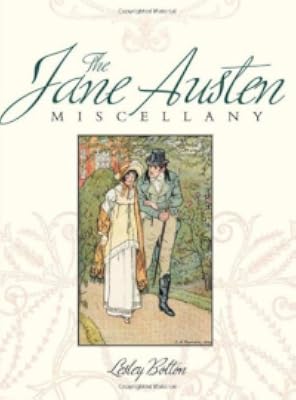
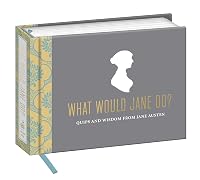
A delightful collection of Jane Austen's wittiest insights, taken from her celebrated novels and letters. Lauded for her eloquence, observation and wry humour, Jane Austen was a novelist who was highly regarded and greatly celebrated in her own time. However, her appeal is as great as ever, and her insights remain as fresh and relevant today as when they were first published. This delightful volume offers thematic extracts from her fiction and correspondence, featuring quotes from such show more novels as Emma, Northanger Abbey, Pride and Prejudice, Mansfield Park and Persuasion, alongside extracts from Austen's letters to her sister and confidante, Cassandra. Containing a host of quotations displaying Austen's sharp - indeed, often wicked - wit, this wonderful treasury will be enjoyed by fans of the author as well as readers who are new to her writing. show lessTags
Recommendations







Member Reviews
In a Nutshell: A compilation of some of Jane Austen’s shrewd quotes and observations from her published writings and personal correspondence. Will work better if you are a devout Janeite as context is quite important in getting the best from this collection.
~~~~~~~~~~~~~~~~~~~~~~~
With 2025 being the 250th year of Jane Austen’s birth, there are some wonderful new releases that commemorate the contributions of this intelligent writer to the literary world. However, this isn't a new book but the latest edition of a book first published in 2002 and republished several times since. (Mine is supposedly a revised edition, but I am not sure about what exactly has been revised.)
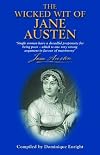
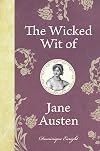
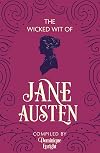
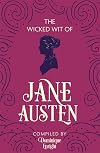
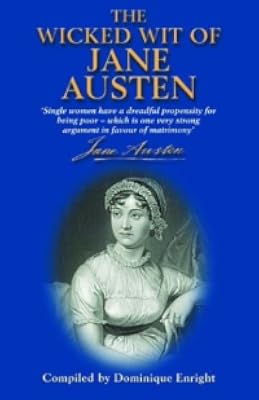
As I’m one of Austen’s biggest fans, I grabbed the chance show more to read this as soon as I saw the cover and the title. Seeing a collection that claimed to honour her “wicked wit” stirred every bit of my curiosity.! Having read and loved all six of her novels (only four of which were published in her lifetime), her novella ‘Lady Susan’, and her two unfinished works ‘The Watsons’ and ‘Sanditon’, I always get annoyed when certain “readers” dismiss Austen’s work as classic romances. While romance (or to be more accurate, love) plays a role in all of her books, her prime focus is always more practical and even satirical, subtly ridiculing the mores of the society she was raised in. Those who have read her ‘Juvenilia’, a collection of the stories she wrote between the ages of eleven to seventeen, will even be aware of how mischievous her younger self was. We get a glimpse of some of her best witticisms in this compilation.
‘Wit’ has two meanings: astuteness and funniness. While there can be an overlap in these two traits, they aren’t synonymous. This book contains both, with a slight tilt towards the former. So when the title promises you the ‘Wicked Wit of Jane Austen’, you need to remember that this book is more an ode to her sharp intellect than her funny bone, which is also evident in the content but not the mainstay of the writing.
The book begins with an ‘Introduction to Austen’, a delight for Austen fans and a useful informative piece to those who know little to nothing about her. Next up is the Dramatis Personae, containing a list of the recipients of Austen’s letters and their exact relation to her. Only after this strong foundation does the main content begin.
This book compiles several observations made by Austen in her early works, her novels, and her letters to her family, especially to her elder sister Cassandra. (I wonder how Austen would have felt if she knew that the letters she wrote in confidence are now subject to public opinion and analysis.) The quotes from her personal correspondence best reveal her snarky side, which all of us have in private but don’t reveal to outsiders.
The observations are segregated into chapters based on commonality of themes, such as Austen’s thoughts on London vs. Bath, on ballgowns and parties, on the monarchs of her time, and so on. The first section, titled ‘Early Exuberances’ presents lines taken from ‘Juvenilia’. I think this was a poor decision. These quotes have nothing in common except that they were written by her in the initial days of her writing journey. Most readers have not even heard of ‘Juvenilia’, and of those who have, many might not have read it. So these quotes don’t create a great impact as they feel incomplete without the contextual background.
Austen was at her best when she wrote about the double standards of the society around her, be it in matters of marriage or wealth or gender or even reading preferences. These quotes are also present in the book but only later. It is up to us to decide whether Austen was being serious, mocking or ironic in these quotes, but whatever the case, these quotes were the best to read. I enjoyed revisiting many of my favourite Austen lines, including this one from ‘Northanger Abbey’: “The person, be it gentleman or lady, who hast not pleasure in a good novel, must be intolerably stupid.” show less
~~~~~~~~~~~~~~~~~~~~~~~
With 2025 being the 250th year of Jane Austen’s birth, there are some wonderful new releases that commemorate the contributions of this intelligent writer to the literary world. However, this isn't a new book but the latest edition of a book first published in 2002 and republished several times since. (Mine is supposedly a revised edition, but I am not sure about what exactly has been revised.)
As I’m one of Austen’s biggest fans, I grabbed the chance show more to read this as soon as I saw the cover and the title. Seeing a collection that claimed to honour her “wicked wit” stirred every bit of my curiosity.! Having read and loved all six of her novels (only four of which were published in her lifetime), her novella ‘Lady Susan’, and her two unfinished works ‘The Watsons’ and ‘Sanditon’, I always get annoyed when certain “readers” dismiss Austen’s work as classic romances. While romance (or to be more accurate, love) plays a role in all of her books, her prime focus is always more practical and even satirical, subtly ridiculing the mores of the society she was raised in. Those who have read her ‘Juvenilia’, a collection of the stories she wrote between the ages of eleven to seventeen, will even be aware of how mischievous her younger self was. We get a glimpse of some of her best witticisms in this compilation.
‘Wit’ has two meanings: astuteness and funniness. While there can be an overlap in these two traits, they aren’t synonymous. This book contains both, with a slight tilt towards the former. So when the title promises you the ‘Wicked Wit of Jane Austen’, you need to remember that this book is more an ode to her sharp intellect than her funny bone, which is also evident in the content but not the mainstay of the writing.
The book begins with an ‘Introduction to Austen’, a delight for Austen fans and a useful informative piece to those who know little to nothing about her. Next up is the Dramatis Personae, containing a list of the recipients of Austen’s letters and their exact relation to her. Only after this strong foundation does the main content begin.
This book compiles several observations made by Austen in her early works, her novels, and her letters to her family, especially to her elder sister Cassandra. (I wonder how Austen would have felt if she knew that the letters she wrote in confidence are now subject to public opinion and analysis.) The quotes from her personal correspondence best reveal her snarky side, which all of us have in private but don’t reveal to outsiders.
The observations are segregated into chapters based on commonality of themes, such as Austen’s thoughts on London vs. Bath, on ballgowns and parties, on the monarchs of her time, and so on. The first section, titled ‘Early Exuberances’ presents lines taken from ‘Juvenilia’. I think this was a poor decision. These quotes have nothing in common except that they were written by her in the initial days of her writing journey. Most readers have not even heard of ‘Juvenilia’, and of those who have, many might not have read it. So these quotes don’t create a great impact as they feel incomplete without the contextual background.
Austen was at her best when she wrote about the double standards of the society around her, be it in matters of marriage or wealth or gender or even reading preferences. These quotes are also present in the book but only later. It is up to us to decide whether Austen was being serious, mocking or ironic in these quotes, but whatever the case, these quotes were the best to read. I enjoyed revisiting many of my favourite Austen lines, including this one from ‘Northanger Abbey’: “The person, be it gentleman or lady, who hast not pleasure in a good novel, must be intolerably stupid.” show less
This was fun. The compiler draws a lot from the Juvenilia and letters, which is a different and sharper side to Austen than most of us think of. A fun and quick reference book!
Ratings
Members
- Recently Added By
Lists

About Jane Austen...
13 works; 4 members
Author Information
27+ Works 1,817 Members
All Editions
Series

Common Knowledge
- Original publication date
- 2002
- People/Characters
- Jane Austen
- Important places
- Bath, Somerset, England, UK
- Important events
- Regency Era
Classifications
Statistics
- Members
- 166
- Popularity
- 194,310
- Reviews
- 2
- Rating
- (3.58)
- Languages
- English
- Media
- Paper, Ebook
- ISBNs
- 9
- UPCs
- 1
- ASINs
- 1