On This Page
Description
Myra's personality is altered by her sex change operation and Myron is transported back through time to the year 1948.Tags
Recommendations

















Member Reviews
Myra Breckinridge repeatedly claims that she is a purely self-created person. Of course, it’s not true; Gore Vidal created this outrageous, unforgettable transgender character. She arrives in Hollywood, claiming to be the widow of a pretentious, unsuccessful film critic, Myron. It’s common to refer to one’s mate as one’s “better half,” but this takes it further. The female side of Myron has taken over and been surgically recreated as Myra. Although in the case of Myron/Myra, it’s debatable which was the male side, since Myron got his kicks by coercing heterosexual males to penetrate him, while Myra is as thirsty for power as any dictator or CEO.
Whether Myron or Myra, they are convinced that all movies made there between show more 1935 - 1945 were the highest artistic achievement of mankind. But that era has passed. All the talent and creativity go into creating television ads.
Myra arrives with a mission: to destroy traditional manhood and realign the sexes. All in the service of reducing world population to a sustainable level. Myra’s ambitions are purely altruistic, if only in her own mind.
Alongside this is an unabashed pleasure in the male body as an object of desire. This, as well, is a carryover from Myron, although whereas Myron took the role of being abused, Myra sees to it that she is the abuser. Ultimately life, including sex, is a power struggle, she maintains. Romantic love is a fantasy, existing only in the celluloid world Myra prizes.
Some readers will be put off by the hungry gaze at the male form in both books, even though they first appeared when there were no limits to the depiction of male desire for the female. That didn’t bother me, but I did find the graphic description of Myra’s rape of Rusty disturbing.
Somehow, Myra’s schemes appear to succeed, fitting for a Hollywood tale, but then the conclusion of the first book disappointed me. It was like those “it was all a dream” denouements in films and novels that can’t think of another way to end a tale of fantasy.
All the better, then, that there was a sequel. Unlike many sequels, I enjoyed Myron more than its predecessor, with its slapstick struggle between a domestically-tamed Myron and a more preposterous than ever Myra. The two sides of this split personality battle it out inside the set of a movie shot twenty-five years earlier. The entire tale depends on the premise that one can be pushed inside a television (a precursor of Purple Rose of Cairo). Myron finally makes it home, comforted by the belief that Myra has been thwarted. A mistaken notion; as in the first book, Myra has succeeded in what she set out to do, albeit with unintended consequences.
In both volumes, Vidal applies his sardonic wit to many aspects of contemporary politics and culture. My amusement was tempered, however, by how often his satire was prophetic. For instance, Myra observes of the male students at the acting and modeling school: “they are . . . quite totalitarian-minded, even for Americans, and I am convinced that any attractive television personality who wanted to become our dictator would have their full support.”
One aspect of Vidal’s writing I savored was his habit of deconstructing and reformulating the cliches that infect our writing. One example: “But nut-wise he is harder to crack than I thought.” Most of all, I liked the ironic distance Vidal created by making Myra, in all her delusional self-importance, the mouthpiece of many of the author’s views. Vidal rejected the notion of strictly binary gender. Here he illustrates this in a narrative that, at the same time, subverts common assumptions of what could be labeled the male or female aspects of one’s makeup. show less
Whether Myron or Myra, they are convinced that all movies made there between show more 1935 - 1945 were the highest artistic achievement of mankind. But that era has passed. All the talent and creativity go into creating television ads.
Myra arrives with a mission: to destroy traditional manhood and realign the sexes. All in the service of reducing world population to a sustainable level. Myra’s ambitions are purely altruistic, if only in her own mind.
Alongside this is an unabashed pleasure in the male body as an object of desire. This, as well, is a carryover from Myron, although whereas Myron took the role of being abused, Myra sees to it that she is the abuser. Ultimately life, including sex, is a power struggle, she maintains. Romantic love is a fantasy, existing only in the celluloid world Myra prizes.
Some readers will be put off by the hungry gaze at the male form in both books, even though they first appeared when there were no limits to the depiction of male desire for the female. That didn’t bother me, but I did find the graphic description of Myra’s rape of Rusty disturbing.
Somehow, Myra’s schemes appear to succeed, fitting for a Hollywood tale, but then the conclusion of the first book disappointed me. It was like those “it was all a dream” denouements in films and novels that can’t think of another way to end a tale of fantasy.
All the better, then, that there was a sequel. Unlike many sequels, I enjoyed Myron more than its predecessor, with its slapstick struggle between a domestically-tamed Myron and a more preposterous than ever Myra. The two sides of this split personality battle it out inside the set of a movie shot twenty-five years earlier. The entire tale depends on the premise that one can be pushed inside a television (a precursor of Purple Rose of Cairo). Myron finally makes it home, comforted by the belief that Myra has been thwarted. A mistaken notion; as in the first book, Myra has succeeded in what she set out to do, albeit with unintended consequences.
In both volumes, Vidal applies his sardonic wit to many aspects of contemporary politics and culture. My amusement was tempered, however, by how often his satire was prophetic. For instance, Myra observes of the male students at the acting and modeling school: “they are . . . quite totalitarian-minded, even for Americans, and I am convinced that any attractive television personality who wanted to become our dictator would have their full support.”
One aspect of Vidal’s writing I savored was his habit of deconstructing and reformulating the cliches that infect our writing. One example: “But nut-wise he is harder to crack than I thought.” Most of all, I liked the ironic distance Vidal created by making Myra, in all her delusional self-importance, the mouthpiece of many of the author’s views. Vidal rejected the notion of strictly binary gender. Here he illustrates this in a narrative that, at the same time, subverts common assumptions of what could be labeled the male or female aspects of one’s makeup. show less
A clever, but ultimately hollow, exploration of the boundaries of human sexuality.
Myra Breckinridge shows up on the doorstep of an acting school owned by faded western movie star Buck Loner. She claims to be the widow of his nephew, Myron, and thereby entitled to half of his business and properties.
Myra is interested in conquest and power, both of the temporal and sexual varieties.
I liked the narrative voice, which alternates between excerpts from Myra's journal and transcripts of dictation by Buck. Myra, the wicked, witty narrator reminded me of Humbert Humbert in "Lolita".
In the end, though, this book has a lot less to offer than Nabokov's great book. I don't think we ever really understand Myra's motivations. Some claim this book is show more a key to understanding a more open view of sexuality, where the divide between heterosexual and homosexual is not so clear cut. If that was indeed the point of the book, why not make that point with a more sympathetic narrator? Myra is petty, violent, and vengeful, and we're never sure exactly what she's supposed to be avenging.
One of Robert Heinlein's "lesser" books, "I Will Fear No Evil", also dealt with the plasticity of human sexuality. Heinlein is generally regarded as a great idea man, but a poor writer. But in the book mentioned above, I think he did a better job explicating the human sexual psyche than Vidal, who is generally regarded as a much better writer than he.
I'm going to have to read Myra's sequel, Myron, and see if my view of Myra changes in retrospect. show less
Myra Breckinridge shows up on the doorstep of an acting school owned by faded western movie star Buck Loner. She claims to be the widow of his nephew, Myron, and thereby entitled to half of his business and properties.
Myra is interested in conquest and power, both of the temporal and sexual varieties.
I liked the narrative voice, which alternates between excerpts from Myra's journal and transcripts of dictation by Buck. Myra, the wicked, witty narrator reminded me of Humbert Humbert in "Lolita".
In the end, though, this book has a lot less to offer than Nabokov's great book. I don't think we ever really understand Myra's motivations. Some claim this book is show more a key to understanding a more open view of sexuality, where the divide between heterosexual and homosexual is not so clear cut. If that was indeed the point of the book, why not make that point with a more sympathetic narrator? Myra is petty, violent, and vengeful, and we're never sure exactly what she's supposed to be avenging.
One of Robert Heinlein's "lesser" books, "I Will Fear No Evil", also dealt with the plasticity of human sexuality. Heinlein is generally regarded as a great idea man, but a poor writer. But in the book mentioned above, I think he did a better job explicating the human sexual psyche than Vidal, who is generally regarded as a much better writer than he.
I'm going to have to read Myra's sequel, Myron, and see if my view of Myra changes in retrospect. show less
Wow. Craaaaaaazy. It was a pretty dense book and hard to follow at times, but very well worth it. Gore Vidal, you are on crazy son-of-a-bitch.
Gore Vidal's two related novels in a single volume, with a new introduction by the author. Myra Breckinridge arrives in Hollywood intending to prove that it is possible to work out in life all one's fantasies - and survive. And in "Myron" she returns to battle it out with her eponymous alter ego.
wiki: Myra Breckinridge (1968) is a satirical novel by Gore Vidal written in the form of a diary. It was made into a movie in 1970. Described by the critic Dennis Altman as "part of a major cultural assault on the assumed norms of gender and sexuality which swept the western world in the late 1960s and early 1970s,"[citation needed] the book's major themes are feminism, transsexuality, American expressions of machismo and patriarchy, and deviant sexual practices, as filtered through an aggressively camp sensibility. Set in Hollywood in the 1960s, the novel also contains candid and irreverent glimpses into the machinations within the film industry.
Dismissed by some of the era's more conservative critics as pornographic at the time of its show more first publication in February 1968, the book immediately became a worldwide bestseller and has since come to be considered a classic in some circles. "It is tempting to argue that Vidal said more to subvert the dominant rules of sex and gender in Myra than is contained in a shelf of queer theory treatises,"[citation needed] wrote Dennis Altman. In 1974 Vidal published a sequel, Myron. show less
Dismissed by some of the era's more conservative critics as pornographic at the time of its show more first publication in February 1968, the book immediately became a worldwide bestseller and has since come to be considered a classic in some circles. "It is tempting to argue that Vidal said more to subvert the dominant rules of sex and gender in Myra than is contained in a shelf of queer theory treatises,"[citation needed] wrote Dennis Altman. In 1974 Vidal published a sequel, Myron. show less
> Babelio : https://www.babelio.com/livres/Vidal-Myra-Breckinridge-et-Myron/150286
> Lisez "Myra Breckinridge" pour la folie, pour le délire pur. Mais il y a des oeuvres où Gore Vidal révèle une profondeur de pensée rafraichissante. Il a en outre une facilité d'écriture impressionnante et, soit il est facile à traduire, soit Gérard Joulié a fait un travail remarquable. Peut-être les deux d'ailleurs…
—Danieljean (Babelio)
> Lecture / Ecriture : http://www.lecture-ecriture.com/8337-Myra-Breckinridge-et-Myron-Gore-Vidal
> Lisez "Myra Breckinridge" pour la folie, pour le délire pur. Mais il y a des oeuvres où Gore Vidal révèle une profondeur de pensée rafraichissante. Il a en outre une facilité d'écriture impressionnante et, soit il est facile à traduire, soit Gérard Joulié a fait un travail remarquable. Peut-être les deux d'ailleurs…
—Danieljean (Babelio)
> Lecture / Ecriture : http://www.lecture-ecriture.com/8337-Myra-Breckinridge-et-Myron-Gore-Vidal
Feb 20, 2021 (Edited)French
Ratings
Members
- Recently Added By
Author Information

168+ Works 31,153 Members
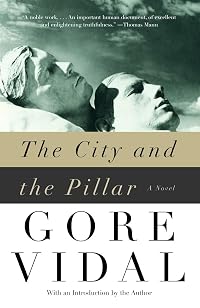
Gore Vidal was born Eugene Luther Gore Vidal Jr. on October 3, 1925 at the U.S. Military Academy at West Point, New York. He did not go to college but attended St. Albans School in Washington and graduated from Phillips Exeter Academy in New Hampshire in 1943. He enlisted in the Army, where he became first mate on a freight supply ship in the show more Aleutian Islands. His first novel, Williwaw, was published in 1946 when he was twenty-one years old and working as an associate editor at the publishing company E. P. Dutton. The City and the Pillar was about a handsome, athletic young Virginia man who gradually discovers that he is homosexual, which caused controversy in the publishing world. The New York Times refused to advertise the novel and gave a negative review of it and future novels. He had such trouble getting subsequent novels reviewed that he turned to writing mysteries under the pseudonym Edgar Box and then gave up novel-writing altogether for a time. Once he moved to Hollywood, he wrote television dramas, screenplays, and plays. His films included I Accuse, Suddenly Last Summer with Tennessee Williams, Is Paris Burning? with Francis Ford Coppola, and Ben-Hur. His most successful play was The Best Man, which he also adapted into a film. He started writing novels again in the 1960's including Julian, Washington, D.C., Myra Breckenridge, Burr, Myron, 1876, Lincoln, Hollywood, Live From Golgotha: The Gospel According to Gore Vidal, and The Golden Age. He also published two collections of essays entitled The Second American Revolution, which won the National Book Critics Circle Award for criticism in 1982 and United States: Essays 1952-1992. In 2009, he received the National Book Awards lifetime achievement award. He died from complications of pneumonia on July 31, 2012 at the age of 86. (Bowker Author Biography) show less
Some Editions
Series

Work Relationships
Contains
Common Knowledge
- Canonical title
- Myra Breckinridge [and] Myron
- Original publication date
- 1986-08-12
Classifications
Statistics
- Members
- 496
- Popularity
- 60,642
- Reviews
- 6
- Rating
- (3.59)
- Languages
- Dutch, English, French
- Media
- Paper
- ISBNs
- 5
- ASINs
- 2