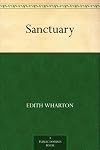
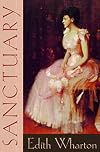
Sanctuary
by Edith Wharton
On This Page
Description
In novels like The Age of Innocence and The House of Mirth, Edith Wharton demonstrated a remarkable talent for exposing the dark underbelly of American high society. In Sanctuary, the tale of doomed marriage propped up by the protagonist's altruism, Wharton further explores the question of whether it is our nature or our upbringing that determines one's character and moral fiber..
Tags
Recommendations































Member Reviews
46. Sanctuary by Edith Wharton
published: 1902
format: 52-page kindle ebook (typically ~ 100 pages)
acquired: September 7
read: Sep 27
time reading: 2:46, 3.2 mpp
rating: 4
locations: California?, New York City
about the author: 1862-1937. Born Edith Newbold Jones on West 23rd Street, New York City. Spent most of her writing life in France.
Wharton‘s 3rd work of fiction, a novella from 1902, consists of two connected parts around Kate Peyton, née Orme. First a naïve Kate discovers her fiancé has conned an inheritance, and she still marries him. In part 2 her son has a moral quandary. Kate is passionately well-meaning, morality driven and likable, but strained by circumstance, and ultimately humanly flawed. She has to discover for herself show more her charmed “life was honeycombed by a vast system of moral sewage.” And, she struggles herself to understand her relationship with her son, whose life she is maybe over-involved in. ("As she sat there in the radius of lamplight which, for so many evenings, had held Dick and herself in a charmed circle of tenderness, she saw that her love for her boy had come to be merely a kind of extended egotism.") She never does seem to realize how awkward is what she is doing. I think it's fair to say a lot is going here that she doesn't really understand.
I enjoyed this and reading with a Wharton group on Litsy. It gave me a lot to think about. Our next book with be [House of Mirth].
2021
https://www.librarything.com/topic/333774#7618914 show less
published: 1902
format: 52-page kindle ebook (typically ~ 100 pages)
acquired: September 7
read: Sep 27
time reading: 2:46, 3.2 mpp
rating: 4
locations: California?, New York City
about the author: 1862-1937. Born Edith Newbold Jones on West 23rd Street, New York City. Spent most of her writing life in France.
Wharton‘s 3rd work of fiction, a novella from 1902, consists of two connected parts around Kate Peyton, née Orme. First a naïve Kate discovers her fiancé has conned an inheritance, and she still marries him. In part 2 her son has a moral quandary. Kate is passionately well-meaning, morality driven and likable, but strained by circumstance, and ultimately humanly flawed. She has to discover for herself show more her charmed “life was honeycombed by a vast system of moral sewage.” And, she struggles herself to understand her relationship with her son, whose life she is maybe over-involved in. ("As she sat there in the radius of lamplight which, for so many evenings, had held Dick and herself in a charmed circle of tenderness, she saw that her love for her boy had come to be merely a kind of extended egotism.") She never does seem to realize how awkward is what she is doing. I think it's fair to say a lot is going here that she doesn't really understand.
I enjoyed this and reading with a Wharton group on Litsy. It gave me a lot to think about. Our next book with be [House of Mirth].
2021
https://www.librarything.com/topic/333774#7618914 show less
Kate marries a man she knows to be morally deficient in order to protect whatever unborn children he may have from his moral lapses. Fast forward and Kate is now widowed and living with the son she had with this man. The son Dick is an architect, and through various circumstances the moral choices Kate feared her husband's children might one day face are now imminent.
This theme of moral choices and what makes a person "good" reminded me of the first Litsy Wharton read, The Touchstone (see >179 arubabookwoman:), only this time the issue is explored from the woman's point of view. Then it turned into a sort of nature v. nurture kind of thing. Wharton writes beautifully, and there are hints of the intricacies of her later novels in this show more short work. I'm glad to have read this.
3 stars show less
This theme of moral choices and what makes a person "good" reminded me of the first Litsy Wharton read, The Touchstone (see >179 arubabookwoman:), only this time the issue is explored from the woman's point of view. Then it turned into a sort of nature v. nurture kind of thing. Wharton writes beautifully, and there are hints of the intricacies of her later novels in this show more short work. I'm glad to have read this.
3 stars show less
Edith Wharton's novella about moral choice and temptation spreads itself over two generations and two men's moral dilemmas. The woman at the center of this story is first a girl on the edge of marriage, who discovers a dark secret regarding the man she is to marry, and a mother, whose son must make a similar choice. In this world, where money is king, I dare say most people would never resist the temptations presented to these men.
I read this at one sitting and thoroughly enjoyed the story and waiting, like Kate, to see which would be chosen, the easy way or the moral one.
I read this at one sitting and thoroughly enjoyed the story and waiting, like Kate, to see which would be chosen, the easy way or the moral one.
I didn't end up liking this as much as I thought I would. Kate stands on her moral high ground and judges both her husband and son but I don't believe as much in her 'do the right thing' when she does end up marrying her husband despite what she sees as his failings. The part about the son then just felt odd and weird. Not my favourite Wharton.
A very entertaining psychological drama played out first between the main character, Kate Peyton, and her fiance and then later between mother and son. Kate becomes aware before her marriage of a sinister weakness in her fiance and yet marries him so that she will be able to guard any of his progeny against a similar weakness. Left a widow early, she zealously devotes her life to instilling the principles in her son she deems necessary to ward off this weakness of character which she is afraid her son has inherited. The time comes when Kate is forced to sit back and await her son's decision while he agonizes alone with a moral crisis in his own life. An interesting plot written with the skill of a master story-teller.
What an oddity.
Kate Orme es una mujer joven cuya dicha conyugal se rompe cuando se enfrenta cara a cara con el oscuro secreto que esconde su prometido, Denis Peyton, un hombre de fortuna, pero con un pasado gobernado por las mentiras y por los engaños. Cuando ambos tienen un hijo y Denis muere, Kate se convence de que el espíritu de su marido permanece en su joven vástago, traspasándole en cierto modo sus vicios morales. Se consagrará desde entonces a luchar para que eso no ocurra.
Mar 28, 2023Spanish
Members
- Recently Added By
Lists

Books Read in 2015
3,298 works; 126 members

Canon de la narrativa universal del s. XX (cicutadry)
499 works; 3 members
Author Information

377+ Works 63,550 Members
Edith Wharton was a woman of extreme contrasts; brought up to be a leisured aristocrat, she was also dedicated to her career as a writer. She wrote novels of manners about the old New York society from which she came, but her attitude was consistently critical. Her irony and her satiric touches, as well as her insight into human character, show more continue to appeal to readers today. As a child, Wharton found refuge from the demands of her mother's social world in her father's library and in making up stories. Her marriage at age 23 to Edward ("Teddy") Wharton seemed to confirm her place in the conventional role of wealthy society woman, but she became increasingly dissatisfied with the "mundanities" of her marriage and turned to writing, which drew her into an intellectual community and strengthened her sense of self. After publishing two collections of short stories, The Greater Inclination (1899) and Crucial Instances (1901), she wrote her first novel, The Valley of Decision (1902), a long, historical romance set in eighteenth-century Italy. Her next work, the immensely popular The House of Mirth (1905), was a scathing criticism of her own "frivolous" New York society and its capacity to destroy her heroine, the beautiful Lily Bart. As Wharton became more established as a successful writer, Teddy's mental health declined and their marriage deteriorated. In 1907 she left America altogether and settled in Paris, where she wrote some of her most memorable stories of harsh New England rural life---Ethan Frome (1911) and Summer (1917)---as well as The Reef (1912), which is set in France. All describe characters forced to make moral choices in which the rights of individuals are pitted against their responsibilities to others. She also completed her most biting satire, The Custom of the Country (1913), the story of Undine Spragg's climb, marriage by marriage, from a midwestern town to New York to a French chateau. During World War I, Wharton dedicated herself to the war effort and was honored by the French government for her work with Belgian refugees. After the war, the world Wharton had known was gone. Even her Pulitzer Prize-winning novel, The Age of Innocence (1920), a story set in old New York, could not recapture the former time. Although the new age welcomed her---Wharton was both a critical and popular success, honored by Yale University and elected to The National Institute of Arts and Letters---her later novels show her struggling to come to terms with a new era. In The Writing of Fiction (1925), Wharton acknowledged her debt to her friend Henry James, whose writings share with hers the descriptions of fine distinctions within a social class and the individual's burdens of making proper moral decisions. R.W.B. Lewis's biography of Wharton, published in 1975, along with a wealth of new biographical material, inspired an extensive reevaluation of Wharton. Feminist readings and reactions to them have focused renewed attention on her as a woman and as an artist. Although many of her books have recently been reprinted, there is still no complete collected edition of her work. (Bowker Author Biography) show less
Awards and Honors
Series
Belongs to Publisher Series
Work Relationships
Common Knowledge
- Original publication date
- 1903
- First words
- It is not often that youth allows itself to feel undividedly happy: the sensation is too much the result of selection and elimination to be within reach of the awakening clutch on life.
Classifications
Statistics
- Members
- 164
- Popularity
- 198,735
- Reviews
- 7
- Rating
- (3.22)
- Languages
- English, Spanish
- Media
- Paper, Audiobook, Ebook
- ISBNs
- 52
- ASINs
- 17