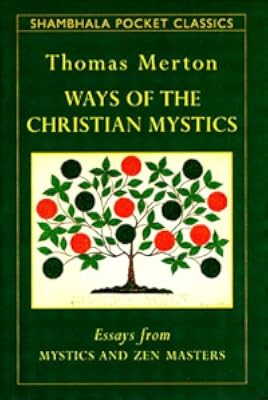
WAYS OF THE CHRISTIAN MYSTICS (Shambhala Pocket Classics)
by Thomas Merton
On This Page
Description
Thomas Merton (1915–1968) was a Trappist monk, spiritual director, political activist, social critic, and one of the most-read spiritual writers of the twentieth century. He is the author of many books, including The Seven Storey Mountain.Tags
Recommendations













Member Reviews
Ways of the Christian Mystics begins with a discussion concerning the history of pilgrimages. It explains that pilgrimages encourage "the spiritual dialogue between man and creation," as the journey to a sacred shrine or place brings them closer to God. Redemption comes from being close to God. Marching quickly through hundreds of years of pilgrimage history, Ways would probably entertain secular and religious folk alike.
Members
- Recently Added By
Author Information

397+ Works 38,235 Members
Born in France, Thomas Merton was the son of an American artist and poet and her New Zealander husband, a painter. Merton lost both parents before he had finished high school, and his younger brother was killed in World War II. Something of the ephemeral character of human endeavor marked all his works, deepening the pathos of his writings and show more drawing him close to Eastern, especially Buddhist, forms of monasticism. After an initial education in the United States, France, and England, he completed his undergraduate degree at Columbia University. His parents, nominally friends, had given him little religious guidance, and in 1938, he converted to Roman Catholicism. The following year he received an M.A. from Columbia University and in 1941, he entered Gethsemani Abbey in Kentucky, where he remained until a short time before his death. His working life was spent as a Trappist monk. At Gethsemani, he wrote his famous autobiography, "The Seven Storey Mountain" (1948); there he labored and prayed through the days and years of a constant regimen that began with daily prayer at 2:00 a.m. As his contemplative life developed, he still maintained contact with the outside world, his many books and articles increasing steadily as the years went by. Reading them, it is hard to think of him as only a "guilty bystander," to use the title of one of his many collections of essays. He was vehement in his opposition to the Vietnam War, to the nuclear arms race, to racial oppression. Having received permission to leave his monastery, he went on a journey to confer with mystics of the Hindu and Buddhist traditions. He was accidentally electrocuted in a hotel in Bangkok, Thailand, on December 10, 1968. (Bowker Author Biography) show less
Series
Belongs to Publisher Series
Classifications
- Genres
- Nonfiction, Religion & Spirituality, Philosophy
- DDC/MDS
- 248.2209 — Religion Christian practice & observance Christian experience, practice, life Religious experience Mystical Christianity
- LCC
- BV5075 .M47 — Philosophy, Psychology and Religion Practical Theology Practical Theology Practical religion. The Christian life Mysticism
Statistics
- Members
- 36
- Popularity
- 800,529
- Reviews
- 1
- Rating
- (3.00)
- Languages
- English
- Media
- Paper
- ISBNs
- 1