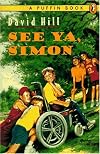
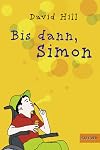
See Ya, Simon
by David Hill
On This Page
Description
Over the years fourteen-year-old Nathan has learned a lot about muscular dystrophy from his best friend but is unprepared for Simon's rapid decline and approaching death.Tags
Recommendations



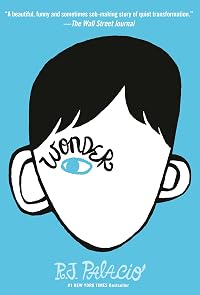
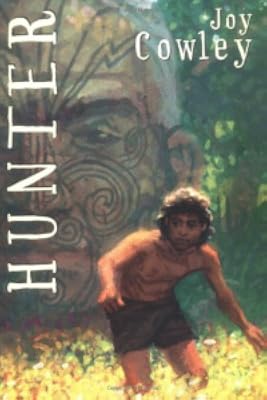


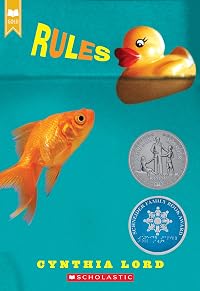




















Member Recommendations
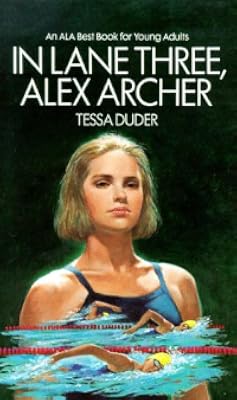
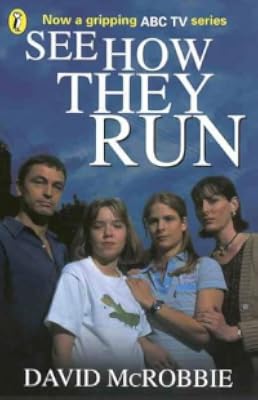
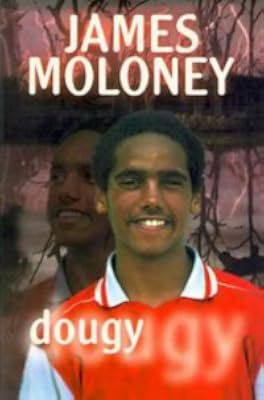
mybookshelf Both books deal sensitively and humorously with a young narrator coming to terms with the disability and eventual death of somebody close to them.

Member Reviews
Nathan and Simon are best mates. They share interests in soccer, their pretty classmates, and the local paper’s idiotic headlines. But there is something they don’t share: Simon has muscular dystrophy and is confined to a wheelchair. Nathan relates their experiences together, and sometimes apart—at school, visiting Simon at home, and in the hospital. He is honest about all the good and bad points he notices about having a disability, and also about the reality of Simon’s approaching death.
This is an appealing story with realistic, everyday characters. The classroom scenes could be reproduced in any high school in the country, and the breakfast-table argument about who does what chore will be equally familiar. But there is always show more a shadow cast by Simon’s condition – the thing which makes this story not just another predictable teenage drama.
Although this is primarily a story about Simon, as told by Nathan, their family members are significant parts of the story, too. There are ongoing jokes about Nathan’s sister – Fiona the Moaner – and her enthusiasm for drawing. Simon’s older sister Kirsti also features in the story, with Nathan frequently commenting how good it is for his reputation to be seen talking to a school senior. Accordingly, the reader has the opportunity to identify with many different perspectives on what’s happening with Simon.
Throughout his narration, Nathan maintains a sense of humour. Mostly he shares his jokes with Simon, but the reader also gets to know what’s going on in Nathan’s head with regard to those he’s observing, and many of these observations are recorded in ways that are bound to raise a smile. This is one reason why, despite the subject matter, this is a far from depressing book.
In a sense the main subject of this novel is the end of Simon’s life. As Nathan puts it, early on in the book: “Simon’s my best friend, and sometime in the next year or two years, he’s going to die.” The story concludes on the day before the funeral. However, it would be inaccurate to say that the story is about Simon’s death: rather, it is a celebration of the friendship the two boys share, and an eye-opener regarding the prejudices and difficulties faced by young people with disabilities.
I would strongly recommend this book to all readers who are prepared to get to know characters like Simon as friends; and who can, with Nathan, say, “I’m proud I knew him, and I’ll never forget him.” show less
This is an appealing story with realistic, everyday characters. The classroom scenes could be reproduced in any high school in the country, and the breakfast-table argument about who does what chore will be equally familiar. But there is always show more a shadow cast by Simon’s condition – the thing which makes this story not just another predictable teenage drama.
Although this is primarily a story about Simon, as told by Nathan, their family members are significant parts of the story, too. There are ongoing jokes about Nathan’s sister – Fiona the Moaner – and her enthusiasm for drawing. Simon’s older sister Kirsti also features in the story, with Nathan frequently commenting how good it is for his reputation to be seen talking to a school senior. Accordingly, the reader has the opportunity to identify with many different perspectives on what’s happening with Simon.
Throughout his narration, Nathan maintains a sense of humour. Mostly he shares his jokes with Simon, but the reader also gets to know what’s going on in Nathan’s head with regard to those he’s observing, and many of these observations are recorded in ways that are bound to raise a smile. This is one reason why, despite the subject matter, this is a far from depressing book.
In a sense the main subject of this novel is the end of Simon’s life. As Nathan puts it, early on in the book: “Simon’s my best friend, and sometime in the next year or two years, he’s going to die.” The story concludes on the day before the funeral. However, it would be inaccurate to say that the story is about Simon’s death: rather, it is a celebration of the friendship the two boys share, and an eye-opener regarding the prejudices and difficulties faced by young people with disabilities.
I would strongly recommend this book to all readers who are prepared to get to know characters like Simon as friends; and who can, with Nathan, say, “I’m proud I knew him, and I’ll never forget him.” show less
A powerful read about school friendship and coping with a friend who has special needs. Written from Nathan's (Simon's friend) perspective, it is light hearted, sad, thought provoking and well worth reading.
Nathan tells of his friendship with Simon, who has muscular dystrophy. During the course of the novel Simon's condition deteriorates, with periodic hospital stays. Simon is very open that he will not survive to adulthood. Nathan's mother is supportive and encourages Nathan to talk about his true feelings about Simon and Simon's fate. In the course of this discussion the feelings of grief are raised. The book ends after Simon's friends visit his body the day after his death. A realistic book, enlivened by moments of humour, usually instigated by Simon, who doesn't let his impending death interfere with his life.
I’m not able to write the review I wanted to write for this book. So I’m just going to quote a poem that Simon wrote in English class when the kids were tasked with writing a poem about their worries and fears. It really resonated with me, as did so much of the book.
“I am here in the bright summer days.
Outside, the world gleams and glitters;
Inside, my chair and I watch leaves in the sun,
Or listen to distant laughing voices.
There, boys swim, surf, smile at girls;
Here, I sit in my chair and read,
Or watch old midday movies,
Or push myself from room to room.
When my friends break in from their shining worlds,
Part of me breaks too.”
“I am here in the bright summer days.
Outside, the world gleams and glitters;
Inside, my chair and I watch leaves in the sun,
Or listen to distant laughing voices.
There, boys swim, surf, smile at girls;
Here, I sit in my chair and read,
Or watch old midday movies,
Or push myself from room to room.
When my friends break in from their shining worlds,
Part of me breaks too.”
Thoroughly enjoyed. Highly recommend for intermediate level. Sad and funny at the same time.
Simon is a teenager who likes girls and weekends
Väga hea raamat. Kurva sisuga. Lugege!
Members
- Recently Added By
Lists

1001 Children's Books You Must Read Before You Grow Up
774 works; 101 members

Death of human -- children's/young adult fiction
86 works; 5 members

Muscular dystrophy -- children's/young adult fiction
8 works; 1 member

Top 100 NZ Children's Books
100 works; 1 member
Author Information

64+ Works 622 Members
David Hill lives in Los Angeles & Mississippi. "Sacred Dust" won the Commonwealth Club of California First Work of Fiction award. (Publisher Provided) David Hill is the author of First to the Top: Sir Edmund Hillary's Amazing Everest Adventure whcih made the New Zealand Best Seller List in 2015. (Bowker Author Biography)
Awards and Honors
Awards
Classifications
Statistics
- Members
- 117
- Popularity
- 278,557
- Reviews
- 7
- Rating
- (4.35)
- Languages
- 5 — Dutch, English, Estonian, German, Slovenian
- Media
- Paper, Ebook
- ISBNs
- 16
- ASINs
- 1