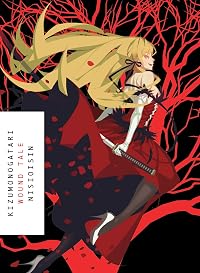
KIZUMONOGATARI
by NISIOISIN
Monogatari Series {novels, English release order} (1), Monogatari Series {novels, Japanese release order} (3)
On This Page
Description
Around midnight, under a lonely street lamp in a provincial town in Japan, lies a white woman, a blonde, alone, robbed of all four limbs, yet undead. Indeed, a rumor's been circulating among the local girls that a vampire has come to their backwater, of all places. Koyomi Araragi, who prefers to avoid having friends because they'd lower his "intensity as a human," is naturally skeptical. Yet it is to him that the bloodsucking demon, a concept "dated twice over," beckons on the first day of show more spring break as he makes his way home with a fresh loot of morally compromising periodicals. show lessTags
Recommendations




















Member Reviews
Really, it's more like 4 1/2 stars. Most of that half star short of five is due to personal taste. I am uninterested in fanservice, and vampires weak to sunlight is a pet peeve of mine (fun fact: it was the 1922 German silent film Nosferatu that introduced the 'sunlight hurts vampires' bit of lore! Not Carmilla, Dracula, or the myths surrounding the creatures the modern vampire was built from!). That, and emotional/ethical objections to Kisshot's situation at the end of the story.
I feel like I missed some things by reading it in English (alas, I don't speak Japanese, so...), but the wordplay I could discern was still quite enjoyable. I take my hat off to Ko Ransom for handling such a translation.
The story is absurd at times, and the show more characters are aware of this. Tropes are toyed with, but it rarely feels forced. For the most part Araragi and Hanekawa act like ordinary people would in unlikely (even impossible) situations.
The characterization is nuanced to a degree that newcomers to the series may find startling. It's delightful how Kisshot (the vampire) isn't just a powerful human, but an entity with inhuman psychology and different cultural expectations. With Araragi in particular it is important for readers to take observations with a grain of salt. He has a few blind spots despite being a fairly astute narrator (especially about himself).
As for the rest...
Full disclosure: I struggle with suicidal depression. Ergo, I typically have Strong Feelings about any media that addresses such issues.
First, kudos to Nisioisin for recognizing that suicidal feelings can fluctuate (gosh, it's almost like depression is a disease and isn't entirely logical!).
But, Araragi's final choice made me a little sick. More so when it's dressed up to look entirely altruistic (but! We do have Oshino's pointed observation: "And now, in a way you've [Araragi has] chosen to keep a vampire as a pet--having filed down its fangs, plucked out its claws, crushed its throat, and castrated it. You, who were made a pet, turned around and made your master your pet. That's all there is to this story. It's certainly no heart-warmer.").
I'm not exactly pro-suicide, but the point remains that only Araragi's choice was honored. Kisshot chose death, and was overruled. It it's not like Araragi wasn't warned that she'd be miserable. True, he offers to let her kill him, but that doesn't really solve her problem, does it?
TL;DR: I thought it was great, and I'll be reading the rest of the series. show less
I feel like I missed some things by reading it in English (alas, I don't speak Japanese, so...), but the wordplay I could discern was still quite enjoyable. I take my hat off to Ko Ransom for handling such a translation.
The story is absurd at times, and the show more characters are aware of this. Tropes are toyed with, but it rarely feels forced. For the most part Araragi and Hanekawa act like ordinary people would in unlikely (even impossible) situations.
The characterization is nuanced to a degree that newcomers to the series may find startling. It's delightful how Kisshot (the vampire) isn't just a powerful human, but an entity with inhuman psychology and different cultural expectations. With Araragi in particular it is important for readers to take observations with a grain of salt. He has a few blind spots despite being a fairly astute narrator (especially about himself).
As for the rest...
Full disclosure: I struggle with suicidal depression. Ergo, I typically have Strong Feelings about any media that addresses such issues.
First, kudos to Nisioisin for recognizing that suicidal feelings can fluctuate (gosh, it's almost like depression is a disease and isn't entirely logical!).
But, Araragi's final choice made me a little sick. More so when it's dressed up to look entirely altruistic (but! We do have Oshino's pointed observation: "And now, in a way you've [Araragi has] chosen to keep a vampire as a pet--having filed down its fangs, plucked out its claws, crushed its throat, and castrated it. You, who were made a pet, turned around and made your master your pet. That's all there is to this story. It's certainly no heart-warmer.").
I'm not exactly pro-suicide, but the point remains that only Araragi's choice was honored. Kisshot chose death, and was overruled. It it's not like Araragi wasn't warned that she'd be miserable. True, he offers to let her kill him, but that doesn't really solve her problem, does it?
TL;DR: I thought it was great, and I'll be reading the rest of the series. show less
Kizumonogatari stars Koyomi Araragi, a 17-year-old loser. He avoids having friends because he believes they would “lower his intensity as a human” (although one wonders if this isn't just his way of making himself feel better because no one wants to be friends with him). His life seems to be going nowhere, until one day he comes across Tsubasa Hanekawa, class president and all-around model student, and accidentally gets an excellent view of her panties when the wind blows her skirt straight up. Instead of getting upset or fleeing in embarrassment, Hanekawa decides to be Araragi's first friend.
Later, Araragi tries to wipe away the memory of Hanekawa's panties by buying some porn. On his way home, he comes across Kiss-Shot show more Acerola-Orion Heart-Under-Blade (name found online, because otherwise I'd never have figured out how to spell it all), “the iron-blooded, hot-blooded, yet cold-blooded vampire.” Someone has removed all four of her limbs, and she is dying. She asks Araragi to save her by letting her drink him dry, and he, in a fit of pity and realization that he's a loser whose life, he decides, is probably worth less than hers, agrees. He expects to die but instead wakes up as Kiss-Shot's new servant, the one who now has to get her limbs back from the vampire hunters who took them.
This book was garbage on multiple levels. I was a little surprised at how much I hated it. Both the author and the series are very popular, so I figured that, even if there was as much fanservice as I'd heard, the book would still have other redeeming qualities. Unfortunately, it did not.
However, I do have some good things to say, so I'll start there. The narration was fabulous. Cristina Vee, Keith Silverstein, and Eric Kimerer are to be commended. They did as well as they possibly could, considering the material they had to work with, and they managed to make the clunky dialogue somewhat listenable. I especially enjoyed Cristina Vee's work – if I hadn't known better, I'd have thought there were two female narrators, one for Hanekawa and Kiss-Shot's cutesy voices and one for the older version of Kiss-Shot. The desperation she put into dying Kiss-Shot's voice was great.
The voice acting combined with the background music, which went so far as to feature specific character themes, made listening to Kizumonogatari a little like listening to an anime. I really enjoyed that and hope that Vertical continues their foray into audiobooks. Hopefully with better books than this one.
All right, now for the bad. I suppose I'll start with the gross fanservice. NisiOisiN stopped short of having Hanekawa or Kiss-Shot suggestively suck on or eat something, but what did happen was still pretty awful. I swear, at least an hour or two of this 9.5-hour book was Araragi obsessing over breasts and panties. None of it was what you'd call sexy or erotic, just clunky and awkward. The description of Hanekawa's panties felt like it took ages (the text mentioned that Araragi had gone on for almost two pages), Hanekawa's reactions were closer to how women in porn movies might behave than to anything resembling reality, and unfortunately there was worse to come.
In one scene, Kiss-Shot spoke to Araragi and then laid down to sleep in the same room while he was still there. Araragi was amazed at how casually she did this and found himself thinking that it would be rude for him not to...do something (the “something” wasn't stated, but I figure “grope her” was high on the list – so yeah, Araragi thought it was impolite not to sexually assault a girl who was trusting enough to fall asleep in the same room as him). There were multiple jokes about Kiss-Shot's flat-chestedness when she was in her 10-year-old form, and then even more jokes about the hugeness of her chest when she was back to her 27-year-old form.
In one especially cringe-worthy scene, Araragi asked Hanekawa to allow him to touch her breasts, ostensibly to help him better ignore Kiss-Shot's enormous breasts during his upcoming battle with her. Hanekawa agreed and went so far as to remove her bra and tell him he had to fondle her breasts for a full minute. Araragi, shocked at his good fortune but nervous about the possibility that she might later claim that he'd forced himself on her, asked her to clearly voice her consent. Soon Araragi was using that as an opportunity to embarrass Hanekawa by making her talk dirty to him. The exact things he asked her to say: “Araragi, I beg you, please fondle my bra-less boobies! It's a great honor to have my breasts fondled by you! I've worked hard to grow these lewd breasts, all so that you could squish them one day, Araragi!” Oh, Cristina Vee. I hope they paid you well.
The story wasn't anywhere near good enough to balance out the grossness. Araragi won most of his battles through blind luck. The big revelations near the end weren't terribly shocking, either because I'd begun to guess what was going on or because Araragi's narration was just that bad. Seriously, the guy could suck the fun and excitement out of anything. In Araragi's first battle, his enemy turned his own arms into swords and hacked Araragi's hands off. It should have been a fast-paced, action-packed scene, and yet Araragi persisted in narrating everything to death.
The ending was worse than I expected. Hanekawa had to figure out pretty much everything on her own and then tell Araragi. Araragi, meanwhile, was horrified by one particular bit of info (which he had to practically be beaten over the head with) but then forgot about that horror when the story needed him to pity Kiss-Shot again. The weird relationship that Araragi and Kiss-Shot ended up with didn't sit well with me, but I suppose it was necessary to make room for all the series' other related stories.
I've been intrigued by the series' various anime adaptations for years - the clips I've seen have looked absolutely gorgeous. However, I think this book has finally killed my desire to see them. I'm thankful for that, considering how much Aniplex of America charges.
(Original review posted on A Library Girl's Familiar Diversions.) show less
Later, Araragi tries to wipe away the memory of Hanekawa's panties by buying some porn. On his way home, he comes across Kiss-Shot show more Acerola-Orion Heart-Under-Blade (name found online, because otherwise I'd never have figured out how to spell it all), “the iron-blooded, hot-blooded, yet cold-blooded vampire.” Someone has removed all four of her limbs, and she is dying. She asks Araragi to save her by letting her drink him dry, and he, in a fit of pity and realization that he's a loser whose life, he decides, is probably worth less than hers, agrees. He expects to die but instead wakes up as Kiss-Shot's new servant, the one who now has to get her limbs back from the vampire hunters who took them.
This book was garbage on multiple levels. I was a little surprised at how much I hated it. Both the author and the series are very popular, so I figured that, even if there was as much fanservice as I'd heard, the book would still have other redeeming qualities. Unfortunately, it did not.
However, I do have some good things to say, so I'll start there. The narration was fabulous. Cristina Vee, Keith Silverstein, and Eric Kimerer are to be commended. They did as well as they possibly could, considering the material they had to work with, and they managed to make the clunky dialogue somewhat listenable. I especially enjoyed Cristina Vee's work – if I hadn't known better, I'd have thought there were two female narrators, one for Hanekawa and Kiss-Shot's cutesy voices and one for the older version of Kiss-Shot. The desperation she put into dying Kiss-Shot's voice was great.
The voice acting combined with the background music, which went so far as to feature specific character themes, made listening to Kizumonogatari a little like listening to an anime. I really enjoyed that and hope that Vertical continues their foray into audiobooks. Hopefully with better books than this one.
All right, now for the bad. I suppose I'll start with the gross fanservice. NisiOisiN stopped short of having Hanekawa or Kiss-Shot suggestively suck on or eat something, but what did happen was still pretty awful. I swear, at least an hour or two of this 9.5-hour book was Araragi obsessing over breasts and panties. None of it was what you'd call sexy or erotic, just clunky and awkward. The description of Hanekawa's panties felt like it took ages (the text mentioned that Araragi had gone on for almost two pages), Hanekawa's reactions were closer to how women in porn movies might behave than to anything resembling reality, and unfortunately there was worse to come.
In one scene, Kiss-Shot spoke to Araragi and then laid down to sleep in the same room while he was still there. Araragi was amazed at how casually she did this and found himself thinking that it would be rude for him not to...do something (the “something” wasn't stated, but I figure “grope her” was high on the list – so yeah, Araragi thought it was impolite not to sexually assault a girl who was trusting enough to fall asleep in the same room as him). There were multiple jokes about Kiss-Shot's flat-chestedness when she was in her 10-year-old form, and then even more jokes about the hugeness of her chest when she was back to her 27-year-old form.
In one especially cringe-worthy scene, Araragi asked Hanekawa to allow him to touch her breasts, ostensibly to help him better ignore Kiss-Shot's enormous breasts during his upcoming battle with her. Hanekawa agreed and went so far as to remove her bra and tell him he had to fondle her breasts for a full minute. Araragi, shocked at his good fortune but nervous about the possibility that she might later claim that he'd forced himself on her, asked her to clearly voice her consent. Soon Araragi was using that as an opportunity to embarrass Hanekawa by making her talk dirty to him. The exact things he asked her to say: “Araragi, I beg you, please fondle my bra-less boobies! It's a great honor to have my breasts fondled by you! I've worked hard to grow these lewd breasts, all so that you could squish them one day, Araragi!” Oh, Cristina Vee. I hope they paid you well.
The story wasn't anywhere near good enough to balance out the grossness. Araragi won most of his battles through blind luck. The big revelations near the end weren't terribly shocking, either because I'd begun to guess what was going on or because Araragi's narration was just that bad. Seriously, the guy could suck the fun and excitement out of anything. In Araragi's first battle, his enemy turned his own arms into swords and hacked Araragi's hands off. It should have been a fast-paced, action-packed scene, and yet Araragi persisted in narrating everything to death.
The ending was worse than I expected. Hanekawa had to figure out pretty much everything on her own and then tell Araragi. Araragi, meanwhile, was horrified by one particular bit of info (which he had to practically be beaten over the head with) but then forgot about that horror when the story needed him to pity Kiss-Shot again. The weird relationship that Araragi and Kiss-Shot ended up with didn't sit well with me, but I suppose it was necessary to make room for all the series' other related stories.
I've been intrigued by the series' various anime adaptations for years - the clips I've seen have looked absolutely gorgeous. However, I think this book has finally killed my desire to see them. I'm thankful for that, considering how much Aniplex of America charges.
(Original review posted on A Library Girl's Familiar Diversions.) show less
Timeline-wise, this is the first in the Monogatari series, though it was the second "arc" published. This one gives important backstory to Koyomi Araragi's situation, and some great characterization of Tsubasa Hanezawa (who felt a little lacking in Bakemonogatari Part 01).
This is one very fanservice-y in comparison to Bakemonogatari Part 01. So that could definitely be a turn-off to some people (though I felt it made Araragi a bit more "normal teenage boy"). I really loved the ending, personally, but that is another thing that may turn people off (the book warns you in the prologue it doesn't end happy).
This had the same rapid-fire quippy anime-esque dialogue Nisioisin is known for, and plenty of tapping on the fourth wall. So a fun show more read for people who enjoy anime. show less
This is one very fanservice-y in comparison to Bakemonogatari Part 01. So that could definitely be a turn-off to some people (though I felt it made Araragi a bit more "normal teenage boy"). I really loved the ending, personally, but that is another thing that may turn people off (the book warns you in the prologue it doesn't end happy).
This had the same rapid-fire quippy anime-esque dialogue Nisioisin is known for, and plenty of tapping on the fourth wall. So a fun show more read for people who enjoy anime. show less
My first idea was to do a proper review, something objective, neutral and ignoring completely than I'm a huge fan of Monogatari series.
But you know what? Screw that.
It's here!!! Thanks to vertical for bringing, translating and distributing it!
OK, a bit of context...
Monogatari is a series of novel by Nisio Isin and a huge success in Japan. Most novels are already adapted as anime and are excellent. The story tells the tale of Koyomi Araragi, a young male who need to deal with various mystical apparitions and creatures.
What distinguish Monogatari from the other Japanese Animes / Mangas / Novels is the dialogs, the complex story and the way this story is told. Many mangas try to deal with complex situation (love, hate, friendship, show more violence, family, etc) like immature adolescents. I feel Monogatari has a more adult approach and is still able to stay as funny (the toothbrush scene!!) and exiting as hell.
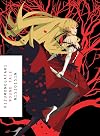
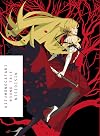
Kizumonogatari, specifically, is the beginning of this huge tale. It's where the faith of Araragi is decided. It's where he crosses Kiss-Shot (the cover), where he meets Hanekawa and becames what we can see in the anime. There is so much in this novel, seriously, go grab it!
My score : 8/10
https://4nakama.net/2016/01/02/kizumonogatari-review/ show less
But you know what? Screw that.
It's here!!! Thanks to vertical for bringing, translating and distributing it!
OK, a bit of context...
Monogatari is a series of novel by Nisio Isin and a huge success in Japan. Most novels are already adapted as anime and are excellent. The story tells the tale of Koyomi Araragi, a young male who need to deal with various mystical apparitions and creatures.
What distinguish Monogatari from the other Japanese Animes / Mangas / Novels is the dialogs, the complex story and the way this story is told. Many mangas try to deal with complex situation (love, hate, friendship, show more violence, family, etc) like immature adolescents. I feel Monogatari has a more adult approach and is still able to stay as funny (the toothbrush scene!!) and exiting as hell.
Kizumonogatari, specifically, is the beginning of this huge tale. It's where the faith of Araragi is decided. It's where he crosses Kiss-Shot (the cover), where he meets Hanekawa and becames what we can see in the anime. There is so much in this novel, seriously, go grab it!
My score : 8/10
https://4nakama.net/2016/01/02/kizumonogatari-review/ show less
Ratings
Members
- Recently Added By
Author Information

202+ Works 4,689 Members
Some Editions
Series


Work Relationships
Is contained in
Common Knowledge
- Canonical title
- KIZUMONOGATARI
- Original title
- 傷物語
- Alternate titles
- Kizumonogatari: Wound Tale
- Original publication date
- 2008-05-07 (JPN | Kondansha BOX) (JPN | Kondansha BOX); 2015-12-15 (ENG|Vertical) (ENG | Vertical); 2015-12-22 (JPN|Kodansha BOX|Special Edition) (JPN | Kodansha BOX | Special Edition)
- People/Characters
- Koyomi Araragi; Kissshot Acerolaorion Heartunderblade; Mèmè Oshino; Tsubasa Hanekawa; Guillotine Cutter; Episode (show all 9); Dramaturgy; Karen Araragi; Tsukihi Araragi
- First words
- I suppose I need to get around to talking about Kissshot Acerolaorion Heartunderblade. I probably have a duty to do so.
- Last words
- (Click to show. Warning: May contain spoilers.)Thus begins the tale of the wounded ones. A tale of blood that splattered red and dried up black. The tale of our never-to-heal, precious wound. I will tell it to no one.
- Original language
- Japanese
Classifications
- Genres
- Fiction and Literature, Teen
- DDC/MDS
- 895.636 — Literature & rhetoric Literatures of other languages Literatures of East and Southeast Asia Japanese Japanese fiction 2000–
- LCC
- PL873.5 .I84 .K5913 — Language and Literature Languages and literatures of Eastern Asia, Africa, Oceania Languages of Eastern Asia, Africa, Oceania Japanese language and literature Japanese literature
- BISAC
Statistics
- Members
- 239
- Popularity
- 136,367
- Reviews
- 4
- Rating
- (3.94)
- Languages
- Chinese, traditional, English, Japanese
- Media
- Paper, Audiobook, Ebook
- ISBNs
- 4
- ASINs
- 3