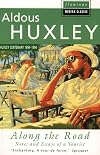
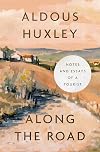
Along the Road
by Aldous Huxley 
On This Page
Description
Witty and "enchanting" reflections on the experience of travel, with a focus on art, music, and literature, by the author of Brave New World (The Spectator). One of the most renowned and prolific writers of the twentieth century, Aldous Huxley produced not only dystopian fiction like Brave New World and philosophical memoirs like The Doors of Perception, but also insightful travel writing. Here, he discusses his visits to Italy, France, and other European destinations; reflects on cultural show more landmarks; and ruminates on the benefits and challenges of travel itself, offering a fascinating glimpse into the Europe of a century ago--and the mind of a remarkable author. "As opposed to those who believe that the best picture is the most famous or expensive one, or the one that wins a prize, Huxley speaks for those prepared to spend contemplative time with works of art." --The Sydney Morning Herald show lessTags
Recommendations

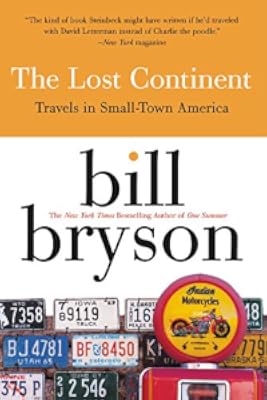


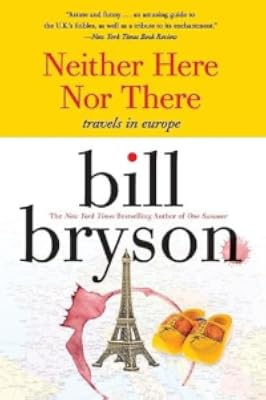


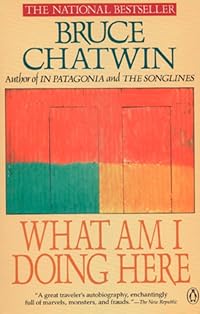

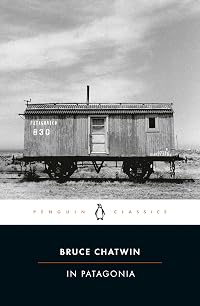
























Member Reviews
Actually, I didn't read a print edition, more's the pity, I read this online at The Huxley Archive. (The link is on my blog).
There are four parts, but I’m going to share my thoughts about Part 1, ‘Travel in General’. There is an air of tongue-in-cheek hubris about some of Huxley’s cheekier opinions, as if he is writing as an intellectual provocateur. Writers of today’s click-bait tabloid opinion pieces might read these and weep that their trade precludes writing anything so witty, erudite, and enduring.
The collection starts with a deliciously provocative essay about how most people do not enjoy travel but do it out of snobbery, a desire to be seen to do it and to have travel stories with which to impress other people.
Well indeed, a century ago i.e. before developments in transport and the age of mass tourism, he may have been right. Most travel would have been arduous to say the least, though depending on your destination, it still can be. And while we can use the internet to prepare ourselves for the attractions we can expect to see, in 1925 the traveller was reliant on word of mouth and the vagaries of amateur sketches, B&W photography of dubious quality and travel writing, such as it was. (Remember Herodotus and his facts, legends and bizarre digressions about gold-digging ants and hippos with manes like horses?) How could the would-be traveller feel confident that it was going to be worth the hassle and expense?
And surely you have to wonder about the selfie generation and their bucket lists, do they actually enjoy what they’re doing?
Anyway, I had a good chuckle when Huxley then undercut his own pomposity by declaring himself to be a ‘born traveller’ and likens his travelling to a vice.
To see the rest of my review please visit https://anzlitlovers.com/2025/10/23/along-the-road-notes-and-essays-of-a-tourist... show less
There are four parts, but I’m going to share my thoughts about Part 1, ‘Travel in General’. There is an air of tongue-in-cheek hubris about some of Huxley’s cheekier opinions, as if he is writing as an intellectual provocateur. Writers of today’s click-bait tabloid opinion pieces might read these and weep that their trade precludes writing anything so witty, erudite, and enduring.
The collection starts with a deliciously provocative essay about how most people do not enjoy travel but do it out of snobbery, a desire to be seen to do it and to have travel stories with which to impress other people.
Someshow more
people travel on business, some in search of health. But it is neither the sickly, nor the men of affairs who fill the Grand Hotels and the pockets of their proprietors. It is those who travel “for pleasure,” as the phrase goes. What Epicurus, who never travelled except when he was banished, sought in his own garden, our tourists seek abroad. And do they find their happiness? Those who frequent the places where they resort must often find this question, with a tentative answer in the negative, fairly forced upon them. For tourists are, in the main, a very gloomy-looking tribe. I have seen much brighter faces at a funeral than in the Piazza of St. Mark’s. Only when they can band together and pretend, for a brief, precarious hour, that they are at home, do the majority of tourists look really happy. One wonders why they come abroad.
The fact is that very few travellers really like travelling. If they go to the trouble and expense of travelling, it is not so much from curiosity, for fun or because they like to see things beautiful and strange, as out of a kind of snobbery. People travel for the same reason as they collect works of art: because the best people do it. To have been to certain spots on the earth’s surface is socially correct; and having been there, one is superior to those who have not. Moreover, travelling gives one something to talk about when one gets home. The subjects of conversation are not so numerous that one can neglect an opportunity for adding to one’s store.
Well indeed, a century ago i.e. before developments in transport and the age of mass tourism, he may have been right. Most travel would have been arduous to say the least, though depending on your destination, it still can be. And while we can use the internet to prepare ourselves for the attractions we can expect to see, in 1925 the traveller was reliant on word of mouth and the vagaries of amateur sketches, B&W photography of dubious quality and travel writing, such as it was. (Remember Herodotus and his facts, legends and bizarre digressions about gold-digging ants and hippos with manes like horses?) How could the would-be traveller feel confident that it was going to be worth the hassle and expense?
And surely you have to wonder about the selfie generation and their bucket lists, do they actually enjoy what they’re doing?
Anyway, I had a good chuckle when Huxley then undercut his own pomposity by declaring himself to be a ‘born traveller’ and likens his travelling to a vice.
To see the rest of my review please visit https://anzlitlovers.com/2025/10/23/along-the-road-notes-and-essays-of-a-tourist... show less
A nice book of a collection of essays that are most entertaining when he is hating on others or relating his stories of travelling. I got a bit bored with the descriptions of art.
Pretty good book. It started off really well with his essays of mild distaste, but grew a little boring as he talked about the different pieces of art he observed. It picked up at the end with short anecdotes and tales about the places he traveled.
Huxley gets facetious in explaining his travels, these genius shorts from a writer of wit wisdom and unearthly knowledge.
> Babelio : https://www.babelio.com/livres/Huxley-Le-Monde-en-passant--Journal-de-voyage/294...
> LE MONDE EN PASSANT, de Aldous Huxley (éd. Vernal / P. Lebaud). — Voyager, c’est découvrir que tout le monde a tort. Les philosophies, les civilisations qui, de loin, vous semblent bien supérieures à la vôtre, vues de près, sont toutes, à leur façon, aussi désespérément imparfaites. Apprendre cela — et cela ne s’apprend qu’en voyageant — mérite, il me semble, toute la peine, toute l’absence de bien-être, et tous les frais d’un tour du monde. (Michel FOURNIER)
—Nouvelles Clés, (3), Nov./Déc. 1988, (p. 57)
> LE MONDE EN PASSANT, de Aldous Huxley (éd. Vernal / P. Lebaud). — Voyager, c’est découvrir que tout le monde a tort. Les philosophies, les civilisations qui, de loin, vous semblent bien supérieures à la vôtre, vues de près, sont toutes, à leur façon, aussi désespérément imparfaites. Apprendre cela — et cela ne s’apprend qu’en voyageant — mérite, il me semble, toute la peine, toute l’absence de bien-être, et tous les frais d’un tour du monde. (Michel FOURNIER)
—Nouvelles Clés, (3), Nov./Déc. 1988, (p. 57)
Sep 23, 2020 (Edited)French
CART0025
Sep 15, 2014French
Ratings
Members
- Recently Added By
Lists

The Works of Aldous Huxley
49 works; 1 member
Author Information

Aldous Huxley was born on July 26, 1894, in Surrey, England, into a distinguished scientific and literary family; his grandfather was the noted scientist and writer, T.H. Huxley. Following an eye illness at age 16 that resulted in near-blindness, Huxley abandoned hope of a career in medicine and turned instead to literature, attending Oxford show more University and graduating with honors. While at Oxford, he published two volumes of poetry. Crome Yellow, his first novel, was published in 1927 followed by Antic Hay, Those Barren Leaves, and Point Counter Point. His most famous novel, Brave New World, published in 1932, is a science fiction classic about a futuristic society controlled by technology. In all, Huxley produced 47 works during his long career, In 1947, Huxley moved with his family to southern California. During the 1950s, he experimented with mescaline and LSD. Doors of Perception and Heaven and Hell, both works of nonfiction, were based on his experiences while taking mescaline under supervision. In 1959, Aldous Huxley received the Award of Merit for the Novel from the American Academy of Arts and Letters. He died on November 22, 1963. (Bowker Author Biography) show less
Aldous Huxley has a Legacy Library. Legacy libraries are the personal libraries of famous readers, entered by LibraryThing members from the Legacy Libraries group.
Some Editions
Series
Belongs to Publisher Series
D'ací i d'allà (37)
Work Relationships
Is contained in
Common Knowledge
- Canonical title
- Along the Road
- Original publication date
- 1925
- First words
- Some people travel on business, some in search of health.
Classifications
Statistics
- Members
- 149
- Popularity
- 220,271
- Reviews
- 6
- Rating
- (3.75)
- Languages
- 7 — Catalan, English, French, German, Italian, Russian, Spanish
- Media
- Paper, Ebook
- ISBNs
- 14
- ASINs
- 10