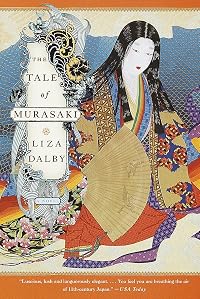
The Tale of Murasaki
by Liza Dalby
On This Page
Description
"The sensitive and modest daughter of a mid-ranking court poet, Murasaki Shikibu staves off loneliness with her acitve imagination, telling stories about the dashing Prince Genji to her close friends. At first, they are their private entertainment, but soon Genji's amorous adventures are leaked to the public and Murasaki is thrust into the life of a kind of eleventh-century Japanese celebrity. She is compelled by a charismatic regent to accept a position at court regaling the empress with show more her stories. At court, Lady Murasaki becomes caught in a vortex of high politics and sexual intrigue, which begins to reflect itself in her stories."--Jacket. show lessTags
Recommendations
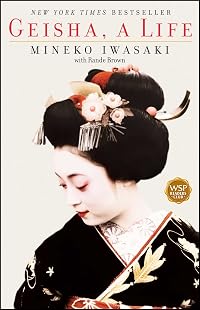
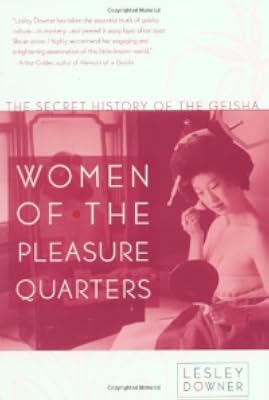
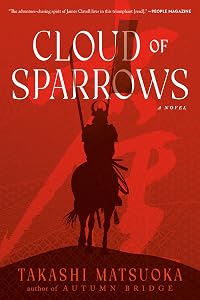
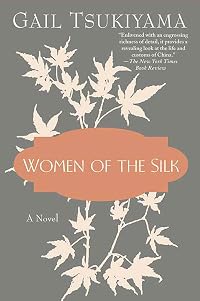


Member Reviews
While the book is interesting in that it is full of period detail, the story drags pretty badly. I enjoyed the insight into a writer's mind, but found the constant repetition of "I wanted to write, but I couldn't because I had to do this instead" pretty dull after a while. There are too many characters who are more like names that are occasionally dropped until suddenly the character comes to visit and the reader is told that this character is very important to the narrator, which is rather hard to believe, as they never appear again. I also had a hard time bringing myself to care what happened to the rather insipid narrator, Fuji (Murasaki), who seems to be forever complaining and making poor choices. I also found the narrator selfish show more despite her continual self-sacrifice. It seemed she managed to hang onto a lot of things that she found important, such as her character Genji and even her own reputation as a blender of incense, but, though she claims her daughter is her most precious treasure, the poor little girl is pretty much abandoned. I guess I might be biased on this because I have a tiny little daughter myself and I cannot understand how anything on Earth could induce me to treat her in such a fashion. It especially irked me that, despite seeing how unhealthy life at court was for women especially, the narrator purposefully raises her daughter up to be the ultimate courtier. And to top it off, she tricks the poor girl into thinking they will be together at last, only to run off to become a nun and leave her daughter to find her own way through the intrigues Murasaki herself apparently so despised.
Despite all of this, reading about Murasaki's changes to her "Shining Prince" as she becomes older, wiser, and of course sadder, and the way that these changes may have reflected her own life experiences was interesting. Seeing her grow from a writer of idealized romance to a shrewd observer of human nature with all of its failings makes the book worth finishing. The final story is fascinating and makes me want to read all of her work. Now to find translations in English...that's going to probably be a lot harder overall than dragging myself through this book was! show less
Despite all of this, reading about Murasaki's changes to her "Shining Prince" as she becomes older, wiser, and of course sadder, and the way that these changes may have reflected her own life experiences was interesting. Seeing her grow from a writer of idealized romance to a shrewd observer of human nature with all of its failings makes the book worth finishing. The final story is fascinating and makes me want to read all of her work. Now to find translations in English...that's going to probably be a lot harder overall than dragging myself through this book was! show less
This is one of these fictionalized autobiographies that take facts from a person's life, and fills in the gaps with whatever the author can come up with. Generally, I enjoyed the story, and the poetry, but I did find the rape scene to be unneccessary. I don't know if Murasaki ever hinted at that in her diary, but if she didn't, then I am disappointed that Ms. Dalby inserted it in here because I felt that it added nothing to the story. I did find the descriptions to be an excellent part of the book, it was easy to imagine what people wore or the settings. If anything, this book gives you a nice view of 11th century life in the upper echelons of Japanese society, and a peek into Imperial life in this era when Murasaki becomes part of show more court. I also liked how the character of Murasaki's husband was presented here, little is known about him and I think the author gave a nice, balanced view of his character. I wish though, that there had been more about Katako and her life in here. show less
I'll start by saying I have never read The Tale of Genji or any other of the writings that have survived from Eleventh century Heian Japan but Liza Dalby has obviously done her research making this an evocative portrayal of that long ago time and place. In fact so much so that I was sorry to leave this world when I turned the last page.
This is a fictionalised telling of what the life of Murasaki, the creator of Genji, might have been like. Based on and including parts of her diary, her poetry and The Tale of Genji Dalby has recreated a vivid picture of an alien, to me, culture. I loved reading this and maybe I should try to find a copy of the Tale of Genji.
This is a fictionalised telling of what the life of Murasaki, the creator of Genji, might have been like. Based on and including parts of her diary, her poetry and The Tale of Genji Dalby has recreated a vivid picture of an alien, to me, culture. I loved reading this and maybe I should try to find a copy of the Tale of Genji.
The first/only American to qualify as a geisha wrote this in the first person, as a semi-fictionalised autobiography of an 11th century author who was also lady-in-waiting to an empress. She was famous for the The Tale of Genji, but also wrote poems and a journal.
The modern author used the journal and poems to construct the author's own story, creating parallels between her life and that of the main characters in her tales. It's a fascinating insight into medieval Japanese court life, with liberal scatterings of poems of a form similar to haiku. Clearly American ("gotten", for example), but wonderfully atmospheric. I have no idea how authentic it is, though.
The modern author used the journal and poems to construct the author's own story, creating parallels between her life and that of the main characters in her tales. It's a fascinating insight into medieval Japanese court life, with liberal scatterings of poems of a form similar to haiku. Clearly American ("gotten", for example), but wonderfully atmospheric. I have no idea how authentic it is, though.
I continue to read and re-read this ever 3 or 4 months. The fragrant and melancholy atmosphere of Heian Nobility is perfectly captured and a impossibly alien culture becomes approachable and understandable. The story is captivating and the setting is more so. Reading this is like taking a vacation and leaves one strangely suprised with the modern world when one looks up fromt he page. I recommend this to anyone who wants a refreshing change from mainstream historical fiction.
As a period piece, this is a very interesting book to read. Dalby obviously has the enthusiasm and the background to make this read like an authentic recreation of Heian Japan (though this is neither a place nor a time that I know much about, so perhaps this was a false impression!), and it's a world that comes to life through her crisp, clear prose. Unfortunately, her attention to detail does mean that the book as a story lags a little—a little too much showing, not telling.
I picked this book up only because it was historical fiction and I did enjoy "Memoirs of a Geisha"; however, this is much different and at first I was rather disappointed. I didn't particularly like the first person narrative and what I thought of as the "weird little phrases" of poetry interspersed, but I kept reading. I was soon pulled in and could not put it down. Not that I especially liked the character of Muraski, but I so enjoyed the visit to 11th century Japan.
I agree with those that remarked on the lack of background regarding the politics and religion that shape this novel, but I didn't find it overwhelming. Instead, it spurred my interest to investigate further.
It is hard to judge the qualities of characters that are living show more in a world so far from our own. The exchanges of "waka" seem bizarre at first, but I actually found myself looking at my own surroundings (especially nature) in a new light. Although the author, I felt, was too detailed, too wordy (especially in the long descriptions of colors and kimonos), we could all learn something about saying so much in so few words.
How enthralling to briefly inhabit a world without time;
how much my time has changed. show less
I agree with those that remarked on the lack of background regarding the politics and religion that shape this novel, but I didn't find it overwhelming. Instead, it spurred my interest to investigate further.
It is hard to judge the qualities of characters that are living show more in a world so far from our own. The exchanges of "waka" seem bizarre at first, but I actually found myself looking at my own surroundings (especially nature) in a new light. Although the author, I felt, was too detailed, too wordy (especially in the long descriptions of colors and kimonos), we could all learn something about saying so much in so few words.
How enthralling to briefly inhabit a world without time;
how much my time has changed. show less
Members
- Recently Added By
Lists

Authors from the United States
245 works; 3 members

Fiction With Familiar Settings
280 works; 94 members
Author Information

9+ Works 3,282 Members
Work Relationships
Has the adaptation
Common Knowledge
- Canonical title
- The Tale of Murasaki
- Original publication date
- 2000-05-16
- People/Characters
- Murasaki Shikibu
- Important places
- Japan; Kyoto, Japan
- Dedication
- For Michael
and Marie, Owen and Chloe - First words
- I was pregnant with you when my mother died, but my condition was far from normal.
- Last words
- (Click to show. Warning: May contain spoilers.)She groped toward the door of her room and pushed it open, letting the autumn breeze rush through, sweeping out all traces of lingering scent.
- Blurbers
- Golden, Arthur
- Original language
- English
Classifications
Statistics
- Members
- 1,344
- Popularity
- 17,933
- Reviews
- 25
- Rating
- (3.73)
- Languages
- 9 — Dutch, English, French, German, Hungarian, Polish, Portuguese, Romanian, Spanish
- Media
- Paper, Audiobook, Ebook
- ISBNs
- 27
- ASINs
- 4