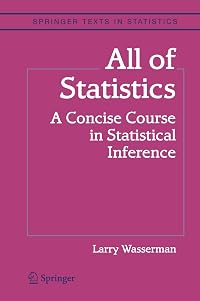
All of Statistics: A Concise Course in Statistical Inference
by Larry Wasserman
Springer Texts in Statistics
On This Page
Description
This book is for people who want to learn probability and statistics quickly. It brings together many of the main ideas in modern statistics in one place. The book is suitable for students and researchers in statistics, computer science, data mining and machine learning. This book covers a much wider range of topics than a typical introductory text on mathematical statistics. It includes modern topics like nonparametric curve estimation, bootstrapping and classification, topics that are show more usually relegated to follow-up courses. The reader is assumed to know calculus and a little linear algebra. No previous knowledge of probability and statistics is required. The text can be used at the advanced undergraduate and graduate level. Larry Wasserman is Professor of Statistics at Carnegie Mellon University. He is also a member of the Center for Automated Learning and Discovery in the School of Computer Science. His research areas include nonparametric inference, asymptotic theory, causality, and applications to astrophysics, bioinformatics, and genetics. He is the 1999 winner of the Committee of Presidents of Statistical Societies Presidents' Award and the 2002 winner of the Centre de recherches mathematiques de Montreal–Statistical Society of Canada Prize in Statistics. He is Associate Editor of The Journal of the American Statistical Association and The Annals of Statistics. He is a fellow of the American Statistical Association and of the Institute of Mathematical Statistics. show lessTags
Recommendations
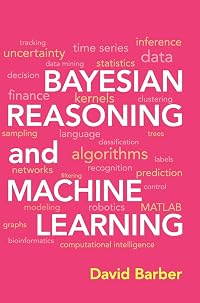
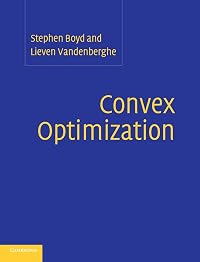
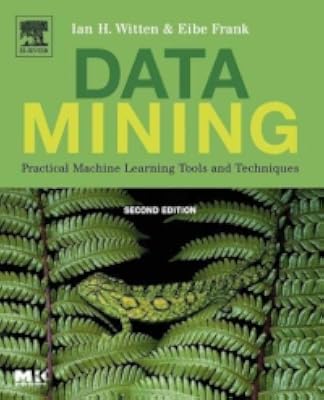
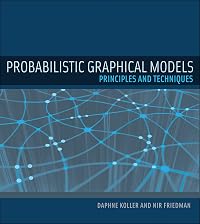

Member Reviews
Not a good one for getting started, very formal and less intuitive.
Indeholder "Preface", "Statistics /Data Mining Dictionary", "I. Probability", " 1. Probability", " 1.1 Introduction", " 1.2 Sample Spaces and Events", " 1.3 Probability", " 1.4 Probability on Finite Sample Spaces", " 1.5 Independent Events", " 1.6 Conditional Probability", " 1.7 Bayes' Theorem", " 1.8 Bibliographic Remarks", " 1.9 Appendix", " 1.10 Exercises", " 2. Random Variables", " 2.1 Introduction", " 2.2 Distribution Functions and Probability Functions", " 2.3 Some Important Discrete Random Variables", " 2.4 Some Important Continuous Random Variables", " 2.5 Bivariate Distributions", " 2.6 Marginal Distributions", " 2.7 Independent Random Variables", " 2.8 Conditional Distributions", " 2.9 Multivariate Distributions and lID show more Samples", " 2.10 Two Important Multivariate Distributions", " 2.11 Transformations of Random Variables", " 2.12 Transformations of Several Random Variables", " 2.13 Appendix", " 2.14 Exercises", " 3. Expectation", " 3.1 Expectation of a Random Variable", " 3.2 Properties of Expectations", " 3.3 Variance and Covariance", " 3.4 Expectation and Variance of Important Random Variables", " 3.5 Conditional Expectation", " 3.6 Moment Generating Functions", " 3.7 Appendix", " 3.8 Exercises", " 4. Inequalities", " 4.1 Probability Inequalities", " 4.2 Inequalities For Expectations", " 4.3 Bibliographic Remarks", " 4.4 Appendix", " 4.5 Exercises", " 5. Convergence of Random Variables", " 5.1 Introduction", " 5.2 Types of Convergence", " 5.3 The Law of Large Numbers", " 5.4 The Central Limit Theorem", " 5.5 The Delta Method", " 5.6 Bibliographic Remarks", " 5.7 Appendix", " 5.7.1 Almost Sure and L1 Convergence", " 5.7.2 Proof of the Central Limit Theorem", " 5.8 Exercises", "II. Statistical Inference", " 6. Models, Statistical Inference and Learning", " 6.1 Introduction", " 6.2 Parametric and Nonparametric Models", " 6.3 Fundamental Concepts in Inference", " 6.3.1 Point Estimation", " 6.3.2 Confidence Sets", " 6.3.3 Hypothesis Testing", " 6.4 Bibliographic Remarks", " 6.5 Appendix", " 6.6 Exercises", " 7. Estimating the CDF and Statistical Functionals", " 7.1 The Empirical Distribution Function", " 7.2 Statistical Fmctionals", " 7.3 Bibliographic Remarks", " 7.4 Exercises", " 8. The Bootstrap", " 8.1 Simulation", " 8.2 Bootstrap Variance Estimation", " 8.3 Bootstrap Confidence Intervals", " 8.4 Bibliographic Remarks", " 8.5 Appendix", " 8.5.1 The Jackknife", " 8.5.2 Justification For The Percentile Interval", " 8.6 Exercises", " 9. Parametric Inference", " 9.1 Parameter of Interest", " 9.2 The Method of Moments", " 9.3 Maximum Likelihood", " 9.4 Properties of Maximum Likelihood Estimators", " 9.5 Consistency of Maximum Likelihood Estimators", " 9.6 Equivariance of the MLE", " 9.7 Asymptotic Normality", " 9.8 Optimality", " 9.9 The Delta Method", " 9.10 Multiparameter Models", " 9.11 The Parametric Bootstrap", " 9.12 Checking Assumptions", " 9.13 Appendix", " 9.13.1 Proofs", " 9.13.2 Sufficiency", " 9.13.3 Exponential Families", " 9.13.4 Computing Maximum Likelihood Estimates", " 9.14 Exercises", " 10. Hypothesis Testing and p-values", " 10.1 The Wald Test", " 10.2 p-vaiues", " 10.3 The X2 Distribution", " 10.4 Pearson's X2 Test For Multinomial Data", " 10.5 The Permutation Test", " 10.6 The Likelihood Ratio Test", " 10.7 Multiple Testing", " 10.8 Goodness-of-fit Tests", " 10.9 Bibliographic Remarks", " 10.10 Appendix", " 10.10.1 The Neyman-Pearson Lemma", " 10.10.2 The t-test", " 10.11 Exercises", " 11. Bayesian Inference", " 11.1 The Bayesian Philosophy", " 11.2 The Bayesian Method", " 11.3 Functions of Parameters", " 11.4 Simulation", " 11.5 Large Sample Properties of Bayes' Procedures", " 11.6 Flat Priors, Improper Priors, and "Noninformative" Priors", " 11.7 Multiparameter Problems", " 11.8 Bayesian Testing", " 11.9 Strengths and Weaknesses of Bayesian Inference", " 11.10 Bibliographic Remarks", " 11.11 Appendix", " 11.12 Exercises", " 12. Statistical Decision Theory", " 12.1 Preliminaries", " 12.2 Comparing Risk Functions", " 12.3 Bayes Estimators", " 12.4 Minimax Rules", " 12.5 Maximum Likelihood, Minimax, and Bayes", " 12.6 Admissibility", " 12.7 Stein's Paradox", " 12.8 Bibliographic Remarks", " 12.9 Exercises", "III. Statistical Models and Methods", " 13. Linear and Logistic Regression", " 13.1 Simple Linear Regression", " 13.2 Least Squares and Maximum Likelihood", " 13.3 Properties of the Least Squares Estimators", " 13.4 Prediction", " 13.5 Multiple Regression", " 13.6 Model Selection", " 13.7 Logistic Regression", " 13.8 Bibliographic Remarks", " 13.9 Appendix", " 13.10 Exercises", " 14. Multivariate Models", " 14.1 Random Vectors", " 14.2 Estimating the Correlation", " 14.3 Multivariate Normal", " 14.4 Multinomial", " 14.5 Bibliographic Remarks", " 14.6 Appendix", " 14.7 Exercises", " 15. Inference About Independence", " 15.1 Two Binary Variables", " 15.2 Two Discrete Variables", " 15.3 Two Continuous Variables", " 15.4 One Continuous Variable and One Discrete", " 15.5 Appendix", " 15.6 Exercises", " 16. Causal Inference", " 16.1 The Counterfactual Model", " 16.2 Beyond Binary Treatments", " 16.3 Observational Studies and Confounding", " 16.4 Simpson's Paradox", " 16.5 Bibliographic Remarks", " 16.6 Exercises", " 17. Directed Graphs and Conditional Independence", " 17.1 Introduction", " 17.2 Conditional Independence", " 17.3 DAGs", " 17.4 Probability and DAGs", " 17.5 More Independence Relations", " 17.6 Estimation for DAGs", " 17.7 Bibliographic Remarks", " 17.8 Appendix", " 17.9 Exercises", " 18. Undirected Graphs", " 18.1 Undirected Graphs", " 18.2 Probability and Graphs", " 18.3 Cliques and Potentials", " 18.4 Fitting Graphs to Data", " 18.5 Bibliographic Remarks", " 18.6 Exercises", " 19. Log-Linear Models", " 19.1 The Log-Linear Model", " 19.2 Graphical Log-Linear Models", " 19.3 Hierarchical Log-Linear Models", " 19.4 Model Generators", " 19.5 Fitting Log-Linear Models to Data", " 19.6 Bibliographic Remarks", " 19.7 Exercises", " 20. Nonparametric Curve Estimation", " 20.1 The Bias-Variance Tradeoff", " 20.2 Histograms", " 20.3 Kernel Density Estimation", " 20.4 Nonparametric Regression", " 20.5 Appendix", " 20.6 Bibliographic Remarks", " 20.7 Exercises", " 21. Smoothing Using Orthogonal Functions", " 21.1 Orthogonal Functions and L2 Spaces", " 21.2 Density Estimation", " 21.3 Regression", " 21.4 Wavelets", " 21.5 Appendix", " 21.6 Bibliographic Remarks", " 21.7 Exercises", " 22. Classification", " 22.1 Introduction", " 22.2 Error Rates and the Bayes Classifier", " 22.3 Gaussian and Linear Classifiers", " 22.4 Linear Regression and Logistic Regression", " 22.5 Relationship Between Logistic Regression and LDA", " 22.6 Density Estimation and Naive Bayes", " 22.7 Trees", " 22.8 Assessing Error Rates and Choosing a Good Classifier", " 22.9 Support Vector Machines", " 22.10 Kernelization", " 22.11 Other Classifiers", " 22.12 Bibliographic Remarks", " 22.13 Exercises", " 23. Probability Redux: Stochastic Processes", " 23.1 Introduction", " 23.2 Markov Chains", " 23.3 Poisson Processes", " 23.4 Bibliographic Remarks", " 23.5 Exercises", " 24. Simulation Methods", " 24.1 Bayesian Inference Revisited", " 24.2 Basic Monte Carlo Integration", " 24.3 Importance Sampling", " 24.4 MCMC Part I: The Metropolis- Hastings Algorithm", " 24.5 MCMC Part II: Different Flavors", " 24.6 Bibliographic Remarks", " 24.7 Exercises", "Index".
Indholdsfortegnelsen er ret grimt lavet rent typografisk, så det må være en uden det store kørekort til LaTeX, der har været inde over. show less
Indholdsfortegnelsen er ret grimt lavet rent typografisk, så det må være en uden det store kørekort til LaTeX, der har været inde over. show less
Jun 19, 2025Danish
Ratings
Members
- Recently Added By
Author Information
3 Works 318 Members
Larry Wasserman is Professor of Statistics at Carnegie Mellon University and a member of the Center for Automated Learning and Discovery in the School of Computer Science.
Series

Common Knowledge
- Canonical title
- All of Statistics: A Concise Course in Statistical Inference
Classifications
Statistics
- Members
- 246
- Popularity
- 132,354
- Reviews
- 4
- Rating
- (3.89)
- Languages
- English
- Media
- Paper, Ebook
- ISBNs
- 6
- ASINs
- 2