On This Page
Description
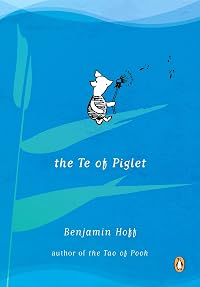
The author and the characters from the Pooh books engage in dialogue elucidating the Taoist principle of Te, the Way of the Small.Tags
Recommendations





Member Recommendations
Marewinds Companion volume to the Tao of Pooh, and slightly more in-depth, for the next steps in your journey down the path of the Tao.
30
Member Reviews
Again I find myself reviewing a book I didn't like because for some reason I find it easier to say why I didn't like something, than what I enjoy about a book.
As other reviewers have said don't bother with this book, read the Tao of Pooh. And avoid it like the plague if you have read the Tao of Pooh as it will retrospectively dim your enjoyment of that book.
As to why this book is so bad. For one thing it feels heavy, world weary & cynical to me, more like the Te of Eeyore than the Te of Piglet. I don't know if this was a contractual obligation book, but that is what it feels like to me. I can almost feel the author's resentment at having to write it curl off the pages.
And then there are the rather random rants against the many and show more varied targets of the authors ire, which are rather out of place, diminish my opinion of the author and again enhance my feeling that this is a contractual obligation book.
In short do your Karma (and dogma (and catma)) a favour and stick to the Tao of Pooh. show less
As other reviewers have said don't bother with this book, read the Tao of Pooh. And avoid it like the plague if you have read the Tao of Pooh as it will retrospectively dim your enjoyment of that book.
As to why this book is so bad. For one thing it feels heavy, world weary & cynical to me, more like the Te of Eeyore than the Te of Piglet. I don't know if this was a contractual obligation book, but that is what it feels like to me. I can almost feel the author's resentment at having to write it curl off the pages.
And then there are the rather random rants against the many and show more varied targets of the authors ire, which are rather out of place, diminish my opinion of the author and again enhance my feeling that this is a contractual obligation book.
In short do your Karma (and dogma (and catma)) a favour and stick to the Tao of Pooh. show less
Hoff continues tying the world of A.A. Milne to Lao Tzu in this sequel, pointing out that Taoism defended the underdog in Chinese society, and this along with the component of virtue embodied in the middle character “Te” in “Tao Te Ching” align most closely to Pooh’s frightened little buddy Piglet.
Not only is the analogy less applicable, but Hoff pontificates quite a bit in the book, making it a much less enjoyable read. Examples abound. In “The Eeyore Effect” chapter, he calls out the news media, critics, public education, and feminists in what goes from examples of pessimism to an opinionated rant, which is counter to the philosophy he so adores. He continues this in “Things as They Might Be”, complaining about show more technology, materialism, and the state of politics, e.g. “For nearly thirty years now, the nation that was once the Light of the Free World has been electing to the highest office in the land a succession of Nightmare Clowns who lead us deeper and deeper into darkness…”. Ugh. And it continues from there. Do you see any of this kind of thing in Lao-Tzu or Chuang-Tzu’s teachings? No.
Just a couple of quotes:
On pessimism:
“Eeyores are afraid – afraid to risk positive emotional expression, positive action, positive involvement in anything beyond Ego. … Unfortunately for those around them, complaining is the one thing that Eeyores are not afraid to do. They grudgingly carry their thimbles to the Fountain of Life, then mumble and grumble that they weren’t given enough.”
On Taoism:
“Its key principles are Natural Simplicity, Effortless Action, Spontaneity, and Compassion. The most easily noticed difference between Confucianism and Taoism is emotional, a difference in feeling: Confucianism is stern, regimented, patriarchal, often severe; Taoism is happy, gentle, childlike, and serene – like its favorite symbol, that of flowing water.” show less
Not only is the analogy less applicable, but Hoff pontificates quite a bit in the book, making it a much less enjoyable read. Examples abound. In “The Eeyore Effect” chapter, he calls out the news media, critics, public education, and feminists in what goes from examples of pessimism to an opinionated rant, which is counter to the philosophy he so adores. He continues this in “Things as They Might Be”, complaining about show more technology, materialism, and the state of politics, e.g. “For nearly thirty years now, the nation that was once the Light of the Free World has been electing to the highest office in the land a succession of Nightmare Clowns who lead us deeper and deeper into darkness…”. Ugh. And it continues from there. Do you see any of this kind of thing in Lao-Tzu or Chuang-Tzu’s teachings? No.
Just a couple of quotes:
On pessimism:
“Eeyores are afraid – afraid to risk positive emotional expression, positive action, positive involvement in anything beyond Ego. … Unfortunately for those around them, complaining is the one thing that Eeyores are not afraid to do. They grudgingly carry their thimbles to the Fountain of Life, then mumble and grumble that they weren’t given enough.”
On Taoism:
“Its key principles are Natural Simplicity, Effortless Action, Spontaneity, and Compassion. The most easily noticed difference between Confucianism and Taoism is emotional, a difference in feeling: Confucianism is stern, regimented, patriarchal, often severe; Taoism is happy, gentle, childlike, and serene – like its favorite symbol, that of flowing water.” show less
From the outset [a: Benjamin Hoff|27397|Benjamin Hoff|https://images.gr-assets.com/authors/1472629940p2/27397.jpg] makes it clear that this is not so much a sequel to [b: The Tao of Pooh|48757|The Tao of Pooh|Benjamin Hoff|https://images.gr-assets.com/books/1348137748s/48757.jpg|55188] as it is a companion book to the first. What this means, essentially, is that this exists to further expound upon the contents of [b: The Tao of Pooh|48757|The Tao of Pooh|Benjamin Hoff|https://images.gr-assets.com/books/1348137748s/48757.jpg|55188] rather than complement them exactly. The result of which is a book that goes much more in depth than [b: The Tao of Pooh|48757|The Tao of Pooh|Benjamin show more Hoff|https://images.gr-assets.com/books/1348137748s/48757.jpg|55188] and comes across as considerably less charming than the first. It is what it is.
I first heard about this book from a friend's mom, a former teacher of Buddhism, and she was considerably fond of it. I read it only cautiously, having been a great fan of the first book, but ultimately did not find myself disappointed. Yes, it is more complicated than [b: The Tao of Pooh|48757|The Tao of Pooh|Benjamin Hoff|https://images.gr-assets.com/books/1348137748s/48757.jpg|55188] and with less charming interjections from the characters and examples. It falls into ranting now and again rather than explaining plainly, but ultimately it is informative. It gives one things to think on, contains a lot of rather beautiful Taoist translations, and altogether is entertaining. That's all I truly ask for from most books.
I would caution people about this book, and explain what it is prior to them reading it. Do not go in expecting the same experience [b: The Tao of Pooh|48757|The Tao of Pooh|Benjamin Hoff|https://images.gr-assets.com/books/1348137748s/48757.jpg|55188] offered, but go in with an open heart and mind. I'm hovering between a 2 and 3 star rating. I did enjoy the book, but it still left me feeling more empty than perhaps I would like. It didn't have the charm of the first book, and at times was more muddled than helpful. I liked the message, but I liked reading through the Book of Changes more than this.
Perhaps it will be stronger upon a reread? show less
I first heard about this book from a friend's mom, a former teacher of Buddhism, and she was considerably fond of it. I read it only cautiously, having been a great fan of the first book, but ultimately did not find myself disappointed. Yes, it is more complicated than [b: The Tao of Pooh|48757|The Tao of Pooh|Benjamin Hoff|https://images.gr-assets.com/books/1348137748s/48757.jpg|55188] and with less charming interjections from the characters and examples. It falls into ranting now and again rather than explaining plainly, but ultimately it is informative. It gives one things to think on, contains a lot of rather beautiful Taoist translations, and altogether is entertaining. That's all I truly ask for from most books.
I would caution people about this book, and explain what it is prior to them reading it. Do not go in expecting the same experience [b: The Tao of Pooh|48757|The Tao of Pooh|Benjamin Hoff|https://images.gr-assets.com/books/1348137748s/48757.jpg|55188] offered, but go in with an open heart and mind. I'm hovering between a 2 and 3 star rating. I did enjoy the book, but it still left me feeling more empty than perhaps I would like. It didn't have the charm of the first book, and at times was more muddled than helpful. I liked the message, but I liked reading through the Book of Changes more than this.
Perhaps it will be stronger upon a reread? show less
Meditative and meandering, The Te of Piglet accomplishes it's intention of delivering an accessible introduction to Taoist ideas and traditions as compliments it's predecessor, The Tao of Pooh.
Hardly a page-turner, Hoff's approach is a calm one, for the most part. The work is peppered with excepts from texts ranging thousands of years of literary and philosophical works. The tone does, at times, make this a slower read, but this is easily forgivable given the author's obvious intention.
Hardly a page-turner, Hoff's approach is a calm one, for the most part. The work is peppered with excepts from texts ranging thousands of years of literary and philosophical works. The tone does, at times, make this a slower read, but this is easily forgivable given the author's obvious intention.
Summary: Using the characters from Winnie the Pooh (whom I love) the author reveals Taoist wisdom. This book is filled with well written truths that coincide with what I know to be true principles and it is presented in a truly unique way. I must say that I disagree with the author on religion and government issues, but how I would love to sit down and have a good talk with this fascinating author.
Quote: Speaking of Gandhi (who I love) "He ...changed human beings by regarding them not as what they thought they were but as though they were what they wished to be, and as though the good in them was all of them."
Quote: Speaking of Gandhi (who I love) "He ...changed human beings by regarding them not as what they thought they were but as though they were what they wished to be, and as though the good in them was all of them."
I managed to get to the end, but only because I look forward to rereading the original texts of Tao and of Milne and wanted to be confident that I wasn't missing anything here.
A lot is explained nearer to the end, where the author says " I'm not writing this book. That would be Struggle and Difficulty. Instead, I'm letting the book write itself, through me. That's fun and Excitement. It flows along, and I follow as best I can. Day by day, wherever I go, things come to me and I include them in these pages." Hmpf. No wonder it's so hard to learn anything from this.
I'm also not fond of how he disses Eeyore. I agree that there are a lot of negative ppl around, and that Eeyore sometimes acts like them, but the poor donkey does not need to be show more made a scapegoat. That abuse doesn't seem apt behavior for someone practicing The Way. Yet he does have a point.
So, leaving Eeyore out of it, [some people] call themselves Realists. " but reality is what one makes it. And the more negative reality 1 nurtures and creates, the more of it one has yours see only what they want to... F for example, never before in history has the individual had so much power, and so many opportunities to effect change. That assertion can easily be verified by taking a good look around. But... A great many people believe that they are powerless. And because they believe they're powerless, they are."
So, two stars, not just one. show less
A lot is explained nearer to the end, where the author says " I'm not writing this book. That would be Struggle and Difficulty. Instead, I'm letting the book write itself, through me. That's fun and Excitement. It flows along, and I follow as best I can. Day by day, wherever I go, things come to me and I include them in these pages." Hmpf. No wonder it's so hard to learn anything from this.
I'm also not fond of how he disses Eeyore. I agree that there are a lot of negative ppl around, and that Eeyore sometimes acts like them, but the poor donkey does not need to be show more made a scapegoat. That abuse doesn't seem apt behavior for someone practicing The Way. Yet he does have a point.
So, leaving Eeyore out of it, [some people] call themselves Realists. " but reality is what one makes it. And the more negative reality 1 nurtures and creates, the more of it one has yours see only what they want to... F for example, never before in history has the individual had so much power, and so many opportunities to effect change. That assertion can easily be verified by taking a good look around. But... A great many people believe that they are powerless. And because they believe they're powerless, they are."
So, two stars, not just one. show less
Hoff's ability to recreate the voices of Pooh and his friends has worsened in this companion novel, but the core content of philosophy remains about as good as the other one. There are one or two rants about politically charged things that may or may not hold up, and it's not inappropriate given the context, but it might dissuade some readers.
Members
- Recently Added By
Author Information

7 Works 14,938 Members
Awards and Honors
Distinctions
Series

Work Relationships
Is contained in
Was inspired by
Common Knowledge
- Canonical title
- The Te of Piglet
- Original publication date
- 1992
- People/Characters
- Piglet
- Important places*
- Sylvan, Oregon, Verenigde Staten; Oregon, Verenigde Staten
- First words
- One day not long ago, I found Piglet sitting by himself on the writing table, gazing wistfully out the window.
- Last words
- (Click to show. Warning: May contain spoilers.)"For me, it also seems like a beginning."
*Some information comes from Common Knowledge in other languages. Click "Edit" for more information.
Classifications
Statistics
- Members
- 3,885
- Popularity
- 4,079
- Reviews
- 34
- Rating
- (3.44)
- Languages
- 13 — Danish, Dutch, English, Estonian, Finnish, French, Italian, Korean, Norwegian (Bokmål), Polish, Russian, Swedish, Turkish
- Media
- Paper, Audiobook
- ISBNs
- 22
- UPCs
- 1
- ASINs
- 10