On This Page
Description
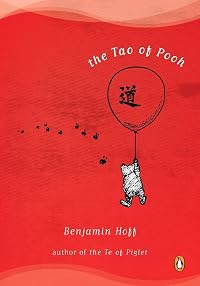
Philosophy. Nonfiction. Winnie-the-Pooh has a certain Way about him, a way of doing things that has made him the world's most beloved bear. In The Tao of Pooh, Benjamin Hoff shows that Pooh's Way is amazingly consistent with the principles of living envisioned by the Chinese founders of Taoism. The author's explanation of Taoism through Pooh, and Pooh through Taoism, shows that this is not simply an ancient and remote philosophy but something you can use, here and now.And what is Taoism? show more It's really very simple. It calls for living without preconceived ideas about how life should be lived-but it's not a preconception of how life-it's.... Well, you'd do better to listen to this book, and listen to Pooh, if you really want to find out. show lessTags
Recommendations
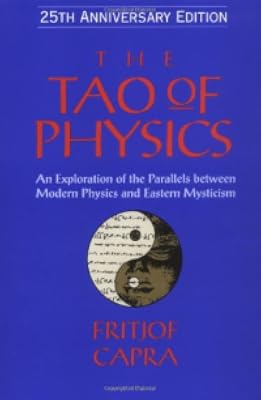
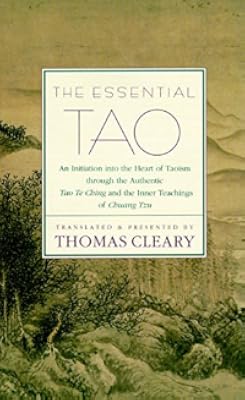
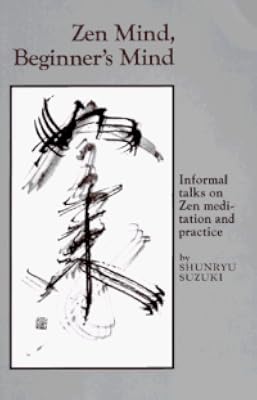
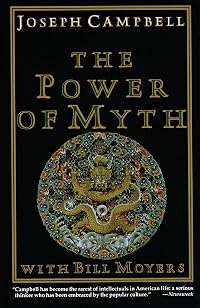






Member Recommendations
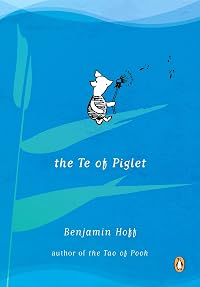
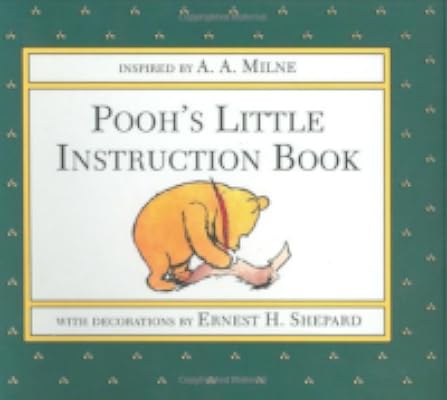
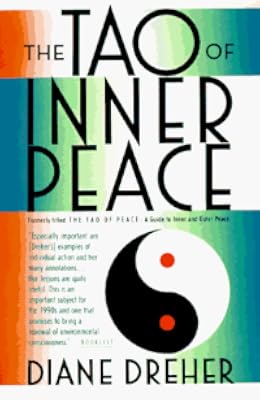
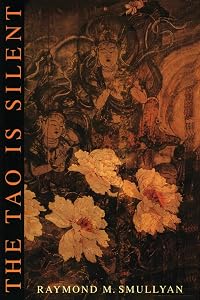
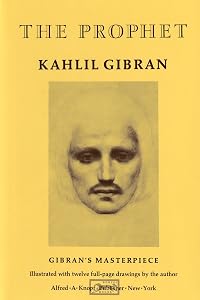
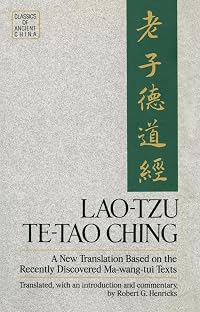
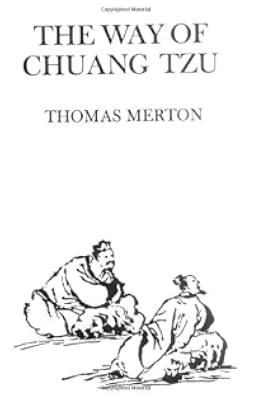
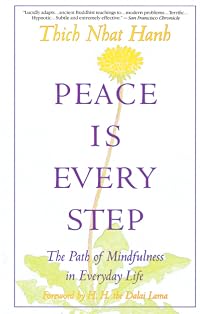
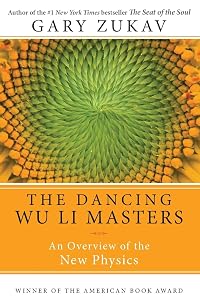
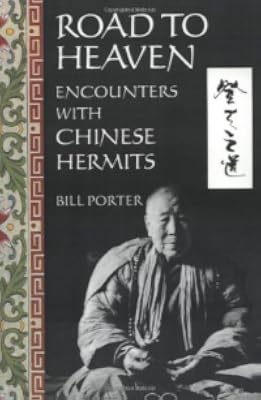
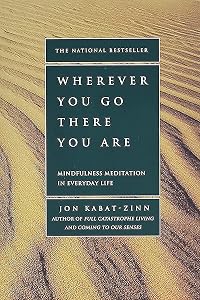
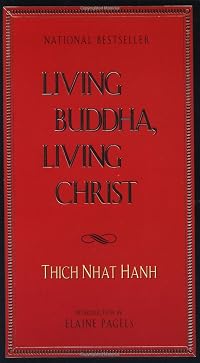
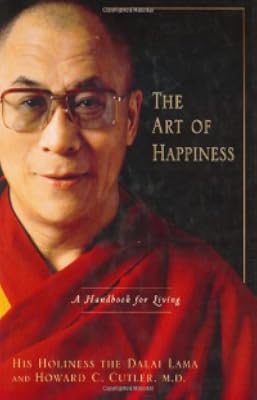
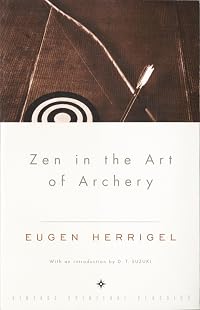
Marewinds Companion volume to the Tao of Pooh, and slightly more in-depth, for the next steps in your journey down the path of the Tao.
30

Member Reviews
Either Taoism, or Hoff's interpretation of it, makes me think of nothing so much as a cow contentedly chewing its cud. Yes, more people should live more simply, less busily, and more true to their natures and to Nature and The Way. But gosh, if we were all Taoists (at least by Hoff's lights), there wouldn't be a printing press and none of us would know of Pooh or Hoff!
And what if it is one's nature to be curious? What if one is a striving scientist in one's heart? According to Hoff, one would have to deny one's nature to Live with the Natural order....
And what if it is one's nature to be curious? What if one is a striving scientist in one's heart? According to Hoff, one would have to deny one's nature to Live with the Natural order....
I loved Winnie-the-Pooh as a child...little did I know the depth of meaning behind what I was reading and watching. I'd like to say it got into my psyche subliminally and helped me live a peaceful and wisdom-filled Taoist life. I'd REALLY like to say that, but I can't. I've been a "Backson" (if you read the book, you'll learn about this unfortunate being) for many a decade now...in recovery since late 2009, when a lightbulb began to glimmer in the darkened corners of my soul. (Thank you, Kauai!) Each day since then it has glowed a tiny bit brighter, illuminating my authentic self, driving out the darkness of judgment, helping me tap into a buried reservoir filled with love and empathy, and recently leading me find (manifest?) a pretty show more special guy. On our second date, said guy took me to 'The Controversial Bookstore' and handed me this book in response to my request for a suggestion from his imressive spiritual reading list. Lucky me!
The Tao of Pooh is a great intro to Taoism, a way of being that I had been realizing in small ways naturally on my own. But, realizing is one thing...truly living it is another. As I turned the last page, it officially became my goal...my top resolution for 2013. This book has launched me onto a journey to further explore Taoism so that I can completely ditch my "Backson" ways and learn to love doing nothing, thinking just enough, and enjoy the childish ways I left behind more than 30 years ago. I'm excited. show less
The Tao of Pooh is a great intro to Taoism, a way of being that I had been realizing in small ways naturally on my own. But, realizing is one thing...truly living it is another. As I turned the last page, it officially became my goal...my top resolution for 2013. This book has launched me onto a journey to further explore Taoism so that I can completely ditch my "Backson" ways and learn to love doing nothing, thinking just enough, and enjoy the childish ways I left behind more than 30 years ago. I'm excited. show less
For some time I referred to one co-worker as Eeyore, because every time anyone asked her in ordinary conversation how she was, instead of saying "fine" or what-have-you she always says "oh, well" and follows with a description of how tired or headache-y or what-have-you she is. The odd thing is she's always pretty darned cheerful. But it was still inevitable that she be labeled "Eeyore".
Then I realized that another co-worker, who barges into every situation, takes over conversations, assumes control over things she has no right to controlling, and never does anything quietly – she is Rabbit. And another girl, who climbs rock walls and goes for long hikes for fun (an alien mindset) and whose laugh can be heard rooms away, and who show more despite being half my size makes ten times more noise just walking … Tigger. It didn't take long to assign the rest of the Pooh Gang to coworkers. I would be Piglet – being somewhat round, and more than somewhat timid in some situations – but someone else round and timid wanted it, so I took a deep breath and admitted to being Wol Owl, the notorious know-it-all who really doesn't. So I laughed out loud when Simon Vance read the line "Owl told him in 25,000 monotonous words or more ..." Heh. Who (whoooo) knew? I'm even more Owl than I thought.
It's funny, though – I'd forgotten that in addition to being Mr. Frowny Face Eeyore was such a horrid know-it-all. That (sadly) means that my co-worker is not as Eeyore as I thought. Or rather, she is Disney Eeyore, not Real Eeyore.
It's been a very long time since I first read this, and I took on the Audible edition based on a low price and a Simon Vance narration. The great Simon Vance, one of the upper echelons of narration rock stars, reads Pooh? Oh, you know I'm in. And it was terrific. Now, the reason I listen to audiobooks at work is that my coworkers have no filters, and no indoor voices. Eeyore isn't so bad, but when I say Rabbit does nothing quietly, I mean it literally: she flops into her chair with a clunk that used to make me think she fell, badly injured; she types loudly with her artificial nails; she yawns at the top of her lungs. Between her and a coworker I will refer to as the Heffalump (I'm just deeply greatful that Tigger is in a different room), the volume and stupidity get so thick on some days you could cut it with a chainsaw; complaining (and breaking down into tearful whimpering) to management has resulted in absolutely no change in their behavior, but instead the suggestion that I listen to something using earphones.
Hence a really healthy Goodreads Challenge number.
And hence my very deep appreciation for the Taoist philosophy outlined in this book and illustrated by Winnie-the-Pooh. "He advised those who wanted strong health to: sit like a turtle, walk like a pigeon, and sleep like a dog. When asked for his major secret, though, he said 'Inner quiet'." To listen to that surrounded by people who have literally no concept of "inner quiet" is an interesting experience.
Like silence after noise or cool, clear water on a hot, stuffy day, emptiness cleans out the messy mind and charges up the batteries of spiritual energy. Many people are afraid of emptiness, however, because it reminds them of loneliness. Everything has to be filled in, it seems ...
I loved this book as a kid, and I think I love it more now. Benjamin Hoff takes not only a bone-deep understanding of Tao with an even more impressive knowledge and understanding of Pooh Bear and melds them beautifully. No: as he points out, they are already one, and he simply reveals that. He's right. And he's funny.
And as to that narration: I've been referring to Simon Vance and his ilk, and seeing them referred to, as rock stars for a long time. So when at one point Himself is called upon to recite some (possibly made-up) popular music lyrics – "Oh baby don't leave me" – Oh, baby. It is magnificent. Just magnificent.
So. Listen to this book, and bask in the beautiful narration of a clever, clever book, and try – do try – to be more Pooh than Eeyore or Rabbit or Owl.
Just, whatever you do, don't be a bisy backson. show less
Then I realized that another co-worker, who barges into every situation, takes over conversations, assumes control over things she has no right to controlling, and never does anything quietly – she is Rabbit. And another girl, who climbs rock walls and goes for long hikes for fun (an alien mindset) and whose laugh can be heard rooms away, and who show more despite being half my size makes ten times more noise just walking … Tigger. It didn't take long to assign the rest of the Pooh Gang to coworkers. I would be Piglet – being somewhat round, and more than somewhat timid in some situations – but someone else round and timid wanted it, so I took a deep breath and admitted to being Wol Owl, the notorious know-it-all who really doesn't. So I laughed out loud when Simon Vance read the line "Owl told him in 25,000 monotonous words or more ..." Heh. Who (whoooo) knew? I'm even more Owl than I thought.
It's funny, though – I'd forgotten that in addition to being Mr. Frowny Face Eeyore was such a horrid know-it-all. That (sadly) means that my co-worker is not as Eeyore as I thought. Or rather, she is Disney Eeyore, not Real Eeyore.
It's been a very long time since I first read this, and I took on the Audible edition based on a low price and a Simon Vance narration. The great Simon Vance, one of the upper echelons of narration rock stars, reads Pooh? Oh, you know I'm in. And it was terrific. Now, the reason I listen to audiobooks at work is that my coworkers have no filters, and no indoor voices. Eeyore isn't so bad, but when I say Rabbit does nothing quietly, I mean it literally: she flops into her chair with a clunk that used to make me think she fell, badly injured; she types loudly with her artificial nails; she yawns at the top of her lungs. Between her and a coworker I will refer to as the Heffalump (I'm just deeply greatful that Tigger is in a different room), the volume and stupidity get so thick on some days you could cut it with a chainsaw; complaining (and breaking down into tearful whimpering) to management has resulted in absolutely no change in their behavior, but instead the suggestion that I listen to something using earphones.
Hence a really healthy Goodreads Challenge number.
And hence my very deep appreciation for the Taoist philosophy outlined in this book and illustrated by Winnie-the-Pooh. "He advised those who wanted strong health to: sit like a turtle, walk like a pigeon, and sleep like a dog. When asked for his major secret, though, he said 'Inner quiet'." To listen to that surrounded by people who have literally no concept of "inner quiet" is an interesting experience.
Like silence after noise or cool, clear water on a hot, stuffy day, emptiness cleans out the messy mind and charges up the batteries of spiritual energy. Many people are afraid of emptiness, however, because it reminds them of loneliness. Everything has to be filled in, it seems ...
I loved this book as a kid, and I think I love it more now. Benjamin Hoff takes not only a bone-deep understanding of Tao with an even more impressive knowledge and understanding of Pooh Bear and melds them beautifully. No: as he points out, they are already one, and he simply reveals that. He's right. And he's funny.
And as to that narration: I've been referring to Simon Vance and his ilk, and seeing them referred to, as rock stars for a long time. So when at one point Himself is called upon to recite some (possibly made-up) popular music lyrics – "Oh baby don't leave me" – Oh, baby. It is magnificent. Just magnificent.
So. Listen to this book, and bask in the beautiful narration of a clever, clever book, and try – do try – to be more Pooh than Eeyore or Rabbit or Owl.
Just, whatever you do, don't be a bisy backson. show less
A playful and original expression of some of the basic tenets of Taoism, [b:The Tao of Pooh|48757|The Tao of Pooh|Benjamin Hoff|https://d.gr-assets.com/books/1348137748s/48757.jpg|55188] should not be considered a replacement for, say, [b:Tao Te Ching|67896|Tao Te Ching|Lao Tzu|https://d.gr-assets.com/books/1333578861s/67896.jpg|100074], but a primer for the Western mind. Hoff does a fine job of balancing playfulness (there's a foreword and a backword, for example) with depth--the former doesn't damage the latter, and the latter doesn't hinder the former--and the three-layer conversational structure with neat little sentences allows the book to be absorbed by virtually anyone in a relatively short amount of time (thus, lending itself to show more re-reading throughout life).
I have long analogized American Transcendentalism (especially as expressed in Thoreau's [b:Walden|16902|Walden|Henry David Thoreau|https://d.gr-assets.com/books/1465675526s/16902.jpg|2361393]) and Taoism in my mind, and, sure enough, on page 108 we get an explicit reference to Thoreau. As I said, this book blends western thought and eastern discipline à la [b:The Power of Now: A Guide to Spiritual Enlightenment|6708|The Power of Now A Guide to Spiritual Enlightenment|Eckhart Tolle|https://d.gr-assets.com/books/1386925535s/6708.jpg|840520], so it's not surprising to see Thoreau pop up. And, indeed, both the Transcendentalists and the Taoists share the same concern with humanity's hustle and bustle and lack of concern for living life now. What Lao-tzu, Thoreau, Tolle, and Hoff are trying to show is that, despite our frantic plight to create things that save time, we have less time than ever! Not convinced? Try this: "It's really great fun to go someplace where there are no timesaving devices because, when you do, you find that you have lots of time" (108).
A difference between the Transcendentalists and the Taoists, however, is in disposition. The former take on a critical, more intellectual posture whereas the true Taoists shed criticality and intellectualism, both of which can only thwart our enjoyment of life: "The surest way to become Tense, Awkward, and Confused is to develop a mind that tries too hard--one that thinks too much" (77). The exemplar of the intellectual is found in Owl, and too a lesser degree (cleverness) in Rabbit. Pooh, on the other hand, never tries to don the façade of knowledge instead of yielding to simple honesty.
To write a book on Taoism or, say, Zen Buddhism is to take on an arduous duty; and to pull it off even to a reasonable degree is quite a feat. This is because, well, in the words of Lao-tzu, "The Tao that can be spoken is not the eternal Tao." Just trying to express this discipline in words is essentially not to talk about the discipline (which is sort of the point, actually). This is why so much of the ancient Chinese philosophy and Hoff's book use metaphors and stories--they are seeking to communicate the impression of Taoist principles rather than elucidate them in the flimsy medium of language. Hence Zen Buddhism's famous koans: the point is to break the thinking mind down and set the inner self free. So, if for no other reason, I think Hoff did a fine job with a tough subject, using an unsuitable medium. show less
I have long analogized American Transcendentalism (especially as expressed in Thoreau's [b:Walden|16902|Walden|Henry David Thoreau|https://d.gr-assets.com/books/1465675526s/16902.jpg|2361393]) and Taoism in my mind, and, sure enough, on page 108 we get an explicit reference to Thoreau. As I said, this book blends western thought and eastern discipline à la [b:The Power of Now: A Guide to Spiritual Enlightenment|6708|The Power of Now A Guide to Spiritual Enlightenment|Eckhart Tolle|https://d.gr-assets.com/books/1386925535s/6708.jpg|840520], so it's not surprising to see Thoreau pop up. And, indeed, both the Transcendentalists and the Taoists share the same concern with humanity's hustle and bustle and lack of concern for living life now. What Lao-tzu, Thoreau, Tolle, and Hoff are trying to show is that, despite our frantic plight to create things that save time, we have less time than ever! Not convinced? Try this: "It's really great fun to go someplace where there are no timesaving devices because, when you do, you find that you have lots of time" (108).
A difference between the Transcendentalists and the Taoists, however, is in disposition. The former take on a critical, more intellectual posture whereas the true Taoists shed criticality and intellectualism, both of which can only thwart our enjoyment of life: "The surest way to become Tense, Awkward, and Confused is to develop a mind that tries too hard--one that thinks too much" (77). The exemplar of the intellectual is found in Owl, and too a lesser degree (cleverness) in Rabbit. Pooh, on the other hand, never tries to don the façade of knowledge instead of yielding to simple honesty.
To write a book on Taoism or, say, Zen Buddhism is to take on an arduous duty; and to pull it off even to a reasonable degree is quite a feat. This is because, well, in the words of Lao-tzu, "The Tao that can be spoken is not the eternal Tao." Just trying to express this discipline in words is essentially not to talk about the discipline (which is sort of the point, actually). This is why so much of the ancient Chinese philosophy and Hoff's book use metaphors and stories--they are seeking to communicate the impression of Taoist principles rather than elucidate them in the flimsy medium of language. Hence Zen Buddhism's famous koans: the point is to break the thinking mind down and set the inner self free. So, if for no other reason, I think Hoff did a fine job with a tough subject, using an unsuitable medium. show less
The main problem with this great obsession for saving time is very simple: you can't save time. You can only spend it. But you can spend it wisely or foolishly.
I read this book on a lunchbreak when I was 13/14. I remember being in a truly horrible headspace at the time. Being a teenager is just so fun, right? /s
But then I found this book on a shelf at home and figured, hey, Winnie the Pooh, sounds groovy. And I can safely say that reading this book changed my entire perspective. I remember walking out of the library and feeling better, feeling less like a blackhole of doom and far more capable. I dunno. Maybe it wouldn't have the same effect on me now, but back then, this book seriously helped me. I honestly think it philosophically show more kicked me in the butt and made me re-evaluate my behaviour, which is fairly impressive for a book to do.
Overall, this book is beautiful and something I very much needed at the time. I recommend it for anyone who's struggling through life and needs a new perspective.
Wisdom, Happiness, and Courage are not waiting somewhere out beyond sight at the end of a straight line; they're part of a continuous cycle that begins right here. They're not only the ending, but the beginning as well. show less
I read this book on a lunchbreak when I was 13/14. I remember being in a truly horrible headspace at the time. Being a teenager is just so fun, right? /s
But then I found this book on a shelf at home and figured, hey, Winnie the Pooh, sounds groovy. And I can safely say that reading this book changed my entire perspective. I remember walking out of the library and feeling better, feeling less like a blackhole of doom and far more capable. I dunno. Maybe it wouldn't have the same effect on me now, but back then, this book seriously helped me. I honestly think it philosophically show more kicked me in the butt and made me re-evaluate my behaviour, which is fairly impressive for a book to do.
Overall, this book is beautiful and something I very much needed at the time. I recommend it for anyone who's struggling through life and needs a new perspective.
Wisdom, Happiness, and Courage are not waiting somewhere out beyond sight at the end of a straight line; they're part of a continuous cycle that begins right here. They're not only the ending, but the beginning as well. show less
More than anything else, by the end, this was reminding me of The Essential Rumi:
"No better love than love with no object,
no more satisfying work than work with no purpose.
If you could give up tricks and cleverness,
that would be the cleverest trick!"
From The Tao of Pooh:
"Lots of people talk to animals," said Pooh.
"Maybe, but..."
"Not very many *listen,* though," he said.
"That's the problem," he added.
In other words, you might say that there is more to Knowing that just being correct. (29)
We could describe the principle like this: while pounding on the piano keys may produce noise, removing them doesn't exactly further the creation of music. The principles of Music and Living aren't all that different, we think...
"Music and Living--"
"The show more same thing," said Pooh. (59)
If you compare the City with the Forest, you may begin to wonder why it's *man* who goes around classifying himself as The Superior Animal...
"If people were Superior to Animals, they'd take better care of the world," said Pooh. (77)
Things may get a little Odd at times, but they work out. (78)
A clever mind is not a heart. Knowledge doesn't really care. Wisdom does. (128)
But is Brain all that important? Is it really Brain that takes us where we need to go? Or is it all too often Brain that sends us off in the wrong direction, following the echo of the wind in the treetops, which we *think* is real, rather than listening to the voice within us that tells is which way to turn? (153) show less
"No better love than love with no object,
no more satisfying work than work with no purpose.
If you could give up tricks and cleverness,
that would be the cleverest trick!"
From The Tao of Pooh:
"Lots of people talk to animals," said Pooh.
"Maybe, but..."
"Not very many *listen,* though," he said.
"That's the problem," he added.
In other words, you might say that there is more to Knowing that just being correct. (29)
We could describe the principle like this: while pounding on the piano keys may produce noise, removing them doesn't exactly further the creation of music. The principles of Music and Living aren't all that different, we think...
"Music and Living--"
"The show more same thing," said Pooh. (59)
If you compare the City with the Forest, you may begin to wonder why it's *man* who goes around classifying himself as The Superior Animal...
"If people were Superior to Animals, they'd take better care of the world," said Pooh. (77)
Things may get a little Odd at times, but they work out. (78)
A clever mind is not a heart. Knowledge doesn't really care. Wisdom does. (128)
But is Brain all that important? Is it really Brain that takes us where we need to go? Or is it all too often Brain that sends us off in the wrong direction, following the echo of the wind in the treetops, which we *think* is real, rather than listening to the voice within us that tells is which way to turn? (153) show less
It would be easy to dismiss this book by its cover as a ‘child’s read’ and leave it on the shelf. That would be a shame, for this charming book portrays the principles of Taoism through the story of Winnie the Pooh - and the other characters - in such a way that it makes the reader stop… and think about life. Pooh lives in the ‘now’ without concern for things past or future; life just ‘Is’. Benjamin Hoff shows, through the adventures of Pooh and his companions, that a happier, more contented life is not such a distant or unachievable concept; it is just a question of changing the way we look at things.
"While Eeyore frets
... and Piglet hesitates
... and Rabbit calculates
... and Owl pontificates
... Pooh just is.”
Members
- Recently Added By
Lists

Unread books
1,063 works; 86 members

1980s
356 works; 23 members

Blue Pyramid 1,276 Best Books of All Time
1,248 works; 32 members

Authors from the United States
245 works; 3 members

al.vick-series
381 works; 2 members

Books Read in 2021
5,361 works; 114 members

Books Read in 2009
464 works; 11 members

Books Read in 2022
5,226 works; 115 members

Books Read in 2023
5,638 works; 147 members

Read with a Friend
17 works; 1 member

Junky Paperbacks
15 works; 1 member

BitLife
212 works; 4 members

Books Read in 2018
4,360 works; 110 members

Guilty Pleasures
223 works; 86 members

spirituality and self growth
84 works; 1 member

The Five Books That Represent Us
391 works; 149 members
Author Information

7 Works 14,938 Members
Some Editions
Awards and Honors
Awards
Series

Work Relationships
Is contained in
Was inspired by
Common Knowledge
- Canonical title
- The Tao of Pooh
- Original title
- The Tao of Pooh
- Original publication date
- 1982
- People/Characters
- Eeyore; Kanga; Owl [in Winnie-the-Pooh]; Piglet; Winnie-the-Pooh; Rabbit [in Winnie-the-Pooh]
- Important places
- Hundred Acre Wood
- Epigraph
- Cottleston, Cottleston, Cottleston Pie,
A fly can't bird, but a bird can fly.
Ask me a riddle and I reply:
"Cottleston, Cottleston, Cottleston Pie." - Dedication
- For Han Hsiang-tse
- First words
- "What's this you're writing?" asked Pooh, climbing onto the writing table.
• • Foreword
"You see, Pooh," I said, "a lot of people don't seem to know what Taoism is . . ."
• • The How of Pooh? - Last words
- (Click to show. Warning: May contain spoilers.)"It's the same thing."
"Oh," said Pooh. "So it is." - Original language
- English
- Canonical LCC
- PR6025.I65 Z68 1983
Classifications
Statistics
- Members
- 9,697
- Popularity
- 1,062
- Reviews
- 140
- Rating
- (3.78)
- Languages
- 19 — Bulgarian, Chinese, Czech, Danish, Dutch, English, Estonian, Finnish, French, German, Hungarian, Italian, Norwegian (Bokmål), Polish, Portuguese, Russian, Spanish, Swedish, Turkish
- Media
- Paper, Audiobook, Ebook
- ISBNs
- 60
- ASINs
- 45