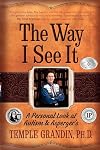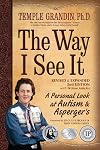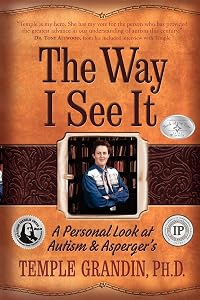
The Way I See It: A Personal Look at Autism & Asperger's
by Temple Grandin
On This Page
Description
Grandin offers helpful do's and don'ts, practical strategies, and try-it-now tips, all based on her "insider" perspective and a great deal of research.Tags
Recommendations


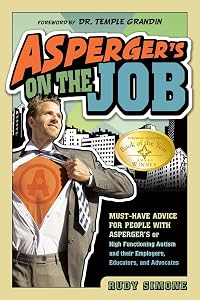
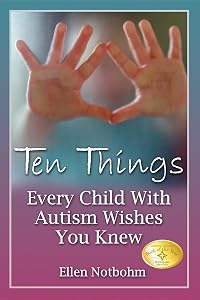
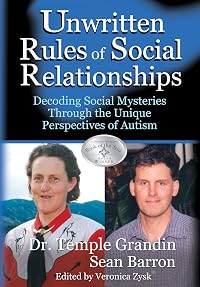
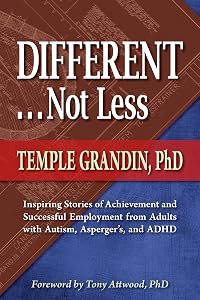







Member Reviews
I loved The Way I See It by Temple Grandin. Autistic herself, Dr. Grandin explains in simple terms the experience of those on the spectrum. For many such individuals, because of their sensitivity, sensory and auditory events can disrupt their lives and evoke extreme reactions. For example, fluorescent light flickers that "neurotypicals" don't notice, bells or music for changing classes, the harsh rub of fabric on skin, can be so profoundly and painfully experienced that avoidance seems the only recourse. Even if tolerated, learning can be hindered and for some impossible unless sensory conditions are changed or the individual appropriately accommodated.
Dr. Grandin is an engagingly straightforward writer, and extremely knowledgeable in show more this area. At the same time, much of what she has to say comes across powerfully because it is grounded in her personal experience. She is adamant that those on the spectrum can learn to have satisfying lives, even the severely autistic. Early intervention is critical: "Doing nothing is the worst thing you can do. It will take less practice to change an inappropriate behavior at age two {than the} same behavior at age seven." Furthermore, "Most individuals on the spectrum have areas of strength that can be nurtured and developed into marketable employment skills."
In her case, her youthful interest in cattle chutes eventually developed into expertise in designing livestock environments. That's touched on in this book, but her experiences with animals are discussed more fully elsewhere in her writings. This book instead is a practical resource for those on the spectrum or those responsible for someone who is, and a clear-eyed view into the ASD world for everyone else.
Routine and repetition are important. "Consistency is calming, surprises produce anxiety." She insists that those with ASD need to learn "the rules and {how to} act in socially appropriate ways," even though that often does not come easily. She points out that people like her learn from the bottom up, from specifics to generalities, not the top down, generalities to specifics, as neurotypicals do. An example: if a neurotypical is taught to look both ways before carefully and safely crossing a street, he or she will apply that general idea to all the specific streets out there. It's different, according to Grandin, for someone on the spectrum. If taught near their home to look both ways before carefully and safely crossing the street, those with ASD may well apply it only to that street by their home, and cross dangerously elsewhere. Grandin explains that it will often be necessary to patiently teach them the same lesson at several streets, e.g. the street by their school and the street by grandma's, so that they have multiple specific examples to build on, and then to work patiently with them to generalize the idea.
She also emphasizes the benefits of high functioning autism, and believes many of our great talents and geniuses, like Einstein, are (or were) on the spectrum. As to those with Aspberger's Syndrome, "Aspies have great memories, pay attention to details, are persistent, focused, and love structure." “Preventing severe autism would be a worthy goal, but preventing mild autism and Asperger’s would be a grave mistake… {our} world would lose many creative people who have made the world a much more interesting place.” She is humorously skeptical of neurotypicals who are adept at socializing but little more:
“What would happen if the autism gene was eliminated from the gene pool?
You would have a bunch of people standing around in a cave, chatting and socializing and not getting anything done.”
Despite her academic achievements and honors, Dr. Grandin has a practical, common sense point of view, and that, combined with her flashes of humor, makes for exceptionally satisfying reading. The only place where it dragged a bit for me was in the discussion of effective complementary use of drugs, but others no doubt will find that section informative, too, Anyone interested in the workings of the mind and this particular disorder should enjoy this book. In one of her TED talks on Youtube, she's very funny about how Silicon Valley is filled with techies on the spectrum, but at the same time she pushes that we should be grooming many more with ASD for such jobs. This is a remarkable book by an impressive woman. Five stars. show less
Dr. Grandin is an engagingly straightforward writer, and extremely knowledgeable in show more this area. At the same time, much of what she has to say comes across powerfully because it is grounded in her personal experience. She is adamant that those on the spectrum can learn to have satisfying lives, even the severely autistic. Early intervention is critical: "Doing nothing is the worst thing you can do. It will take less practice to change an inappropriate behavior at age two {than the} same behavior at age seven." Furthermore, "Most individuals on the spectrum have areas of strength that can be nurtured and developed into marketable employment skills."
In her case, her youthful interest in cattle chutes eventually developed into expertise in designing livestock environments. That's touched on in this book, but her experiences with animals are discussed more fully elsewhere in her writings. This book instead is a practical resource for those on the spectrum or those responsible for someone who is, and a clear-eyed view into the ASD world for everyone else.
Routine and repetition are important. "Consistency is calming, surprises produce anxiety." She insists that those with ASD need to learn "the rules and {how to} act in socially appropriate ways," even though that often does not come easily. She points out that people like her learn from the bottom up, from specifics to generalities, not the top down, generalities to specifics, as neurotypicals do. An example: if a neurotypical is taught to look both ways before carefully and safely crossing a street, he or she will apply that general idea to all the specific streets out there. It's different, according to Grandin, for someone on the spectrum. If taught near their home to look both ways before carefully and safely crossing the street, those with ASD may well apply it only to that street by their home, and cross dangerously elsewhere. Grandin explains that it will often be necessary to patiently teach them the same lesson at several streets, e.g. the street by their school and the street by grandma's, so that they have multiple specific examples to build on, and then to work patiently with them to generalize the idea.
She also emphasizes the benefits of high functioning autism, and believes many of our great talents and geniuses, like Einstein, are (or were) on the spectrum. As to those with Aspberger's Syndrome, "Aspies have great memories, pay attention to details, are persistent, focused, and love structure." “Preventing severe autism would be a worthy goal, but preventing mild autism and Asperger’s would be a grave mistake… {our} world would lose many creative people who have made the world a much more interesting place.” She is humorously skeptical of neurotypicals who are adept at socializing but little more:
“What would happen if the autism gene was eliminated from the gene pool?
You would have a bunch of people standing around in a cave, chatting and socializing and not getting anything done.”
Despite her academic achievements and honors, Dr. Grandin has a practical, common sense point of view, and that, combined with her flashes of humor, makes for exceptionally satisfying reading. The only place where it dragged a bit for me was in the discussion of effective complementary use of drugs, but others no doubt will find that section informative, too, Anyone interested in the workings of the mind and this particular disorder should enjoy this book. In one of her TED talks on Youtube, she's very funny about how Silicon Valley is filled with techies on the spectrum, but at the same time she pushes that we should be grooming many more with ASD for such jobs. This is a remarkable book by an impressive woman. Five stars. show less
At first I thought I'd made a mistake. I was looking for and expecting a more personal account of life on the autistic spectrum. However, this "how to" manual covers so much ground so effectively and accessibly that I answered all my questions and discovered questions I hadn't thought to ask. Temple is particularly effective in discussing the neurological aspects of autism; I had never thought to be interested in neurology but I am now. I had a sneaky feeling before I started the book that autism / Asberger's has a connection with "high sensitivity". I'm now convinced of it. I like the straightforward approach that clearly differentiates fact from opinion and which provides an interesting question about the nature of intelligence. To show more what extent do our brains have to make a trade-off between technical and emotional connectedness? I may not have understood correctly, but it seems that there are a series of continuums or aspects of brain functioning that come into play in the way white matter makes connections between the grey matter centres of the brain. If we tick enough boxes or if we tick a few at the more "severe" end, we get a label. Otherwise, we don't. Temple doesn't see a clear distinction: autistic / non-autistic, and, from my understanding of this book, I no longer do either. This is a fascinating insight into what makes us who we are. show less
What a good book! This is a collection of essays, well organized into relevant chapters that present Temple Grandin’s way of viewing individuals along the autism spectrum. She herself is autistic so, in this volume, she explores autism and Asperger’s syndrome from the inside out.
Her book can be used in many ways. It can be read cover to cover, as I did, to get as much information out of it as I could. It certainly is useful as a parental resource to be referred to chapter by chapter, depending on the information needed at the time. In addition, it would be effective comfort to anyone on the autistic spectrum as an aid to begin to view oneself by his ability rather than the disability that others assume him to have.
This book may show more seem a tiny bit repetitive, but that’s only because this is not a straight non-fiction book but rather many Temple Grandin articles which had previously be published elsewhere. What I liked most about this book was the advice that Grandin gave to parents, mentors, and teachers. Much of that advice could be useful advice for dealing with any child who is “different” from those to whom she refers as “neurotypical”. Down to earth and practical, this is a must read for anyone who wishes to learn more about autism spectrum disorders in general or simply learn how an autistic individual sees the world. show less
Her book can be used in many ways. It can be read cover to cover, as I did, to get as much information out of it as I could. It certainly is useful as a parental resource to be referred to chapter by chapter, depending on the information needed at the time. In addition, it would be effective comfort to anyone on the autistic spectrum as an aid to begin to view oneself by his ability rather than the disability that others assume him to have.
This book may show more seem a tiny bit repetitive, but that’s only because this is not a straight non-fiction book but rather many Temple Grandin articles which had previously be published elsewhere. What I liked most about this book was the advice that Grandin gave to parents, mentors, and teachers. Much of that advice could be useful advice for dealing with any child who is “different” from those to whom she refers as “neurotypical”. Down to earth and practical, this is a must read for anyone who wishes to learn more about autism spectrum disorders in general or simply learn how an autistic individual sees the world. show less
The Way I See It, Revised and Expanded 2nd Edition: A Personal Look at Autism and Asperger's. I recommend reading either Grandin's autobiography or other biographies (my review) before starting this one, just so you can see what Grandin has overcome and what she has experienced. It will also give you details on the personal anecdotes she briefly shares on these pages. Those experiences color her observations and advice.
I say this book is a must-read for anyone with a child on the autism spectrum. It is almost a how-to guide or an explanation from an insider into "why" a child may do certain things. I found it a more succinct and helpful primer than two other books I've read with actual methods of prescribed therapy by practitioners. show more Good ideas and observations. Perhaps the book's greatest value is that Grandin has spoken to a lot of other people on the autism spectrum, learned some of how they think and behave, and is able to translate that for us due to her own perspective. She's also done a lot of reading, which helps point the reader to many recent sources of research.
I give it 4 stars out of 5. show less
I say this book is a must-read for anyone with a child on the autism spectrum. It is almost a how-to guide or an explanation from an insider into "why" a child may do certain things. I found it a more succinct and helpful primer than two other books I've read with actual methods of prescribed therapy by practitioners. show more Good ideas and observations. Perhaps the book's greatest value is that Grandin has spoken to a lot of other people on the autism spectrum, learned some of how they think and behave, and is able to translate that for us due to her own perspective. She's also done a lot of reading, which helps point the reader to many recent sources of research.
I give it 4 stars out of 5. show less
Because I have 3 grandchildren with autism, I read all that I can on the subject. This book was invaluable in showing that, as they become adults, they can fit into society if treated early enough. the author, Temple Grandin, has lived with this illness since birth. This edition is revised and expanded and because of that 14 additional articles have been included. "The Role of Genetics and Environmental Factors in Causing Autism, Understanding the Mind of a Nonverbal Person with Autism, Finding Mentors and Appropriate Colleges" are just some of the articles that will enlighten those who need such information.
Ms. Grandin is an inspiration to families and readers, for she gives hope to those who felt that autism was the end of a healthy show more life....the author shows that it is only the beginning of living with something that isn't cured, but understood. She offers helpful strategies and try-it-now tips offered from her perspective as she lived and researched autism. Explaining how and why people with autism think differently was an eye opener for me and I wished as I read more and more chapters, that I had known about this book as my first grandson was diagnosed. His great grandmother,knowing nothing about autism, would say "He just needs spanked" because she thought he was misbehaving. Little did we know that he suffered with his own internal lack of expressing himself, and would become unpredictable in his behaviors.. With no way to speak and explain, these youngsters suffer from society until more research is done and all of us understand more and more of what they are saying in their way of not speaking.
I heartily recommend this book to anyone with autism in the family, or wanting to understand autism better to be able to help those who need us to listen to them. Ms. Grandin , who had an HBO movie based on her life, received 7 Emmys, a Golden Globe and a Screen Actors Guild Award. Well-deserved and worthy of the awards, the author lived a life that most of us can only read about. This remarkable book is the place to start. show less
Ms. Grandin is an inspiration to families and readers, for she gives hope to those who felt that autism was the end of a healthy show more life....the author shows that it is only the beginning of living with something that isn't cured, but understood. She offers helpful strategies and try-it-now tips offered from her perspective as she lived and researched autism. Explaining how and why people with autism think differently was an eye opener for me and I wished as I read more and more chapters, that I had known about this book as my first grandson was diagnosed. His great grandmother,knowing nothing about autism, would say "He just needs spanked" because she thought he was misbehaving. Little did we know that he suffered with his own internal lack of expressing himself, and would become unpredictable in his behaviors.. With no way to speak and explain, these youngsters suffer from society until more research is done and all of us understand more and more of what they are saying in their way of not speaking.
I heartily recommend this book to anyone with autism in the family, or wanting to understand autism better to be able to help those who need us to listen to them. Ms. Grandin , who had an HBO movie based on her life, received 7 Emmys, a Golden Globe and a Screen Actors Guild Award. Well-deserved and worthy of the awards, the author lived a life that most of us can only read about. This remarkable book is the place to start. show less
Temple Grandin, one of the most famous and accomplished individuals on the autism spectrum, touches on real life everyday experiences in this revised and expanded edition. The book is a compilation of articles she has written for her regular column in Autism Asperger's Digest magazine over the last eleven years. Grouped by theme in this book, they cover diagnosis and intervention; teaching and education; sensory issues; understanding nonverbal autism; behaviour issues; social functioning; medication and biomedical therapy; cognition and brain research; and adult issues and employment. Grandin offers helpful do's and don'ts, practical strategies, and tips, based on her "insider" perspective, and research. The book also includes a show more transcript of an interview that took place between Dr Tony Attwood and Grandin in 1999. show less
The Way I See It is Temple Grandin’s newest autism book. As an autistic patient who has adjusted to the world of the neurotypicals (i.e., the “normal” world) and made a successful career, Grandin has a unique point of view to offer. The book begins with diagnosis and early intervention, and ends with adult issues and employment-related topics. She gives clear, concise, pragmatic advice for parents with children on the autism spectrum. Grandin also explains why and where certain autistic behaviors are likely to occur, and what can be done to adjust either the child’s environment or their daily routines to help them cope.
The majority of the articles are very short, only a few pages. The book is consequently very easy to read in show more small doses. There is also enough repetition of ideas and tips throughout the book to allow for skipping from an article to another without losing anything vital. Recommended both for caregivers and people who have frequent contact with autism spectrum individuals.
EJ 04/2011 show less
The majority of the articles are very short, only a few pages. The book is consequently very easy to read in show more small doses. There is also enough repetition of ideas and tips throughout the book to allow for skipping from an article to another without losing anything vital. Recommended both for caregivers and people who have frequent contact with autism spectrum individuals.
EJ 04/2011 show less
Members
- Recently Added By
Author Information

46+ Works 9,542 Members
Temple Grandin was born August 29, 1947 in Boston, Massachusetts. She is a bestselling author, doctor and professor of Animal Science at Colorado State University, and leader of both the animal welfare and autism advocacy movements. Grandin was diagnosed with autism in 1950. She was immediately placed in a structured nursery, had speech therapy, show more and had a nanny spend hours playing turn-based games with her. At the age of four, she began talking and her progress continued. In 1970, Grandin received her bachelor's degree in psychology from Franklin Pierce College in Rindge, New Hampshire. She received her master's degree in animal science from Arizona State University in 1975, and in 1989, she received a Ph.D. in animal science from the University of Illinois at Urbana-Champaign. Grandin, being a high-functioning autistic, is widely-known for her work in autism advocacy. She has been featured on major televisions programs such as the Today Show and ABC's Primetime Live. She has also been featured in Time magazine, People magazine, Forbes, and the New York Times. Grandin was the subject of the Horizon documentary "The Woman Who Thinks Like a Cow" and was described by Oliver Sacks in the title of his narrative book: An Anthropologist on Mars. Grandin's bestselling book: Thinking in Pictures is scheduled to be released as an HBO film in 2009. Grandin's Animals in Translation and Animals Make Us Human have also been bestsellers. Grandin lives in Colorado, but has speaking engagements on autism and cattle handling around the world. show less
Common Knowledge
- Original publication date
- 2008
- People/Characters
- Temple Grandin
- Dedication
- I dedicate this book to all individuals on the autism spectrum.
- First words
- Autism is a developmental disorder, typically diagnosed during the first three years of life.
- Last words
- (Click to show. Warning: May contain spoilers.)Be realistic with expectations, but don't overlook the potential for genius that maya be quietly waiting hiding inside, just waiting for an opportunity to express itself.
- Publisher's editor
- Veronica Zysk
Classifications
- Genres
- Nonfiction, General Nonfiction, Biography & Memoir
- DDC/MDS
- 616.85882 — Applied science & technology Medicine & health Diseases, Allergies, Skin Conditions Nervous Disorders: Autism, Anorexia, OCD Miscellaneous Personality, sexual, gender-identity, impulse-control, factitious, developmental, learning disorders; violent behavior; mental retardation Mental retardation; developmental and learning disorders Autism
- LCC
- RC553 .A88 .G743 — Medicine Internal medicine Internal medicine Neurosciences. Biological psychiatry. Neuropsychiatry Psychiatry Psychopathology
- BISAC
Statistics
- Members
- 414
- Popularity
- 74,753
- Reviews
- 8
- Rating
- (3.97)
- Languages
- English, Spanish
- Media
- Paper, Audiobook, Ebook
- ISBNs
- 20
- UPCs
- 1
- ASINs
- 1