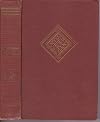
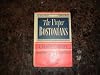
The Proper Bostonians
by Cleveland Amory, Cleveland Amory (Author)
On This Page
Tags
Recommendations
























Member Reviews
This is quite the story about the origins and perseverance of WASP Bostonian elite – at least from the vantage point of six decades back. Often hilarious though not necessarily scathing; I suspect it provoked much societal consternation towards the author (himself carrying one of “The” family names). He apparently ended up writing books about his cat, contributing to Parade and was a fixture on the Today Show so one might view this as a cautionary tale about pissing off a whole segment of your town’s populace, at least if you disdain NBC’s morning offering as much as I do.
The machinations of these gentlemen and gentlewomen, according to Amory, seem simultaneously predictable and bizarre. They’re one of those mysteries eaten show more by an enigma wrapped inside a riddle packaged within a fortune cookie or however that matryoshka-like reference goes. Amory covers seemingly all facets; their munificent charity offset by a notable stinginess towards retailers and tip jars; Their strictures on “good breeding” by selective marriage which often resulted in a disturbing union of first cousins – Medici-style; Their unrelenting love and corporate control of Harvard which they pronounce Hah-vud (not of Southie origin as I long suspected).
Lest you be confused, these “right families” are not descendents of the hard-scrabble, persecution-relief Mayflowerites. These Grandfathers came here strictly to make a buck and, after the early exploits of one John Hancock, they learned to protect said buck from any threat of profligacy by subsequent generations. Thus they’re a highly conservative, provincial group that started with a few successful sea merchants before the merchant paradigm shifted toward the wrong sort of commerce (no Jordan Marsh department store magnates or Joe Kennedy rum runners needed apply . The “right” family door was bolted shut long before).
Amory obviously takes an irreverent approach but some level of sincerity and fairness predominates. At certain points I experienced something of an admiration for certain aspects of the Brahmin lifestyle (the gents always walked to their office, the ladies disregard repulsive “New York” fashions of the day, Mrs. Jack Gardner drank beer instead of tea), but then the author inevitably transitions to the obnoxiously arcane (total insistence that Boston is the hub of the world – “Why should I travel when I’m already here?”; intense snobbery as regards the rabble – such as Mayor Curly, those suspect new millionaires, and non-Roosevelt U.S. Presidents; insane anecdotes – Sarah Palfrey getting crap from her sisters for exposing her seventy-five year-old ankles to “the peering eyes of Harvard boys” while biking). This is quite the story!
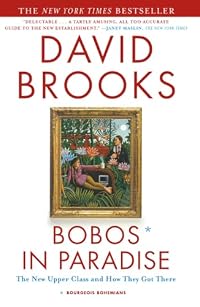
Generally this seems to represent an attempt by Amory to explain how this particular and peculiar segment of the population has managed to sustain it’s livelihood through circumspect financial policy and extreme selectivity in matters of breeding despite general societal transformations and occasional aberrations such as a debutante moving to Hollywood or an old fart marrying his secretary. This was written just after the Second World War so many conspicuous upheavals – Rock-n-Roll, May 1968, heinous Taco Bell commercials – must have chipped away at their Ye-Olde-WASP mores over the intervening decades. As a Boston/Brookline resident for a few years I honestly don’t know how pervasive, if it all, these families and their society are at this stage. The cleanest cut group that I associate with are, at best, BoBos and I don’t check the Society Pages, Snob Blogs, or whatever may exist at this point. There doesn’t seem to be much attention directed towards Cabot, Lowell, nor Parker descendants but it seems apparent that even in 1947 they were already something of an insignificant presence in Boston (and certainly the rest of the world stopped caring many decades earlier). If they were defined at that point by Fridays at the Symphony, coming-out parties, and a handful of elite private schools then I doubt 98% of Boston gave a damn even then. Conversely some of the annoying social-stratification attitudes seem to have been adopted by any number of groups that would by no means figure highly in the First Family hierarchy (other older cities, of course, are afflicted with such issues. In St Louis one would be fortunate to go a few weeks without receiving an inquiry regarding which High School they attended – the local social/economic gauge). Other writings position the provincial Brahmin influence as the main reason New York – which, as it developed, lacked such an individual power segment – gained dominance during the nineteenth century. Amory also alludes to this at points, but overall I think this was his earnest attempt to simply expose his people to the multitude – warts and all – in order to humanize a group that must have seemed otherworldly. show less
The machinations of these gentlemen and gentlewomen, according to Amory, seem simultaneously predictable and bizarre. They’re one of those mysteries eaten show more by an enigma wrapped inside a riddle packaged within a fortune cookie or however that matryoshka-like reference goes. Amory covers seemingly all facets; their munificent charity offset by a notable stinginess towards retailers and tip jars; Their strictures on “good breeding” by selective marriage which often resulted in a disturbing union of first cousins – Medici-style; Their unrelenting love and corporate control of Harvard which they pronounce Hah-vud (not of Southie origin as I long suspected).
Lest you be confused, these “right families” are not descendents of the hard-scrabble, persecution-relief Mayflowerites. These Grandfathers came here strictly to make a buck and, after the early exploits of one John Hancock, they learned to protect said buck from any threat of profligacy by subsequent generations. Thus they’re a highly conservative, provincial group that started with a few successful sea merchants before the merchant paradigm shifted toward the wrong sort of commerce (no Jordan Marsh department store magnates or Joe Kennedy rum runners needed apply . The “right” family door was bolted shut long before).
Amory obviously takes an irreverent approach but some level of sincerity and fairness predominates. At certain points I experienced something of an admiration for certain aspects of the Brahmin lifestyle (the gents always walked to their office, the ladies disregard repulsive “New York” fashions of the day, Mrs. Jack Gardner drank beer instead of tea), but then the author inevitably transitions to the obnoxiously arcane (total insistence that Boston is the hub of the world – “Why should I travel when I’m already here?”; intense snobbery as regards the rabble – such as Mayor Curly, those suspect new millionaires, and non-Roosevelt U.S. Presidents; insane anecdotes – Sarah Palfrey getting crap from her sisters for exposing her seventy-five year-old ankles to “the peering eyes of Harvard boys” while biking). This is quite the story!
Generally this seems to represent an attempt by Amory to explain how this particular and peculiar segment of the population has managed to sustain it’s livelihood through circumspect financial policy and extreme selectivity in matters of breeding despite general societal transformations and occasional aberrations such as a debutante moving to Hollywood or an old fart marrying his secretary. This was written just after the Second World War so many conspicuous upheavals – Rock-n-Roll, May 1968, heinous Taco Bell commercials – must have chipped away at their Ye-Olde-WASP mores over the intervening decades. As a Boston/Brookline resident for a few years I honestly don’t know how pervasive, if it all, these families and their society are at this stage. The cleanest cut group that I associate with are, at best, BoBos and I don’t check the Society Pages, Snob Blogs, or whatever may exist at this point. There doesn’t seem to be much attention directed towards Cabot, Lowell, nor Parker descendants but it seems apparent that even in 1947 they were already something of an insignificant presence in Boston (and certainly the rest of the world stopped caring many decades earlier). If they were defined at that point by Fridays at the Symphony, coming-out parties, and a handful of elite private schools then I doubt 98% of Boston gave a damn even then. Conversely some of the annoying social-stratification attitudes seem to have been adopted by any number of groups that would by no means figure highly in the First Family hierarchy (other older cities, of course, are afflicted with such issues. In St Louis one would be fortunate to go a few weeks without receiving an inquiry regarding which High School they attended – the local social/economic gauge). Other writings position the provincial Brahmin influence as the main reason New York – which, as it developed, lacked such an individual power segment – gained dominance during the nineteenth century. Amory also alludes to this at points, but overall I think this was his earnest attempt to simply expose his people to the multitude – warts and all – in order to humanize a group that must have seemed otherworldly. show less
witty, final word on Boston
Ratings
Members
- Recently Added By
Lists

A Boston Reading List
120 works; 10 members
Author Information

28+ Works 3,567 Members
Cleveland Amory is a humorist and humanitarian especially known for his books about animals and his animal advocacy. Amory was born in 1917 into a prominent New England family. Amory attended Harvard where he was president of the Harvard Crimson. Upon graduation, Amory became the youngest editor ever of The Saturday Evening Post. He served in Army show more Intelligence in World War II and soon after the war wrote a trilogy of social history studies, including The Proper Bostonians, which is still in print 50 years later. He also wrote The Last Resorts and Who Killed Society? Amory was social commentator of the Today Show and chief critic of the TV Guide from 1963 to 1976. He wrote a weekly column for the Saturday Review and delivered a daily radio essay titled Curmudgeon at Large. Amory became senior contributing editor of Parade magazine in 1980. In 1974 he wrote Man Kind? Our Incredible War on Wildlife, one of a few books ever to be awarded an editorial in The New York Times. This book inspired The Guns of Autumn, a CBS documentary on hunting. His books on cats include The Cat Who Came for Christmas, The Cat and the Curmudgeon, and The Best Cat Ever. In 1996 an anthology, Cat Tales: Classic Stories from Favorite Writers, joined his other cat books. Ranch of Dreams, published in 1997, tells the story of Black Beauty Ranch, a sanctuary and shelter for animals developed in East Texas by the Fund for Animals, which Amory founded in 1967. Amory lives in New York. He visits Black Beauty Ranch often and continues to be active on behalf of animals. (Bowker Author Biography) show less
Awards and Honors
Distinctions
Classifications
- Genres
- Nonfiction, History, General Nonfiction
- DDC/MDS
- 917.4461 — History & geography Geography & travel Geography of and travel in North America Northeastern U.S. Massachusetts Suffolk County Boston
- LCC
- F73.37 .A5 — Local History of the United States, Canada and Latin America United States local history Massachusetts
Statistics
- Members
- 165
- Popularity
- 197,790
- Reviews
- 2
- Rating
- (4.20)
- Languages
- English
- Media
- Paper
- ISBNs
- 2
- ASINs
- 15