On This Page
Description
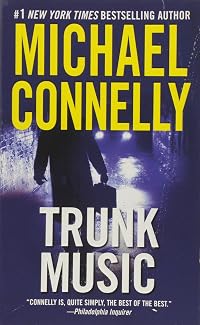
Back on the job after an involuntary leave of absence, LAPD homicide detective Harry Bosch is ready for a challenge — but a murderous Las Vegas crime ring might prove to be more than he bargained for.It starts with the body of a Hollywood producer in the trunk of a Rolls-Royce, shot twice in the head at close range - what looks like "trunk music," a Mafia hit. But the LAPD's organized crime unit is curiously uninterested, and when Harry follows a trail of gambling debts to Las Vegas, the show more case suddenly becomes more complex - and much more personal.
A rekindled romance with an old girlfriend opens new perspectives on the murder, and he begins to glimpse a shocking triangle of corruption and collusion. Yanked off the case, Harry himself is soon the one being investigated. But only a bullet can stop Harry when he's searching for the truth . . . show less
Tags
Recommendations



Member Reviews
The more I move forward with this series, the more I’m glad that I started reading it propelled by my enjoyment of the TV show it inspired: not only it offers a welcome digression from a steady “diet” of science fiction and fantasy, therefore helping me avoid reader fatigue, it also showcases an engaging character whose personal journey is still ongoing as he deals with interesting murder cases, the complex social microcosm of a big city like Los Angeles and the even more convoluted political ramifications between law enforcement agencies.
Returning to work after the compulsory leave of absence described in the previous book, Harry Bosch is eager to go back to solving homicides, and the first one he’s called to investigate looks show more like a mob hit: a body is found in the trunk of an abandoned Rolls Royce, and once the victim’s identity is revealed (a small-time producer of porn movies with a side occupation as a money launderer) everything seems to point toward organized crime. Some details, however, don’t add up and the investigation leads Bosch and colleagues along several paths, both in L.A. and in Las Vegas, where the victim was a frequent visitor: it’s here that the detective makes an unexpected encounter with someone from his past, a chance meeting that is fraught with uncomfortable memories and unrepressed emotions. As the hunt for the killer becomes more complicated Bosch faces a web of misdirections and red herrings - as does the reader - but nothing, not even a false accusation of having planted evidence, will distract him from following his leads with the usual dogged determination, until he solves the case.
In my review of the previous book in the series I spoke of a turning point for the main character, and here the differences in personality and approach to situations are indeed remarkable: Harry Bosch is still relentless in his pursuit of the truth, and he’s still prone to ignoring the rules when they clash with his methods, but while in the past he might have looked possessed by an inner darkness, now he’s more at peace with himself and this attitude reflects on the way he deals with people. It’s possible that having finally solved his mother’s murder he gave himself the permission to be more human, to be happy and to reach out to other people: this new approach is evident in his relationship with his old-time partner Edgar and with the new one assigned to the team, Kiz Rider, who is a brilliant, on-the-rise detective. Rider, and Lieutenant Grace Billets, Bosch’s new chief, are welcome additions to a story that was begging for a few female figures of substance: in particular I was happy for the arrival of Billets because I enjoyed her TV character very much, and because she marks a huge difference from the previous commander, since she is stern and tough but also knows how to give some slack to her detectives when it’s necessary to get things done.
While this “new” Bosch still indulges in his lone-wolf attitude at times, here in Trunk Music we see how he’s able to work with a team - of which he has been given command with a show of faith in his skills as a coordinator - and to ask for the cooperation of other people instead of getting it literally at gunpoint as he used to do in the past: it’s as if he’s been trying to rebuild himself, just as he’s now rebuilding the house that was wrecked by the earthquake in the previous book, and the parallel about new beginnings extends also to his private life, where the chance encounter I mentioned before leads to a momentous change that sees him involved in a stable relationship. One of the reasons I’m enjoying this series so far is Connelly’s ability of showing his character’s evolution through the experiences he deals with: in this book he faces his own feelings for a woman from his past and comes to admit his vulnerability where she is concerned, but at the same time he’s able to avoid being distracted by those same feelings in his search for the truth. What comes out is a more rounded - and more human - character than the one presented at the beginning of the series, and makes him more relatable and sympathetic.
Of course the investigative parts of the story are no less intriguing than the characters peopling it: the old-fashioned detective activity is still present, of course, with witness questioning, search for connections and so forth, but some details of the forensic angle start to come into play more than they did before - which never fails to intrigue me because I’m totally fascinated by the scientific side of police work. And in this particular case there are several clues that seem marginal at first, only to be later revealed as pivotal in the solution of the case: nothing is left to chance here, there are no hanging threads that end up nowhere, there is instead a fascinating organization at the roots of these stories that leads the reader, alongside the detectives, toward the final revelation and the surprises awaiting there, because there are no foregone conclusions here and the sustained, never slacking pace of the story carries you from step to step while keeping you totally immersed in its progress.
An important consideration, that became more noticeable in Trunk Music, is how the books and the TV series they inspired are similar but never the same: since I encountered these stories in their televised form first, I thought that the “excitement factor” might be diminished by my foreknowledge of the way they went, but this fifth book confirmed how the TV scripts changed many of the pieces on the playing field, allowing me to enjoy the books because of the marked differences between the two mediums. Which leads me to believe that I have still many surprises awaiting me down the road… show less
Returning to work after the compulsory leave of absence described in the previous book, Harry Bosch is eager to go back to solving homicides, and the first one he’s called to investigate looks show more like a mob hit: a body is found in the trunk of an abandoned Rolls Royce, and once the victim’s identity is revealed (a small-time producer of porn movies with a side occupation as a money launderer) everything seems to point toward organized crime. Some details, however, don’t add up and the investigation leads Bosch and colleagues along several paths, both in L.A. and in Las Vegas, where the victim was a frequent visitor: it’s here that the detective makes an unexpected encounter with someone from his past, a chance meeting that is fraught with uncomfortable memories and unrepressed emotions. As the hunt for the killer becomes more complicated Bosch faces a web of misdirections and red herrings - as does the reader - but nothing, not even a false accusation of having planted evidence, will distract him from following his leads with the usual dogged determination, until he solves the case.
In my review of the previous book in the series I spoke of a turning point for the main character, and here the differences in personality and approach to situations are indeed remarkable: Harry Bosch is still relentless in his pursuit of the truth, and he’s still prone to ignoring the rules when they clash with his methods, but while in the past he might have looked possessed by an inner darkness, now he’s more at peace with himself and this attitude reflects on the way he deals with people. It’s possible that having finally solved his mother’s murder he gave himself the permission to be more human, to be happy and to reach out to other people: this new approach is evident in his relationship with his old-time partner Edgar and with the new one assigned to the team, Kiz Rider, who is a brilliant, on-the-rise detective. Rider, and Lieutenant Grace Billets, Bosch’s new chief, are welcome additions to a story that was begging for a few female figures of substance: in particular I was happy for the arrival of Billets because I enjoyed her TV character very much, and because she marks a huge difference from the previous commander, since she is stern and tough but also knows how to give some slack to her detectives when it’s necessary to get things done.
While this “new” Bosch still indulges in his lone-wolf attitude at times, here in Trunk Music we see how he’s able to work with a team - of which he has been given command with a show of faith in his skills as a coordinator - and to ask for the cooperation of other people instead of getting it literally at gunpoint as he used to do in the past: it’s as if he’s been trying to rebuild himself, just as he’s now rebuilding the house that was wrecked by the earthquake in the previous book, and the parallel about new beginnings extends also to his private life, where the chance encounter I mentioned before leads to a momentous change that sees him involved in a stable relationship. One of the reasons I’m enjoying this series so far is Connelly’s ability of showing his character’s evolution through the experiences he deals with: in this book he faces his own feelings for a woman from his past and comes to admit his vulnerability where she is concerned, but at the same time he’s able to avoid being distracted by those same feelings in his search for the truth. What comes out is a more rounded - and more human - character than the one presented at the beginning of the series, and makes him more relatable and sympathetic.
Of course the investigative parts of the story are no less intriguing than the characters peopling it: the old-fashioned detective activity is still present, of course, with witness questioning, search for connections and so forth, but some details of the forensic angle start to come into play more than they did before - which never fails to intrigue me because I’m totally fascinated by the scientific side of police work. And in this particular case there are several clues that seem marginal at first, only to be later revealed as pivotal in the solution of the case: nothing is left to chance here, there are no hanging threads that end up nowhere, there is instead a fascinating organization at the roots of these stories that leads the reader, alongside the detectives, toward the final revelation and the surprises awaiting there, because there are no foregone conclusions here and the sustained, never slacking pace of the story carries you from step to step while keeping you totally immersed in its progress.
An important consideration, that became more noticeable in Trunk Music, is how the books and the TV series they inspired are similar but never the same: since I encountered these stories in their televised form first, I thought that the “excitement factor” might be diminished by my foreknowledge of the way they went, but this fifth book confirmed how the TV scripts changed many of the pieces on the playing field, allowing me to enjoy the books because of the marked differences between the two mediums. Which leads me to believe that I have still many surprises awaiting me down the road… show less
Probably a 3.75. A good, complicated plot, good characterisation (not too cliched) and at least Bosch wasn't quite as obnoxious as in the previous book!
Might be the best of the Bosch series.
LAPD homicide detective Harry Bosch is lead on a case that's more than he bargained for. It starts with the body of a Hollywood producer in the trunk of a Rolls-Royce, shot twice in the head at close range - what looks like "trunk music," a Mafia hit. But the LAPD's organized crime unit is curiously uninterested, and when Harry follows a trail of gambling debts to Las Vegas, the case suddenly becomes more complex - and much more personal. A rekindled romance with an old girlfriend opens new perspectives on the murder and the corruption and collusion behind it. Yanked off the case, Harry himself is soon the one being investigated.
LAPD homicide detective Harry Bosch is lead on a case that's more than he bargained for. It starts with the body of a Hollywood producer in the trunk of a Rolls-Royce, shot twice in the head at close range - what looks like "trunk music," a Mafia hit. But the LAPD's organized crime unit is curiously uninterested, and when Harry follows a trail of gambling debts to Las Vegas, the case suddenly becomes more complex - and much more personal. A rekindled romance with an old girlfriend opens new perspectives on the murder and the corruption and collusion behind it. Yanked off the case, Harry himself is soon the one being investigated.
Harry has returned to the job after an involuntary leave of absence. His first case back is a little more than he bargained for. B-grade L.A. movie producer Tony Aliso is found shot twice in the head and stuffed into the trunk of his Rolls Royce – what looks like “trunk music,” a Mafia hit. Harry is not so sure and follows the money to Vegas. Tony had enemies, and the investigations quickly gives Harry his own share of them also, everyone from Vegas thugs to his own department's Internal Affairs, to Tony’s killers. Harry is not all hung up on his own issues, he’s instead concentrates on getting the job done. Even the involvement of a former love, Eleanor Wish, is only a sidelight. He’s not as sad or angry as he has been at show more times, which was a good change. I have always liked Harry, but sometimes he just needed to stop thinking so hard and get back to solving the case. Actually, the plot in this one was better than the characters. The ending is, as usual, exciting and of course unexpected. That's a Michael Connolly specialty. The clues were there, and how it all fell in place was simply well-done. show less
[[Michael Connelly]] is back to his best with this Harry Bosch story. Bosch catches a murder with a guy shot, execution style, and left in the trunk of his own car. The victim is involved in money laundering for some seedy Las Vegas fellas - so, mob hit, right. Nope, and it takes him some work to get back to the truth on this one. Eleanor Wish is back, from the first book; she and Bosch dance a bit before getting back to where they were when Bosch sent her up. The last installment was good, with Bosch in mandated therapy, but this one is great.
Highly Recommended!!!!!
5 bones!!!!!
Highly Recommended!!!!!
5 bones!!!!!
In the previous book, The Last Coyote, Harry Bosch was at war with the whole world. He was at war with his boss; he even gets suspended from the force and has to go for a psychiatric evaluation where he ends up at war with his therapist. He is at war with the housing inspector that is trying to condemn his house following an earthquake and he is at war with women as his current girlfriend leaves him. He is drinking too much and ends up at war with his past as he tries to understand what happened to his mother and why she was murdered 30 years ago. Harry starts The Last Coyote miserable and he ends the book miserable. So much so that he even leaves his beloved LA and goes to Florida to be with his new girlfriend.
Trunk Music is almost a show more polar opposite of The Last Coyote. Harry is back on the job; has even been given the position of Team Leader on the new murder he has been assigned; has a new boss that he respects; and meets an old girlfriend that he knows was the one he missed out on before. Early in the book, Harry even admits to himself that he is happy. He is still Harry and still does things the way Harry does things, but he is no longer miserable and at war with himself and everyone around him. Harry still uses violence in most situations and it usually ends up being destructive and counterproductive for what he is trying to accomplish. But in Trunk Music, Harry begins to be part of a team, work with his boss instead of against his boss, and his relationships with women go from feeling forced much of the time to being integrated into the overall story in a way that adds to the story instead of detracting from it. In fact, two of the most telling moments in the book happen in relationships with the two main female characters in the book.
At one point Harry is having a Harry-like moment when an FBI agent comes to pick up a box of evidence. Words are exchanged and Harry has the FBI agent's tie jerked up around his throat when the new boss, Lt. Grace Billets intervenes and tells Harry to sit down and she will handle the agent. Harry has trouble doing it, but does. After the agent leaves she turns to Harry and says,
"You don't know how to help yourself do you? Why don't you grow up and stop these pissing wars?" She didn't wait for his reply, because he didn't have one.
There are multiple times when the reader has thought the same thing as Harry has reacted in ways that ultimately may help to get the case solved but are excessive and even thuggish as he reacts to what is in front of him with abrasiveness and violence.
The second moment happens later in the book as Harry is talking on the phone with another FBI agent and when he hangs up his girlfriend asks him what the agent wanted:
“I guess to apologize.”
“That’s unusual; the bureau doesn’t usually apologize for anything.”
“It wasn’t an official call”.
“Oh. One of those macho male bonding calls.”
Bosch smiled because she was so right.
In almost every situation in previous books, Bosch was always leading with his chin. In this book there are moments like this when he slows down and what is happening has an opportunity to affect him. He actually feels something besides just anger, rage and guilt. But as is the case with so much of what Harry does, as he does begin to feel other feelings, he ends up being drawn to the woman who probably has as many problems as he does, who is as damaged as he is. Harry is better, but he is only a little better. He is happier but he is probably only happier for a short while. show less
Trunk Music is almost a show more polar opposite of The Last Coyote. Harry is back on the job; has even been given the position of Team Leader on the new murder he has been assigned; has a new boss that he respects; and meets an old girlfriend that he knows was the one he missed out on before. Early in the book, Harry even admits to himself that he is happy. He is still Harry and still does things the way Harry does things, but he is no longer miserable and at war with himself and everyone around him. Harry still uses violence in most situations and it usually ends up being destructive and counterproductive for what he is trying to accomplish. But in Trunk Music, Harry begins to be part of a team, work with his boss instead of against his boss, and his relationships with women go from feeling forced much of the time to being integrated into the overall story in a way that adds to the story instead of detracting from it. In fact, two of the most telling moments in the book happen in relationships with the two main female characters in the book.
At one point Harry is having a Harry-like moment when an FBI agent comes to pick up a box of evidence. Words are exchanged and Harry has the FBI agent's tie jerked up around his throat when the new boss, Lt. Grace Billets intervenes and tells Harry to sit down and she will handle the agent. Harry has trouble doing it, but does. After the agent leaves she turns to Harry and says,
"You don't know how to help yourself do you? Why don't you grow up and stop these pissing wars?" She didn't wait for his reply, because he didn't have one.
There are multiple times when the reader has thought the same thing as Harry has reacted in ways that ultimately may help to get the case solved but are excessive and even thuggish as he reacts to what is in front of him with abrasiveness and violence.
The second moment happens later in the book as Harry is talking on the phone with another FBI agent and when he hangs up his girlfriend asks him what the agent wanted:
“I guess to apologize.”
“That’s unusual; the bureau doesn’t usually apologize for anything.”
“It wasn’t an official call”.
“Oh. One of those macho male bonding calls.”
Bosch smiled because she was so right.
In almost every situation in previous books, Bosch was always leading with his chin. In this book there are moments like this when he slows down and what is happening has an opportunity to affect him. He actually feels something besides just anger, rage and guilt. But as is the case with so much of what Harry does, as he does begin to feel other feelings, he ends up being drawn to the woman who probably has as many problems as he does, who is as damaged as he is. Harry is better, but he is only a little better. He is happier but he is probably only happier for a short while. show less
As #5 in the Harry Bosch series, “Trunk Music” is another excellent contribution and every bit as good (if not better) than its predecessors. The title refers to a style of mob killings in which the victim is put into a car trunk before being riddled with bullets. The plot is intricate, with several false leads and red herrings. Organized crime is involved, along with soft core porn, Las Vegas gamblers, crooked cops, an undercover police operative, a philandering husband, a jealous wife, and a scramble for hidden millions. As always, Bosch is forced to buck authority in his search for the truth, his life and his job are both put at risk, and ultimately he prevails. He even “gets the girl” – that is, Eleanor Wish (for whom he show more falls) agrees to marry him. Experienced readers will know better than to assume that he lives happily ever after however – see #6 in the series.
Here’s a summary of the plot, one that leaves out some of the several complexities.The victim in this case is a Tony Aliso, a producer of trashy movies who likes to gamble in Las Vegas. Harry and his partners Edgar and Kizman determine that Aliso was laundering mob money, a fact of which someone had tipped off the IRS. And Harry finds that the LAPD had Aliso under video surveillance, without proper authorization. Harry discovers fingerprints on Aliso’s jacket that belong to Luke Goshen, a Las Vegas figure with mob ties, and finds the murder weapon in Goshen’s home. Harry brings him back to LA – only to find that Goshen is working undercover for the FBI. Meanwhile, Harry’s girlfriend Eleanor Wish has been kidnapped to put pressure on him, and he locates and rescues her.
The police try to put a stop to Harry’s investigation and to charge him with framing Aliso, and he’s forced to pursue the case unofficially. As it turns out. Aliso’s wife Veronica had Tony killed in a way to pin the blame on the Las Vegas mob; what’s more, she did so in league with a crooked copy named Powers with whom she was having an affair. Harry uses a clever plot to trap Powers – and the two miscreants turn on each other. The climax comes when the two show up at a bank where Tony supposedly had stashed his millions, one staked out by the police and the FBI – and Powers winds up dead. As for the money, it winds up in the hands of Veronica’s daughter Layla – and though Harry finds out, he decides to drop the matter.
All in all, I found this a satisfying, engrossing story, with a plot that kept me guessing throughout. Harry’s far from likeable – always brimming with barely controlled anger that sometimes erupts into unjustifiable violence. “Spenser” he’s not, that’s for sure. show less
Here’s a summary of the plot, one that leaves out some of the several complexities.
The police try to put a stop to Harry’s investigation and to charge him with framing Aliso, and he’s forced to pursue the case unofficially. As it turns out. Aliso’s wife Veronica had Tony killed in a way to pin the blame on the Las Vegas mob; what’s more, she did so in league with a crooked copy named Powers with whom she was having an affair. Harry uses a clever plot to trap Powers – and the two miscreants turn on each other. The climax comes when the two show up at a bank where Tony supposedly had stashed his millions, one staked out by the police and the FBI – and Powers winds up dead. As for the money, it winds up in the hands of Veronica’s daughter Layla – and though Harry finds out, he decides to drop the matter.
All in all, I found this a satisfying, engrossing story, with a plot that kept me guessing throughout. Harry’s far from likeable – always brimming with barely controlled anger that sometimes erupts into unjustifiable violence. “Spenser” he’s not, that’s for sure. show less
Members
- Recently Added By
Lists

Best Crime Fiction
262 works; 39 members

Crime and Mysteries to Read
746 works; 31 members

Mysteries and Thrillers
13 works; 6 members

Books Read in 2018
4,360 works; 110 members

Books Read in 2001
194 works; 4 members

Books - Connolly, Michael: Bosch
44 works; 1 member
Talk Discussions
Past Discussions
Chat in Book Discussion : Trunk Music by Michael Connelly (November 2024)
Author Information

160+ Works 154,697 Members
Michael Connelly was born in Philadelphia, Pennsylvania on July 21, 1956. He graduated from the University of Florida in 1980 where he majored in journalism and minored in creative writing. After graduation, he worked at newspapers in Daytona Beach and Fort Lauderdale, Florida, specializing in the crime beat. In 1986, he interviewed survivors of a show more plane crash with two other reporters and the magazine story subsequently written on the crash was on the short list for the Pulitzer Prize for feature writing. This story led to a job as a crime reporter for the Los Angeles Times. After three years there, he began writing his first novel. His first novel, The Black Echo, was published in 1992 and won the Edgar Award for best first novel. He is the author of the Harry Bosch series, the Jack McEvoy series, and the Mickey Haller series. He has won numerous awards including the Anthony Award, Macavity Award, Shamus Award, Dilys Award, Nero Award, Barry Award, Ridley Award, Maltese Falcon Award (Japan), .38 Caliber Award (France), Grand Prix Award (France), Premio Bancarella Award (Italy), and the Pepe Carvalho Award (Spain). (Bowker Author Biography) show less
Some Editions
Awards and Honors
Awards
Series


Belongs to Publisher Series
Work Relationships
Is contained in
The Closers / Chasing the Dime / The Brass Verdict / The Last Coyote / Trunk Music / City of Bones by Michael Connelly
The Black Echo / The Poet / Trunk Music / Angels Flight / The Closers / The Lincoln Lawyer by Michael Connelly
The Black Echo / The Black Ice / The Concrete Blonde / The Last Coyote / The Poet / Trunk Music / Blood Work / Angels Flight / Void Moon / A Darkness More Than Night / City of Bones / Lost Light / The Narrows / The Closers / The Lincoln Lawyer / Echo Park / The Overlook / The Brass Verdict / Nine Dragons / The Reversal by Michael Connelly
Common Knowledge
- Canonical title
- Trunk Music
- Original title
- Trunk Music
- Original publication date
- 1997
- People/Characters
- Hieronymus 'Harry' Bosch; Jerry Edgar; Kizmin 'Kiz' Rider; Grace 'Bullets' Billets; Art Donovan; Irvin Irving (show all 23); Eleanor D. Wish; Sally Salazar; Dominic 'Dom' Carbone; Anthony 'Tony' N. Aliso; Veronica Aliso (Jennifer Gilroy); Rhonda; Layla (Gretchen Alexander); Dorothy Alexander (Dorothy Gilroy); John Felton; John 'Gussie' Flanagan; Luke 'Lucky' Goshen; John 'Ivy' Iverson; Joey Marks (Joseph Marconi); Leon Fitzgerald; Matthew Gregson; John 'Sustain' Chastain; Roy Lindell
- Important places
- Los Angeles, California, USA; Las Vegas, Nevada, USA
- Related movies
- Season 2 of Bosch (2016): https://www.imdb.com/title/tt3502248/e... (2016)
- Dedication
- This is for my editor, Michael Pietsch
- First words
- As he drove along Mulholland Drive toward the Cahuenga Pass, Bosch began to hear the music.
- Last words
- (Click to show. Warning: May contain spoilers.)He felt like nobody could ever hurt him again.
- Publisher's editor
- Pietsch, Michael
- Original language*
- Anglès
- Disambiguation notice
- ISBN 0752846833 is for The Harry Bosch Novels Volume Two
*Some information comes from Common Knowledge in other languages. Click "Edit" for more information.
Classifications
Statistics
- Members
- 4,311
- Popularity
- 3,502
- Reviews
- 80
- Rating
- (3.86)
- Languages
- 17 — Bulgarian, Czech, Danish, Dutch, English, Finnish, French, German, Italian, Norwegian (Bokmål), Norwegian, Polish, Portuguese, Russian, Spanish, Swedish, Turkish
- Media
- Paper, Audiobook, Ebook
- ISBNs
- 111
- UPCs
- 1
- ASINs
- 29