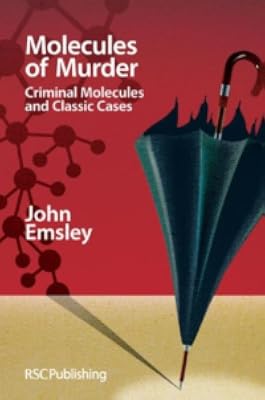
Molecules of Murder: Criminal Molecules and Classic Cases
by John Emsley
On This Page
Description
Molecules of Murder is about infamous murderers and famous victims; about people like Harold Shipman, Alexander Litvinenko, Adelaide Bartlett, and Georgi Markov. Few books on poisons analyse these crimes from the viewpoint of the poison itself, doing so throws a new light on how the murders or attempted murders were carried out and ultimately how the perpetrators were uncovered and brought to justice. Part I includes molecules which occur naturally and were originally used by doctors before show more becoming notorious as murder weapons. Part II deals with unnatural molecules, mainly man-made, and they too have been dangerously misused in famous crimes. The book ends with the most famous poisoning case in recent years, that of Alexander Litvinenko and his death from polonium chloride. The first half of each chapter starts by looking at the target molecule itself, its discovery, its history, its chemistry, its use in medicine, its toxicology, and its effects on the human body. The second half then investigates a famous murder case and reveals the modus operandi of the poisoner and how some were caught, some are still at large, and some literally got away with murder. Molecules of Murder will explain how forensic chemists have developed cunning ways to detect minute traces of dangerous substances, and explain why some of these poisons, which appear so life-threatening, are now being researched as possible life-savers. Award winning science writer John Emsley has assembled another group of true crime and chemistry stories to rival those of his highly acclaimed Elements of Murder. show lessTags
Recommendations
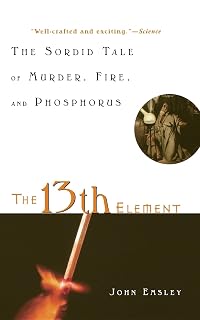
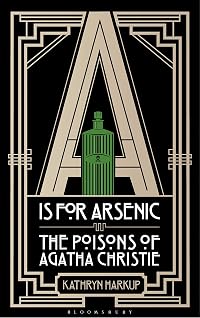
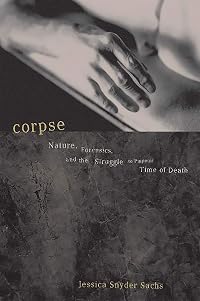
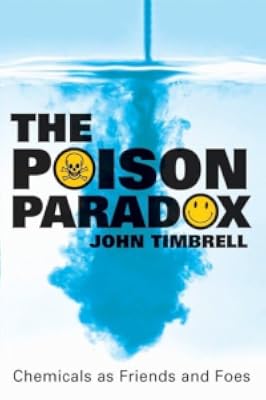



Member Recommendations
Member Reviews
I am chemist by trade and when I saw this book pop up on Amazon Vine I thought I would get it and give it a read. It is a fascinating book. Anyone interested in chemistry, forensics, or even poisons would find this book fascinating; you don't need a technical background.
This book covers 5 poisons found in nature and 5 man-made poisons. Each chapter is very nicely structured and goes through how the poison was discovered, how the poison affects the human body, what remedies there are, and then goes through a case study where the poison was used to murder someone. In some chapters there are sections that give statistics on the number of poisonings with a given poison and how many of these are accidental.
The only parts that might require show more some technical knowledge are the chemical descriptions of the poisons and how the poison reacts with the enzymes (or whatever) in the human body. Even these parts of the book are presented in such a fashion that someone without a depth of technical knowledge gets a lot out of them.
The book is very well-written. I was worried this would be more of a dry technical read but it wasn't. I was sucked in right from the beginning and had trouble putting the book down. I really, really enjoyed it.
This is not something you would want to use as a handbook for poisoning because for the majority of cases the poisons go wrong and/or the poisoners get caught. My husband did want to know exactly why I need to read a book about poisons. I told him it was in self-defense :-)
Overall a great book. I will definitely keep an eye out for more books from this author. A colleague of mine actually heard John Emsley do a talk on forensic chemistry at an American Chemical Society meeting; supposedly he is also a great speaker. show less
This book covers 5 poisons found in nature and 5 man-made poisons. Each chapter is very nicely structured and goes through how the poison was discovered, how the poison affects the human body, what remedies there are, and then goes through a case study where the poison was used to murder someone. In some chapters there are sections that give statistics on the number of poisonings with a given poison and how many of these are accidental.
The only parts that might require show more some technical knowledge are the chemical descriptions of the poisons and how the poison reacts with the enzymes (or whatever) in the human body. Even these parts of the book are presented in such a fashion that someone without a depth of technical knowledge gets a lot out of them.
The book is very well-written. I was worried this would be more of a dry technical read but it wasn't. I was sucked in right from the beginning and had trouble putting the book down. I really, really enjoyed it.
This is not something you would want to use as a handbook for poisoning because for the majority of cases the poisons go wrong and/or the poisoners get caught. My husband did want to know exactly why I need to read a book about poisons. I told him it was in self-defense :-)
Overall a great book. I will definitely keep an eye out for more books from this author. A colleague of mine actually heard John Emsley do a talk on forensic chemistry at an American Chemical Society meeting; supposedly he is also a great speaker. show less
Poisons are among the favorite weapons of mystery writers, if not murderers. Guns may be quicker, but poisons have a cachet that you really can't beat. On the other hand, murder by poison has become increasingly dangerous - to the perpetrator! Despite the fact that incredibly small amounts of certain chemicals constitute a lethal dose, resourceful forensic scientists have pushed the limits of quantification to even smaller values. It is amazing that a person can be killed with only micrograms of a few substances (think about what a microgram would look like), but even more so that they are always detectable in a corpse. "Molecules of Murder" recounts some of the most infamous murders by poison in a style that will appeal to chemists and show more students of chemistry. While he does not provide chemical structures for the toxins (so as not to put off the non-chemical reader), skilled science writer John Emsley [author of other Hal's Picks in November 2001 and July 1998] deftly describes the murders and the murderers in a case-by-case style that never speaks down to his audience. show less
Though it reads in places like the first draft of a chemistry professor's lecture notes, Molecules of Murder is a fascinating approach to the shiver-inducing topic of homicide by poison. Ten "molecules of murder" are featured, from the well known, such as cyanide, to the man-made radioactive element Polonium-210. For each, Dr. Emsley presents an introduction to its properties (for which a recollection of one's high school chemistry is highly useful), a summary of its beneficial and malignant uses (most have both), and brief accounts of one or more murders in which it figured. There is a good variety of motives, methods and opportunities. The murderers were impelled by money, love, politics and insanity. Some were fiendishly clever, like show more the Bulgarian secret service agent whose umbrella shot a ricin-laden capsule into Georgi Markov's leg. Others, like the notorious Dr. Crippen, bungled the job and had to finish off their victims by other means.
The author concludes with a hopeful moral: that poisoning is not as safe and easy as detective novels might lead you to believe. More than a few of his killers were confident that their agents were undetectable. Modern advances in forensics make any such confidence more and more often misplaced.
Readers with an interest in mysteries, crime solving, chemistry or exotic anecdotes will find Dr. Emsley's chapters well worth their time. show less
The author concludes with a hopeful moral: that poisoning is not as safe and easy as detective novels might lead you to believe. More than a few of his killers were confident that their agents were undetectable. Modern advances in forensics make any such confidence more and more often misplaced.
Readers with an interest in mysteries, crime solving, chemistry or exotic anecdotes will find Dr. Emsley's chapters well worth their time. show less
Ratings
Members
- Recently Added By
Lists

The r/Chemistry Recommended Books
87 works; 1 member
Author Information

25+ Works 1,697 Members
John Emsley is Science Writer in Residence at the University of Cambridge. Author of the highly popular "Molecule of the Month" column for The Independent and of the book Molecules in an Exhibit, he has received both a Glaxo Award for science writing and the Chemical Industries Association's President's Award for science communication. He lives in show more London show less
Awards and Honors
Notable Lists
Common Knowledge
- Original publication date
- 2008
Classifications
Statistics
- Members
- 102
- Popularity
- 318,165
- Reviews
- 3
- Rating
- (3.72)
- Languages
- English, Hungarian
- Media
- Paper, Ebook
- ISBNs
- 4
- ASINs
- 1