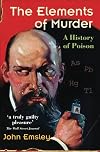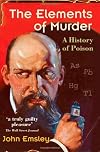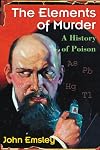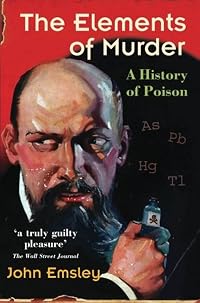
The Elements of Murder: A History of Poison
by John Emsley
On This Page
Description
Mercury, arsenic, antimony, lead, and thallium can be lethal, as many a poisoner knew too well. Emsley explores the gruesome history of these elements and those who have succumbed to them in a fascinating narrative that weaves together stories of true crime, enduring historical mysteries, tragic accidents, and the science behind it all. The colourful cast includes ancient alchemists, kings, leaders, a pope, several great musicians, and a motley crew of murderers. Among the intriguing show more accounts is that of the 17th century poet Sir Thomas Overbury, who survived four attempts to poison him with mercury but died when given the poison in enema form - under whose direction remains uncertain. Here, too, is detailed the celebrated case of Florence Maybrick, convicted of poisoning her violent husband James with arsenic, but widely believed at the time to be innocent. The question of her guilt is still disputed. show lessTags
Recommendations
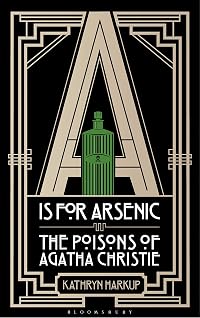

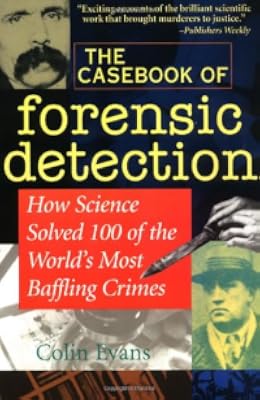
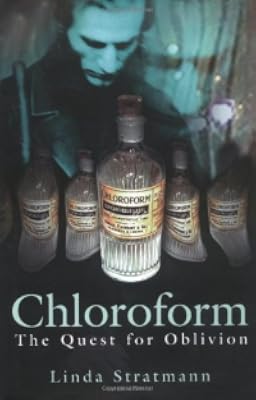
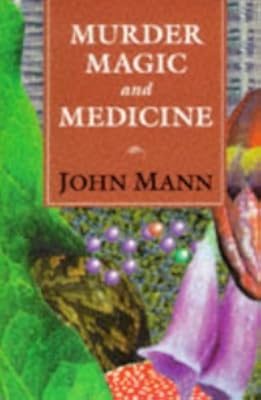



Member Recommendations

Member Reviews
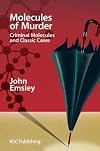
A very interesting book from start to finish, including the lovely cover work, which so convinced my Mother that she thought I'd torn her book.
A very thorough explanation is given of the uses of these poisonous elements, why they're poisonous, what damage they do and what remedies can be used against them. In the section on each poison there is also at least one discription of a case where it has been used to poison people, the process that the murderer went through and how they were caught.
I also really like the chemical glossary at the end.
The weakest part of the book, oddly enough, was the first chapter on mercury but it gets better after this, particularly the sections on arsenic and stibium.
Very good and solid book.
A very thorough explanation is given of the uses of these poisonous elements, why they're poisonous, what damage they do and what remedies can be used against them. In the section on each poison there is also at least one discription of a case where it has been used to poison people, the process that the murderer went through and how they were caught.
I also really like the chemical glossary at the end.
The weakest part of the book, oddly enough, was the first chapter on mercury but it gets better after this, particularly the sections on arsenic and stibium.
Very good and solid book.
This might be called "Elements of Murder: a History of Metal Poison," for those are the only kinds of poisons the author is concerned with. He goes in-depth about mercury, lead, antimony, arsenic and thallium, and pays lip service to other elemental poisons.
Contrary to what the title would have you believe, this is not a true crime book but rather, simply, a history of poison -- no matter how it was delivered and why. The author, a chemist, explains the uses and abuses of the various poisons throughout history and how they interact with the human body, and provides examples of individual and mass poisonings of both the accidental and homicidal kind.
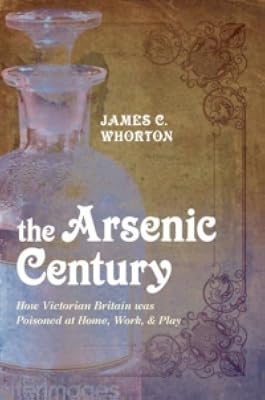
Though, as some other reviewers have noted, the writing is often clumsy, I feel I learned show more a lot. True crime/history buffs with a passing interest in chemistry would enjoy this book. For a much more in-depth, better-written book focusing on one specific element as poison, try The Arsenic Century. show less
Contrary to what the title would have you believe, this is not a true crime book but rather, simply, a history of poison -- no matter how it was delivered and why. The author, a chemist, explains the uses and abuses of the various poisons throughout history and how they interact with the human body, and provides examples of individual and mass poisonings of both the accidental and homicidal kind.
Though, as some other reviewers have noted, the writing is often clumsy, I feel I learned show more a lot. True crime/history buffs with a passing interest in chemistry would enjoy this book. For a much more in-depth, better-written book focusing on one specific element as poison, try The Arsenic Century. show less
This book was promising. My advice would be to read the introduction which is well written and interesting and ignore the rest of it. Everything that followed the introduction was of such a poor quality that I could not believe the author of the introduction to be the same as for the main body of the book. For reasons best known to the author there were digressions into vitriolic judgements on the sexual proclivities of King Charles and some quite unsustainable remarks about Isaac Newton. What a shame! I was really looking forward to this book, and whereas the introduction had some very nicely written paragraphs the main body of the book was in ungainly prose. I didn't read much beyond the third chapter -perhaps it improved.
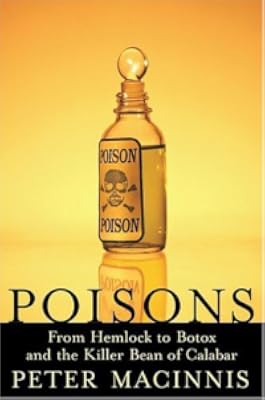
For show more something much more worthwhile read Poisons: From Hemlock to Botox and the Killer Bean of Calabar by Peter Macinnins. show less
For show more something much more worthwhile read Poisons: From Hemlock to Botox and the Killer Bean of Calabar by Peter Macinnins. show less
This was a fun read. Each chapter is a self contained history of a poisonous element, starting with discovery, natural and biological utilization, and industrial uses. The rest of each chapter is than a series of case histories of people who used that particular element as a murder weapon. It includes a long section on serial poisoner Graham Young, whose story was told in the movie Young Poisoner's Handbook.
Although the subject is very interesting, and the anecdotes are lovely, the book does not read very well. A lot of facts are presented in a way that is not always very organized. But, overall, a very interesting book!
Very interesting facts, but oddly written. There's no real conclusion, and the editing and grammar are idiosyncratic. Still, an interesting read.
Ratings
Members
- Recently Added By
Lists

The r/Chemistry Recommended Books
87 works; 1 member
Author Information

25+ Works 1,695 Members
John Emsley is Science Writer in Residence at the University of Cambridge. Author of the highly popular "Molecule of the Month" column for The Independent and of the book Molecules in an Exhibit, he has received both a Glaxo Award for science writing and the Chemical Industries Association's President's Award for science communication. He lives in show more London show less
Awards and Honors
Awards
Series
Belongs to Publisher Series
Common Knowledge
- Canonical title
- The Elements of Murder: A History of Poison
- Original title
- Elements of murder
- Original publication date
- 2005
- People/Characters
- Charles Bravo; Florence Maybrick
- First words
- During the South Sea Bubble in 1720, prices on the London stock market soared to dizzying heights.
- Last words
- (Click to show. Warning: May contain spoilers.)A case of deliberate poisoning of a person with a tin compound is not recorded in the criminal history.
Classifications
Statistics
- Members
- 377
- Popularity
- 83,442
- Reviews
- 6
- Rating
- (3.99)
- Languages
- English, German
- Media
- Paper, Ebook
- ISBNs
- 9
- ASINs
- 2