On This Page
Description
Ralph faces bankruptcy or working off balances. He finds a way to turn tragedy into opportunity.Tags
Recommendations




















Member Reviews
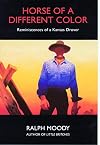
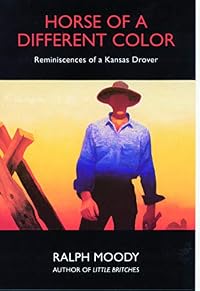
Ralph Moody's story of rural American enterprise in the early 1920s. He found himself with mountainous debts through collapse of the livestock market; in the process of digging himself out of debt, he also saved a town from total bankruptcy. The reader lives through a flash flood, admires his sanitary slaughter house, and weeps over a forced farm auction. A recollection of Pre-Dust Bowl, pre-Depression days.
I was so sad to come to the end of this book and the end of Mr. Moody's memoirs. From a boy eager to be thought a man, a boy somewhat boastful and yet willing to work hard - to a man with honor, a work ethic to be admired, and compassion for others. I finished this book wishing I were a friend of Mr. Moody - that would be a friendship to be treasured for a lifetime.
The Dry Divide for me was just ok, so I didn’t really know what to expect of this book, and I wasn’t necessarily looking forward to it, except for the finishing of the series as a whole.
It must just be that certain parts of Moody’s life caught my imagination less than others, because this last installment had me just about enraptured. There was a fair amount of drama in his business dealings, and undeserved hardship when things took a downward turn, but Ralph meets it all with a steady determination to do whatever it takes to make something out of nothing.
These parts of his stories are what I find most compelling - a young man who refuses to be beat and will do just about anything to achieve his goals, is not afraid of hard work, show more and is unwaveringly determined to treat others around him with fairness and as much generosity as he can. In achieving those ends he is able to lift not only himself, but his whole community, and they repay him with loyalty and appreciation. He finds himself some good friends, a father-figure, and wraps things up with a happy little ending.
I feel like there may have been more adventures to tell after he got married; I can’t believe he didn’t have any other obstacles to surmount in creative ways once he had a new family to support, especially having gone through the Great Depression as well as WWII. I’d love for a biography or something to fill in the gaps of his life and maybe answer some of the lingering questions I have, but all in all, it’s such a fantastic story, well worth reading. show less
It must just be that certain parts of Moody’s life caught my imagination less than others, because this last installment had me just about enraptured. There was a fair amount of drama in his business dealings, and undeserved hardship when things took a downward turn, but Ralph meets it all with a steady determination to do whatever it takes to make something out of nothing.
These parts of his stories are what I find most compelling - a young man who refuses to be beat and will do just about anything to achieve his goals, is not afraid of hard work, show more and is unwaveringly determined to treat others around him with fairness and as much generosity as he can. In achieving those ends he is able to lift not only himself, but his whole community, and they repay him with loyalty and appreciation. He finds himself some good friends, a father-figure, and wraps things up with a happy little ending.
I feel like there may have been more adventures to tell after he got married; I can’t believe he didn’t have any other obstacles to surmount in creative ways once he had a new family to support, especially having gone through the Great Depression as well as WWII. I’d love for a biography or something to fill in the gaps of his life and maybe answer some of the lingering questions I have, but all in all, it’s such a fantastic story, well worth reading. show less
This is a memoir written in the 1960s, about a young man's beginnings in Kansas in the early 1920s. It is the last in the Little Britches series. "Bud" arrives when he is a mere twenty years old and we learn about three years of his life. I'm sure some of it is fictionalized, after all, he wrote this forty years after the events. That does not lessen the spirit of it though. It is amazing what a young man could do at that time if he was motivated and had good sense and good council.
I did not find the storytelling as engaging in this book as it was in the first story, Little Britches. The narrator is monotone. However, the circumstances he finds himself in are compelling, and I found it hard to put down. Moody paints a detailed picture show more of rural life in 1920s America. When I read of his struggles, his hopes, dreams, plans and failures, I could not help but think of my own father and his father; their life-long love affair with the land, and struggle to wrest a living from it. show less
I did not find the storytelling as engaging in this book as it was in the first story, Little Britches. The narrator is monotone. However, the circumstances he finds himself in are compelling, and I found it hard to put down. Moody paints a detailed picture show more of rural life in 1920s America. When I read of his struggles, his hopes, dreams, plans and failures, I could not help but think of my own father and his father; their life-long love affair with the land, and struggle to wrest a living from it. show less
Coming-of-age theme, and told in a vernacular style. The repetitive descriptions of being a drover and setting up a business in livestock, the theme would be unlikely to engage a younger reader. Since this is the dénouement to the Little Britches narrative, it was not clear what audience the author intended to aim his tale of a cowboy going into the meat business and reaching marriageable age.
Overall, the attempts to keep from losing his livelihood on a number of occasions were frustrating. For example, the naivety of storing all his savings in the cuffs of his Levis (denim jeans) would seem unbelievable to today's YA readers.
Overall, the attempts to keep from losing his livelihood on a number of occasions were frustrating. For example, the naivety of storing all his savings in the cuffs of his Levis (denim jeans) would seem unbelievable to today's YA readers.
The final chapter in Moody's series of memoirs, this one takes place when he's in his early twenties. Interesting that he never wrote about anything later in his life- and kind of sad, too. He's just as competent in this one as the earlier ones, teaching himself several new trades including butchering. There are some interesting characters here, and some fun stories. Worth a listen.
My favorite "coming of age" story.
Members
- Recently Added By
Lists

Sonlight Books
1,487 works; 25 members

Books Read in 2016
4,666 works; 197 members
Author Information

42+ Works 8,051 Members
Ralph Moody (1898-1982) is the author of Come on Seabiscuit! as well as the Little Britches series about a boy's life on a Colorado ranch
Series

Common Knowledge
- Original publication date
- 1968
- Important places
- Kansas, USA
Classifications
Statistics
- Members
- 404
- Popularity
- 76,612
- Reviews
- 8
- Rating
- (4.10)
- Languages
- English
- Media
- Paper, Audiobook, Ebook
- ISBNs
- 8
- UPCs
- 1
- ASINs
- 5