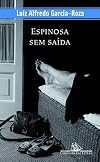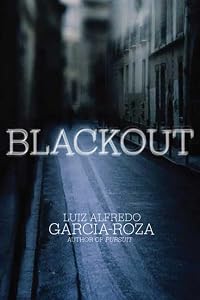
On This Page
Description
Unable to forget the unsolved murder of a homeless man, Chief Inspector Espinosa investigates a group of affluent guests who had dined at a nearby mansion on the night of the killing, exposing a web of lies and cover-ups.Tags
Recommendations





































Member Reviews
What a lovely puzzle this is.
Aldo Bruno, architect, and his wife Camila, psychotherapist, attend a dinner party in a fancy part of Rio de Janeiro. When they have to leave they encounter rain, so Camila stays inside while Aldo runs for the car, parked in a cul-de-sac at the end of the street.
Later, they learn that a homeless man had been shot in that location, and Aldo was one of two persons from the party who might have seen what happened.
Homeless people rarely are seen in this rich enclave, and this one was particularly memorable because he had only one leg and got around with crutches. He would have a time climbing the steep hill to get where he was found.
Inspector Espinosa is on the case. He wonders why the dead man was there in the show more first place, and why anyone would want to kill him. He interviews anyone who was in a position to offer any information, including Aldo Bruno and his wife.
Bruno confesses to his wife the next day that his memory blanked out, and he did not remember what he did from the time he left the dinner party until he picked her up to go home. It worries him because it wasn't the first time he had memory gaps. Camila isn't worried, suggests that this happens to everyone from time to time. But Aldo does worry.
Worse, Aldo does not want to admit his memory loss to anyone else, so he makes up a story to tell the police. A plausible and possibly true story but he just doesn't remember it.
Aldo's office focuses on interior design rather than architecture. He has an assistant and a couple of interns, and they keep busy. Camila's practice is successful as well, although she comes from money and thus it is likely that neither actually has to work.
As Aldo grapples with his memory and Espinosa struggles with the little he is able to glean from visitors, residents, and workers in the area, there is another death. This one hits far closer to home for Aldo and he is swimming in confusion.
Full of intrigue and interesting twists, I enjoyed it. I did guess one of the critical aspects of the puzzle but that did not prevent me from enjoying the trip. show less
Aldo Bruno, architect, and his wife Camila, psychotherapist, attend a dinner party in a fancy part of Rio de Janeiro. When they have to leave they encounter rain, so Camila stays inside while Aldo runs for the car, parked in a cul-de-sac at the end of the street.
Later, they learn that a homeless man had been shot in that location, and Aldo was one of two persons from the party who might have seen what happened.
Homeless people rarely are seen in this rich enclave, and this one was particularly memorable because he had only one leg and got around with crutches. He would have a time climbing the steep hill to get where he was found.
Inspector Espinosa is on the case. He wonders why the dead man was there in the show more first place, and why anyone would want to kill him. He interviews anyone who was in a position to offer any information, including Aldo Bruno and his wife.
Bruno confesses to his wife the next day that his memory blanked out, and he did not remember what he did from the time he left the dinner party until he picked her up to go home. It worries him because it wasn't the first time he had memory gaps. Camila isn't worried, suggests that this happens to everyone from time to time. But Aldo does worry.
Worse, Aldo does not want to admit his memory loss to anyone else, so he makes up a story to tell the police. A plausible and possibly true story but he just doesn't remember it.
Aldo's office focuses on interior design rather than architecture. He has an assistant and a couple of interns, and they keep busy. Camila's practice is successful as well, although she comes from money and thus it is likely that neither actually has to work.
As Aldo grapples with his memory and Espinosa struggles with the little he is able to glean from visitors, residents, and workers in the area, there is another death. This one hits far closer to home for Aldo and he is swimming in confusion.
Full of intrigue and interesting twists, I enjoyed it. I did guess one of the critical aspects of the puzzle but that did not prevent me from enjoying the trip. show less
The first murder, that of a one-legged apparently homeless man, intrigues Detective Espinosa because it takes place in a district he knows well, close to where he grew up. The main suspects are two men who are collecting their parked cars in heavy rain after a dinner party. Espinosa prefers one over the other as a suspect but for a long time the case goes nowhere. Much of the investigation relates to how the victim got to the site of the murder, which is at the top of a very steep hill, and why he was there.
During part 2 of the story Espinosa and his team carry out a constant investigation of his preferred suspect, turning up at his place of work to check minor details of his story, or talking to his wife. We see most of the story show more through the eyes of this suspect, raising the question of how reliable a witness he really is. He claims to his wife that there are large parts of the evening that he doesn't remember. Espinosa ramps up the psychological pressure.
In places the author's style reminds me of Simenon and that is probably why I liked it so much.
Some readers will find the story's climax a bit too open-ended and inconclusive. show less
During part 2 of the story Espinosa and his team carry out a constant investigation of his preferred suspect, turning up at his place of work to check minor details of his story, or talking to his wife. We see most of the story show more through the eyes of this suspect, raising the question of how reliable a witness he really is. He claims to his wife that there are large parts of the evening that he doesn't remember. Espinosa ramps up the psychological pressure.
In places the author's style reminds me of Simenon and that is probably why I liked it so much.
Some readers will find the story's climax a bit too open-ended and inconclusive. show less
When a crippled and seemingly homeless man is found shot to death in a cul-de-sac in a wealthy neighborhood Espinosa knew from childhood personal intrigue is added to his professional duty to find the killer. The secluded neighborhood is up a very steep hill so why would a vagrant man with only one leg be there, especially late at night in a torrential downpour? Espinosa likes two men for the crime. Both were collecting their cars in the same cul-de-sac after a dinner party. Both men initially lie to Espinosa but one man in particular holds his attention longer. There is something about Aldo. Espinosa and his team slowly turn up the pressure on their prime suspect, showing up at Aldo's work, following him around town, and repeatedly show more interviewing his therapist wife. Such scrutiny finally reveals Aldo is having an affair with a coworker. Even after Aldo's wife is found murdered Espinosa refuses to consider he has an open and shut case. He shows considerable restraint when he does not eagerly arrest the obvious suspect.
Character development is subtle and substantial all at once. The character of Camilla Bruno was intriguing. Was she seducing patients or not? I wish I had more Garcia-Rozas on my Challenge list. I would have liked to see how Espinoza's personality evolves. His love of books, for example.
One of the best part's of Garcia-Roza's writing is his elegant descriptions of the Rio de Janeiro neighborhoods (Copacabana and Ipanema specifically). I found myself playing around with Google Earth just to see how close he came to matching the true landscapes. show less
Character development is subtle and substantial all at once. The character of Camilla Bruno was intriguing. Was she seducing patients or not? I wish I had more Garcia-Rozas on my Challenge list. I would have liked to see how Espinoza's personality evolves. His love of books, for example.
One of the best part's of Garcia-Roza's writing is his elegant descriptions of the Rio de Janeiro neighborhoods (Copacabana and Ipanema specifically). I found myself playing around with Google Earth just to see how close he came to matching the true landscapes. show less
6th in the Inspector Espinosa from Rio de Janeiro series.
An apparently homeless, one-legged beggar is efficiently (one shot to the heart) murdered in an affluent neighborhood in Rio’s 12th District in Copacabana, home to Chief Inspector Espinosa. The killing makes no sense. It was clearly not drug-related, and it is impossible to see the murder as a self-defense against an obviously harmless beggar. Everything about the case is baffling, including the lack of anyone who knew the victim and the total lack of witnesses, even though two men from a dinner party in a house close to where the crime was committed claim to have seen nothing.
Thus begins the latest in Garcia-Roza’s superb series. The protagonist, Inspector Espinosa, is not show more your standard hard-boiled detective; unusual for a Brasilian, he is bookish, as well as being somewhat dreamy, eccentric (not unusual in a Brasilian!). The writing and, importantly, the translation are excellent; the plot is taut and unpredictable. The characters are real and their environment--the Copacabana district--is vibrantly alive. I have spent a great deal of time in Brasil but have never visited Rio. Until I started reading this series, I never wanted to, either. But Garcia-Roza paints a picture of a real neighborhood with interesting people—not the Copacabana of tourists, but the one of cariocas, as the residents of Rio are known.
So far, Garcia-Roza does not seem to write to a formula. All of his books have been different. Certainly this book is vastly different from his previous, mind-bending thriller, Pursuit. But, as with all the others, Blackout is a real page-turner, as the tension and surprises mount to an excellent denouement.
Highly recommended. show less
An apparently homeless, one-legged beggar is efficiently (one shot to the heart) murdered in an affluent neighborhood in Rio’s 12th District in Copacabana, home to Chief Inspector Espinosa. The killing makes no sense. It was clearly not drug-related, and it is impossible to see the murder as a self-defense against an obviously harmless beggar. Everything about the case is baffling, including the lack of anyone who knew the victim and the total lack of witnesses, even though two men from a dinner party in a house close to where the crime was committed claim to have seen nothing.
Thus begins the latest in Garcia-Roza’s superb series. The protagonist, Inspector Espinosa, is not show more your standard hard-boiled detective; unusual for a Brasilian, he is bookish, as well as being somewhat dreamy, eccentric (not unusual in a Brasilian!). The writing and, importantly, the translation are excellent; the plot is taut and unpredictable. The characters are real and their environment--the Copacabana district--is vibrantly alive. I have spent a great deal of time in Brasil but have never visited Rio. Until I started reading this series, I never wanted to, either. But Garcia-Roza paints a picture of a real neighborhood with interesting people—not the Copacabana of tourists, but the one of cariocas, as the residents of Rio are known.
So far, Garcia-Roza does not seem to write to a formula. All of his books have been different. Certainly this book is vastly different from his previous, mind-bending thriller, Pursuit. But, as with all the others, Blackout is a real page-turner, as the tension and surprises mount to an excellent denouement.
Highly recommended. show less
Garcia-Roza escreve lindamente, uma prosa limpa, linear, aparentemente simples. O primeiro capítulo é, mesmo, deslumbrante, envolvendo-nos num calor quase sólido, numa evocação de um passado distante e misterioso, num sentimento de impotência! O crime é, também, intrigante... um sem-abrigo, perneta, é assassinado com um único tiro no peito no cimo de uma ladeira de um beco sem saída de um dos morros do Rio de Janeiro onde o delegado Espinosa costumava brincar quando criança. Mas o desenvolvimento pareceu-me frágil, as considerações de Espinosa sobre o crime, algo repetitivas, e o final abrupto e um tanto previsível. Um desapontamento, porque não sou grande fã de policiais, mas sobretudo porque conheço uns quantos show more grandes fãs espinosistas... mas não desisto já. Abre-te [b:Uma Janela Em Copacabana|2781908|Uma Janela Em Copacabana|Luiz Alfredo Garcia-Roza|https://d202m5krfqbpi5.cloudfront.net/books/1250560931s/2781908.jpg|240950]! show less
This Brazilian mystery possesses a kind of frothy, Latino elan, but unfortunately that seems to be all there is. The book doesn't really function as mystery, per se, and it's slim charms don't offer enough to compensate.
Inspector Espinosa is called to a childhood haunt when a beggar turns up shot. But why would someone murder a man who has nothing, and what does one of the key witnesses - a neurotic interior designer - have to do with it?
Blackout's central mystery is at times predictable, illogical, and unguessable. The novel is more of a police procedural, but Espinosa's peregrinations lack much procedure. This gives the novel a kind of loping, episodic, almost pre-destined feel. This is not helped by the somewhat irrational and/or show more thin characters.
This is not to say the characters aren't enjoyable. They are all stereotypically (perplexingly!), sexy. Everyone seems to be good-looking, sleeping with someone with one eye on someone else. There's an undercurrent running through Blackout, a kind of unceasing murmur like a batucada - "It's so hot, the day is so beautiful, why worry? Let's make love!" It's certainly a change from the average police procedural, and it is winsome, in its own way.
But it's also kind of frustrating as the novel collapses wholly into silliness in the home stretch. You can't hate it too much for this; it's so light and trivial that a grudge seems needlessly stern, but at the same time there's not really a compelling reason to read any more. show less
Inspector Espinosa is called to a childhood haunt when a beggar turns up shot. But why would someone murder a man who has nothing, and what does one of the key witnesses - a neurotic interior designer - have to do with it?
Blackout's central mystery is at times predictable, illogical, and unguessable. The novel is more of a police procedural, but Espinosa's peregrinations lack much procedure. This gives the novel a kind of loping, episodic, almost pre-destined feel. This is not helped by the somewhat irrational and/or show more thin characters.
This is not to say the characters aren't enjoyable. They are all stereotypically (perplexingly!), sexy. Everyone seems to be good-looking, sleeping with someone with one eye on someone else. There's an undercurrent running through Blackout, a kind of unceasing murmur like a batucada - "It's so hot, the day is so beautiful, why worry? Let's make love!" It's certainly a change from the average police procedural, and it is winsome, in its own way.
But it's also kind of frustrating as the novel collapses wholly into silliness in the home stretch. You can't hate it too much for this; it's so light and trivial that a grudge seems needlessly stern, but at the same time there's not really a compelling reason to read any more. show less
Solid police detective mystery set in Rio. It's the sixth in the series and my guess is that a) Rio is one of the most compelling features of these novels, and b) this feature is more prominent in earlier novels.
Members
- Recently Added By
Author Information

22+ Works 1,135 Members
Awards and Honors
Awards
Series

Common Knowledge
- Canonical title
- Blackout
- Original title
- Espinosa sem saida
- Original publication date
- 2006 (Portuguese) (Portuguese); 2008 (English) (English)
- People/Characters
- Inspector Espinosa
- Important places
- Rio de Janeiro, Brasil
- First words
- It was early afternoon, the hottest hour of the day, when the water in the faucet was warm, the asphalt on the streets sizzling, and the cloudless sky unperturbed by the slightest breeze.
- Disambiguation notice
- Original title: Espinosa sem saida
Classifications
- Genres
- Fiction and Literature, Mystery
- DDC/MDS
- 869.3 — Literature & rhetoric Spanish Literature Literatures of Portuguese and Galician languages Portuguese fiction
- LCC
- PQ9698.17 .A745 .E8713 — Language and Literature French, Italian, Spanish and Portuguese literatures Portuguese literature Provincial, local, colonial, etc. Brazil
- BISAC
Statistics
- Members
- 88
- Popularity
- 362,660
- Reviews
- 7
- Rating
- (3.34)
- Languages
- English, French, Portuguese
- Media
- Paper, Ebook
- ISBNs
- 6
- ASINs
- 2