Mapping the Mind
by Rita Carter
On This Page
Description
A visual guide to the brain, discussing the work of scientists who are using modern imaging techniques to locate the precise brain activity that creates specific experiences and responses, and considering the social implications of their discoveries.Tags
Recommendations

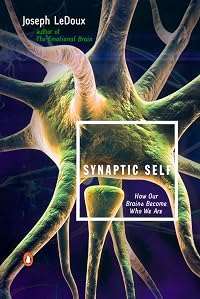

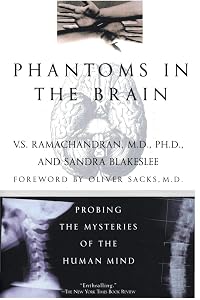
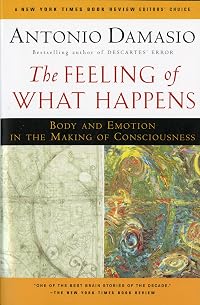

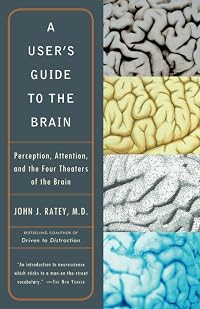


















Member Recommendations
Member Reviews
Mapping The Mind by Rita Carter is one of those serendipitous finds in books that make one forget all the overhyped titles to which we are exposed. This is more than a coffee table book for the layman but, thankfuly, less than a medical school text. It is by a British science writer with extensive sidebars by recognized experts in neuropsychology. This illustrations are top rate. One can actually learn from the illustrations so that one can relate the text to the concept. This is exactly the way it should be. If I were emperor of the world, my first decree would be that all text must be made understandable with extensive and top quality illustrations. That, neighbors, is how humans evolved - visual! visual! visual! Those pesky words, show more spoken and later written, came later.
As a premed student, I was apalled how much of what I had to study seemed designed to be obscure, even though the principle, if one could understand it from text alone, was simple. Rita Carter does us all, those of us who really want to learn about neuropsychology, a great service by her accurate yet easy to read text, an interesting but not condescending writing style, and choosing a publisher who knows how to publish a thoroughly usable book on neuropsychology for the lay person. In general, those who know can't write, and those who write, don't know.
I'm not going to rehash details from the book - I'm sure others have done that. I am, however, going to tell you that there is so much "Oh, my God, so that's why people (fill in the blank)!" that your view of yourself and others, if not your entire view of a philosophical or religious take on life may hang by a thread.
There are plenty of clinical examples - the woman whose right hand would pick out a sensible dress whilst her left hand would pick out a wildly colorful dress, comes to mind. She suffered the 'alien hand' syndrome due to separation of the two brain hemispheres at the corpus callosum through surgery to cure her of severe epilepsy. Afterward, she had no dominant side, thus each side did what it wanted.
This is not cocktail party talk. This hits at the essence of what it means to be human. We are still human even if parts of us doesn't work. I don't have my appendix anymore, yet no social stigma attaches to that. Unfortunately, neuro-psychiatric illnesses generate enormous misunderstanding and human tragedy. Yet the principle is the same. There's just a part of us that doesn't work right. Or is missing. Or damaged in an accident.
Reading this book may help people put that in perspective. I'd recommend it for anyone who needed to understand the situation of someone with an NP disorder. From erectile disorder to schizophrenia, there is a neurological explanation, thanks to the miracle of functional imaging techniques of the last fifteen years or so, for a wide range of conditions. Nothing is shameful. What is shameful is cutting someone who simply has something wrong with their body. Shifting someone to a lower status in the family or the neighborhood simply because they have Alzheimers or La Tourette syndrome.
We might hope that in this century neuropsychology may progress such that effective treatments may be devised for many of the disabling conditions mentioned in this excellent book. If you have a motive to read a book like this - then Mapping The Mind by Rita Carter is the one I recommend. show less
As a premed student, I was apalled how much of what I had to study seemed designed to be obscure, even though the principle, if one could understand it from text alone, was simple. Rita Carter does us all, those of us who really want to learn about neuropsychology, a great service by her accurate yet easy to read text, an interesting but not condescending writing style, and choosing a publisher who knows how to publish a thoroughly usable book on neuropsychology for the lay person. In general, those who know can't write, and those who write, don't know.
I'm not going to rehash details from the book - I'm sure others have done that. I am, however, going to tell you that there is so much "Oh, my God, so that's why people (fill in the blank)!" that your view of yourself and others, if not your entire view of a philosophical or religious take on life may hang by a thread.
There are plenty of clinical examples - the woman whose right hand would pick out a sensible dress whilst her left hand would pick out a wildly colorful dress, comes to mind. She suffered the 'alien hand' syndrome due to separation of the two brain hemispheres at the corpus callosum through surgery to cure her of severe epilepsy. Afterward, she had no dominant side, thus each side did what it wanted.
This is not cocktail party talk. This hits at the essence of what it means to be human. We are still human even if parts of us doesn't work. I don't have my appendix anymore, yet no social stigma attaches to that. Unfortunately, neuro-psychiatric illnesses generate enormous misunderstanding and human tragedy. Yet the principle is the same. There's just a part of us that doesn't work right. Or is missing. Or damaged in an accident.
Reading this book may help people put that in perspective. I'd recommend it for anyone who needed to understand the situation of someone with an NP disorder. From erectile disorder to schizophrenia, there is a neurological explanation, thanks to the miracle of functional imaging techniques of the last fifteen years or so, for a wide range of conditions. Nothing is shameful. What is shameful is cutting someone who simply has something wrong with their body. Shifting someone to a lower status in the family or the neighborhood simply because they have Alzheimers or La Tourette syndrome.
We might hope that in this century neuropsychology may progress such that effective treatments may be devised for many of the disabling conditions mentioned in this excellent book. If you have a motive to read a book like this - then Mapping The Mind by Rita Carter is the one I recommend. show less
It's a really gorgeous book--oversized, nice glossy pages, loads of beautiful illustrations. The content was interesting and good (though in this field, with a 2000 pub date, it's already pretty outdated). One of my biggest complaints about this book was the atrocious editing. This book was absolutely fraught with not only typographical errors, but also wrong word choices, bad cut-n-paste jobs, missing words or halves of sentences...it just goes on. Very disappointing in a book published by a respectable scholarly press, and it tends to make you wonder if that little effort was given to the language, how much effort was put into fact checking and assuring the accuracy of the content? My low mark is mostly for this and the fact that the show more organization of the book felt thrown together. Otherwise, it is full of a run-down of some fascinating studies and bits of trivia about the brain. show less
If one wants to learn about the basics of neuroscience or simply how the brain works, this book serves as a good introduction. It has wonderful, 3D illustrations, and the language is easy enough to understand. It (literally) copies the main ideas from the important thinkers such as Sacks, Ramachandran, Le Doux and others. (I'm not sure how science books deal with citing case studies and other important ideas, but although it mentions the names of these thinkers, it doesn't really cite them directly for it.) That said, it is definitely more interesting and rewarding to read about the ideas, theories and studies from the main sources themselves. Typographical errors aside, this book, read slowly, might serve to heighten one's interest in show more the neurosciences. show less
I enjoyed the book, though most of the information was not new to me. The illustrations were quite beautiful and I liked the explanations given in the book. Though it was written in 1998, it was still up to date enough to talk about fMRI and other methods of scanning.
I found the book both beautifully illustrated and extremely well-written (...not always the case in cognitive science, unfortunately), but as other reviewers have mentioned, given the publication date of the book, it's likely less than completely up to date by now. That said, I'm glad to have this title in my library: though it has been a few years since originally purchasing and reading it, I do still reread parts of it on occasion.
ETA: a new version has been released this year! I haven't had the opportunity to check it out, but presumably the worries of being out of date wouldn't be applicable to this new edition.
ETA: a new version has been released this year! I haven't had the opportunity to check it out, but presumably the worries of being out of date wouldn't be applicable to this new edition.
I enjoyed the book but I am sure science unfettered will show that the Mind is nothing to do with coming from the brain.
Very readable and solid coverage of how the brain works.
Members
- Recently Added By
Author Information

21 Works 1,547 Members
Rita Carter is a science writer whose work has appeared in, among other publications, The New York Times, Washington Post, New Scientist, Daily Mail, and Daily Telegraph. She has twice been awarded the Medical Journalists' Association prize for outstanding contribution to medical journalism. Her first book, Mapping the Mind, was shortlisted for show more the Rhone-Poulenc science prize show less
All Editions
Some Editions
Awards and Honors
Awards
Notable Lists
Work Relationships
Is expanded in
Common Knowledge
- Original publication date
- 1998
- Publisher's editor
- Flanders, Judith
Classifications
- Genres
- Science & Nature, Nonfiction, General Nonfiction
- DDC/MDS
- 612.82 — Applied science & technology Medicine & health Human Body Systems Nervous system Central nervous system
- LCC
- RC386.6 .B7 .C37 — Medicine Internal medicine Internal medicine Neurosciences. Biological psychiatry. Neuropsychiatry Neurology. Diseases of the nervous system
- BISAC
Statistics
- Members
- 669
- Popularity
- 43,077
- Reviews
- 8
- Rating
- (4.04)
- Languages
- 7 — Danish, Dutch, English, French, German, Portuguese, Spanish
- Media
- Paper, Ebook
- ISBNs
- 13
- ASINs
- 2