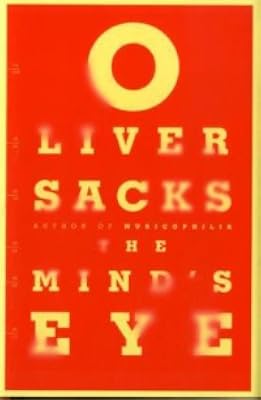
The Mind's Eye
by Oliver Sacks
On This Page
Description
Includes stories of people who are able to navigate the world and communicate with others despite losing what many of us consider indispensable senses and faculties: the power of speech, the capacity to recognize faces, the sense of three-dimensional space, the ability to read, and the sense of sight. This book is a testament to the complexity of vision and the brain and to the power of creativity and adaptation, and it provides a whole new perspective on the power of language and show more communication, as we try to imagine what it is to perceive through another person's eyes, or another person's mind. show lessTags
Recommendations
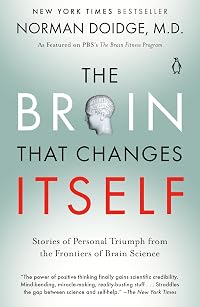
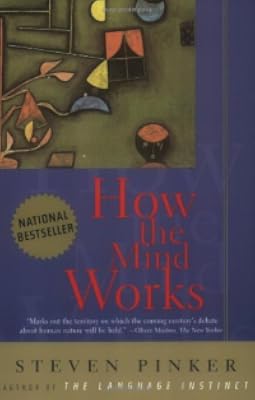
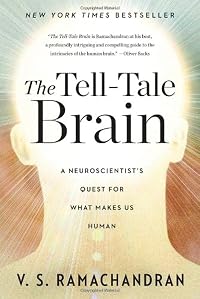
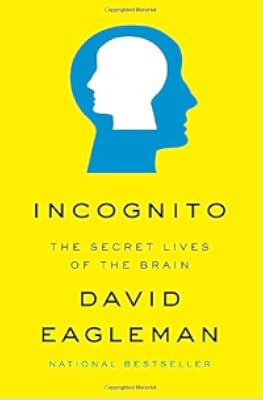


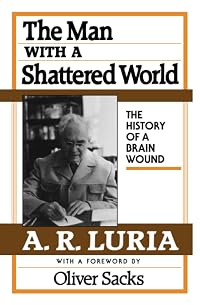
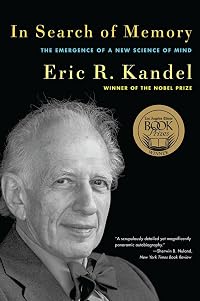

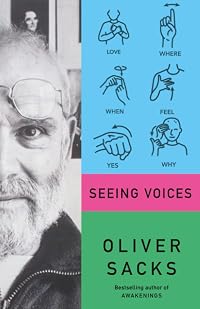
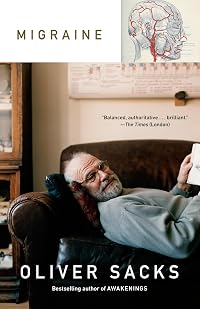

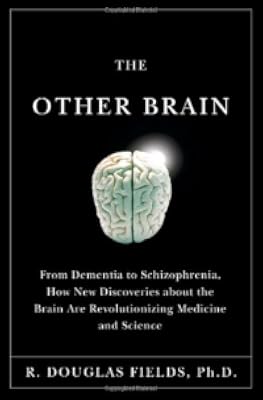
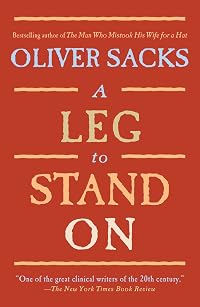

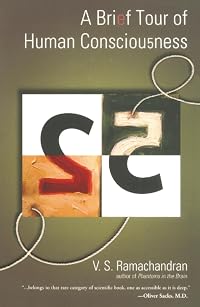
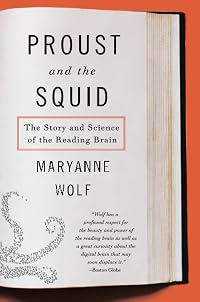






Member Recommendations
SylviaC The Mind's Eye includes a chapter about Howard Engel, and Oliver Sacks provides an afterword to The Man Who Forgot How to Read
librorumamans By means of many illustrations, Hoffman lays out some of the rules by which our brains interpret what our eyes see.

nessreader Eye/Beholder is a heavily illustrated (based on an art exhibition) book about how the brain identifies and sorts and memorises faces, so it mostly relates to the 1st of Sacks' essays.
SnootyBaronet Philosophical meditations on blindness
Member Reviews
A typical selection of essays by Dr. Oliver Sacks, managing to be profoundly sad and profoundly inspiring simultaneously. If you happen to be unfamiliar with Sack’s work, he writes evocative descriptions of various neurological problems, often touched with wry humor and insight. In The Mind’s Eye he discusses various cases where neurological (rather than optical) problems affect vision. In one case, a patient has alexia, which progresses to agnosia; the subject first loses the ability to read (although, paradoxically, she can still write), then gradually loses the ability to recognize once-familiar objects. Her intelligence and memory are unaffected; she still knows what (for example) an apple is, she just can’t recognize one when show more she sees it. There’s no cure, but she develops some compensating abilities; always a talented musician she can no longer sight-read but can compose and transcribe music mentally (something she couldn’t do before).
Another patient, after a lifetime of lacking stereo vision (due to strabismus correction surgery that was delayed a little too long), more or less suddenly develops it after additional treatment. Her wonder at first seeing a snowstorm in depth makes me appreciate my own stereoscopic ability even more. (This chapter mentions my thesis advisor, John Cisne, who demonstrated that some of the elaborate illuminations in medieval manuscripts could be accomplished by “free-fused” stereoscopy. I used to be able to do free-fused stereoscopy but lost the ability after cataract surgery; can’t focus close enough anymore).
Several cases discuss visual imagery; do people “see” things in their minds, and if so do they use the same parts of the brain that process data coming from their eyes. Evidence is equivocal and mostly anecdotal but tantalizing; some total blind people still claim they can “see” mentally (including a blind Australian who had such a good mental image of his house roof that he was able to replace all his gutters unassisted. At night.) while others have no mental visual capability at all.
Another chapter gives a name to a defect I have myself (and I share with Dr. Sacks)– prosopagnosia, the inability to recognize faces. In both my case and Dr. Sacks, it’s fairly mild – Sacks notes it appears to be normally distributed, with some people with hyper abilities (able to recognize faces they saw for a few seconds years earlier) while other are totally deficient (unable to recognize their wives and children, or themselves in a mirror). In both our cases our facial recognition ability is dependent on context; we can recognize people in familiar situations but not in unfamiliar ones – i.e., classmates or coworkers in class or at work but not when encountered on the street or in a restaurant. Dr. Sacks seems to be somewhat more deficient than me; he was unable to recognize his personal assistant when he saw her in a doctor’s waiting room rather than at home. I’m not that bad, but I still have trouble. Interestingly, the problem seems to correlate with Asperger’s syndrome.
The final chapters recount Dr. Sack’s own visual changes after he had a retinal melanoma removed. After radiation and laser surgery he ended up with a “blind spot” in his right visual field that, eventually, his brain would “fill in”. At first it was only uniform fields – if he was looking at the sky the spot would turn a uniform blue. However, after a while the infilling would become more sophisticated. If he brought his hand into the area, it would first disappear as if it had been cut off at the wrist; but if he held it there for a while the brain would generate a “phantom hand” (especially if he did something like wiggling the fingers). The effect isn’t fast enough to be useful in everyday life; he still has to twist around to see somebody on his right.
Recommended – a very quick (afternoon) read. Well referenced to original literature; the only illustrations are Sacks’ own line drawings of what he saw during treatment for his melanoma. show less
Another patient, after a lifetime of lacking stereo vision (due to strabismus correction surgery that was delayed a little too long), more or less suddenly develops it after additional treatment. Her wonder at first seeing a snowstorm in depth makes me appreciate my own stereoscopic ability even more. (This chapter mentions my thesis advisor, John Cisne, who demonstrated that some of the elaborate illuminations in medieval manuscripts could be accomplished by “free-fused” stereoscopy. I used to be able to do free-fused stereoscopy but lost the ability after cataract surgery; can’t focus close enough anymore).
Several cases discuss visual imagery; do people “see” things in their minds, and if so do they use the same parts of the brain that process data coming from their eyes. Evidence is equivocal and mostly anecdotal but tantalizing; some total blind people still claim they can “see” mentally (including a blind Australian who had such a good mental image of his house roof that he was able to replace all his gutters unassisted. At night.) while others have no mental visual capability at all.
Another chapter gives a name to a defect I have myself (and I share with Dr. Sacks)– prosopagnosia, the inability to recognize faces. In both my case and Dr. Sacks, it’s fairly mild – Sacks notes it appears to be normally distributed, with some people with hyper abilities (able to recognize faces they saw for a few seconds years earlier) while other are totally deficient (unable to recognize their wives and children, or themselves in a mirror). In both our cases our facial recognition ability is dependent on context; we can recognize people in familiar situations but not in unfamiliar ones – i.e., classmates or coworkers in class or at work but not when encountered on the street or in a restaurant. Dr. Sacks seems to be somewhat more deficient than me; he was unable to recognize his personal assistant when he saw her in a doctor’s waiting room rather than at home. I’m not that bad, but I still have trouble. Interestingly, the problem seems to correlate with Asperger’s syndrome.
The final chapters recount Dr. Sack’s own visual changes after he had a retinal melanoma removed. After radiation and laser surgery he ended up with a “blind spot” in his right visual field that, eventually, his brain would “fill in”. At first it was only uniform fields – if he was looking at the sky the spot would turn a uniform blue. However, after a while the infilling would become more sophisticated. If he brought his hand into the area, it would first disappear as if it had been cut off at the wrist; but if he held it there for a while the brain would generate a “phantom hand” (especially if he did something like wiggling the fingers). The effect isn’t fast enough to be useful in everyday life; he still has to twist around to see somebody on his right.
Recommended – a very quick (afternoon) read. Well referenced to original literature; the only illustrations are Sacks’ own line drawings of what he saw during treatment for his melanoma. show less
More than just a collection of interesting neurological case studies (which are bewilderingly amazing in and of themselves, the extent to which our brains are capable of reconciling the stimuli we receive to certain imagery or experience or feeling, the ways it can be so easily manipulated and deceived, the delicacy of the brain with all its interacting components and also its elastic attempts to counteract any imbalances), I also liked how each case, from aphasia to stereoscopy to blindness, can be so easily interpreted as a metaphor (seeing but not recognising, loss of one aspect leading to new appreciation for the usual experienced from a different aspect, the importance of peripheral vision giving context to the central show more vision).
Recommended for fans of The Man Who Mistook His Wife for a Hat and Sacks' personable writing style. show less
Recommended for fans of The Man Who Mistook His Wife for a Hat and Sacks' personable writing style. show less
Another wonderful book from Sacks, this time focused on visual disorders, abilities, adaptations, and the nature of seeing itself.
Sacks' own story of losing first stereo-vision, then vision in his right eye completely (as well as the story of his inability to recognize faces) humanizes him and conveys how even a lifelong professional in neurological matters can be a very fragile human being when it comes to dealing with a sudden sensory change.
This is balanced by lovely stories of impressive ways in which affected individuals deal with their disabilities, and one wonderful example of a woman who only gained a common, taken-for-granted sense later in life.
I enjoyed this more than 'Musicophilia', which made me scared since I have no show more musical ability whatsoever, and Sacks paints it as crucial to the human experience. I'm a "visual thinker", though (Sacks goes into what this might mean) so this book delighted me. show less
Sacks' own story of losing first stereo-vision, then vision in his right eye completely (as well as the story of his inability to recognize faces) humanizes him and conveys how even a lifelong professional in neurological matters can be a very fragile human being when it comes to dealing with a sudden sensory change.
This is balanced by lovely stories of impressive ways in which affected individuals deal with their disabilities, and one wonderful example of a woman who only gained a common, taken-for-granted sense later in life.
I enjoyed this more than 'Musicophilia', which made me scared since I have no show more musical ability whatsoever, and Sacks paints it as crucial to the human experience. I'm a "visual thinker", though (Sacks goes into what this might mean) so this book delighted me. show less
Sacks is so good at taking a single case and using it to explore a quirk of the nervous system and to demonstrate what the science and philosophizing mean in real life.
This is now a decade old, so many of the thoughts I had while reading were either addressed later in the book or by more recent research and writing. Several specific individuals are case studies for a broader theme of vision and visualization. Sacks' own loss of some vision as described in his journals of the time is included.
Research into minblindness at the time of the book writing and since then has cleared up much of the ambiguity of that time. Likewise, research into the autism spectrum of presentations has broadened our understanding of what is neurotypical, and show more the broad outlines of what is not neurotypical, but still normal.
It's fascinating stuff and Sacks is a great writer with varied interests that allow unexpected connections. Plus it's always fun to learn what things people assume everyone does vs. what things people think are unique to themselves, and how often those assumptions are wrong. The writing is thoughtful but it also encourages thought in the reader, which is less common than one would like.
Library copy show less
This is now a decade old, so many of the thoughts I had while reading were either addressed later in the book or by more recent research and writing. Several specific individuals are case studies for a broader theme of vision and visualization. Sacks' own loss of some vision as described in his journals of the time is included.
Research into minblindness at the time of the book writing and since then has cleared up much of the ambiguity of that time. Likewise, research into the autism spectrum of presentations has broadened our understanding of what is neurotypical, and show more the broad outlines of what is not neurotypical, but still normal.
It's fascinating stuff and Sacks is a great writer with varied interests that allow unexpected connections. Plus it's always fun to learn what things people assume everyone does vs. what things people think are unique to themselves, and how often those assumptions are wrong. The writing is thoughtful but it also encourages thought in the reader, which is less common than one would like.
Library copy show less
Summary: Narratives of those who because of optical or neural issues experience distortions in or loss of sight, and how they adapt to such losses.
Neurologist Oliver Sacks left us a series of narratives of neurological impairments and how people with these adapted to life. In this volume he considers cases of visual impairment or loss, describing both a collection of different impairments, some in the eye, some in the brain, and how real people have adapted to losses or changes in this seemingly essential sense.
He begins with a concert pianist who loses her ability to read music. She could remember pieces and play them with perfection, and yet could not make sense any longer of musical notation. In this, as in other narratives, he show more wrote eloquently, and with admiration of her adaptation:
"Lilian had been ingenious and resilient in the eleven or twelve years since her illness started. She had brought inner resources of every kind to her own aid: visual, musical, emotional, intellectual. Her family, her friends, her husband and daughter, and above all, but also her students and colleagues, helpful people in the supermarket or on the street--everyone had helped her cope. Her adaptations to the agnosia were extraordinary--a lesson in what could be done to hold together a life in the face of ever-advancing perceptual and cognitive challenge. But it was in her art, her music, that Lilian not only coped with disease but transcended it. This was clear when she played the piano, an art that both demands and provides a sort of superintegration, a total integration of sense and muscle, of body and mind, of memory and fantasy, of intellect and emotion, of one's whole self, of being alive. Her musical powers, mercifully, remained untouched by her disease."
In succeeding chapters, he describes a patient with receptive aphasia resulting from a stroke, a man who no longer could decode letters into words and sentences, even though he could continue to write them, the challenges of those who are face-blind, a woman who through therapy, achieves stereoscopic vision for the first time in her adult life, and how this changed her perception of the world, and what happens within the brain when a person becomes blind and yet continues to have a "visual sense" of the world-- a "mind's eye."
Perhaps the most moving was the description of the author's own experience of visual distortion due to a form of melanoma and eventual loss of stereoscopic vision with retinal bleeding in one eye. He describes the changes in his own perception of the world, his loss of a sense of the existence of half of his visual field, and how he personally adapted to this loss.
Like other books by Saks, he brings together the fascinating world of neuroscience, and the marvelous uniqueness of the human beings whose stories he tells. He helped me marvel at the sense of sight that I take so for granted, and yet could change or be lost for a host of reasons (I need to make that eye check up appointment!). And he helped me appreciate the tremendous ingenuity of individuals, and the fascinating properties of the brain, that enable people to adapt to devastating loss. show less
Neurologist Oliver Sacks left us a series of narratives of neurological impairments and how people with these adapted to life. In this volume he considers cases of visual impairment or loss, describing both a collection of different impairments, some in the eye, some in the brain, and how real people have adapted to losses or changes in this seemingly essential sense.
He begins with a concert pianist who loses her ability to read music. She could remember pieces and play them with perfection, and yet could not make sense any longer of musical notation. In this, as in other narratives, he show more wrote eloquently, and with admiration of her adaptation:
"Lilian had been ingenious and resilient in the eleven or twelve years since her illness started. She had brought inner resources of every kind to her own aid: visual, musical, emotional, intellectual. Her family, her friends, her husband and daughter, and above all, but also her students and colleagues, helpful people in the supermarket or on the street--everyone had helped her cope. Her adaptations to the agnosia were extraordinary--a lesson in what could be done to hold together a life in the face of ever-advancing perceptual and cognitive challenge. But it was in her art, her music, that Lilian not only coped with disease but transcended it. This was clear when she played the piano, an art that both demands and provides a sort of superintegration, a total integration of sense and muscle, of body and mind, of memory and fantasy, of intellect and emotion, of one's whole self, of being alive. Her musical powers, mercifully, remained untouched by her disease."
In succeeding chapters, he describes a patient with receptive aphasia resulting from a stroke, a man who no longer could decode letters into words and sentences, even though he could continue to write them, the challenges of those who are face-blind, a woman who through therapy, achieves stereoscopic vision for the first time in her adult life, and how this changed her perception of the world, and what happens within the brain when a person becomes blind and yet continues to have a "visual sense" of the world-- a "mind's eye."
Perhaps the most moving was the description of the author's own experience of visual distortion due to a form of melanoma and eventual loss of stereoscopic vision with retinal bleeding in one eye. He describes the changes in his own perception of the world, his loss of a sense of the existence of half of his visual field, and how he personally adapted to this loss.
Like other books by Saks, he brings together the fascinating world of neuroscience, and the marvelous uniqueness of the human beings whose stories he tells. He helped me marvel at the sense of sight that I take so for granted, and yet could change or be lost for a host of reasons (I need to make that eye check up appointment!). And he helped me appreciate the tremendous ingenuity of individuals, and the fascinating properties of the brain, that enable people to adapt to devastating loss. show less
In The Mind's Eye, noted neurologist and author Oliver Sacks writes about a variety of brain functions and dysfunctions (especially those caused suddenly and unexpectedly, such as after a stroke), with a particular focus on those that affect visual sensation or perception in some manner. Sacks does so by discussing the case histories of patients he treated over the years. For instance, one man - an author by trade - loses his ability to read the written word. Another woman gains the ability to see stereoscopically after years of seeing everything as flat. Sacks uses these case studies and others as jumping off places to delve into additional research on each of these subjects, supplying a lot of history and neuroscience to further show more explain the phenomenon he sees in each of his cases, so the reader comes away better informed.
I found this particular book so interesting because Sacks interjects so much about himself into this one. For example, he talks about his own struggles with "face blindness," a condition in which he (and others with it) can hardly recognize a person by their facial features, even people close to them such as family members, co-workers, or neighbors. He describes being unable or easily confused in recognizing even his own face at times. Another lengthy section of the book - written in a journal style - covers Sacks's loss of vision in one eye after dealing with a tumor.
It is very interesting to read about how the various patients covered in this book learn to live with their neurological dysfunctions and regain at least some sense of normalcy in their lives, especially given that so many of these issues occur as a result of a trauma later in life. Who says you can't teach an old dog new tricks? However, there are also really rather sad consequences, such as one patient who Sacks sees progressively worsen over time. All in all, this was a fascinating read, especially for those interested in psychology, neuroscience, or just learning more about the human condition. show less
I found this particular book so interesting because Sacks interjects so much about himself into this one. For example, he talks about his own struggles with "face blindness," a condition in which he (and others with it) can hardly recognize a person by their facial features, even people close to them such as family members, co-workers, or neighbors. He describes being unable or easily confused in recognizing even his own face at times. Another lengthy section of the book - written in a journal style - covers Sacks's loss of vision in one eye after dealing with a tumor.
It is very interesting to read about how the various patients covered in this book learn to live with their neurological dysfunctions and regain at least some sense of normalcy in their lives, especially given that so many of these issues occur as a result of a trauma later in life. Who says you can't teach an old dog new tricks? However, there are also really rather sad consequences, such as one patient who Sacks sees progressively worsen over time. All in all, this was a fascinating read, especially for those interested in psychology, neuroscience, or just learning more about the human condition. show less
I have long been a fan of Oliver Sacks and his latest book The Mind’s Eye did not let me down. I love how Sacks combines hard science with philosophy and an air of wonder and appreciation for the complexities of the human brain. Sacks has a way of taking all those things we take for granted, such as sight, and revealing to be the truly amazing acts of neurology and biology that they are. Sacks also incorporated his own anecdotes in The Mind’s Eye. After having a melanoma in one of his eyes Sacks lost his stereo vision and some of his perception, this personal touch makes The Mind’s Eye even more relatable and enjoyable. If you are a neurology fan or just a love of the wonders of the human mind and senses this book is a must read.
~ED
~ED
Members
- Recently Added By
Published Reviews
ThingScore 50
Mr. Brain can be a demon from hell when it decides to turn against its body.
added by WeeklyAlibi
Lists

Art of Reading
188 works; 5 members

The r/AskScience Reading List
159 works; 3 members
Author Information

66+ Works 43,635 Members
Oliver Sacks was born in London, England on July 9, 1933. He received a medical degree from Queen's College, Oxford University and performed his internship at Middlesex Hospital in London and Mount Zion Hospital in San Francisco. He completed his residency at UCLA. In 1965, he became a clinical neurologist to the Little Sisters of the Poor and show more Beth Abraham Hospital. His work in a Bronx charity hospital led him to write the book Awakenings in 1973. The book inspired a play by Harold Pinter and became a film starring Robert De Niro and Robin Williams. His other works included An Anthropologist on Mars, The Mind's Eye, The Man Who Mistook His Wife for a Hat, Uncle Tungsten, Musicophilia, A Leg to Stand On, On the Move: A Life, and Gratitude. In 2007, he ended his 42-year relationship with the Albert Einstein College of Medicine to accept an interdisciplinary teaching position at Columbia. In 2012, he returned to the New York University School of Medicine as a professor of neurology. He died of cancer on August 30, 2015 at the age of 82. (Bowker Author Biography) show less
Awards and Honors
Series
Belongs to Publisher Series
rororo (62560)
Common Knowledge
- Canonical title*
- L'occhio della mente
- Original title
- The Mind's Eye
- Original publication date
- 2010
- People/Characters
- David H. Abrahamson; John Hull
- Dedication
- for David Abramson
- First words
- PREFACE
I grew up in a household full of doctors and medical talk -- my father and older brothers were general practitioners, and my mother was a surgeon. - Original language
- English
*Some information comes from Common Knowledge in other languages. Click "Edit" for more information.
Classifications
- Genres
- General Nonfiction, Science & Nature, Nonfiction, Biography & Memoir
- DDC/MDS
- 616.855 — Applied science & technology Medicine & health Diseases, Allergies, Skin Conditions Nervous Disorders: Autism, Anorexia, OCD Miscellaneous Speech and language disorders
- LCC
- RC423 .S23 — Medicine Internal medicine Internal medicine Neurosciences. Biological psychiatry. Neuropsychiatry Neurology. Diseases of the nervous system
- BISAC
Statistics
- Members
- 1,758
- Popularity
- 12,522
- Reviews
- 69
- Rating
- (3.72)
- Languages
- 14 — Czech, Dutch, English, Finnish, French, German, Hungarian, Italian, Polish, Portuguese, Romanian, Spanish, Swedish, Turkish
- Media
- Paper, Audiobook, Ebook
- ISBNs
- 45
- ASINs
- 15