The Man Who Forgot How to Read: A Memoir
by Howard Engel
On This Page
Description
The remarkable journey of an award-winning writer struck with a rare and devastating affliction that prevented him from reading even his own writingOne hot midsummer morning, novelist Howard Engel picked up his newspaper from his front step and discovered he could no longer read it. The letters had mysteriously jumbled themselves into something that looked like Cyrillic one moment and Korean the next. While he slept, Engel had experienced a stroke and now suffered from a rare condition show more called alexia sine agraphia, meaning that while he could still write, he could no longer read.Over the next several weeks in hospital and in rehabilitation, Engel discovered that much more was affected than his ability to read. His memory failed him, and even the names of old friends escaped his tongue. At first geography eluded him: he would know that two streets met somewhere in the city, but he couldn't imagine where. Apples and grapefruit now looked the same. When he returned home, he had trouble remembering where things went and would routinely ?nd cans of tuna in the dishwasher and jars of pencils in the freezer.Despite his disabilities, Engel prepared to face his dilemma. He contacted renowned neurologist Dr. Oliver Sacks for advice and visited him in New York City, forging a lasting friendship. He bravely learned to read again. And in the face of tremendous obstacles, he triumphed in writing a new novel.An absorbing and uplifting story, filled with sly wit and candid insights, The Man Who Forgot How to Read will appeal to anyone fascinated by the mysteries of the mind, on and off the page. show lessTags
Recommendations


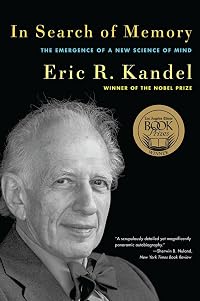
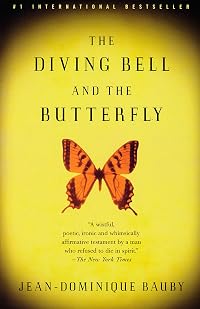
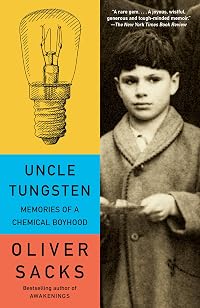
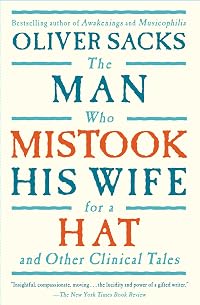





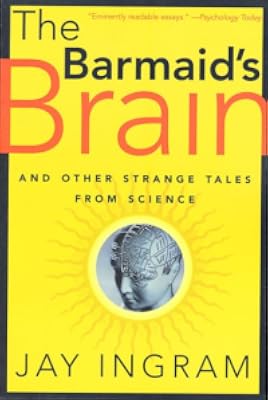

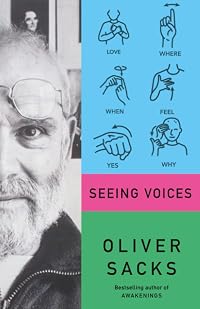
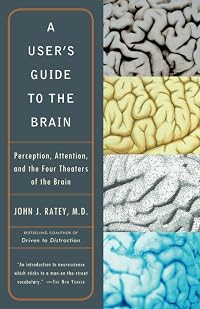


Member Recommendations
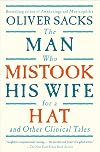
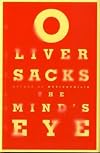
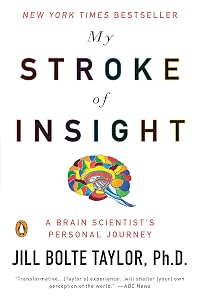
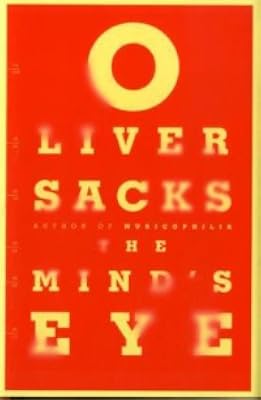
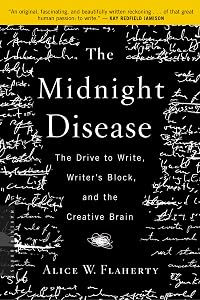
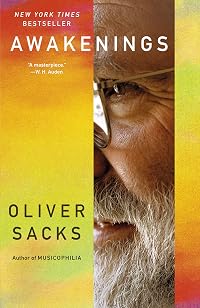
SylviaC The Mind's Eye includes a chapter about Howard Engel, and Oliver Sacks provides an afterword to The Man Who Forgot How to Read
Member Reviews
Engel describes wakening one morning, getting his newspaper off the front step and wondering why it was printed in what appeared to be Cyrillic or Greek. Fortunately he realized he must have had a stroke and, accompanied by his twelve year-old son Jacob, went to emergency at Mount Sinai Hospital in Toronto where he was diagnosed with alexia sine agraphia caused by the stroke. Although he was still able to write to some extent, he could not read, not even what he had just written. There were other memory problems too and he spent months in rehabilitation where he learned tricks to find his way around the hospital and his life.
As an author and lifelong book lover, the diagnosis was understandably devastating but he was protected from show more worry in some way by the brain injury itself. Meanwhile, the care for his young son (Engel was a widower) was shared among other family members meaning Jacob had to live out of a backpack for months. Eventually Engel was able to read extremely slowly and with difficulty, but was it enough to re-write and edit the books from which he made a living? When he came up with a plot for a new novel featuring his sweet, humble detective Benny Cooperman, he jumped right in giving Benny a head injury with the same symptoms in Memory Book. Encouraged by Oliver Sacks and with much assistance he successfully published the book, as well as another one since then (East of Suez) when Benny is recovering. Engel describes his condition and rehabilitation without any sign of self pity but with good humour and grace, making this both entertaining and interesting. show less
As an author and lifelong book lover, the diagnosis was understandably devastating but he was protected from show more worry in some way by the brain injury itself. Meanwhile, the care for his young son (Engel was a widower) was shared among other family members meaning Jacob had to live out of a backpack for months. Eventually Engel was able to read extremely slowly and with difficulty, but was it enough to re-write and edit the books from which he made a living? When he came up with a plot for a new novel featuring his sweet, humble detective Benny Cooperman, he jumped right in giving Benny a head injury with the same symptoms in Memory Book. Encouraged by Oliver Sacks and with much assistance he successfully published the book, as well as another one since then (East of Suez) when Benny is recovering. Engel describes his condition and rehabilitation without any sign of self pity but with good humour and grace, making this both entertaining and interesting. show less
At long last I have gotten around to reading this. As a bibliophile I can't imagine anything worse than not being able to read. But for someone who writes for a living, as Howard Engel does, it must be even worse. Even being told your alexia is sine agraphia (in other words inability to read without the inability to write) is scant comfort because so much of what a writer does is to reread and revise one's works. One of the quotes that really drew this home to me:
In the hospital I was being told that while I couldn't read, I could still write. At the time, this was cold comfort. It was like being given permission to tap dance all the way to the scaffold. (p. 81)
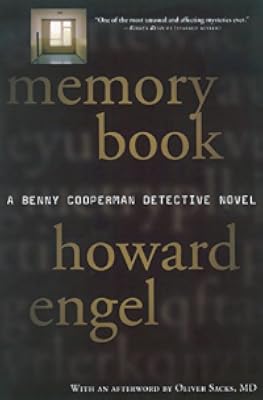
But at least being a writer is a help in describing what it feels like to show more have this condition. Engel wrote to Oliver Sacks while still in hospital and his letter was actually quoted by Sacks in an article in the The New Yorker. Engel was "an assiduous and long-time reader" of the magazine and he was pleased to be quoted in an article there. However, what he really wanted to do was write a story himself that would be printed in the magazine. Maybe this, as well as his fertile imagination, led him back to the computer to do another Benny Cooperman mystery. That book is entitled Memory Book and in it Benny suffers a similar fate as Engel. I haven't read it but now I am even more anxious to find a copy.
If there is anything that could make me want to undergo this devastating condition it would be the chance to not only write to but actually meet Oliver Sacks. Engel called in on Sacks when he went to Manhattan and they subsequently met each other when one was in the home town of the other. I am a huge fan of Sacks and the icing on the cake to this very interesting book was the afterword by him. show less
In the hospital I was being told that while I couldn't read, I could still write. At the time, this was cold comfort. It was like being given permission to tap dance all the way to the scaffold. (p. 81)
But at least being a writer is a help in describing what it feels like to show more have this condition. Engel wrote to Oliver Sacks while still in hospital and his letter was actually quoted by Sacks in an article in the The New Yorker. Engel was "an assiduous and long-time reader" of the magazine and he was pleased to be quoted in an article there. However, what he really wanted to do was write a story himself that would be printed in the magazine. Maybe this, as well as his fertile imagination, led him back to the computer to do another Benny Cooperman mystery. That book is entitled Memory Book and in it Benny suffers a similar fate as Engel. I haven't read it but now I am even more anxious to find a copy.
If there is anything that could make me want to undergo this devastating condition it would be the chance to not only write to but actually meet Oliver Sacks. Engel called in on Sacks when he went to Manhattan and they subsequently met each other when one was in the home town of the other. I am a huge fan of Sacks and the icing on the cake to this very interesting book was the afterword by him. show less
“Like astigmatism on a drunken weekend.” “[A] film in which the soundtrack no longer matched the lip movements of the characters.” “Like being told that the right leg had to be amputated but that I could keep the shoe and sock.”
There are countless medical conditions that may befall a person, but it is unlikely there has been a more ironic misfortune than that which afflicts Canadian author Howard Engel.
Engel, creator of the successful Benny Cooperman mystery series, woke one day to discover that the front page of The Globe and Mail looked to written in a foreign language, “Cyrillic one moment and Korean the next…what looked like an a one moment looked like an e the next and a w after that.”
Engel had suffered a type of show more stroke called alexia sine agraphia, or “word-blindness,” a rare condition in which the afflicted can still write, but can no longer read. Recognizing the overwhelming irony of the condition as it applied to his livelihood, Engel writes, “I felt like a plumber told to stay clear of drains and lead pipes, or a banker told to avoid dealings with money.”
The Man Who Forgot How to Read – the title is a direct nod to The Man Who Mistook His Wife for a Hat, a work by famed neurologist Dr. Oliver Sacks – is Engel’s memoir of rehabilitation, a work notable for its complete absence of self-pity. Certainly, no one could ever blame Engel for spiraling into depression, but his refusal to give up what he loves is inspiring.
It is not the likelihood of never writing again which fuels Engel’s initial despair, but the possibility that he will never again enjoy the simple pleasure of reading a book. “Reading was hard-wired into me,” he pines, devastated that the main pleasure of his life has been cruelly snatched away. “I could no more stop reading than I could stop my heart.”
As he comes to grips with his new situation, attending therapy sessions to help him adapt to a world where apples and grapefruits appear strangely similar, Engel begins to try and write again, facing each letter as a hieroglyph to be memorized. This is far harder than he anticipated, vividly describing it as “trying to move a ton of raw liver uphill by hand.”
Like the Cooperman mysteries (that last of which, Memory Book, was written after his stroke), Engel writes with a disarming simplicity of voice that may keep his mysteries humming, but unfortunately robs the story at hand of any tension.
In his guise as mystery writer, Engel excels at keeping the reader guessing as to the outcome. Here, the ending is never in doubt, and while this should not dissuade a person from reading Engel’s remarkable story, the lightness of his voice never fully captures the anguish he says he feels.
As Dr. Sacks himself says in the afterword, Engel’s story “is not only as fascinating as one of his won detective novels but a testament to the resilience and creative adaptation of one man and his brain.” Engel’s spirit in the face of his affliction is indeed stunning, but his hand is far surer in the realm of fiction than memoir.
Originally published (heavily expurgated version) in The Winnipeg Free Press, September 23, 2007. show less
There are countless medical conditions that may befall a person, but it is unlikely there has been a more ironic misfortune than that which afflicts Canadian author Howard Engel.
Engel, creator of the successful Benny Cooperman mystery series, woke one day to discover that the front page of The Globe and Mail looked to written in a foreign language, “Cyrillic one moment and Korean the next…what looked like an a one moment looked like an e the next and a w after that.”
Engel had suffered a type of show more stroke called alexia sine agraphia, or “word-blindness,” a rare condition in which the afflicted can still write, but can no longer read. Recognizing the overwhelming irony of the condition as it applied to his livelihood, Engel writes, “I felt like a plumber told to stay clear of drains and lead pipes, or a banker told to avoid dealings with money.”
The Man Who Forgot How to Read – the title is a direct nod to The Man Who Mistook His Wife for a Hat, a work by famed neurologist Dr. Oliver Sacks – is Engel’s memoir of rehabilitation, a work notable for its complete absence of self-pity. Certainly, no one could ever blame Engel for spiraling into depression, but his refusal to give up what he loves is inspiring.
It is not the likelihood of never writing again which fuels Engel’s initial despair, but the possibility that he will never again enjoy the simple pleasure of reading a book. “Reading was hard-wired into me,” he pines, devastated that the main pleasure of his life has been cruelly snatched away. “I could no more stop reading than I could stop my heart.”
As he comes to grips with his new situation, attending therapy sessions to help him adapt to a world where apples and grapefruits appear strangely similar, Engel begins to try and write again, facing each letter as a hieroglyph to be memorized. This is far harder than he anticipated, vividly describing it as “trying to move a ton of raw liver uphill by hand.”
Like the Cooperman mysteries (that last of which, Memory Book, was written after his stroke), Engel writes with a disarming simplicity of voice that may keep his mysteries humming, but unfortunately robs the story at hand of any tension.
In his guise as mystery writer, Engel excels at keeping the reader guessing as to the outcome. Here, the ending is never in doubt, and while this should not dissuade a person from reading Engel’s remarkable story, the lightness of his voice never fully captures the anguish he says he feels.
As Dr. Sacks himself says in the afterword, Engel’s story “is not only as fascinating as one of his won detective novels but a testament to the resilience and creative adaptation of one man and his brain.” Engel’s spirit in the face of his affliction is indeed stunning, but his hand is far surer in the realm of fiction than memoir.
Originally published (heavily expurgated version) in The Winnipeg Free Press, September 23, 2007. show less
This is a very interesting first-hand perspective of the results of a stroke that left Mr. Engel, a successful author, unable to read. He could, however, still write. The book provides more food for thought on the workings of the human brain, a subject that I'm very interested in.
It is also a very personal story of someone with a profound love of reading who refuses to believe he must give it up. It is a story of personal courage and family support.
It is also a very personal story of someone with a profound love of reading who refuses to believe he must give it up. It is a story of personal courage and family support.
They hook you early, the pushers, even in pre-school. Maybe some of us have a greater weakness for it than others. It is a fierce addiction, reading, and from there it is a slippery slope to writing. Howard Engel was hooked young. Blame his parents; they read in the house. Soon he was picking his own library books and writing puppet shows. He could not be found without a two or more books on hand. As an adult, he wrote for radio then published a dozen detective novels. He was an addict of the printed word when he forgot how to read.
The Man Who Forgot How to Read is memoir by Engel of a stroke that robbed him of his ability to read. Alexia sine agraphia is a rare condition in which the victim maintains the ability to write, but not read. show more A frustrating condition, indeed. He could write, but not read what he had just written. Stroke cuts into memory, threatening one’s sense of self; but Engel’s identity was fixed in reading: “I was still a reader. The blast to my brain could not make me otherwise. Reading was hard-wired into me. I could no more stop reading than I could stop my heart. Reading was bone and marrow, lymph and blood to me.” (41)
Step by step, with the help of skilled therapists and dedicated family and friends, Engel learned to read from the beginning again. Once the reading skills were working again, the writing came naturally, first another detective novel in which his protagonist suffers a blow to the head, then this memoir. Engel’s refusal to accept the status of a “former reader”, and his victory over a stroke and brain damage to achieve it, should be a siren call to those who have not yet discovered a passion for reading. Unlike other addictions, the reading vice may take some effort to acquire, but then pays off in lifelong pleasure without regret. Want a fix?
http://johnmiedema.ca/2009/08/09/the-man-who-forgot-how-to-read-by-howard-engel-... show less
The Man Who Forgot How to Read is memoir by Engel of a stroke that robbed him of his ability to read. Alexia sine agraphia is a rare condition in which the victim maintains the ability to write, but not read. show more A frustrating condition, indeed. He could write, but not read what he had just written. Stroke cuts into memory, threatening one’s sense of self; but Engel’s identity was fixed in reading: “I was still a reader. The blast to my brain could not make me otherwise. Reading was hard-wired into me. I could no more stop reading than I could stop my heart. Reading was bone and marrow, lymph and blood to me.” (41)
Step by step, with the help of skilled therapists and dedicated family and friends, Engel learned to read from the beginning again. Once the reading skills were working again, the writing came naturally, first another detective novel in which his protagonist suffers a blow to the head, then this memoir. Engel’s refusal to accept the status of a “former reader”, and his victory over a stroke and brain damage to achieve it, should be a siren call to those who have not yet discovered a passion for reading. Unlike other addictions, the reading vice may take some effort to acquire, but then pays off in lifelong pleasure without regret. Want a fix?
http://johnmiedema.ca/2009/08/09/the-man-who-forgot-how-to-read-by-howard-engel-... show less
Howard Engel, a Canadian writer of detective fiction tells the true story of his stroke and subsequent alexia which left him unable to read, but still able to write. I found the book dealt well with the overall experience, but I wanted to know more about how he was able to gain back some skill in reading, rather than just knowing that he underwent rehab, still had a faulty memory especially for names and relies heavily on others including his editors to read back what he writes. Amazingly, he has published another Barry Cooperman mystery in which he situates Barry in a hospital recovering from head injury.
Written not long after the stroke that afflicted Engel with the inability to read (while still having the ability to write, although without being able to read what he had written), this book is written (deliberately) with the flaws and memory slips you would expect as Engel tells his story. It works in an odd way even though it is an awkward read. I strongly recommend following up this book by reading Memory Book (A Benny Cooperman Detective Novel) by the same author where he more literately brings to life his affliction by passing it on to the detective he is know for writing about.
Members
- Recently Added By
Published Reviews
In Engel's memoir, he relates the difficult journey from bookworm word-jockey to near-illiterate and back again; a successful mystery novelist in his native Canada, Engel awoke one morning to discover he'd lost the ability to read. Soon, he's informed that he suffered a stroke while asleep, and is afflicted with alexia sine agraphia, a condition in which he can still write, but can't read-even show more what he himself has written. While battling alexia in rehab, Engel juggles a young son and a girlfriend, and tries to figure out how to support himself and his family. After accepting that he will never again write adventures for his long-time lead, detective Benny Cooperman, he eventually finds himself forging a therapeutic novel in which Benny suffers from a brain injury similar to Engel's own. This intriguing account of personal tragedy, overcome with grace and humility, is an inspirational and instructive tale. show less
added by VivienneR
Lists

Best Autobiographies and Memoirs
370 works; 67 members

Disabled author's autobiography
36 works; 4 members
Author Information

24+ Works 1,204 Members
Howard Engel was born on April 2, 1931; he is a Canadian mystery writer, author of the Benny Cooperman Mysteries. He has won numerous awards thanks to his literary works, such as the Arthur Ellis Award for Crime Fiction and the Crime Writers of Canada Derick Murdoch Award. In 2013, Engel received a Queen Elizabeth II Diamond Jubilee medal. (Bowker show more Author Biography) show less
All Editions
Common Knowledge
- Original publication date
- 2007
- People/Characters
- Howard Engel; Oliver Sacks; Jacob Engel
- Important places
- Toronto, Ontario, Canada
- Epigraph
- "Much of my unassisted self . . . I struggled through the alphabet as if it had been a bramble-bush; getting considerably worried and scratched by every letter. After that, I fell among those thieves, the nine figures, who ... (show all)seemed every evening to do something new to disguise themselves and baffle recognition."
—— Charles Dickens, Great Expectations - Dedication
- In memory of Arthur A. Hamilton and Sheldon P. Zitner
The Rev. A. A. Hamilton always encouraged me in my work and I had often sharpened my wits on his original, enquiring and omnivorous mind. My friend Sheldon, known ... (show all)in print as the poet S. P. Zitner, stimulated me over long lunches with his crystalline, dark wit. - First words
- My name is Howard Engel. I write detective stories. That's what I tell people when they ask me what I do. I could say I'm a writer or a novelist, but that raises a false echo in my brain, so I'm happier with the more modes... (show all)t claim of writing detective stories. I've written quite a few of them.
- Quotations
- I could no more stop reading than I could stop my heart. Reading was bone and marrow, lymph and blood to me.
Books have been my vice. . . . I keep on bringing books home like stray cats. I can't stop. - Last words
- (Click to show. Warning: May contain spoilers.)It is a story that is not only as fascinating as one of his own detective novels but a testament to the resilience and creative adaptation of one man and his brain.
- Blurbers
- Robinson, Peter; Sacks, Oliver
Classifications
- Genres
- Nonfiction, Biography & Memoir, General Nonfiction, Science & Nature, Literature Studies and Criticism
- DDC/MDS
- 362.196 — Society, government, & culture Social problems and social services Social Welfare People with physical illnesses Services to people with specific conditions Diseases
- LCC
- RC394 .W6 .E54 — Medicine Internal medicine Internal medicine Neurosciences. Biological psychiatry. Neuropsychiatry Neurology. Diseases of the nervous system
- BISAC
Statistics
- Members
- 144
- Popularity
- 227,194
- Reviews
- 10
- Rating
- (3.73)
- Languages
- English
- Media
- Paper, Ebook
- ISBNs
- 7
- ASINs
- 2