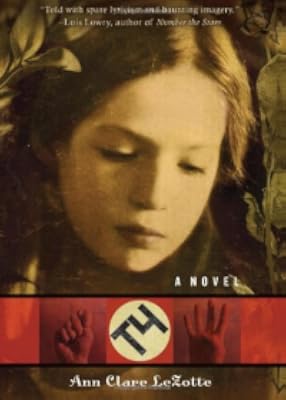
T4
by Ann Clare LeZotte
On This Page
Description
It is 1939. Paula Becker, thirteen years old and deaf, lives with her family in a rural German town. As rumors swirl of disabled children quietly disappearing, a priest comes to her family's door with an offer to shield Paula from an uncertain fate. When the sanctuary he offers is fleeting, Paula needs to call upon all her strength to stay one step ahead of the Nazis.. Juvenile Literature. Historical Fiction. Juvenile Fiction.
Tags
Recommendations

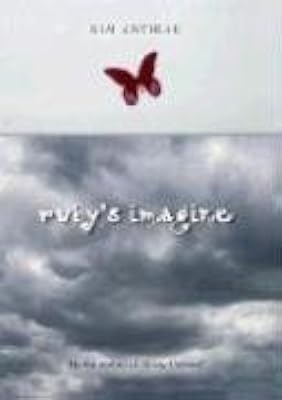
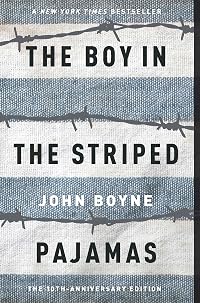
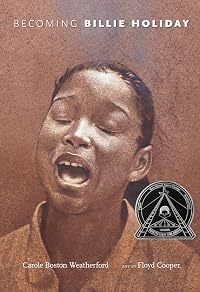
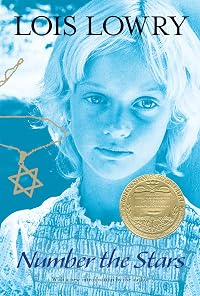






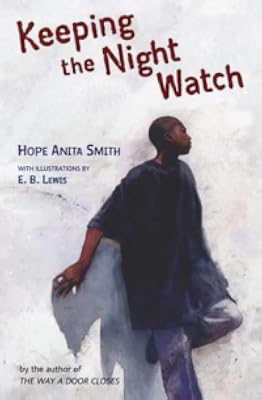
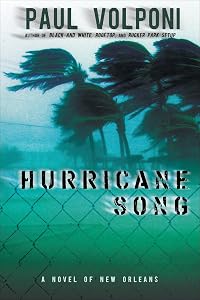
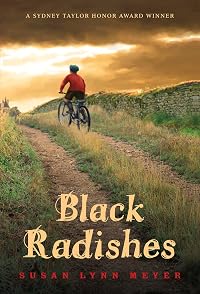
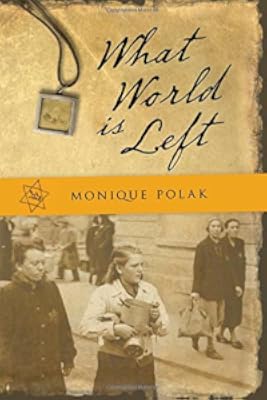


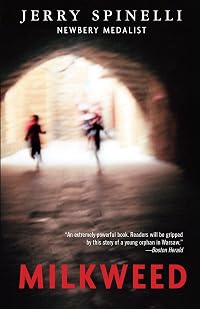
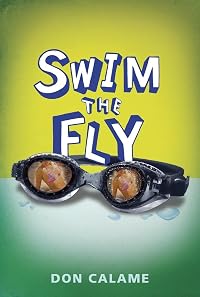
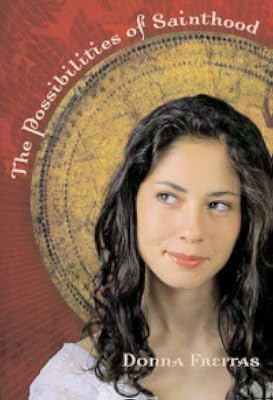
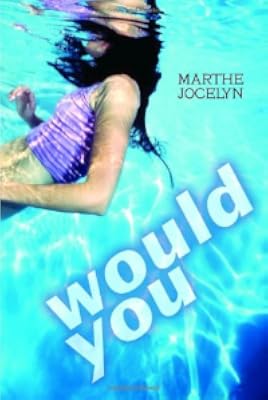
Member Recommendations

Member Reviews
Germany in 1939 was a lethal place, not only for the Jews. This is the story of Paula, a thirteen-year-old Deaf girl targeted by Hitler's program (called Tiergartenstrasse 4 or T4) mandating euthanasia of the mentally and physically disabled. The author pushes us into Paula's world with a balance of research and characterization. Paula learns from other fugitives about doctors and victims of T4, many of them historical personalities. Simultaneously, she tells her own story--a story of Deafness, coming of age, persecution, survival, and spirit--in moments of poignant, vibrant detail.
One could wish this story had been written in prose, fully fleshed out. "A Novel" isn't really accurate. This is more a collection of impressions and show more moments, and the frugal free verse is sometimes almost too sparse. Overall, for me, it works. The writer picked each image perfectly, from dark red lipstick "like the wing of a cardinal, or a fancy automobile" to a frozen forest "that looked like it was made of glass." She cites the grisly statistics of the T4 murders and quotes from an actual German bishop's sermon against it, but she also keeps the atrocities personal for Paula and those she encounters.
Ms. LeZotte manages to meld history's big picture and Paula's little story, the greatest challenge for historical fiction. History is nearer after one reads this book. This is a bright flare of a story, brighter for its brevity. It burns with the strong, straightforward voice of the Deaf and the spirit of all persecuted people. show less
One could wish this story had been written in prose, fully fleshed out. "A Novel" isn't really accurate. This is more a collection of impressions and show more moments, and the frugal free verse is sometimes almost too sparse. Overall, for me, it works. The writer picked each image perfectly, from dark red lipstick "like the wing of a cardinal, or a fancy automobile" to a frozen forest "that looked like it was made of glass." She cites the grisly statistics of the T4 murders and quotes from an actual German bishop's sermon against it, but she also keeps the atrocities personal for Paula and those she encounters.
Ms. LeZotte manages to meld history's big picture and Paula's little story, the greatest challenge for historical fiction. History is nearer after one reads this book. This is a bright flare of a story, brighter for its brevity. It burns with the strong, straightforward voice of the Deaf and the spirit of all persecuted people. show less
Proof that it's not the size of the book that determines the wallop it packs. In just over 100 pages of free verse, the author (herself deaf) opens readers' eyes to the breadth of the Nazis' horrors-- the narrator is not Jewish, but as a disabled person, is marked for death according to the Nazi program, Tiergartenstrasse 4, which mandates that disabled persons are "useless eaters" and "unfit to live." A little-known slice of history, beautifully written.
Ann Clare LeZotte's debut novel, T4, uses free verse to provide a powerful look into the impact of the Nazi regime on German nationals, particularly those deemed unfit to live. T4 (Tiergartenstrasse 4) or Action T4 was a Nazi euthanasia program between 1939 and 1941 to "eliminate" the disabled or mentally ill.
"I couldn't communicate./I was trapped in my silence,/As if under a veil.//This made me feel upset/And angry sometimes./I put my face in my pillow/And sobbed and sighed.//" (I didn't learn to speak, Page 7)
Paula Becker is a young girl living in Germany while the Nazi party is at war with the world and persecuting its own people. But she is not just a young German girl, she's also a deaf girl. T4 is a free verse novel that utilizes show more simple language and images to accurately portray the young narrator's voice. Paula is forced to leave her home and grow up on the run as the Nazi regime seeks out disabled and mentally ill patients for the T4 program. Only one or two poems in the novel seem out of order, but this coincides with the flitting mind of a young girl who is struggling to understand her world and find her place in it.
LeZotte's narrative poems create a cohesive novel for young readers interested in learning more about WWII and the Holocaust. Readers will enjoy the simple imagery and easy-to-read poems, which allow Paula's confusion, curiosity, and evolution to shine through. Some of the most poignant prose poems in this novel are "Poor Kurt," "I Put on Stephanie's Lipstick," "But the Killings Didn't Stop," and "Postscript." T4 is a novel for young readers and adults, which will easily generate discussion and pique children's interest in learning more about WWII and the Holocaust. show less
"I couldn't communicate./I was trapped in my silence,/As if under a veil.//This made me feel upset/And angry sometimes./I put my face in my pillow/And sobbed and sighed.//" (I didn't learn to speak, Page 7)
Paula Becker is a young girl living in Germany while the Nazi party is at war with the world and persecuting its own people. But she is not just a young German girl, she's also a deaf girl. T4 is a free verse novel that utilizes show more simple language and images to accurately portray the young narrator's voice. Paula is forced to leave her home and grow up on the run as the Nazi regime seeks out disabled and mentally ill patients for the T4 program. Only one or two poems in the novel seem out of order, but this coincides with the flitting mind of a young girl who is struggling to understand her world and find her place in it.
LeZotte's narrative poems create a cohesive novel for young readers interested in learning more about WWII and the Holocaust. Readers will enjoy the simple imagery and easy-to-read poems, which allow Paula's confusion, curiosity, and evolution to shine through. Some of the most poignant prose poems in this novel are "Poor Kurt," "I Put on Stephanie's Lipstick," "But the Killings Didn't Stop," and "Postscript." T4 is a novel for young readers and adults, which will easily generate discussion and pique children's interest in learning more about WWII and the Holocaust. show less
I had high hopes for this--a holocaust book that isn't focused on the Jews, but rather on the disabled, an under-represented viewpoint. Lois Lowry even provides a cover quote, claiming that this book is "told with spare lyricism and haunting imagery." But it's just not. Okay, "spare" I'll grant, but there's virtually no imagery at all, and has all the lyricism of an owner's manual. It's a novel in verse (which always gives me pause; it's rare to find one that's done well), and at a slim 100 pages, provides very little information other than that this happened.
The author (who is apparently a published poet, though that boggles me) provides no extra details, no fleshed-out characters or settings or circumstances. It reads like a textbook show more broken into lines. By the end of the book, I still didn't care about the narrator, and it moves along with so little feeling I couldn't really say if it all happened in the span of a decade or a year or a week. (Flipping through it again, it's 4 years--but there's no sense of time progressing, or of spending any length of time in any place.)
Give this one a pass; there are plenty of other, better holocaust books available, though it's a shame so few talk about any persecuted group other than Jews. show less
The author (who is apparently a published poet, though that boggles me) provides no extra details, no fleshed-out characters or settings or circumstances. It reads like a textbook show more broken into lines. By the end of the book, I still didn't care about the narrator, and it moves along with so little feeling I couldn't really say if it all happened in the span of a decade or a year or a week. (Flipping through it again, it's 4 years--but there's no sense of time progressing, or of spending any length of time in any place.)
Give this one a pass; there are plenty of other, better holocaust books available, though it's a shame so few talk about any persecuted group other than Jews. show less
The story's fine but so brief. i don't understand why YA authors have hopped on this free verse bandwagon. It just seems like a lazy way to write a story. You do a very basic outline, add a few words here and there, and the story's done. You don't need to bother with depth or dialogue. Why is this so popular? Is it because our society's grown shiftless?
Just as I started to become a fan of novels in verse, this one made me question their purpose/usefulness/effect. I realized that this "novel in verse" is merely a 2-3 page memoir, if written in prose. There was nothing poetic about it, really, save for the fact that it was in lines and stanzas, some pages being only about 4 lines for no apparent poetic effect. Really, it was an interesting story, but I read it in 20 minutes (and I'm a slow reader who spent most of that 20 minutes trying to leech more meaning out of the structure than actually existed). A fine piece of literature to have a class full of 8th graders read just for the background on T4, but I see little more value in it than that. No depth, seemed sloppy, and to me seemed show more to be stretched out into a "novel" for no reason. I could tell this story in 5 minutes and my kids would get just as much out of it as if they read it. show less
I wanted to love this novel in verse because it's got such an interesting and unique subject matter. Paula is a young deaf girl, which, during Hitler's Holocaust, could get her killed. Children with disabilities are being quietly rounded up and put to death "for their own good". A priest approaches the family and offers to hide Paula so that she won't be taken by the Nazis.
It's certainly a story that needs to be told and it's one that I was very interested to read. But for such riveting subject matter, I found the book to be actually boring. It reads more like a history textbook than the story of a young girl, forced away from her family and facing death for something that is not her fault.
It's certainly a story that needs to be told and it's one that I was very interested to read. But for such riveting subject matter, I found the book to be actually boring. It reads more like a history textbook than the story of a young girl, forced away from her family and facing death for something that is not her fault.
Members
- Recently Added By
Lists

Narrative verse for pleasure
75 works; 8 members
Author Information

8 Works 933 Members
Awards and Honors
Common Knowledge
- Canonical title
- T4
Classifications
- Genres
- Poetry, Fiction and Literature, Kids, Tween, Children's Books
- DDC/MDS
- 114 — Philosophy & psychology Metaphysics (existence, purpose, and the nature of reality) Space
- LCC
- PZ7.5 .L49 .T — Language and Literature Fiction and juvenile belles lettres Fiction and juvenile belles lettres Juvenile belles lettres
- BISAC
Statistics
- Members
- 191
- Popularity
- 171,313
- Reviews
- 26
- Rating
- (3.61)
- Languages
- English
- Media
- Paper, Ebook
- ISBNs
- 2
- ASINs
- 2