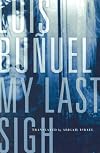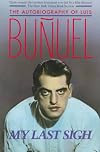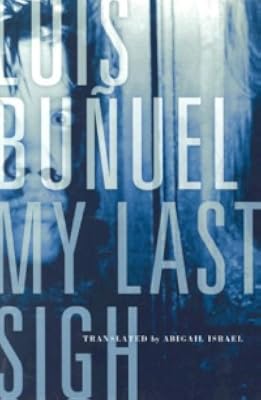
My Last Sigh
by Luis Buñuel
On This Page
Description
A provocative memoir from Luis Buñuel, the Academy Award winning creator of some of modern cinema's most important films, from Un Chien Andalou to The Discreet Charm of the Bourgeoisie. Luis Buñuel's films have the power to shock, inspire, and reinvent our world. Now, in a memoir that carries all the surrealism and subversion of his cinema, Buñuel turns his artistic gaze inward. In swift and generous prose, Buñuel traces the surprising contours of his life, from the Good Friday drumbeats show more of his childhood to the dreams that inspired his most famous films to his turbulent friendships with Federico García Lorca and Salvador Dalí. His personal narratives also encompass the pressing political issues of his time, many of which still haunt us today--the specter of fascism, the culture wars, the nuclear bomb. Filled with film trivia, framed by Buñuel's intellect and wit, this is essential reading for fans of cinema and for anyone who has ever wanted to see the world through a surrealist's eyes. show lessTags
Recommendations

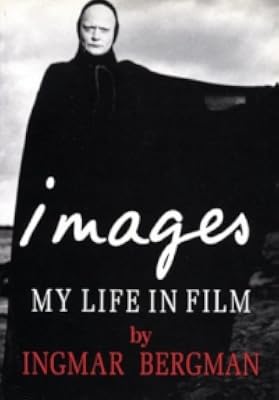
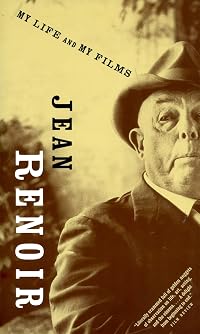

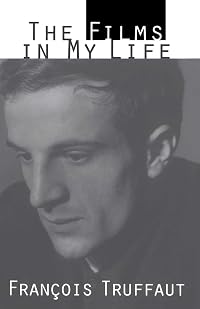
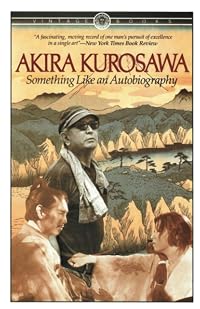















Member Reviews
Passei tempos achando que nunca daria cinco estrelas para um livro escrito por um cineasta desde que Tarkovski acabara com todo as chances com seu estupendo Esculpir o Tempo, mas eis que aparece essa preciosidade de Buñuel (ajudado por Jean-Claude Carrière).
Ao mesmo tempo que não é a obra-prima narrativa que nos deu Tarkovski, é por si um compêndio do século XX, parece-me que não há baluarte daquele século com quem Buñuel não manteve um tête-à-tête, mesmo assim não é bem isso que torna tal livro grandioso e sim a personalidade deliciosa do cineasta.
Sua vida e linguagem é permeada por diatribes incessantes ao status-quo, o que torna suas histórias muito divertidas (assim como seus filmes), mas a verdade é que devo show more estar dando cinco estrelas ao livro pela minha total identificação ao modo de vida e pensar do cineasta, que me dá um certo alento em meio à mediocridade reinante. show less
Ao mesmo tempo que não é a obra-prima narrativa que nos deu Tarkovski, é por si um compêndio do século XX, parece-me que não há baluarte daquele século com quem Buñuel não manteve um tête-à-tête, mesmo assim não é bem isso que torna tal livro grandioso e sim a personalidade deliciosa do cineasta.
Sua vida e linguagem é permeada por diatribes incessantes ao status-quo, o que torna suas histórias muito divertidas (assim como seus filmes), mas a verdade é que devo show more estar dando cinco estrelas ao livro pela minha total identificação ao modo de vida e pensar do cineasta, que me dá um certo alento em meio à mediocridade reinante. show less
review of
Luis Buñuel's My Last Sigh
by tENTATIVELY, a cONVENIENCE - July 6, 2012
"I'm not a writer, but my friend and colleague Jean-Claude Carrière is. An attentive listener and scrupulous recorder during our many long conversations, he helped me write this book."
When I 1st encountered the historical traces of Surrealism, probably in the early 1970s, maybe even earlier, it was very exciting to me. I've always loved the paintings. Then, over the yrs, Surrealism just started to seem like Breton's takeover of dadaism & Breton's constant elimination of the people from the group for their various ideological 'infractions' rubbed me the wrong way. It seemed too authoritarian. Add to that that I found much of the writing disappointing in show more contrast to that of the proto-Surrealists like Lautréamont, Jarry, & Roussel & my interest in & enthusiasm for the Surrealists diminished. I've still loved the paintings, tho, & occasionally wd check out a Buñuel film I hadn't previously witnessed. Even Buñuel is someone whose work I've had varying enthusiasm for. I haven't liked many of the Mexican films very much, eg.
But, then, I got this bk, probably free from my moving-away friend Spat, & I started reading it in a desultory manner while recouping from an injury &, LO & BEHOLD!, I love Surrealism all over again & hope that I can find the 8 Buñuel films I haven't seen so that I can check them out! In fact, if I watch them more than once I'll be seeing them more than Buñuel ever did - according to this final statement of his.
1st, I must say, that sick of Surrealism or not, sick of Buñuel or not, "Un Chien andalou" is probably in my top 10 favorite films of all time - & many others of his are very dear to me indeed: "L'Age d'or", "Tierra sin pan", "The Exterminating Angel". "The Milky Way", "The Discreet Charm of the Bourgeoisie", "The Phantom of Liberty", & "That Obscure Object of Desire" being, perhaps, the main ones. The only Surrealist filmmaker being perhaps even more interesting to me being, perhaps, Jan Svankmajer.
Buñuel's career as a filmmaker having spanned the 50 yrs from 1928 to 1977 he's qualified to talk about 1st-hand experience w/ many aspects of film's development. A particular favorite of mine is the Explicator, the person who explains the movie as it's screened:
"In addition to the traditional piano player, each theater in Saragossa was equipped with its explicador, or narrator, who stood next to the screen and "explained" the action to the audience. "Count Hugo sees his wife go by on the arm of another man," he would declaim. "And now, ladies and gentlemen, you will see how he opens the drawer of his desk and takes out a revolver to assassinate his unfaithful wife!"
"It's hard to imagine today, but when the cinema was in its infancy, it was such a new and unusual narrative form that most spectators had difficulty understanding what was happening. Now we're so used to film language, to the elements of montage, to both simultaneous and successive action, to flashbacks, that our comprehension is automatic; but in the early years, the public had a hard time deciphering this new pictorial grammar. They needed an explicador to guide them from scene to scene." - p 32
Now, I love the idea of explication & have used it in the 21st century. Take, eg, my:
"Satanic Liposuction, Neoasm?!, & YOU!!" wch has a 'final' version revised to include screening footage from Orgone Cinema 1999 five projector version, 2000 Melbourne Super-8 Club version w/ explication & reel change tarot reading, 2007 Jefferson Presents explication from S. Cannon, John Allen Gibel & myself (tENTATIVELY, a cONVENIENCE).
& I think I can safely say that (v)audiences still often find my own movies difficult to understand even w/ explication b/c they're deliberately designed to stretch the attn & reference capacity of the human brain. What for some people is a fast succession of incomprehensible images is for others a succession of comprehensible reference points. I realize that even if there were to be a human being who cd talk fast enuf to 'explain' these references, it's unlikely there wd be anyone capable of following the speech. But that might change & I hope that movies like my own might contribute to that change.
Alas, as much as I loved this bk, I have to say that I was once again disappointed to find that someone whose work I respect was enabled to make it b/c of their wealthy family. The refreshing thing is how honest & direct Buñuel is about it. I became even more convinced that he was a true "Republican" (as in the Spanish Civil War sense).
"I remember my mother weeping with despair when, in 1928 or 1929, I announced my intention of making a film. It was as if I'd said: "Mother, I want to join the circus and be a clown." A family friend, a lawyer, had to be enlisted to convince her that there was a lot of money to be made in films. In fact, he pontificated, someone might even produce an interesting piece of work on the order of the spectacular Italian films about ancient Greece and Rome. (My mother allowed herself to be persuaded, but she never saw the film she'd financed.) - p 33
Ha ha! Buñuel & Dali's "Un Chien andalou" was financed by Buñuel's rich mom!!
"I was having a drink with Claude Jaeger at the Select in Paris one evening and became so outrageously rowdy that all the customers left. Only one woman remained behind. Not exactly sober, I made my way to her table, sat down, and started talking, announcing to her that she was Russian, that she'd been born in Moscow . . . and after a string of other details, we both simply stared at each other openmouthed - we'd never seen each other before!" - p 69
I particularly loved this story b/c a very similar thing happened w/ me. In 1985 or thereabouts I went on a date of sorts w/ a woman that I didn't know very well & we went to a bar & had some drinks. Given my love of extemporizing, I started rambling on w/ a story about her childhood in Italy - basically meant to entertain her. I was in just the right mode of relaxation that seems conducive to stream-of-consciousness hitting an unintentional mark. ANYWAY, she asked me how I cd possibly know all these things. My impromptu imaginary description of her childhood in Italy was accurate. I didn't even realize that she was from Italy. Alas, I've since asked this friend if she remembered that & she didn't - but I certainly do.
"Like the señoritos I knew in Madrid, most surrealists came from good families; as in my case, they were bourgeois revolting against the bourgeoisie." - p 107
"What fascinated me most, however, in all our discussions at Cyrano, was the moral aspect of the movement. For the first time in my life I'd come into contact with a coherent moral system that, as far as I could tell, had no flaws. It was an aggressive morality based on the complete rejection of all existing values. We had other criteria: we exalted passion, mystification, black humour, the insult, and the call of the abyss. Inside this new territory, all our thoughts and actions seemed justifiable; there was simply no room for doubt. Everything made sense. Our morality may have been more demanding and more dangerous than the prevailing order, but it was also stronger, richer, and more coherent." - p 107
Now I have mixed feelings about the above. It was all too easy for them to scorn existing moral systems insofar as they were mostly well-to-do & didn't have to interface w/ society in a more practical manner. They were spoiled brats, intelligent spoiled brats, but spoiled brats nonetheless. Just as I scorn William Burroughs' exalted example of the junkie, wch he cd afford as the scion of a wealthy family, so do I scorn any human who provides an example that doesn't acknowledge the level of privilege that enables it. But, to Buñuel's credit, Buñuel acknowledges his privilege & is also shown as a person whose ethics were deeply felt. & many of the Surrealists sincerely addressed socio-economic inequality by participation in the Communist Party. Many also left the CP by rejecting its narrow-mindedness & authoritarianism. Buñuel explains this well.
Nonetheless, the Surrealists bordered a bit too close for comfort to my mind to Nazism. The composer George Antheil claims that the Surrealists, who supported his music, punched people who didn't like Antheil's "Ballet Mechanigue" at its Paris premier. No doubt the Surrealists were reacting against the oppression of the stodgy to what they considered to be forces of progress. Nonetheless, I don't condone bulying by anyone - even people I agree w/ otherwise.
Surrealists made a practice of insulting priests. Buñuel, as a Republican, nonetheless reports even-handedly about the Spanish Civil War's extremities of anti-Catholicism:
"The priests and the rich landowners - in other words, those with conservative leanings, whom we assumed would support the Falange - were in constant danger of being executed by the Republicans. The moment the fighting began, the anarchists liberated all the political prisoners and immediately incorporated them into the ranks of the Confederación Nacional de Trabajo, which was under the direct control of the anarchist federation. Certain members of this federation were such extremists that the mere presence of a religious icon in someone's room led automatically to Casa Campo, the public park on the outskirts of the city where the executions took place. People arrested at night were always told that they were going to "talk a little walk."" - pp 151-152
Now, I'm an anarchist & I certainly support the Republican side of the Spanish Civil War & I absolutely DETEST religion. However, I don't support such mass executions. A selective assassination of Hitler, yes, wholesale executions of religious people or anyone else just b/c I disagree w/ them, NO! Does that make me a namby-pamby 'moderate'? Hardly. People are always in too big of a hurry to kill other people to make a 'revolution'. To me, a much more difficult revolution wd be one where people actually agree to disagree.
"Despite my ideological sympathies with the anarchists, I couldn't stand their unpredictable and fanatical behavior. Sometimes, it was sufficient merely to be an engineer or to have a university degree to be taken away to Casa Campo." - p 156
I respect Buñuel not for being bourgeois but for having the sense to recognize the social validity of the anarchist position w/o having to endorse its extremities to 'show' how 'hard-core' he was. He had the self-confidence to remain an individualist. The nazis thought they cd change the world by completely eradicating their 'enemy', the Jews. Anyone, who thinks they're going to 'improve' the world by killing off their enemies wholesale is thinking along the same lines as Hitler - despite propaganda bombast to the contrary. Killing the 'enemy' is the same old same old shit that humanity's been disastrously pursuing since day one.
"Then there was André Derain, tall, well-built, and very popular, who remained somewhat separate from the group [the Surrealists]. He was much older than I - at least twenty years - and often used to talk to me about the Paris Commune. He was the first to tell me about men being executed during the fierce repression led by the king's soldiers, simply because they had had calluses on their hands (the stigmata of the working class)." - p 122
Oi! I wonder if Pol Pot took inspiration from such stories - after all, he was french educated. The Khmer Rouge are reputed to've executed people for not having calluses.
"Bataille's wife, Sylvia, one of the most beautiful women I've ever seen, later married Jacques Lacan." - p 122
Small world.
"May 1968 was a series of extraordinary moments, not the least of which was seeing old surrealist slogans painted everywhere, slogans such as "All power to the imagination!" and "It is forbidden to forbid!" - p 125
"I told myself that if this had been happening in Mexico, it wouldn't have lasted more than two hours, and there would surely have been a few hundred casualties to boot, which is exactly what happened, of course, in October on the Plaza de las Tres Culturas. And yet in Paris a week later, everything was back to normal, and the great, miraculously bloodless, celebration was over." - p 125
"Like me, the students talked a great deal but did very little" - p 125
"Did very little"? Perhaps. Or perhaps they created some T.A.Z.s (Temporary Autonomous Zones, as Hakim Bey wd put it) & showed at least a little of what was possible w/o having to kill anybody - wch, as far as I'm concerned, is a great leap forward.
I've spent much of my life trying to actually do instead of fictionalizing about doing - & I've often been frustrated by the seemingly common preference for the fictionalization. But can I really blame people for playing it safe? In fiction, all sorts of havoc can be wrought w/o its having to be real.
"Since I knew the name of the leader of this terrorist group, as well as the hotel in Paris where he lived, I contacted the prefect, who was a Socialist, as soon as I got back to the embassy. He assured me that they'd pick him right up; but time went by, and nothing happened. Later, when I ran into the boss sitting happily with his friends at the Select on the Champs-Elysées, I wept with rage. What kind of world is this? I asked myself. Here's a known criminal, and the police don't want any part of him!" - p 162
Shades of Carlos anyone? While my choice of one paragraph out of a much more explanatory many may be confusing to the reader of this review, suffice it to say that terrorism has always & will always be primarily a tool of the state - no matter how it's propagandized otherwise.
In my review of Surreal friends I mention Edward James, a collector of Surrealist artwork. I also criticize the authors of that bk as politically naive &/or suspect. Buñuel's mention of James seems much more 'street-credible':
"The Englishman, Edward James, had just bought all of Dali's 1938 output, and did indeed want to give the Republicans am ultramodern bomber which was then hidden in a Czechoslovakian airport. Knowing that the Republic was dramatically short of air strength, he was making us this handsome present - in exchange for a few masterpieces from the Prado." - p 164
"Of course, this is risky reasoning. If our birth is totally a matter of chance, the accidental meeting of an egg and a sperm (but why, in fact, that particular egg and sperm among all the millions of possibilities?), chance nonetheless disappears when societies are formed, when the fetus - and then the child - finds himself subjected to its laws." - p 172
This is something Stanislav Lem explores in some detail, perhaps in The Chain of Chance, perhaps in A Perfect Vacuum, perhaps in Microworlds, perhaps in all 3.
"In the end, belief and the lack of it amount to the same thing. If someone were to prove to me - right this minute - that God, in all his luminousness, exists, it wouldn't change a single aspect of my behavior." - p 173
I'm reminded of a philosophical discussion I had w/ my friend Read. He made a good case for everything as totally predetermined by what goes before it, I probably debated for other possibilities. In the end, we both agreed that it ultimately didn't matter in terms of how we'd conduct our actual lives.
Buñuel tells a story about an autobiography of Dali's leading to Buñuel's losing a job in the US. He then meets Dali in NYC:
"He was a bastard, I told him a salaud; his book had ruined my career.
""The book had nothing to do with you," he replied. "I wrote it to make myself a star. You've only got a supporting role."" - p 183
"As unlikely as it may sound, I've never been able to discuss the amount of money offered to me when I sign a contract. Either I accept or refuse, but I never argue. I don't think I've ever done something for money that I didn't want to, and when I don't want to do something, no offer can change my mind. What I won't do for one dollar, I also won't do for a million." - pp 191-192
"Although I had excellent working relationships with my Mexican crews, I had to accept subjects I would normally have refused and work with actors who weren't always right for their roles. When all's said and done, however, I never made a single scene that compromised my convictions or my personal morality." - p 198
"On several occasions, both American and European producers have suggested that I tackle a film version of Malcolm Lowry's Under the Volcano, a novel set in Cuernavaca." [..] "Other directors besides myself have been tempted by the beauty of the story, but so far no one has made the movie." - p 194
John Huston made a film of it the yr after Buñuel died.
"My last abortive American project was the time Woody Allen proposed that I play myself in Annie Hall. He offered me thirty thousand dollars for two days work, but since the shooting schedule conflicted with my trip to New York, I declined, albeit not without some hesitation. (Marshall McLuhan wound up doing the self-portrait in my place, in the foyer of a movie theater.)" - p 194
I'm obviously posting my resumé on the wrong job boards.
"Disguise is a fascinating experience, because it allows you to experience another life. When you're a worker, for instance, sales people immediately suggest you buy the cheapest things; people are always cutting in front of you in line, and women never look at you. Clearly, the world simply isn't made for you at all." - p 227
I'm reminded of a Michael Moore tv show where he had a black scholar try to hail a cab at the same time as a white recently released convict of substantial criminal record. The black guy cdn't get a cab, the white guy had no problem. These are lessons that more people shd learn thru direct experience.
It's great to be a big deal director who makes 35mm films & gets them shown internationally.. BUT, then there's this:
"One other thing I do regret about this film are the cuts I had to make to please the censors, especially the scene between Georges Marchal and Catherine Deneuve, whom he addresses as his daughter when she lies in a coffin in a private chapel after a Mass celebrated under a splendid copy of one of Grünewald's Christs. the suppression of the Mass completely alters the character of this scene." - pp 242-243
Buñuel's last paragraph's ending wd make a great scene in a movie paying tribute to him:
"I'd love to rise from the grave every ten years or so and go buy a few newspapers. Ghostly pale, sliding silently along the walls, my papers under my arm, I'd return to the cemetery and read about all the disasters in the world before falling back to sleep, safe and secure in my tomb." - p 256
Bravo! show less
Luis Buñuel's My Last Sigh
by tENTATIVELY, a cONVENIENCE - July 6, 2012
"I'm not a writer, but my friend and colleague Jean-Claude Carrière is. An attentive listener and scrupulous recorder during our many long conversations, he helped me write this book."
When I 1st encountered the historical traces of Surrealism, probably in the early 1970s, maybe even earlier, it was very exciting to me. I've always loved the paintings. Then, over the yrs, Surrealism just started to seem like Breton's takeover of dadaism & Breton's constant elimination of the people from the group for their various ideological 'infractions' rubbed me the wrong way. It seemed too authoritarian. Add to that that I found much of the writing disappointing in show more contrast to that of the proto-Surrealists like Lautréamont, Jarry, & Roussel & my interest in & enthusiasm for the Surrealists diminished. I've still loved the paintings, tho, & occasionally wd check out a Buñuel film I hadn't previously witnessed. Even Buñuel is someone whose work I've had varying enthusiasm for. I haven't liked many of the Mexican films very much, eg.
But, then, I got this bk, probably free from my moving-away friend Spat, & I started reading it in a desultory manner while recouping from an injury &, LO & BEHOLD!, I love Surrealism all over again & hope that I can find the 8 Buñuel films I haven't seen so that I can check them out! In fact, if I watch them more than once I'll be seeing them more than Buñuel ever did - according to this final statement of his.
1st, I must say, that sick of Surrealism or not, sick of Buñuel or not, "Un Chien andalou" is probably in my top 10 favorite films of all time - & many others of his are very dear to me indeed: "L'Age d'or", "Tierra sin pan", "The Exterminating Angel". "The Milky Way", "The Discreet Charm of the Bourgeoisie", "The Phantom of Liberty", & "That Obscure Object of Desire" being, perhaps, the main ones. The only Surrealist filmmaker being perhaps even more interesting to me being, perhaps, Jan Svankmajer.
Buñuel's career as a filmmaker having spanned the 50 yrs from 1928 to 1977 he's qualified to talk about 1st-hand experience w/ many aspects of film's development. A particular favorite of mine is the Explicator, the person who explains the movie as it's screened:
"In addition to the traditional piano player, each theater in Saragossa was equipped with its explicador, or narrator, who stood next to the screen and "explained" the action to the audience. "Count Hugo sees his wife go by on the arm of another man," he would declaim. "And now, ladies and gentlemen, you will see how he opens the drawer of his desk and takes out a revolver to assassinate his unfaithful wife!"
"It's hard to imagine today, but when the cinema was in its infancy, it was such a new and unusual narrative form that most spectators had difficulty understanding what was happening. Now we're so used to film language, to the elements of montage, to both simultaneous and successive action, to flashbacks, that our comprehension is automatic; but in the early years, the public had a hard time deciphering this new pictorial grammar. They needed an explicador to guide them from scene to scene." - p 32
Now, I love the idea of explication & have used it in the 21st century. Take, eg, my:
"Satanic Liposuction, Neoasm?!, & YOU!!" wch has a 'final' version revised to include screening footage from Orgone Cinema 1999 five projector version, 2000 Melbourne Super-8 Club version w/ explication & reel change tarot reading, 2007 Jefferson Presents explication from S. Cannon, John Allen Gibel & myself (tENTATIVELY, a cONVENIENCE).
& I think I can safely say that (v)audiences still often find my own movies difficult to understand even w/ explication b/c they're deliberately designed to stretch the attn & reference capacity of the human brain. What for some people is a fast succession of incomprehensible images is for others a succession of comprehensible reference points. I realize that even if there were to be a human being who cd talk fast enuf to 'explain' these references, it's unlikely there wd be anyone capable of following the speech. But that might change & I hope that movies like my own might contribute to that change.
Alas, as much as I loved this bk, I have to say that I was once again disappointed to find that someone whose work I respect was enabled to make it b/c of their wealthy family. The refreshing thing is how honest & direct Buñuel is about it. I became even more convinced that he was a true "Republican" (as in the Spanish Civil War sense).
"I remember my mother weeping with despair when, in 1928 or 1929, I announced my intention of making a film. It was as if I'd said: "Mother, I want to join the circus and be a clown." A family friend, a lawyer, had to be enlisted to convince her that there was a lot of money to be made in films. In fact, he pontificated, someone might even produce an interesting piece of work on the order of the spectacular Italian films about ancient Greece and Rome. (My mother allowed herself to be persuaded, but she never saw the film she'd financed.) - p 33
Ha ha! Buñuel & Dali's "Un Chien andalou" was financed by Buñuel's rich mom!!
"I was having a drink with Claude Jaeger at the Select in Paris one evening and became so outrageously rowdy that all the customers left. Only one woman remained behind. Not exactly sober, I made my way to her table, sat down, and started talking, announcing to her that she was Russian, that she'd been born in Moscow . . . and after a string of other details, we both simply stared at each other openmouthed - we'd never seen each other before!" - p 69
I particularly loved this story b/c a very similar thing happened w/ me. In 1985 or thereabouts I went on a date of sorts w/ a woman that I didn't know very well & we went to a bar & had some drinks. Given my love of extemporizing, I started rambling on w/ a story about her childhood in Italy - basically meant to entertain her. I was in just the right mode of relaxation that seems conducive to stream-of-consciousness hitting an unintentional mark. ANYWAY, she asked me how I cd possibly know all these things. My impromptu imaginary description of her childhood in Italy was accurate. I didn't even realize that she was from Italy. Alas, I've since asked this friend if she remembered that & she didn't - but I certainly do.
"Like the señoritos I knew in Madrid, most surrealists came from good families; as in my case, they were bourgeois revolting against the bourgeoisie." - p 107
"What fascinated me most, however, in all our discussions at Cyrano, was the moral aspect of the movement. For the first time in my life I'd come into contact with a coherent moral system that, as far as I could tell, had no flaws. It was an aggressive morality based on the complete rejection of all existing values. We had other criteria: we exalted passion, mystification, black humour, the insult, and the call of the abyss. Inside this new territory, all our thoughts and actions seemed justifiable; there was simply no room for doubt. Everything made sense. Our morality may have been more demanding and more dangerous than the prevailing order, but it was also stronger, richer, and more coherent." - p 107
Now I have mixed feelings about the above. It was all too easy for them to scorn existing moral systems insofar as they were mostly well-to-do & didn't have to interface w/ society in a more practical manner. They were spoiled brats, intelligent spoiled brats, but spoiled brats nonetheless. Just as I scorn William Burroughs' exalted example of the junkie, wch he cd afford as the scion of a wealthy family, so do I scorn any human who provides an example that doesn't acknowledge the level of privilege that enables it. But, to Buñuel's credit, Buñuel acknowledges his privilege & is also shown as a person whose ethics were deeply felt. & many of the Surrealists sincerely addressed socio-economic inequality by participation in the Communist Party. Many also left the CP by rejecting its narrow-mindedness & authoritarianism. Buñuel explains this well.
Nonetheless, the Surrealists bordered a bit too close for comfort to my mind to Nazism. The composer George Antheil claims that the Surrealists, who supported his music, punched people who didn't like Antheil's "Ballet Mechanigue" at its Paris premier. No doubt the Surrealists were reacting against the oppression of the stodgy to what they considered to be forces of progress. Nonetheless, I don't condone bulying by anyone - even people I agree w/ otherwise.
Surrealists made a practice of insulting priests. Buñuel, as a Republican, nonetheless reports even-handedly about the Spanish Civil War's extremities of anti-Catholicism:
"The priests and the rich landowners - in other words, those with conservative leanings, whom we assumed would support the Falange - were in constant danger of being executed by the Republicans. The moment the fighting began, the anarchists liberated all the political prisoners and immediately incorporated them into the ranks of the Confederación Nacional de Trabajo, which was under the direct control of the anarchist federation. Certain members of this federation were such extremists that the mere presence of a religious icon in someone's room led automatically to Casa Campo, the public park on the outskirts of the city where the executions took place. People arrested at night were always told that they were going to "talk a little walk."" - pp 151-152
Now, I'm an anarchist & I certainly support the Republican side of the Spanish Civil War & I absolutely DETEST religion. However, I don't support such mass executions. A selective assassination of Hitler, yes, wholesale executions of religious people or anyone else just b/c I disagree w/ them, NO! Does that make me a namby-pamby 'moderate'? Hardly. People are always in too big of a hurry to kill other people to make a 'revolution'. To me, a much more difficult revolution wd be one where people actually agree to disagree.
"Despite my ideological sympathies with the anarchists, I couldn't stand their unpredictable and fanatical behavior. Sometimes, it was sufficient merely to be an engineer or to have a university degree to be taken away to Casa Campo." - p 156
I respect Buñuel not for being bourgeois but for having the sense to recognize the social validity of the anarchist position w/o having to endorse its extremities to 'show' how 'hard-core' he was. He had the self-confidence to remain an individualist. The nazis thought they cd change the world by completely eradicating their 'enemy', the Jews. Anyone, who thinks they're going to 'improve' the world by killing off their enemies wholesale is thinking along the same lines as Hitler - despite propaganda bombast to the contrary. Killing the 'enemy' is the same old same old shit that humanity's been disastrously pursuing since day one.
"Then there was André Derain, tall, well-built, and very popular, who remained somewhat separate from the group [the Surrealists]. He was much older than I - at least twenty years - and often used to talk to me about the Paris Commune. He was the first to tell me about men being executed during the fierce repression led by the king's soldiers, simply because they had had calluses on their hands (the stigmata of the working class)." - p 122
Oi! I wonder if Pol Pot took inspiration from such stories - after all, he was french educated. The Khmer Rouge are reputed to've executed people for not having calluses.
"Bataille's wife, Sylvia, one of the most beautiful women I've ever seen, later married Jacques Lacan." - p 122
Small world.
"May 1968 was a series of extraordinary moments, not the least of which was seeing old surrealist slogans painted everywhere, slogans such as "All power to the imagination!" and "It is forbidden to forbid!" - p 125
"I told myself that if this had been happening in Mexico, it wouldn't have lasted more than two hours, and there would surely have been a few hundred casualties to boot, which is exactly what happened, of course, in October on the Plaza de las Tres Culturas. And yet in Paris a week later, everything was back to normal, and the great, miraculously bloodless, celebration was over." - p 125
"Like me, the students talked a great deal but did very little" - p 125
"Did very little"? Perhaps. Or perhaps they created some T.A.Z.s (Temporary Autonomous Zones, as Hakim Bey wd put it) & showed at least a little of what was possible w/o having to kill anybody - wch, as far as I'm concerned, is a great leap forward.
I've spent much of my life trying to actually do instead of fictionalizing about doing - & I've often been frustrated by the seemingly common preference for the fictionalization. But can I really blame people for playing it safe? In fiction, all sorts of havoc can be wrought w/o its having to be real.
"Since I knew the name of the leader of this terrorist group, as well as the hotel in Paris where he lived, I contacted the prefect, who was a Socialist, as soon as I got back to the embassy. He assured me that they'd pick him right up; but time went by, and nothing happened. Later, when I ran into the boss sitting happily with his friends at the Select on the Champs-Elysées, I wept with rage. What kind of world is this? I asked myself. Here's a known criminal, and the police don't want any part of him!" - p 162
Shades of Carlos anyone? While my choice of one paragraph out of a much more explanatory many may be confusing to the reader of this review, suffice it to say that terrorism has always & will always be primarily a tool of the state - no matter how it's propagandized otherwise.
In my review of Surreal friends I mention Edward James, a collector of Surrealist artwork. I also criticize the authors of that bk as politically naive &/or suspect. Buñuel's mention of James seems much more 'street-credible':
"The Englishman, Edward James, had just bought all of Dali's 1938 output, and did indeed want to give the Republicans am ultramodern bomber which was then hidden in a Czechoslovakian airport. Knowing that the Republic was dramatically short of air strength, he was making us this handsome present - in exchange for a few masterpieces from the Prado." - p 164
"Of course, this is risky reasoning. If our birth is totally a matter of chance, the accidental meeting of an egg and a sperm (but why, in fact, that particular egg and sperm among all the millions of possibilities?), chance nonetheless disappears when societies are formed, when the fetus - and then the child - finds himself subjected to its laws." - p 172
This is something Stanislav Lem explores in some detail, perhaps in The Chain of Chance, perhaps in A Perfect Vacuum, perhaps in Microworlds, perhaps in all 3.
"In the end, belief and the lack of it amount to the same thing. If someone were to prove to me - right this minute - that God, in all his luminousness, exists, it wouldn't change a single aspect of my behavior." - p 173
I'm reminded of a philosophical discussion I had w/ my friend Read. He made a good case for everything as totally predetermined by what goes before it, I probably debated for other possibilities. In the end, we both agreed that it ultimately didn't matter in terms of how we'd conduct our actual lives.
Buñuel tells a story about an autobiography of Dali's leading to Buñuel's losing a job in the US. He then meets Dali in NYC:
"He was a bastard, I told him a salaud; his book had ruined my career.
""The book had nothing to do with you," he replied. "I wrote it to make myself a star. You've only got a supporting role."" - p 183
"As unlikely as it may sound, I've never been able to discuss the amount of money offered to me when I sign a contract. Either I accept or refuse, but I never argue. I don't think I've ever done something for money that I didn't want to, and when I don't want to do something, no offer can change my mind. What I won't do for one dollar, I also won't do for a million." - pp 191-192
"Although I had excellent working relationships with my Mexican crews, I had to accept subjects I would normally have refused and work with actors who weren't always right for their roles. When all's said and done, however, I never made a single scene that compromised my convictions or my personal morality." - p 198
"On several occasions, both American and European producers have suggested that I tackle a film version of Malcolm Lowry's Under the Volcano, a novel set in Cuernavaca." [..] "Other directors besides myself have been tempted by the beauty of the story, but so far no one has made the movie." - p 194
John Huston made a film of it the yr after Buñuel died.
"My last abortive American project was the time Woody Allen proposed that I play myself in Annie Hall. He offered me thirty thousand dollars for two days work, but since the shooting schedule conflicted with my trip to New York, I declined, albeit not without some hesitation. (Marshall McLuhan wound up doing the self-portrait in my place, in the foyer of a movie theater.)" - p 194
I'm obviously posting my resumé on the wrong job boards.
"Disguise is a fascinating experience, because it allows you to experience another life. When you're a worker, for instance, sales people immediately suggest you buy the cheapest things; people are always cutting in front of you in line, and women never look at you. Clearly, the world simply isn't made for you at all." - p 227
I'm reminded of a Michael Moore tv show where he had a black scholar try to hail a cab at the same time as a white recently released convict of substantial criminal record. The black guy cdn't get a cab, the white guy had no problem. These are lessons that more people shd learn thru direct experience.
It's great to be a big deal director who makes 35mm films & gets them shown internationally.. BUT, then there's this:
"One other thing I do regret about this film are the cuts I had to make to please the censors, especially the scene between Georges Marchal and Catherine Deneuve, whom he addresses as his daughter when she lies in a coffin in a private chapel after a Mass celebrated under a splendid copy of one of Grünewald's Christs. the suppression of the Mass completely alters the character of this scene." - pp 242-243
Buñuel's last paragraph's ending wd make a great scene in a movie paying tribute to him:
"I'd love to rise from the grave every ten years or so and go buy a few newspapers. Ghostly pale, sliding silently along the walls, my papers under my arm, I'd return to the cemetery and read about all the disasters in the world before falling back to sleep, safe and secure in my tomb." - p 256
Bravo! show less
Our memory is our coherence, our reason, our feeling, even our action. Without it we are nothing
In his popular study of neurological cases, The Man Who Mistook his Wife for a Hat , Oliver Sacks uses such quotes from Bunuel’s memoirs. It is a clever way of engaging the reader to appreciate that science can illuminate very human experiences as well as art. And art can illuminate science. The pain of losing memory, hence identity in Sack’s story of a man who cannot recall any of his life is the introduction to Bunuel’s autobiography. Can memory be trusted, and when it cannot be, we have lost so much. At least Bunuel has a reasonable memory beyond 80 years of age. He finished this book, in fact, only months before he died. At least show more there was no further chapter. For an atheist, that was an ideal outcome.
I knew little of Bunuel’s life and only really knew a handful of films I watched at the university ‘cinemateque’ on Wednesday nights. Perhaps I’ve been nostalgic: reminiscing about the 1980s this month. Speaking of which, Franscois Ozon’s latest is set in 1985 called Ete 85. I caught that at the local French Film Festival.
Here’s an excerpt if interested in the Ozon movie
https://www.youtube.com/watch?v=Em2PL_eNmyY
Born in 1900, Bunuel takes a historical point of view of his early life describing the Spain he was born into as only then emerging from the middle ages, the rituals, relationships, work barely changed in 500 years.
He can be very amusing, giving us endless insights into his love of making martinis.
https://www.youtube.com/watch?v=YDKGmW-5nbw
and here we find such skills used with artistic relevance in the film, The Discrete Charm of the Bourgeoisie
https://www.youtube.com/watch?v=QdDu4VcAWQ8
Bunuel knocked about a lot doing odd jobs, both casual and odd. He made Un Chien Andalou with Dali in 1929, and Large Door (sorry local pronunciation joke on the title L'Age d'Or) in 1930 but hardly made more films for 20 years. Before the fall of the Spanish republic he ended up in France working as a propagandist for the Republic. One of his odd jobs was to send anti-fascist pamphlets up inside balloons across the Pyrenees into fascist held Spain. Surrealism and real life change places as I imagine the beauty of a balloon floating across the frontier to deliver their payload. He spent six months in Hollywood studios with a salary to simply follow film productions and learn techniques. He found stage sets unnerving and instead spent the time in his apartment reading.
He knew Lorca and Dali, Breton, Tanguey etc. He is open about not liking Lorca’s work, but found him an exceptional though overly dramatic person. He was artistically close to Dali until he found Dali spent too much time chasing money and fame at the expense of friendships. Bunuel did the opposite. He ended up working for 15 years in Mexico, paid well, but not great, making films with poor technical scope, small funding, a limited acting pool and 24-day shooting regimes. He was proud of meeting such deadlines. He was honest about how some films didn’t work as well as he liked during that time.
Much of what he writes here is matter of fact. He lived around artistic circles, believed in the idea of surrealism as a revolutionary transformative social force, a form of subversion of the oppressive norm around him. He talks about dreams as though they are as valid to relate as the events of the Spanish Civil War. While reading this book, a transference occurred, I had vivid dreams most nights. I can’t recall mine, but Bunuel could recall many of his. So there's a whole chapter on them.
He talks about old age, how he had been losing his hearing for decades, how he was losing his sight and the way his body declined making his world smaller, his life revolving around a simpler and simpler routine.
I had no idea what to expect in this book, only Oliver Sacks quotes of this book to go on. I don’t usually read memoirs or biographies. I’m one of those who prefer the text to the life behind it. But this was illuminating, philosophical, charming, funny, and never egotistical or self-important. A fresh new text that enhances the form.
In Calanda, the small olive growing town where he was born, there is an ancient Easter ritual in which the entire town is out beating a drum for 24 hours after the death of Christ. Death by the way is an ever present in this book, too. It is very Spanish and very personal. These drums are a very early death ritual in his life. Here is a clip of the Calanda Drums I found on YouTube:
https://www.youtube.com/watch?v=JS1fPQ2NwrQ
Bunuel loved this ritual.
He talks a lot about the one shot you get at life and atheism.
chance is a matter of one shots, it rarely takes anything back or gives you a second opportunity
He devotes a whole chapter to pay out on anything he doesn't like. I like it. It's honest. That's one way of writing a late-in-life-memoire, nothing matters when you're dead. The pretensions of life become irrelevant.
I love this guy after reading this. even though he could be a bit of an a**^hole at times. show less
In his popular study of neurological cases, The Man Who Mistook his Wife for a Hat , Oliver Sacks uses such quotes from Bunuel’s memoirs. It is a clever way of engaging the reader to appreciate that science can illuminate very human experiences as well as art. And art can illuminate science. The pain of losing memory, hence identity in Sack’s story of a man who cannot recall any of his life is the introduction to Bunuel’s autobiography. Can memory be trusted, and when it cannot be, we have lost so much. At least Bunuel has a reasonable memory beyond 80 years of age. He finished this book, in fact, only months before he died. At least show more there was no further chapter. For an atheist, that was an ideal outcome.
I knew little of Bunuel’s life and only really knew a handful of films I watched at the university ‘cinemateque’ on Wednesday nights. Perhaps I’ve been nostalgic: reminiscing about the 1980s this month. Speaking of which, Franscois Ozon’s latest is set in 1985 called Ete 85. I caught that at the local French Film Festival.
Here’s an excerpt if interested in the Ozon movie
https://www.youtube.com/watch?v=Em2PL_eNmyY
Born in 1900, Bunuel takes a historical point of view of his early life describing the Spain he was born into as only then emerging from the middle ages, the rituals, relationships, work barely changed in 500 years.
He can be very amusing, giving us endless insights into his love of making martinis.
https://www.youtube.com/watch?v=YDKGmW-5nbw
and here we find such skills used with artistic relevance in the film, The Discrete Charm of the Bourgeoisie
https://www.youtube.com/watch?v=QdDu4VcAWQ8
Bunuel knocked about a lot doing odd jobs, both casual and odd. He made Un Chien Andalou with Dali in 1929, and Large Door (sorry local pronunciation joke on the title L'Age d'Or) in 1930 but hardly made more films for 20 years. Before the fall of the Spanish republic he ended up in France working as a propagandist for the Republic. One of his odd jobs was to send anti-fascist pamphlets up inside balloons across the Pyrenees into fascist held Spain. Surrealism and real life change places as I imagine the beauty of a balloon floating across the frontier to deliver their payload. He spent six months in Hollywood studios with a salary to simply follow film productions and learn techniques. He found stage sets unnerving and instead spent the time in his apartment reading.
He knew Lorca and Dali, Breton, Tanguey etc. He is open about not liking Lorca’s work, but found him an exceptional though overly dramatic person. He was artistically close to Dali until he found Dali spent too much time chasing money and fame at the expense of friendships. Bunuel did the opposite. He ended up working for 15 years in Mexico, paid well, but not great, making films with poor technical scope, small funding, a limited acting pool and 24-day shooting regimes. He was proud of meeting such deadlines. He was honest about how some films didn’t work as well as he liked during that time.
Much of what he writes here is matter of fact. He lived around artistic circles, believed in the idea of surrealism as a revolutionary transformative social force, a form of subversion of the oppressive norm around him. He talks about dreams as though they are as valid to relate as the events of the Spanish Civil War. While reading this book, a transference occurred, I had vivid dreams most nights. I can’t recall mine, but Bunuel could recall many of his. So there's a whole chapter on them.
He talks about old age, how he had been losing his hearing for decades, how he was losing his sight and the way his body declined making his world smaller, his life revolving around a simpler and simpler routine.
I had no idea what to expect in this book, only Oliver Sacks quotes of this book to go on. I don’t usually read memoirs or biographies. I’m one of those who prefer the text to the life behind it. But this was illuminating, philosophical, charming, funny, and never egotistical or self-important. A fresh new text that enhances the form.
In Calanda, the small olive growing town where he was born, there is an ancient Easter ritual in which the entire town is out beating a drum for 24 hours after the death of Christ. Death by the way is an ever present in this book, too. It is very Spanish and very personal. These drums are a very early death ritual in his life. Here is a clip of the Calanda Drums I found on YouTube:
https://www.youtube.com/watch?v=JS1fPQ2NwrQ
Bunuel loved this ritual.
He talks a lot about the one shot you get at life and atheism.
chance is a matter of one shots, it rarely takes anything back or gives you a second opportunity
He devotes a whole chapter to pay out on anything he doesn't like. I like it. It's honest. That's one way of writing a late-in-life-memoire, nothing matters when you're dead. The pretensions of life become irrelevant.
I love this guy after reading this. even though he could be a bit of an a**^hole at times. show less
Es ist ein ganz wunderbares Erinnerungsbuch, das Bunuel da (unter Verwendung des Schreibstiftes seines Freundes und Ko-Autoren Jean-Claude Carriere) gelungen ist. Es unterhält und fasiziniert mit einer wunderbaren Mischung aus Anekdotischem und Philosophischem. (Genial etwa das Kapitel 'Pro und contra', in dem Bunuel einfach ungeordnet aufzählt, was ihm im Leben gefallen hat und was nicht.) Wie seine Filme schafft Bunuel auch mit diesem Buch ein sinnliches Erlebnis besonderer Art. Besser kann man es nicht zusammenfassen als Jörg Fauser, der in einer (als Nachwort abgedruckten) Rezension schreibt, dass es der Geist der Freiheit ist, der jede Seite dieses Buches erfüllt und bestimmt. Auch wenn man kein Fan der Filme von Luis Bunuel show more ist, so kann man es als Autobiographie einer prägenden Persönlichkeit des Kinos mit Genuss und Gewinn lesen. show less
Recomiendo a todos mis enemigos que no lean este libro bajo ninguna circunstancia. A mis amigos, por favor, leedlo, es divertido, interesante y da unas cuantas pistas para disfrutar de la vida.
To give a notion of how much a Buñuel maniac I really am, I bought a copy of this from a sidewalk bookseller in Merida, even though my Spanish (the first year of which I had taken 3 separate times) was atrocious. I couldn't even wait the year it took for an English edition to come out. For some reason, the book seemed so much more erudite when I struggled with the Spanish.
This is the autobiography of Luis Bunuel, the surrealist film director. I watched several of his films a few years ago, and once seen they are not easily forgotten. Though not one of the founding members of the Surrealist movement, he was welcomed into the circle and became a close friend of many of them, as well as becoming the foremost maker of Surrealist films. For those with an interest in Surrealism, this biography has much to offer in terms of the history of the group, their friendships and fallings-out, as well as Bunuel's own musings on Surrealism. However, there is also a wealth of social and political history, as Spain and Europe underewent much upheaval during these years. Bunuel is amusing throughout, and this is a trove of show more anecdotes and interesting events, conversations in cafes, scandal, and inspiration.
Bunuel was born in 1900, in a small town called Calanda in the Aragon region. Almost as a disclaimer, the biography begins with some musings on the vagaries of memory, and he makes the point that even if we remember something falsely, it is not the less a part of ourselves. This is perhaps quite the case, as he wrote this book in the last year of his life before he died in 1982. He then goes into his childhood in Calanda, which was essentially a feudal community that had changed little from medieval times, with a very strict Catholic worldview. Like many of the Surrealists, he grew up in a wealthy family and had the benefit of a good education, in his case initially with the Jesuits (like James Joyce). The driving idea behind surrealism though, as Bunuel explains it, is the idea of revolution and the surrealist act (ie creating a scandal or social shock). They thought of Surrealism as fundamentally not an aesthetic endeavour, but a moral or social one, though this in practice was just one facet of it.
Like most autobiographies, this will be most of interest to those with a pre-existing interest in either the protagonist or the area of their endeavours. Due to the nature of Surrealism, that its essence is hard to grasp, and deliberately so, there is a lot here that can be learnt about the movement. As an artistic phenomemenon it still has appeal, and considerably more depth than most other 20th Century creative movements, despite often not having an obvious aesthetic appeal. This book is not necessarily a good introduction to Surrealism by itself, but will be enlightening to those who have been perplexed by other products of this movement. show less
Bunuel was born in 1900, in a small town called Calanda in the Aragon region. Almost as a disclaimer, the biography begins with some musings on the vagaries of memory, and he makes the point that even if we remember something falsely, it is not the less a part of ourselves. This is perhaps quite the case, as he wrote this book in the last year of his life before he died in 1982. He then goes into his childhood in Calanda, which was essentially a feudal community that had changed little from medieval times, with a very strict Catholic worldview. Like many of the Surrealists, he grew up in a wealthy family and had the benefit of a good education, in his case initially with the Jesuits (like James Joyce). The driving idea behind surrealism though, as Bunuel explains it, is the idea of revolution and the surrealist act (ie creating a scandal or social shock). They thought of Surrealism as fundamentally not an aesthetic endeavour, but a moral or social one, though this in practice was just one facet of it.
Like most autobiographies, this will be most of interest to those with a pre-existing interest in either the protagonist or the area of their endeavours. Due to the nature of Surrealism, that its essence is hard to grasp, and deliberately so, there is a lot here that can be learnt about the movement. As an artistic phenomemenon it still has appeal, and considerably more depth than most other 20th Century creative movements, despite often not having an obvious aesthetic appeal. This book is not necessarily a good introduction to Surrealism by itself, but will be enlightening to those who have been perplexed by other products of this movement. show less
Members
- Recently Added By
Lists

Best Autobiographies and Memoirs
370 works; 67 members

Sight and Sound's Best Film Books
34 works; 1 member

España en cien libros
100 works; 1 member

Film
114 works; 1 member
Author Information

he Spanish-born director Luis Bunuel made his first films with Salvador Dali, whom he met at Madrid University in the 1920s. Their first collaboration, Un Chien Andalou (1928), achieved notoriety for its brutal but comic surreal images; the second, the equally notorious L'Age d'Or (1930), is considered a masterpiece and a major key to Bunuel's show more later works. Bunuel exiled himself from Franco's Spain in the 1930s, eventually settling in Mexico. There he made a series of low-budget movies in relative obscurity until he won the Cannes Film Festival director's prize for Los Olvidados (1950), an unsparing portrait of street children in the slums of Mexico City. Viridiana (1961), a tragicomedy with a lurid plot that is nonetheless a masterwork, established him as a major presence on the European film scene. For the next 15 years, Bunuel directed several highly acclaimed films: Belle de Jour (1966), Tristana (1970), and The Discreet Charm of the Bourgeoisie (1972), The Phantom of Liberty (1974). His work is a strange and compelling blend of the real and the surreal, fatalism and anarchy; sexual liberation and dark repression. Bunuel died in 1983. (Bowker Author Biography) show less
All Editions
Awards and Honors
Series
Belongs to Publisher Series
Common Knowledge
- Canonical title
- My Last Sigh
- Original title
- Mon dernier soupir
- Original publication date
- 1982
- People/Characters
- Luis Buñuel; Salvador Dalí; Federico García Lorca
- First words
- During the last ten years of her life, my mother gradually lost her memory.
Classifications
- Genres
- Biography & Memoir, Nonfiction, Art & Design, General Nonfiction
- DDC/MDS
- 791.43 — Arts & recreation Recreation, sports, and performing arts Public performances Motion pictures, radio, television, podcasting Motion pictures
- LCC
- PN1998 .A3 .B7413 — Language and Literature Literature (General) Literature (General) Drama Motion pictures
- BISAC
Statistics
- Members
- 784
- Popularity
- 35,732
- Reviews
- 15
- Rating
- (4.10)
- Languages
- 14 — Czech, Danish, Dutch, English, Finnish, French, German, Hungarian, Italian, Norwegian (Bokmål), Portuguese, Romanian, Spanish, Swedish
- Media
- Paper, Ebook
- ISBNs
- 50
- ASINs
- 6