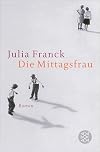
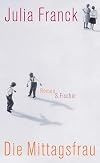
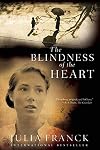
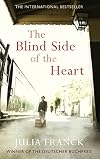
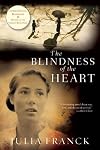
The Blindness of the Heart
by Julia Franck
On This Page
Description
A multi-generational family story set in the Germany of the early twentieth century that reveals the devastating effect of war on the human heart.Tags
Recommendations





































Member Reviews
How much to events outside of our control affect our lives? Quite a bit according to Julia Franck.
The story starts in with a young boy, Peter, being abandoned by his mother on a railway station as they try to escape the Red Army’s advance in Eastern Germany. The rest of the novel follows his mother's life and the events that lead up to this heartbreaking event.
Helene Wursich is a clever young girl born in the small town of Bautzen, on the border of Germany and Poland. Her Jewish mother shows signs of increasing mental instability, while her father is seriously injured during the WWI and dies shortly after returning home.
Helena and her older sister Martha run their house in Bautzen but finally they desert their mother when they are show more invited to live with their aunt in Berlin. Their aunt lives a frantic debauched bohemian lifestyle.
During this time Helene finds love, is bereaved and still suffering from grief marries a Nazi engineer who takes her out of the city and uses her 'mischling' status to abuse her and finally desert her and their newly-born son. The book closes as it started – with Peter, now as a young man some years after the war has ended.
The story is a meloncholy one which wonderfully captures the alienation and pressures of civilian life in Germany during the period covered by the two world wars. There is love but it comes at a price and whilst I don't agree with her reasons for the abandonment I do at least understand them.
The story isn't an easy one to read but it is beautifully written but my real criticism is that there isn't one speech mark throughout. I really do not understand the reason why and felt it distracted me unnecessarily as I had to work out if it a character is speaking or if it was simply part of the narrative. show less
The story starts in with a young boy, Peter, being abandoned by his mother on a railway station as they try to escape the Red Army’s advance in Eastern Germany. The rest of the novel follows his mother's life and the events that lead up to this heartbreaking event.
Helene Wursich is a clever young girl born in the small town of Bautzen, on the border of Germany and Poland. Her Jewish mother shows signs of increasing mental instability, while her father is seriously injured during the WWI and dies shortly after returning home.
Helena and her older sister Martha run their house in Bautzen but finally they desert their mother when they are show more invited to live with their aunt in Berlin. Their aunt lives a frantic debauched bohemian lifestyle.
During this time Helene finds love, is bereaved and still suffering from grief marries a Nazi engineer who takes her out of the city and uses her 'mischling' status to abuse her and finally desert her and their newly-born son. The book closes as it started – with Peter, now as a young man some years after the war has ended.
The story is a meloncholy one which wonderfully captures the alienation and pressures of civilian life in Germany during the period covered by the two world wars. There is love but it comes at a price and whilst I don't agree with her reasons for the abandonment I do at least understand them.
The story isn't an easy one to read but it is beautifully written but my real criticism is that there isn't one speech mark throughout. I really do not understand the reason why and felt it distracted me unnecessarily as I had to work out if it a character is speaking or if it was simply part of the narrative. show less
Everyone seems to love this book. It's being compared with Anna Karenina and Madame Bovary, but I don't see it. The story was gripping, but I didn't like any of the characters, not even the little boy. I couldn't care less about this woman and I was angry that she repeated her own mother's faults. I did finish it because it was for my bookclub, but if it wasn't for that I wouldn't have finished it.
I really don't mind drama in a book, terrible things happen, but I at least want to sympathize with one character and there was just nothing to hold on to. I understand that that is the attraction for a lot of people, but not for me. A very depressing book....
I really don't mind drama in a book, terrible things happen, but I at least want to sympathize with one character and there was just nothing to hold on to. I understand that that is the attraction for a lot of people, but not for me. A very depressing book....
Translated from the German by Anthea Bell
Winner of the German Book Prize
Most novels that explore the events of the Holocaust focus on the ‘Before’ and ‘After’-showing the events chronologically and the resulting impact. However, The Blindness of the Heart takes a reverse approach and begins by revealing a disturbing ‘After’: a young woman abandons her young son at a train station and disappears. We see how they’ve lived in horror for months, but his abandonment is still shocking. Then the author, Julia Franck, takes us back in time to the early years of this young woman, and the events that lead up to a lost little boy, confused, hungry and alone.
The mother is Helene, and her family is dysfunctional and damaged long before show more the Holocaust begins. Her identity as a person is in question before her identity as a Jew becomes relevant. As a nurse she helps care for her ailing father while trying to deal with her mentally ill mother. She thinks she finds a future, but nearly everything she is close to is taken away. She finds a way out of the impending doom by marrying a German who helps her with false papers that identify her as Anna, a German citizen, but their marriage yields nothing but the child. She raises him alone while working long hours in the hospital, assisting German doctors in the maternity ward, as well as in the forced sterilization of some female patients. Her son, Peter, is often left alone while she works, and while they remain together it’s clear she’s drifted away long before she leaves him literally.
The book is incredibly painful. A few times I put it down just to get away from the grief. The author makes a tremendous gamble by having her lead character do something that appears unforgiveable right off the bat. She is counting on the reader to ponder the back story and conditions of the woman’s life and see if her decision made sense. She shows how emotionally abandoned Helene had been, and the ugliness that fills her life. The problem is, despite Helene’s previous suffering, it’s very difficult to get over the impact of the first few pages of the book. The result is a tension that carries through the book and makes the narrative so compelling.
One factor I found fascinating was the details of the nurses and their struggles in Germany. The endless shifts, multiple duties, and repellent activities in their wards were well detailed, and a part of Nazi history that I wasn’t aware of. The fact that Helene works with new mothers is a link emotionally with her own insane mother and her own flawed nurturing. What motherhood means is an underlying theme, and the title makes you consider what kind of love is blind.
Additionally, Franck creates an unforgettably tense scene in which the hungry mother and son go mushroom hunting, and find themselves in flight to escape hunters that are not after animal prey. As she runs frantically, she appears to be hallucinating as she considers her escape route, Peter’s whereabouts, and the various ingredients for different recipes to cook, all spinning through her head at once. Her actions in the forest foreshadow what is to come.
In a few places I found Helene/Anna’s character to be incredibly cold. I understand that under her circumstances, self-preservation required her to withdraw emotionally. And very few aspects of her life were really under her control. Yet there was an element of simple kindness she seemed to lack, or perhaps, it was all used up. In any case, the glimpse we get of Peter's future shows how the cycle of pain is completed. show less
Winner of the German Book Prize
Most novels that explore the events of the Holocaust focus on the ‘Before’ and ‘After’-showing the events chronologically and the resulting impact. However, The Blindness of the Heart takes a reverse approach and begins by revealing a disturbing ‘After’: a young woman abandons her young son at a train station and disappears. We see how they’ve lived in horror for months, but his abandonment is still shocking. Then the author, Julia Franck, takes us back in time to the early years of this young woman, and the events that lead up to a lost little boy, confused, hungry and alone.
The mother is Helene, and her family is dysfunctional and damaged long before show more the Holocaust begins. Her identity as a person is in question before her identity as a Jew becomes relevant. As a nurse she helps care for her ailing father while trying to deal with her mentally ill mother. She thinks she finds a future, but nearly everything she is close to is taken away. She finds a way out of the impending doom by marrying a German who helps her with false papers that identify her as Anna, a German citizen, but their marriage yields nothing but the child. She raises him alone while working long hours in the hospital, assisting German doctors in the maternity ward, as well as in the forced sterilization of some female patients. Her son, Peter, is often left alone while she works, and while they remain together it’s clear she’s drifted away long before she leaves him literally.
The book is incredibly painful. A few times I put it down just to get away from the grief. The author makes a tremendous gamble by having her lead character do something that appears unforgiveable right off the bat. She is counting on the reader to ponder the back story and conditions of the woman’s life and see if her decision made sense. She shows how emotionally abandoned Helene had been, and the ugliness that fills her life. The problem is, despite Helene’s previous suffering, it’s very difficult to get over the impact of the first few pages of the book. The result is a tension that carries through the book and makes the narrative so compelling.
One factor I found fascinating was the details of the nurses and their struggles in Germany. The endless shifts, multiple duties, and repellent activities in their wards were well detailed, and a part of Nazi history that I wasn’t aware of. The fact that Helene works with new mothers is a link emotionally with her own insane mother and her own flawed nurturing. What motherhood means is an underlying theme, and the title makes you consider what kind of love is blind.
Additionally, Franck creates an unforgettably tense scene in which the hungry mother and son go mushroom hunting, and find themselves in flight to escape hunters that are not after animal prey. As she runs frantically, she appears to be hallucinating as she considers her escape route, Peter’s whereabouts, and the various ingredients for different recipes to cook, all spinning through her head at once. Her actions in the forest foreshadow what is to come.
In a few places I found Helene/Anna’s character to be incredibly cold. I understand that under her circumstances, self-preservation required her to withdraw emotionally. And very few aspects of her life were really under her control. Yet there was an element of simple kindness she seemed to lack, or perhaps, it was all used up. In any case, the glimpse we get of Peter's future shows how the cycle of pain is completed. show less
Some wonderfully realised characters, and a heartbreaking opening section. The author has successfully written an eyes-down and incurious protagonist, suffering a series of domestic and personal turmoils in WW2 Germany. Given the period it was set in, one occasionally craves a more eyes-up character, but it broadly works. For me, a couple of re-writes away from a classic.
The story of a young woman in Germany from WWI to after WWII. Helena is the youngest daughter of a Jewish mother and German father and tells the story of how Helena survived Fascist Germany and multigenerational trauma. This is not another Holocaust survival story. Helena is raised protestant. She and her sister study to be trained nurses. This book examines the decadence of the twenties and the fall of Germany's economy and the forces of the political climate. There is a great deal of drugs and sex in this book and it made me think of the play Cabaret which I think was set in the same basic time period of the late twenties. The events are portrayed through the eyes of the well developed characters. this quote from a reviewer really show more says it well, "What is so clever about Franck’s characters and plotting is that she shows the women maturing without any sense of political awareness. Although they see Lotte Lenya in Brecht and Weill’s The Threepenny Opera, the larger political struggle, between Communism and Nazism, hardly touches them. The rise of Hitler is so understated that its gathering momentum gives the book a compulsive charge." show less
This novel starts near the end, then goes back to explain how the opening section came to be, and then ends 10 years after the opening. I love storylines like this, but it makes it VERY hard to write a review without spoilers.
Helene and her sister grew up in a small town near Dresden. After their father is sent to fight in World War I and finally returns home with a devastating and ultimately deadly injury, their mother has a mental breakdown. The sister both study to be nurses, and end up moving in with a cousin in Berlin. From there, we follow Helene's life as a nurse, wife, and mother--right through World War II. As a cis blonde who takes after their father's side, Helene has a much easier time of the 1930s and 40s than her show more dark-haired and dark-eyed lesbian sister who looks like their mother. But both have to hide their mother's origins and her mental illness. show less
Helene and her sister grew up in a small town near Dresden. After their father is sent to fight in World War I and finally returns home with a devastating and ultimately deadly injury, their mother has a mental breakdown. The sister both study to be nurses, and end up moving in with a cousin in Berlin. From there, we follow Helene's life as a nurse, wife, and mother--right through World War II. As a cis blonde who takes after their father's side, Helene has a much easier time of the 1930s and 40s than her show more dark-haired and dark-eyed lesbian sister who looks like their mother. But both have to hide their mother's origins and her mental illness. show less
The Blindness of the Heart is a dark novel that begins with a woman abandoning her young son then backtracks to show how life has rendered her unable to care for her son, even as she treats patients, as nurse. Franck sets the book from World War 1 through the end of World War 2, establishing parallels between societal breakdowns and personal problems. The book is filled with pain and abandonment of all sorts and says a lot about the human condition; I'm glad I read the book in small installments.
(There's more about The Blindness of the Heart on my blog, here.)
Thank you to Amy of The Black Sheep Dances for giving me the review copy she received from Grove Press!
(There's more about The Blindness of the Heart on my blog, here.)
Thank you to Amy of The Black Sheep Dances for giving me the review copy she received from Grove Press!
Members
- Recently Added By
Published Reviews
ThingScore 100
Franck's delicately wrought narrative conflates personal and political disasters; her guiding theme is the growing callousness or "blindness" of German society in those dark interwar years.
added by juliette07
Lists

1001 Books You Must Read Before You Die
1,448 works; 1,132 members

German Literature
514 works; 55 members

Top Five Books of 2018
802 works; 264 members

Most thought-provoking novels
30 works; 26 members
Author Information

11+ Works 1,062 Members
Some Editions
Awards and Honors
Awards
Distinctions
Series
Belongs to Publisher Series
El balancí [Edicions 62] (609)
Fischer Taschenbuch (17552)
Common Knowledge
- Canonical title
- The Blindness of the Heart
- Original title
- Die Mittagsfrau
- Alternate titles
- The Blind Side of the Heart
- Original publication date
- 2007 (original German) (original German)
- People/Characters
- Helene Würsich; Martha Würsich; Selma Würsich; Fanny Steinitz; Leontine; Carl Wertheimer (show all 7); Wilhelm Sehmisch
- Important places
- Bautzen, Saxony, Germany; Berlin, Germany; Szczecin, West Pomeranian, Poland (as Stettin, Germany)
- Epigraph
- Nichts Böses; hast Du die Schwelle überschritten, ist alles gut.
Eine andere Welt und Du mußt nicht reden.
(Franz Kafka, Tagebücher, Zwölftes Heft, 1922)
Niets kwaads: heb je de drempel overschreden, dan is alles goed. Een andere wereld en je hoeft niet te spreken. - Franz Kafka, Dagboeken, 1922
There is nothing bad to fear; once you have crossed the threshold, all is well. Another world, and you do not have to speak. - Franz Kafka, Diaries, Volume 12, 1922 - First words
- Auf dem Fensterbrett stand eine Möwe, sie schrie, es klang, als habe sie die Ostsee im Hals, hoch, die Schaumkronen ihrer Wellen, spitz, die Farbe des Himmels, ihr Ruf verhallte über dem Königsplatz, still war es da, wo je... (show all)tzt das Theater in Trümmern lag.
Op de vensterbank stond een meeuw, hij schreeuwde, het klonk alsof de Oostzee in zijn keel zat, hoog als de schuimkoppen van de golven, schel als de kleur van de hemel, zijn roep stierf weg over de Königsplatz, stil was het ... (show all)waar nu de schouwburg in pijn lag.
A seagull stood on the windowsill, uttering its cry, as if the Baltic itself were in its throat, high as the foaming crests of the waves, keen, sky-coloured, its call died away over Konigsplatz where all was quiet, where the ... (show all)theatre now lay in ruins. - Last words
- (Click to show. Warning: May contain spoilers.)Die Dunkelheit besänftigte, er war ganz ruhig.
(Click to show. Warning: May contain spoilers.)Het donker had een kalmerende uitwerking, hij was heel rustig.
(Click to show. Warning: May contain spoilers.)The darkness soothed him;he was quite calm now. - Blurbers
- Byatt, A. S.; Schillinger, Liesl; Lebrecht, Norman; Ferri, Jessica
- Original language
- German
Classifications
Statistics
- Members
- 777
- Popularity
- 35,750
- Reviews
- 26
- Rating
- (3.59)
- Languages
- 14 — Catalan, Danish, Dutch, English, Finnish, French, German, Norwegian (Bokmål), Farsi/Persian, Polish, Portuguese, Romanian, Spanish, Swedish
- Media
- Paper, Audiobook, Ebook
- ISBNs
- 35
- ASINs
- 15