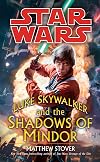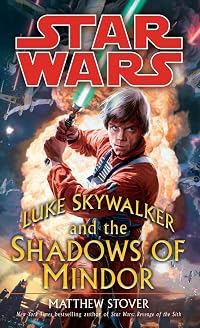
Luke Skywalker and the Shadows of Mindor (Star Wars)
by Matthew Stover
Star Wars Novels (5.5 ABY), Star Wars Universe (5.5 ABY)
On This Page
Description
When Luke Skywalker and his companions are lured to Mindor and into battle with the Black Stormtroopers, they are unaware that the confrontation is part of a plot by Lord Shadowspawn to destroy the heroes of the New Republic and to restore the Empire with himself as ruler.Tags
Recommendations
Member Reviews
The Star Wars Expanded Universe lucked out when they found Matt Stover. So far, he's written the deepest SW novel (Traitor), the darkest (Shatterpoint), and now the funnest* with Luke Skywalker and the Shadows of Mindor. Lots of action, tons of laughs, a billion EU references, and spot-on characterizations make this one of, if not the, best Star Wars novels ever.
*Not a real word, I know. Deal with it.
*Not a real word, I know. Deal with it.
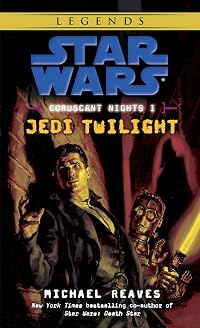
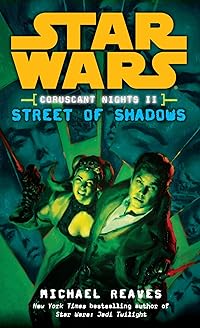
A couple weeks ago, TheForce.Net had its first-ever Aluminum Falcon awards for excellence in Star Wars fiction. Looking over the candidates for Best Novel, I was pretty underwhelmed, between the dreadful concluding novels of Legacy of the Force and the lackluster installments in the Coruscant Nights series. (I ended up picking Jedi Twilight because it was not terrible.) I wish voting hadn't ended before I read this, because not only is Luke Skywalker and the Shadows of Mindor the best Star Wars novel of 2008, it's probably one of the best ever published. Why is this? Because, quite simply, Stover gets Star Wars. The book's real glory is its characterizations: I've never seen so many of the original trilogy cast done right in one book show more probably ever. Luke is awesome, Leia is feisty, Han is roguish, the Rogues are all perfect. Even R2-D2 and C-3P0 get their moments. Even Lando Calrissian is done right. Do you know rare it is that he's in a book, much less written correctly? The book is heavily dependent on obscure continuity but pulls everything together effortlessly; the plot is both a fun action/adventure and your more nuanced Stover rumination. The book might be full of the Dark, but unlike so much modern Star Wars literature, it tells us not to be afraid of it. My only complaint is that there's really no point to a couple of the peripheral characters being there, but it's so much fun to see one of them again that I can't really complain about it that much.
added September 2012:
So, having three books (this one, The Courtship of Princess Leia, and The Thrawn Trilogy) on my to-be-read list that all took place in the years following Return of the Jedi, I decided to read all three in a row, plugging in some old books I had to fill the gaps (X-Wing: Solo Command and Tatooine Ghost). This one was first, and like almost all the books on that list, it was actually a reread; I borrowed the book from the library in hardcover before I bought the paperback.
Last time I read it, I thought that The Shadows of Mindor was one of the best Star Wars books ever published; now I know it to be true. This book has everything a Star Wars fan should want: tense battles, cool Force powers, witty banter, Lando Calrissian. All the heroes of the classic trilogy are here, down to Wedge, and they all get together and do their thing with no infighting or despair or whatnot; they're just heroes in the most idealistic sense of the word. Seriously, this book is just a delight to read from start to finish, and if you only ever read one Star Wars novel, this one ought to be it.
That said, if you read many Star Wars novels... and comics... and sourcebooks... and technical guides, The Shadows of Mindor is a different sort of achievement. The whole book is built out of a passing reference in The Courtship of Princess Leia to Han and Leia having a picnic on Mindor surrounded by dead stormtroopers, and over the years, various Expanded Universe releases added tiny tidbits to the Battle of Mindor. What makes The Shadows of Mindor impressive is that you can read it and not know this: the continuity, despite its sheer bulk, still exists to serve the story and not the other way around. Every little reference is accounted for in some way. After suffering through Darth Plagueis, I actually kinda needed a reminder that continuity can indeed be a force for good. show less
added September 2012:
So, having three books (this one, The Courtship of Princess Leia, and The Thrawn Trilogy) on my to-be-read list that all took place in the years following Return of the Jedi, I decided to read all three in a row, plugging in some old books I had to fill the gaps (X-Wing: Solo Command and Tatooine Ghost). This one was first, and like almost all the books on that list, it was actually a reread; I borrowed the book from the library in hardcover before I bought the paperback.
Last time I read it, I thought that The Shadows of Mindor was one of the best Star Wars books ever published; now I know it to be true. This book has everything a Star Wars fan should want: tense battles, cool Force powers, witty banter, Lando Calrissian. All the heroes of the classic trilogy are here, down to Wedge, and they all get together and do their thing with no infighting or despair or whatnot; they're just heroes in the most idealistic sense of the word. Seriously, this book is just a delight to read from start to finish, and if you only ever read one Star Wars novel, this one ought to be it.
That said, if you read many Star Wars novels... and comics... and sourcebooks... and technical guides, The Shadows of Mindor is a different sort of achievement. The whole book is built out of a passing reference in The Courtship of Princess Leia to Han and Leia having a picnic on Mindor surrounded by dead stormtroopers, and over the years, various Expanded Universe releases added tiny tidbits to the Battle of Mindor. What makes The Shadows of Mindor impressive is that you can read it and not know this: the continuity, despite its sheer bulk, still exists to serve the story and not the other way around. Every little reference is accounted for in some way. After suffering through Darth Plagueis, I actually kinda needed a reminder that continuity can indeed be a force for good. show less
I must admit that when I started this book I was a little concerned. Uncharacteristically for a Matthew Stover novel, it didn't grab me from page one. In fact, the first few chapters were, while certainly readable, not terribly compelling. And then I got to chapter four and was reminded why, whenever Stover releases a new novel, I drop everything else and read it immediately: because it is guaranteed to knock my socks off and leave me with a big stupid grin on my face. This novel is dedicated to Alan Dean Foster and Brian Daley, for good reason: it's a postmodern upgrade of the old-school rollicking adventure novel. Fun, funny, fast-paced, exciting, thrilling, heroes-against-incredible-odds storytelling that's nigh impossible to put show more down before you get to the end. Set shortly after the events of Return of the Jedi, the book's accessible to new fans, yet full enough of familiar characters and references to other Star Wars stories to satisfy even the most obsessed fanboy. Stover *gets* his characters, gets them exactly right, and he can still write an action scene better than anyone else in the business. I was silly to be concerned. Matt Stover persists in writing the best Star Wars stories to grace our bookshelves and our imaginations. Thank you, sir, for once again taking me back a long time ago, to a galaxy far, far away. show less
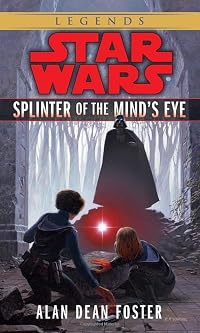
Matthew Stover’s 2008 novel, Luke Skywalker and the Shadows of Mindor, takes place after Return of the Jedi, following the Expanded Universe novels The Truce at Bakura and the Jedi Prince series, specifically Prophets of the Dark Side. Stover described his intent as seeking to evoke Alan Dean Foster’s Star Wars novels like Splinter of the Mind’s Eye and Brian Daley’s Han Solo series. Though Stover wrote following the conclusion of the Prequel Trilogy (he also wrote the novelization of Revenge of the Sith), the tone and style of his work easily recalls the Bantam era of Star Wars novels that began in 1991 with Timothy Zahn’s Thrawn Trilogy and concluded in 1999 with X-Wing: Starfighters of Adumar.
Stover’s novel features Luke show more Skywalker toward the end of his military career following the destruction of the Second Death Star, where he finds himself struggling with the legend that has built up around him (pg. 21). A mission comes up to travel to Mindor, a planet in an unstable system following the Empire’s gravity experiments, where a new warlord calling himself Lord Shadowspawn is raising a fleet. Stover incorporates elements from the prequels, with some surviving Clone Troopers forming the core of Shadowspawn’s army as they retain their original programming (pgs. 35-36). As Luke investigates Shadowspawn’s base on Mindor, he realizes that the new warlord is a former Emperor’s Hand code-named Blackhole, though that is but one of this new threat’s identities as he was also Lord Cronal, the director of Imperial Intelligence (pg. 132). Luke reckons with the nature of the Force as well as his own legacy, deciding where he can be of most benefit to the New Republic.
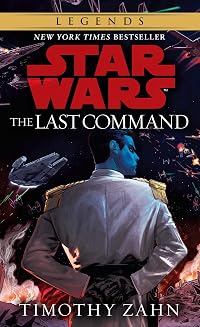
As a villain, Cronal neatly fits the model of Imperial warlords that characterized the Bantam era of books. Stover works to develop the relationship between Han Solo and Princess Leia, portraying it in a fashion that nicely foreshadows where they are at the beginning of the Thrawn Trilogy while also exploring Leia’s Force potential. Stover similarly works to portray Lando Calrissian at a point between Return of the Jedi and Heir to the Empire, including a reference to where Lando got the idea for the Shieldships he uses in the Thrawn Trilogy (pg. 254). Stover includes references to the final Jedi Prince book, Prophets of the Dark Side, both in exploring Cronal’s history (pg. 135) and with a reference to the phrase, “Emperor’s black bones,” which members of the Imperial remnant used as a curse throughout the Jedi Prince series (pg. 91). Finally, Stover works in a nice winking reference about Mara Jade for his readers (pg. 311). Luke Skywalker and the Shadows of Mindor neatly bridges the Bantam and Del Rey Star Wars novels and tells a solid adventure story guaranteed to entertain fans. show less
Stover’s novel features Luke show more Skywalker toward the end of his military career following the destruction of the Second Death Star, where he finds himself struggling with the legend that has built up around him (pg. 21). A mission comes up to travel to Mindor, a planet in an unstable system following the Empire’s gravity experiments, where a new warlord calling himself Lord Shadowspawn is raising a fleet. Stover incorporates elements from the prequels, with some surviving Clone Troopers forming the core of Shadowspawn’s army as they retain their original programming (pgs. 35-36). As Luke investigates Shadowspawn’s base on Mindor, he realizes that the new warlord is a former Emperor’s Hand code-named Blackhole, though that is but one of this new threat’s identities as he was also Lord Cronal, the director of Imperial Intelligence (pg. 132). Luke reckons with the nature of the Force as well as his own legacy, deciding where he can be of most benefit to the New Republic.
As a villain, Cronal neatly fits the model of Imperial warlords that characterized the Bantam era of books. Stover works to develop the relationship between Han Solo and Princess Leia, portraying it in a fashion that nicely foreshadows where they are at the beginning of the Thrawn Trilogy while also exploring Leia’s Force potential. Stover similarly works to portray Lando Calrissian at a point between Return of the Jedi and Heir to the Empire, including a reference to where Lando got the idea for the Shieldships he uses in the Thrawn Trilogy (pg. 254). Stover includes references to the final Jedi Prince book, Prophets of the Dark Side, both in exploring Cronal’s history (pg. 135) and with a reference to the phrase, “Emperor’s black bones,” which members of the Imperial remnant used as a curse throughout the Jedi Prince series (pg. 91). Finally, Stover works in a nice winking reference about Mara Jade for his readers (pg. 311). Luke Skywalker and the Shadows of Mindor neatly bridges the Bantam and Del Rey Star Wars novels and tells a solid adventure story guaranteed to entertain fans. show less
soon after the Empire has fallen. A shadowy figure returns to reunite the empire. But it turns out he has some power to transfer his consciousness and he wants to trap Luke and take him over. Overall, this was on the level of The Crystal Star. It was just not on the same level as Stover's other StarWars books and that was very disappointing. It was more like reading some melodramatic play or something.
The best kind of popcorn: good writing, a fun adventure, and the sort of narrative that keeps you on the edge of your seat even though you know it turns out all right in the end. This is my favorite kind of Star Wars book.
Luke investigating his own war crimes and criticizing his own propaganda? SIGN ME UP FOR A TEN BOOK SERIES.
Why no Leia POV? WHY NO LEIA POV
Why no Leia POV? WHY NO LEIA POV
Members
- Recently Added By
Lists

Star Wars Legends
155 works; 3 members
Author Information

41+ Works 8,406 Members
Series


Common Knowledge
- Original publication date
- 2008-12-30
- People/Characters
- Luke Skywalker; Lando Calrissian; Han Solo; Nick Rostu; Lord Cronal; Kar Vastor (show all 7); Wedge Antilles
- Dedication
- The author respectfully dedicates this novel to the legendary Alan Dean
Foster, and to the memory of the late, great Brian Daley, for showing
us what it looks like when this stuff is done right.
Thank ... (show all)you, gentlemen.
We are in your debt. - First words
- Lorz Geptun stood outside the command cabin door and tried to swallow.
- Last words
- (Click to show. Warning: May contain spoilers.)Rewrites, he decided, sucked.
Classifications
Statistics
- Members
- 574
- Popularity
- 51,381
- Reviews
- 11
- Rating
- (3.41)
- Languages
- English, French, German, Polish
- Media
- Paper, Ebook
- ISBNs
- 9
- ASINs
- 5