
December Stillness
by Mary Downing Hahn
On This Page
Description
Fourteen-year-old Kelly tries to befriend Mr. Weems, a disturbed, homeless Vietnam War veteran who spends his days in her suburban library, though the man makes it clear he wants to be left alone.Tags
Recommendations
























Member Recommendations
Member Reviews
"December Stillness," is written by a librarian Mary Downing Hahn. Hahn does a good job narrating a teenage girl named Kelly McAllister or "Mad Dog Kelly," coined by her long-time
male friend Keith, goes through what teenagers go through -angst, identity formation, confusion, rebellion. Parents do not have fun once their kids reach teenage years; it becomes more challenging.
The female character Kelly comes across a homeless man who visits the library on a daily basis. She becomes curious about him after she decides to write a paper on war veterans. The homeless man carries a large garbage bag for his belongings and sits at the library and just reads. She talks to him as a dare challenged by one of her friends. She makes a scene and the show more librarian warns her. Despite her friend's warnings of Mr. Weems' weird disposition, she approaches him again at the library. She provokes him next time and Mr. Weems, the homeless man throws something at her. She does not see that Mr. Weems is dangerous. She is a teenager. Next time she visits the library she finds out from the librarian that people in the community reported complaints of Mr. Weems and he is no longer allowed to stay at the library. She feels guilty. There is a small scene in the book where she finally talks to Mr. Weems in a conversation at the park. This is the highlight of the book. All the book has been leading up to this moment. There is not much said. There is not much connection between Kelly and Mr. Weems; Mr. Weems is a Vietnam war veteran who suffers from post-traumatic stress disorder, PTSD. While Kelly is different from typical girls, she is not that crazy or odd.
Hahn does a good job depicting some of the feelings teenage girls may experience - their distant relationship with their father as they are no longer small and cute, individuality vs. conformity to what is popular and acceptable, witnessing her parents' relationship with each other, not knowing how to relate to their parents. Her mother is an artist who illustrate holiday cards and she is disappointed at her mother for not pursuing her dreams. Kelly tells herself she "shall never ever give up," a good tenacious attitude for someone who has not found herself yet. Her father only cares about money which she cannot relate to. Her mother assures her that her father was once a hipster who could not care for stocks and making money. Life does that to us. We change because our lives change.
I first read this book as a teenager, most likely fifteen or sixteen years old and I can relate to the main female character Kelly. If I as a teenager was able to connect and relate to Kelly McAllister, than the author did a good job voicing a young teenager. I would have liked to have seen Kelly develop more of a relationship with Keith, the guy who calls her "Mad Dog McAllister," because she bit him when they were young. Kelly seemed to have feelings for Keith but the author does not explore their relationship. Keith may have not seen Kelly that way, he calls her "Mad Dog," not a compliment.
The book focuses more on Kelly's interest in Mr. Weems, and her inner thoughts. There is not much action that happens. Even when Kelly did mean well, bad consequences result from Kelly's provocation. She is not experienced and trained in dealing with someone who has a serious problem. The ending is appropriate and it gives light to repercussions of the war. Not every soldier died at war, but their life's energy, their thirst and joy for life died at the war front. Mr. Weems is one of the soldiers that survived the war, but his being changed. show less
male friend Keith, goes through what teenagers go through -angst, identity formation, confusion, rebellion. Parents do not have fun once their kids reach teenage years; it becomes more challenging.
The female character Kelly comes across a homeless man who visits the library on a daily basis. She becomes curious about him after she decides to write a paper on war veterans. The homeless man carries a large garbage bag for his belongings and sits at the library and just reads. She talks to him as a dare challenged by one of her friends. She makes a scene and the show more librarian warns her. Despite her friend's warnings of Mr. Weems' weird disposition, she approaches him again at the library. She provokes him next time and Mr. Weems, the homeless man throws something at her. She does not see that Mr. Weems is dangerous. She is a teenager. Next time she visits the library she finds out from the librarian that people in the community reported complaints of Mr. Weems and he is no longer allowed to stay at the library. She feels guilty. There is a small scene in the book where she finally talks to Mr. Weems in a conversation at the park. This is the highlight of the book. All the book has been leading up to this moment. There is not much said. There is not much connection between Kelly and Mr. Weems; Mr. Weems is a Vietnam war veteran who suffers from post-traumatic stress disorder, PTSD. While Kelly is different from typical girls, she is not that crazy or odd.
Hahn does a good job depicting some of the feelings teenage girls may experience - their distant relationship with their father as they are no longer small and cute, individuality vs. conformity to what is popular and acceptable, witnessing her parents' relationship with each other, not knowing how to relate to their parents. Her mother is an artist who illustrate holiday cards and she is disappointed at her mother for not pursuing her dreams. Kelly tells herself she "shall never ever give up," a good tenacious attitude for someone who has not found herself yet. Her father only cares about money which she cannot relate to. Her mother assures her that her father was once a hipster who could not care for stocks and making money. Life does that to us. We change because our lives change.
I first read this book as a teenager, most likely fifteen or sixteen years old and I can relate to the main female character Kelly. If I as a teenager was able to connect and relate to Kelly McAllister, than the author did a good job voicing a young teenager. I would have liked to have seen Kelly develop more of a relationship with Keith, the guy who calls her "Mad Dog McAllister," because she bit him when they were young. Kelly seemed to have feelings for Keith but the author does not explore their relationship. Keith may have not seen Kelly that way, he calls her "Mad Dog," not a compliment.
The book focuses more on Kelly's interest in Mr. Weems, and her inner thoughts. There is not much action that happens. Even when Kelly did mean well, bad consequences result from Kelly's provocation. She is not experienced and trained in dealing with someone who has a serious problem. The ending is appropriate and it gives light to repercussions of the war. Not every soldier died at war, but their life's energy, their thirst and joy for life died at the war front. Mr. Weems is one of the soldiers that survived the war, but his being changed. show less
Ratings
Members
- Recently Added By
Author Information

53+ Works 18,880 Members
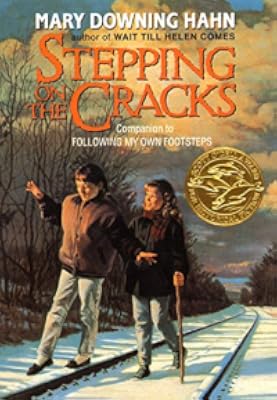
Mary Downing Hahn grew up in College Park, Maryland. After graduating college, she worked as an art teacher, a college instructor, and a children's librarian in Prince George's Public Library System. She published her first novel, The Sara Summer, at the age of 41. Since then, she has been a full-time writer and averages one book a year. Her ghost show more story Wait till Helen Comes was the winner of 12 state children's book awards and she received the Scott O'Dell award for her World War II novel Stepping on the Cracks. She currently lives with her husband in Columbia, Maryland. (Bowker Author Biography) show less
Some Editions
Awards and Honors
Awards
Distinctions
Common Knowledge
- Canonical title
- December Stillness
- First words
- When I left Mr. Poland's classroom, I saw Julie waiting for me by my locker, but she was too busy fussing with her hair to notice me walking toward her.
- Last words
- (Click to show. Warning: May contain spoilers.)Then he put his arm around my shoulders, and we walked slowly away from the memorial, leaving the names behind, 58,156 plus one.
Classifications
- Genres
- Fiction and Literature, Tween, Teen, Children's Books, Young Adult
- DDC/MDS
- 813.54 — Literature & rhetoric American literature in English American fiction in English 1900-1999 1945-1999
- LCC
- PZ7 .H1256 .D — Language and Literature Fiction and juvenile belles lettres Fiction and juvenile belles lettres Juvenile belles lettres
- BISAC
Statistics
- Members
- 175
- Popularity
- 187,860
- Reviews
- 1
- Rating
- (3.20)
- Languages
- English
- Media
- Paper, Audiobook
- ISBNs
- 13