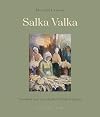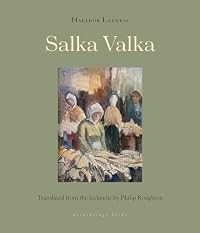
Salka Valka
by Halldór Laxness
On This Page
Description
"On a winter night, an eleven-year-old Salvör and her unmarried mother Sigurlína disembark at the remote, run-down fishing village of Óseyri, where life is "lived in fish and consists of fish." The two struggle to make their way amidst the rough, salt-worn men of the town. After Sigurlína's untimely death, Salvör pays for her funeral and walks home alone, precipitating her coming of age as a daring, strong-willed young woman who chops off her hair, earns her own wages, educates herself show more through political and philosophical texts, and soon becomes an advocate for the town's working class, organizing a local chapter of the seamen's union. A feminist coming-of-age tale, an elegy to the plight of the working class and the corrosive effects of social and economic inequality, and a poetic window into the arrival of modernity in a tiny industrial town, Salka Valka is a novel of epic proportions, living and breathing with its vibrant cast of characters, filled with tenderness, humor, and remarkable pathos"-- show lessTags
Recommendations

















Member Recommendations

Member Reviews
The eponymous Salka Valka is just a young girl of eleven when she and her mother arrive in a tiny fishing town on Iceland's coast. They were on their way south to Reykjavik and between the mother's seasickness and her inability to fund their whole trip, they need to disembark. They find a small village whose entire economy is based on fishing and controlled by one man, who tracks everyone's work and debits what he gives them from his store - no money is involved. Salka and her mother, Sigurlina, turn to the local Salvation Army chapter for support.
They can't find work, but end up living with an older couple. Salka shows an independent spirit from the beginning of the novel. Her mother seems unwilling to work when she runs into some show more roadblocks, but Salka begins cleaning fish and earning a place in the town's ledger. She also ends up able to be tutored by a local boy. Salka is not only independent, she is different. She wears trousers and cuts off her hair, and as she grows up she becomes a more important voice in the community, even organizing the local fisherman into a union. The book turns to a conflict between Bolshevism and capitalism, with those actually doing the work caught in the middle of the ideas brought by outsiders. Salka has a hard life in terms of her relationships. I don't want to give away too many plot points, but she has a traumatic experience with one of her mother's lovers, and this definitely colors her later relationships - both with him (he unfortunately remains in and out of her life) and with other men.
Overall I really enjoyed this. Despite the diatribes on religion and politics, I found the writing less dense than some of Laxness's other novels. Because there is a pretty solid focus on Salka alone, it was easy to stay engaged in her life. It was fascinating to see how this fishing village operated in the early 1900s and to see the changes that take place through the early 20th century. I read a recent translation published by Archipelago. show less
They can't find work, but end up living with an older couple. Salka shows an independent spirit from the beginning of the novel. Her mother seems unwilling to work when she runs into some show more roadblocks, but Salka begins cleaning fish and earning a place in the town's ledger. She also ends up able to be tutored by a local boy. Salka is not only independent, she is different. She wears trousers and cuts off her hair, and as she grows up she becomes a more important voice in the community, even organizing the local fisherman into a union. The book turns to a conflict between Bolshevism and capitalism, with those actually doing the work caught in the middle of the ideas brought by outsiders. Salka has a hard life in terms of her relationships. I don't want to give away too many plot points, but she has a traumatic experience with one of her mother's lovers, and this definitely colors her later relationships - both with him (he unfortunately remains in and out of her life) and with other men.
Overall I really enjoyed this. Despite the diatribes on religion and politics, I found the writing less dense than some of Laxness's other novels. Because there is a pretty solid focus on Salka alone, it was easy to stay engaged in her life. It was fascinating to see how this fishing village operated in the early 1900s and to see the changes that take place through the early 20th century. I read a recent translation published by Archipelago. show less
Many years ago I read and loved this Nobelist's most well-known book, Independent People, so I was intrigued to read this novel after reading jpaul's review. As the novel opens, Salka and her mother Sigurlina are debarking at the fishing village of Oseyri. Sigurlina is seeking work, and they've come from up north, intending to go to Reykjavik, but this was as far as their meager funds would take them. They arrive penniless, with few possessions and few prospects for work. After spending the night at the Salvation Army, they gradually begin making a life for themselves in the village. Salka is about 10 years old when they arrive, and even as a young girl she is independent and strong-willed. The whole first part of the novel depicting show more Salka's young girlhood is a delight.
The second part features Salka as a young woman who has begun to have some financial success. She is instrumental in a newly formed fisherman's union, wears trousers and mostly doesn't care what she looks like. This part dragged for me at times because there was a lot of political maneuvering and discussion. Communist organizers are moving in, elections, rigged or otherwise, are being held. Some of the villagers want to get rid of Johan Bogeson who has controlled the fishing industry in the village for years and who pays those who work for him not in cash, but in credit at the company store, which he also owns. ( "And although the villagers toiled incessantly in competition with the whims of the weather, the fruits of their labor were nowhere to be seen; everything disappeared down the same hole, whether people fished for a share of the catch or a fixed wage: their accounts with Johan Bogeson swallowed everything. Here no one ever saw money.") Other villagers see Bogeson as kind and benevolent, keeping them fed and housed in the lean years. The politicking in this section went on a bit long for me. This second part, as well as the final section, also contains snippets of romance and sexual awakening for Salka, raising issues as to whether she can maintain her strong sense of self as she comes into womanhood.
Amazon describes this as a "feminist coming of age" story, and it is that. Salka was a fascinating character, the descriptions of the village, the villagers and their day to day life, hard and poverty-stricken as it was, is engaging and interesting. Even the political shenigans interested me to an extent, just going on a tad too long. I'm glad I read this book.
Some quotes:
"There never seemed to be good weather in this village because the Creator was always experimenting with His sky. After frost and snow, He brought wind which whipped the snow into drifts. After whipping the snow into drifts, He would send a thaw, and melt all the drifts that He had swept together with great effort. All in all, it might be said that the Creator's favorite weather for this village was rain, which stirred up all sorts of stenches: sea and seaweed, fish, fish heads and fish guts, train oil, tar, manure, and refuse."
"Well, as I've always said, the depravity of the rich is like the sea; if you knew what dwelt in it, you would never dare dip your hand into it."
3 1/2 stars show less
The second part features Salka as a young woman who has begun to have some financial success. She is instrumental in a newly formed fisherman's union, wears trousers and mostly doesn't care what she looks like. This part dragged for me at times because there was a lot of political maneuvering and discussion. Communist organizers are moving in, elections, rigged or otherwise, are being held. Some of the villagers want to get rid of Johan Bogeson who has controlled the fishing industry in the village for years and who pays those who work for him not in cash, but in credit at the company store, which he also owns. ( "And although the villagers toiled incessantly in competition with the whims of the weather, the fruits of their labor were nowhere to be seen; everything disappeared down the same hole, whether people fished for a share of the catch or a fixed wage: their accounts with Johan Bogeson swallowed everything. Here no one ever saw money.") Other villagers see Bogeson as kind and benevolent, keeping them fed and housed in the lean years. The politicking in this section went on a bit long for me. This second part, as well as the final section, also contains snippets of romance and sexual awakening for Salka, raising issues as to whether she can maintain her strong sense of self as she comes into womanhood.
Amazon describes this as a "feminist coming of age" story, and it is that. Salka was a fascinating character, the descriptions of the village, the villagers and their day to day life, hard and poverty-stricken as it was, is engaging and interesting. Even the political shenigans interested me to an extent, just going on a tad too long. I'm glad I read this book.
Some quotes:
"There never seemed to be good weather in this village because the Creator was always experimenting with His sky. After frost and snow, He brought wind which whipped the snow into drifts. After whipping the snow into drifts, He would send a thaw, and melt all the drifts that He had swept together with great effort. All in all, it might be said that the Creator's favorite weather for this village was rain, which stirred up all sorts of stenches: sea and seaweed, fish, fish heads and fish guts, train oil, tar, manure, and refuse."
"Well, as I've always said, the depravity of the rich is like the sea; if you knew what dwelt in it, you would never dare dip your hand into it."
3 1/2 stars show less
Everybody was raving about Laxness over at the European Endless challenge last year, and I was lucky enough to have a book of his on my TBR mound. Not having read Laxness at all, I went into Salka Valka without really knowing what to expect – but with pretty high expectations from all the praise. And I must say Laxness was a pleasant acquaintance to make. I especially enjoyed his style – raw, real, unpolished, but with a streak of true poetry in the way he describes people and settings. It’s not pretty , but it feels true.
The little girl Salka Valka and her mother Sigurlina end up in a small fishing community on the Icelandic east coast, since her their money wasn’t enough to take them all the way to Reykjavik. Here everything show more is ruled by the merchant Bogesen, a fairly benign despot perhaps, but still one who dictates the people’s lives. It’s a community of very slender means, where enough to eat is by no means a certainty and it’s a tough existence for Salka and her mum trying to find work and shelter here. For Sigurlina, the newly established Salvation Army becomes a haven, but outside of the church she mixes with the entirely wrong people: chiefly the charming rapist Steinthor, who also has a uncanny eye for her young daughter. Young Salka finds her strength in working and earning her own money , and from the school sessions with the strange young orphan Arnald.
The book follows Salka in her growing up, but is also a story about changing times. It tells of the rise of socialism (through Arnald, who returns as an agitator) changing the rules in this small community, challenging Bogesen’s power. It’s great how Laxness is letting the political movements among the working people mirror the twists and turns of the love between Salka and Arnald. People go back and forth here, chicken out, change opinion, switch sides or get bought. It’s a pretty intense ride on a very small scale. In the end though, there are a few too many turns of more or less the same, and by the last hundred pages I had kind of lost interest just a little bit. But I’ll surely check out more by Laxness, and recommend this to lovers of the epic realism for instance Steinbeck and Harper Lee. show less
The little girl Salka Valka and her mother Sigurlina end up in a small fishing community on the Icelandic east coast, since her their money wasn’t enough to take them all the way to Reykjavik. Here everything show more is ruled by the merchant Bogesen, a fairly benign despot perhaps, but still one who dictates the people’s lives. It’s a community of very slender means, where enough to eat is by no means a certainty and it’s a tough existence for Salka and her mum trying to find work and shelter here. For Sigurlina, the newly established Salvation Army becomes a haven, but outside of the church she mixes with the entirely wrong people: chiefly the charming rapist Steinthor, who also has a uncanny eye for her young daughter. Young Salka finds her strength in working and earning her own money , and from the school sessions with the strange young orphan Arnald.
The book follows Salka in her growing up, but is also a story about changing times. It tells of the rise of socialism (through Arnald, who returns as an agitator) changing the rules in this small community, challenging Bogesen’s power. It’s great how Laxness is letting the political movements among the working people mirror the twists and turns of the love between Salka and Arnald. People go back and forth here, chicken out, change opinion, switch sides or get bought. It’s a pretty intense ride on a very small scale. In the end though, there are a few too many turns of more or less the same, and by the last hundred pages I had kind of lost interest just a little bit. But I’ll surely check out more by Laxness, and recommend this to lovers of the epic realism for instance Steinbeck and Harper Lee. show less
We see here clearly displayed the talents of a highly intelligent, highly talented and here sadly uninhibited writer. The book should come with a logorrhoea warning: it is prolix and overwritten to an extraordinary degree – never let one adjective suffice when three can be employed – while the language used is selfconsciously "extended" to a considerable degree by Danish loan words and other solecisms. One objective of the author appears at times to have been to fill pages with an element of self-confident display.
There are occasional passages – all too few – where the author’s ability to create a memorable, unique character is on display.
Moi-même, I find the angst of prepubescent and pubescent children wholly uninteresting show more and uninvolving.
This book is far and away my least favourite Laxness novel to date (and that includes most of the major ones). Abandoned.
The lexical notes in this 13th edition are themselves of interest. Sometimes strikingly necessary and sometimes not, sometimes lacking where necessary they could constitute a study in themselves; there’s material there for a thesis. By their presence and necessity they call attention to some characteristics of the author’s writing, a fecund and sometimes overripe cornucopia of language. show less
There are occasional passages – all too few – where the author’s ability to create a memorable, unique character is on display.
Moi-même, I find the angst of prepubescent and pubescent children wholly uninteresting show more and uninvolving.
This book is far and away my least favourite Laxness novel to date (and that includes most of the major ones). Abandoned.
The lexical notes in this 13th edition are themselves of interest. Sometimes strikingly necessary and sometimes not, sometimes lacking where necessary they could constitute a study in themselves; there’s material there for a thesis. By their presence and necessity they call attention to some characteristics of the author’s writing, a fecund and sometimes overripe cornucopia of language. show less
Berättelsen om Salka Valka är både lärorik, fängslande och känslosam. Språket kändes lite gammalt emellanåt och lite svårläst bitvis men väl värt mödan. Första boken jag läst av Laxness men jag har många fler i bokhyllan som garanterat kommer att läsas.
Apr 3, 2014Swedish
Романът проследява суровата съдба на малко момиче, отглеждано от самотната си майка в условията на исландския север през 40-те години на ХХ век. Авторът представя историята в нейната груба и брутална същност, без да спести нищо на читателя. Действието се развива във фиктивно село, лежащо в измислен фиорд на бреговете на Исландия, и докато първата му половина разказва за нещастията на самотната майка, и за show more цената, която трябва да плати на обществото (лично и чрез дъщеря си), за това че има извънбрачно дете, то втората половина на романа сменя главния си герой – тук вече това е Салка Валка. Действащите лица остават едни и същи, но мизансценът е коренно различен – от чисто житейски, се превръща в политико-идеологически, а именно – сблъсъкът на капитализма и комунизма в условията на бедна селска Исландия. Последните страници на творбата възстановяват житейския характер на романа, чрез прокрадването на романтична жилка под формата на всепоглъщаща любов, която е в състояние на превърне заклетия капиталист Салка в „таварищ” и „болшевик” Салка. Романът описва динамиката на живота в исландската провинция, и неговите характерни герои, а авторът, макар и да застъпва идеологическата борба между капитализма и комунизма, не заема страната на нито едната от идеологиите. Говори чрез героите си, и разобличава част от тях чрез действията им, противоречащи на изповядваната от тях идеология. show less
Oct 18, 2017Bulgarian
Salka Valkan tarina on hyvin koruton ja lohdutonkin, välillä melkein epäuskottavuuteen asti, mutta ei onneksi sorru ihan mahdottomiin liioitteluihin. Nuoresta islantilaistytöstä kasvaa kommunisti. Kirja oli ihan ok luettava, tarina eteni eikä henkilöhahmoja ollut liikaa. Ei siis liian raskas lukukokemus, kannattaa tutustua varsinkin jos Islanti kiinnostaa.
Nov 24, 2025Finnish
Members
- Recently Added By
Author Information

123+ Works 8,010 Members
When presenting the 1955 Nobel Prize to Laxness, the Swedish Academy of Letters cited "his vivid writing, which has renewed the Icelandic narrative art." Laxness has been by turns a Catholic convert, a socialist, and a target of the radical press, some of whom accused Laxness of a class ambivalence the Saturday Review summarized this way: "Though show more Laxness came to believe that the novelist's best material is to be found in the proletariat, his rejection of middle-class concerns was never complete, and the ambiguity of his attitude toward the conflict of cultural values accounts for the mixture of humor and pathos that is characteristic of all his novels." Independent People (1934--35) was a bestseller in this country; Paradise Reclaimed Reclaimed (1960), based in part on Laxness's own experiences in the United States, is a novel about a nineteenth-century Icelandic farmer and his travels and experiences, culminating in his conversion to the Mormon church. Laxness owes much to the tradition of the sagas and writes with understated restraint, concentrating almost entirely on external details, from which he extracts the utmost in absurdity. An Atlantic writer found that The Fish Can Sing (1957), the adventures of a young man in 1900 who wants to be a singer, "simmers with an ironic, disrespectful mirth which gives unexpected dimensions to the themes of lost innocence and the nature of art." (Bowker Author Biography) show less
Some Editions
Series
Belongs to Publisher Series
Common Knowledge
- Canonical title*
- Salka Valka
- Original title
- Salka Valka
- Alternate titles*
- Salka-Valka : roman van een menschenleven
- Original publication date
- 1948
- People/Characters*
- Salka Valka
- Important places
- Iceland
- First words
- The coastal steamer attends faithfully to its course, slipping down the middle of the fjord between the mountains, taking its bearings from the stars and peaks and arriving on schedule at Óseyri in Axlarfjörður, its horn b... (show all)lasting through the blowing snow.
- Quotations
- There do exist faces that govern your existence until you're gone. (118)
- Last words
- (Click to show. Warning: May contain spoilers.)All that remain are a few broad-winged, morose gulls gliding about, the birds of winter, the same ones that laid their eggs on the bare cliff ledges in the spring.
- Blurbers
- Proulx, Annie; Galchen, Rivka
- Original language
- Icelandic
*Some information comes from Common Knowledge in other languages. Click "Edit" for more information.
Classifications
- Genres
- General Fiction, Fiction and Literature
- DDC/MDS
- 839.6934 — Literature & rhetoric German & related literatures Other Germanic literatures Old Norse, Old Icelandic, Icelandic, Faroese literatures Modern West Scandinavian; Modern Icelandic Modern Icelandic fiction 1900-1999
- LCC
- PT7511 .L3 .S313 — Language and Literature German, Dutch and Scandinavian literatures Modern Icelandic literature Individual authors or works 19th-20th centuries
- BISAC
Statistics
- Members
- 441
- Popularity
- 68,978
- Reviews
- 10
- Rating
- (3.99)
- Languages
- 13 — Danish, Dutch, English, Estonian, Finnish, French, German, Icelandic, Italian, Norwegian (Bokmål), Russian, Swedish, Turkish
- Media
- Paper, Audiobook, Ebook
- ISBNs
- 38
- ASINs
- 10