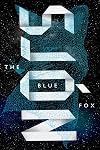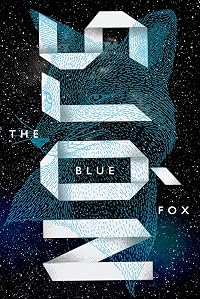
The Blue Fox
by Sjón
On This Page
Description
"Set against the stark backdrop of the Icelandic winter, an elusive, enigmatic fox leads a hunter on a transformative quest. At the edge of the hunter's territory, a naturalist struggles to build a life for his charge, a young woman with Down syndrome whom he had rescued from a shipwreck years before. By the end of Sjón's slender, spellbinding fable of a novel, none of their lives will be the same"--Page 4 of cover.Tags
Recommendations





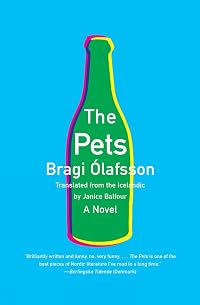

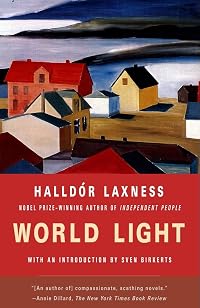
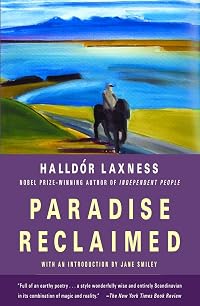


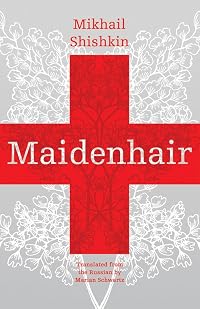


Member Recommendations

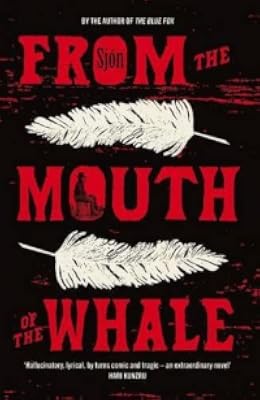
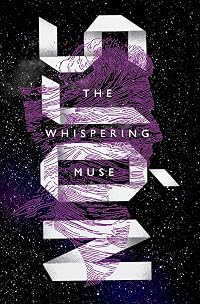
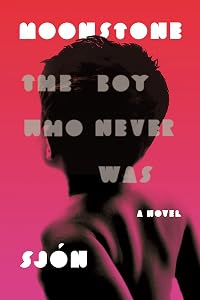
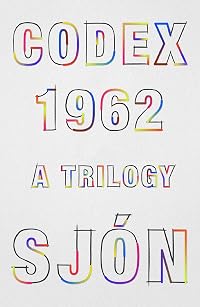
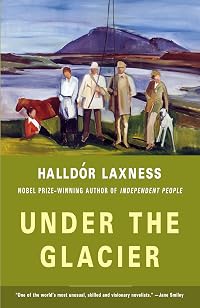
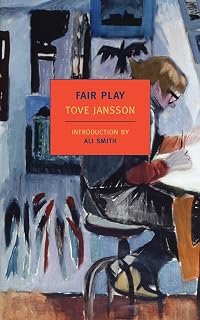
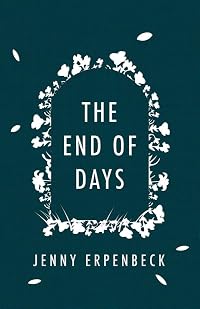
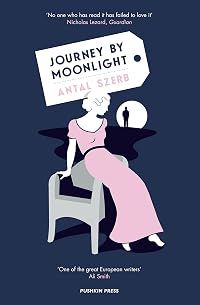
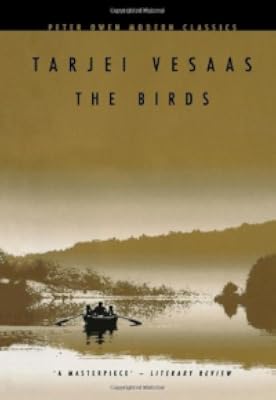
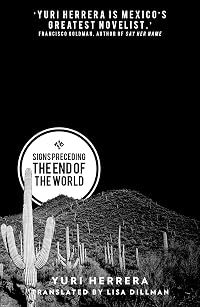
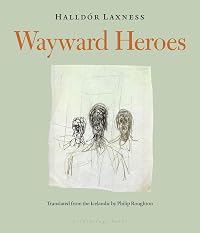
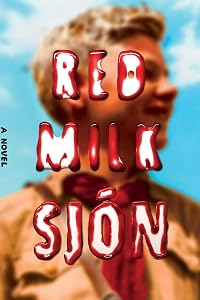
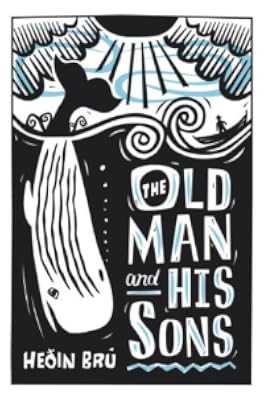
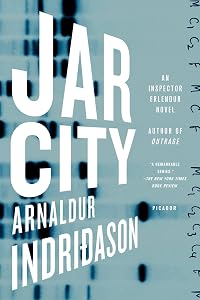
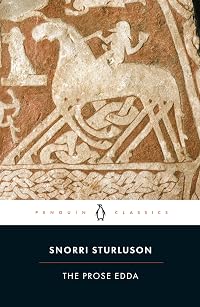
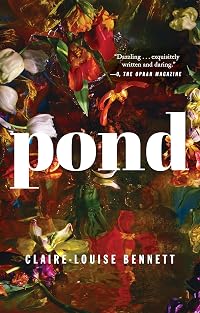
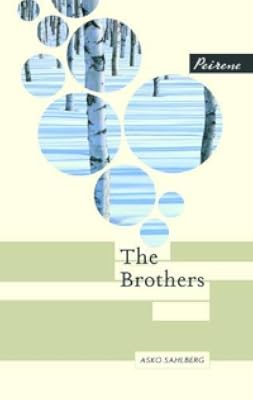
Tinwara Not just because it's also set in Iceland. Both books are written in an evocative poetic style and animals play an important role
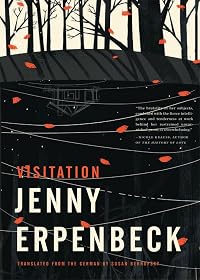
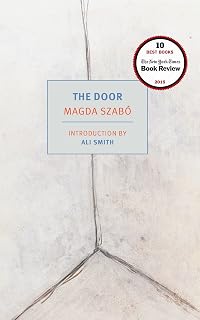
caliginous-labyrinth both of these books are dreamlike novellas with religious themes.
Member Reviews
Oooof. Reading the first part of this slim novel, it seemed to me I was reading a modernized animal fable. Told in poetic language we read about a blue fox, “the vixen”, being tracked through the winter Icelandic landscape of 1883 by a hunter, universalized as “the man”. And then the story explodes into something else, signified by two short lines:
The following sections of the novel gradually spool out a horrific and, alas, an all too human sort of story, told in more traditional though still lyrically heightened prose. I had not looked at reviews before reading this; if I had, I would have seen my Goodreads friend Meike’s review which points out the etymology show more of the Icelandic word skuggabaldur, the novel’s original title in Iceland, which according to Wiktionary has the meanings:
1. An Icelandic folktale creature, the offspring of a tomcat and a vixen (or dog)
2. An evil spirit
3. An evildoer who anonymously does their evil
Icelandic speakers, or people who read smart Goodreads reviews, would thus know right away that the name Baldur Skuggason bodes very ill. I got to find out more gradually. The Reverend Baldur Skuggason has done something hideously evil, unspeakable, and Sjón twines together that brutal story with the safer language of fable, where the moral is guaranteed its victory in the end.
There’s an interesting exchange between Reverend Baldur Skuggason and the vixen that suggestively takes place in a cave (underneath a glacier, being Iceland!). Skuggason challenges the vixen to a debate about electricity. He claims that God materially makes up the world, and that it is thus particles of God that are transmitted through electric wires. To treat God in such a way is a degradation of His nature. The vixen replies that if God causes the light to shine, and if God furthermore is light, then God is shining forth from every lamp, and shouldn’t the Church desire that? The Reverend cynically replies, “Do you really believe, Madam Vixen, that the radiance from these electric bulbs of yours can penetrate the human soul?” He then stabs the vixen through the heart with a knife he has grabbed while the vixen was composing her reply.
Digging out of the cave through the snow right after, the Reverend calls out:
I think there’s enough suggested in these few pages to power several theology classes. show less
She raises her head.
Reverend Baldur Skuggason pulls the trigger.
The following sections of the novel gradually spool out a horrific and, alas, an all too human sort of story, told in more traditional though still lyrically heightened prose. I had not looked at reviews before reading this; if I had, I would have seen my Goodreads friend Meike’s review which points out the etymology show more of the Icelandic word skuggabaldur, the novel’s original title in Iceland, which according to Wiktionary has the meanings:
1. An Icelandic folktale creature, the offspring of a tomcat and a vixen (or dog)
2. An evil spirit
3. An evildoer who anonymously does their evil
Icelandic speakers, or people who read smart Goodreads reviews, would thus know right away that the name Baldur Skuggason bodes very ill. I got to find out more gradually. The Reverend Baldur Skuggason has done something hideously evil, unspeakable, and Sjón twines together that brutal story with the safer language of fable, where the moral is guaranteed its victory in the end.
There’s an interesting exchange between Reverend Baldur Skuggason and the vixen that suggestively takes place in a cave (underneath a glacier, being Iceland!). Skuggason challenges the vixen to a debate about electricity. He claims that God materially makes up the world, and that it is thus particles of God that are transmitted through electric wires. To treat God in such a way is a degradation of His nature. The vixen replies that if God causes the light to shine, and if God furthermore is light, then God is shining forth from every lamp, and shouldn’t the Church desire that? The Reverend cynically replies, “Do you really believe, Madam Vixen, that the radiance from these electric bulbs of yours can penetrate the human soul?” He then stabs the vixen through the heart with a knife he has grabbed while the vixen was composing her reply.
Digging out of the cave through the snow right after, the Reverend calls out:
”Light, more light!”
But the closer the priest came to his goal, the less man there was in him, the more beast.
I think there’s enough suggested in these few pages to power several theology classes. show less
This short book is more of a long parable or novella. Don't let the short length fool you — in true parable form the book is packed with meaning and room for interpretation by the reader. Like The Whispering Muse (also by Sjón), the story also has a bit of a Melville feel to it. The main character is a pastor who's hunting a mysterious blue fox. Throughout the pursuit we learn more about the hunter and his character than we do about the prey. A fascinating read that mixes an adventure story and character study.
The Blue Fox, set in late 19th century Iceland, is a fable that weaves together an historical story of the naturalist Fridrik and his ward Abba (who suffers with Down's Syndrome), with that of a local priest and his quest for the mystical and elusive blue fox. At a mere, 115 pages, it's a short read (as one might expect from a 'fable'), enjoyable, beautifully written (Sjon is also a poet and musician), with a more thoughtful ending than a classic fable one, I think.
I'm not normally given to being moved by books, and certainly almost never by a single sentence, but Sjón strums a chord with:
I saw this title in my Goodreads feed, and wanting a temporary respite from some heady stuff, I indulged myself in a cultural diversion. I'd hoped for a brief glimpse into Icelandic culture, and received an odd and lightly informative story to add to the small amount I already knew of Iceland. And despite its oddness, it was quite engaging. One could feel for the titular protagonist (who actually plays but a small part in the story) and extrapolate to the larger issue of what its fate means. I'm not so intuitive as to discern anything more than a simple moral show more lesson from the companion storyline, and if there is more, without the cultural references, I wouldn't know if I am imparting my reference frames over Icelandic ones.
Still, when an author grabs my attention by defining the universe as made of poems, it is all the more impactful as I'm not partial to poetry! (Though I can see the poetry of math and physics, and sometimes, the math of poetry...)
That will stick with me. show less
“I have seen the universe! It is made of poems!”
I saw this title in my Goodreads feed, and wanting a temporary respite from some heady stuff, I indulged myself in a cultural diversion. I'd hoped for a brief glimpse into Icelandic culture, and received an odd and lightly informative story to add to the small amount I already knew of Iceland. And despite its oddness, it was quite engaging. One could feel for the titular protagonist (who actually plays but a small part in the story) and extrapolate to the larger issue of what its fate means. I'm not so intuitive as to discern anything more than a simple moral show more lesson from the companion storyline, and if there is more, without the cultural references, I wouldn't know if I am imparting my reference frames over Icelandic ones.
Still, when an author grabs my attention by defining the universe as made of poems, it is all the more impactful as I'm not partial to poetry! (Though I can see the poetry of math and physics, and sometimes, the math of poetry...)
That will stick with me. show less
A small Icelandic... Well, I was going to say "novel," but at 115 pages, I think it might actually qualify as a novella. Whatever it is, it's an odd, odd book. We're introduced to a man hunting a blue fox, apparently with something vaguely supernatural going on. Then we jump back in time a few days to meet another man, a man who once took in a young woman with Down's syndrome, despite the fact that this is set during the 19th century, and he'd been exposed to some very ugly ideas about such people. Then it's back to the fox-hunter again, who experiences some very weird things. Through the entire thing I kept wondering why on Earth the author was showing me these things and what the connection was between them. In the end, we're given show more information that makes sense of it... sort of. It's never remotely clear exactly why what happens happens, or even entirely what it is that happens, which leaves me wondering whether the author was deliberately leaving most of it to our imagination (which would be kind of an interesting choice), or whether there's an allusion here to some Icelandic folklore I'm just not aware of.
The writing is odd, too, although I think mostly in a good way. There's a dreamlike quality to it that seems appropriate, and which did kind of pull me along.
But in the end, I'm left completely unsure how I feel about any of it, and can't even remotely decide whether I actually liked it or not.
Rating: Seriously, I don't know whether this was good or bad. I don't know whether I liked it or not. Um... 3.5/5? show less
The writing is odd, too, although I think mostly in a good way. There's a dreamlike quality to it that seems appropriate, and which did kind of pull me along.
But in the end, I'm left completely unsure how I feel about any of it, and can't even remotely decide whether I actually liked it or not.
Rating: Seriously, I don't know whether this was good or bad. I don't know whether I liked it or not. Um... 3.5/5? show less
I think this is one of those books that is improved if the reader is more in touch with the book's cultural origins. Its ending left me a bit puzzled. There is no denying the author's skill: I was drawn in by the characters and the descriptions. But it was a curiously constructed little book, nonetheless.
This book made for a pretty short read and while I was impressed by how the story came together at the end, I was less than thrilled by the novel overall. There were elements I found interesting and moments which were compelling - the beliefs shared about Down syndrome in the 19th century were particularly appalling - yet the story felt confined and narrow in scope. It's possible, as this book was originally written in Icelandic, that something has been lost in translation.
Members
- Recently Added By
Lists

Top Five Books of 2014
1,064 works; 397 members

Authors from Iceland
2 works; 1 member

LIBROS DE CIENCIA FICCIÓN Y FANTASIA
60 works; 1 member

Books Read in 2025
4,128 works; 98 members
Author Information

32+ Works 2,646 Members
Some Editions
Awards and Honors
Common Knowledge
- Canonical title*
- Скугга-Бальдур
- Original title
- Skugga- Baldur
- Original publication date
- 2003
- People/Characters
- Baldr Skuggason; Fridrik B. Fridjonsson; Abba
- Important places
- Iceland
- First words
- Blue foxes are so curiously like stones that it is a matter for wonder.
- Blurbers
- Björk
- Original language
- Icelandic
- Canonical DDC/MDS
- 839.6935
*Some information comes from Common Knowledge in other languages. Click "Edit" for more information.
Classifications
- Genres
- General Fiction, Fiction and Literature, Historical Fiction
- DDC/MDS
- 839.6935 — Literature & rhetoric German & related literatures Other Germanic literatures Old Norse, Old Icelandic, Icelandic, Faroese literatures Modern West Scandinavian; Modern Icelandic Modern Icelandic fiction 21st Century
- LCC
- PT7511 .S62 .S5913 — Language and Literature German, Dutch and Scandinavian literatures Modern Icelandic literature Individual authors or works 19th-20th centuries
- BISAC
Statistics
- Members
- 873
- Popularity
- 31,266
- Reviews
- 38
- Rating
- (3.77)
- Languages
- 20 — Czech, Danish, Dutch, English, Faroese, Finnish, French, German, Galician, Hungarian, Icelandic, Italian, Norwegian (Bokmål), Polish, Portuguese, Romanian, Russian, Serbian, Spanish, Swedish
- Media
- Paper, Audiobook, Ebook
- ISBNs
- 36
- ASINs
- 5