Katinka
by Herman Bang
On This Page
Description
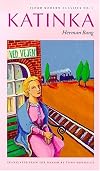
Katinka is the stationmaster's wife in a sleepy Danish provincial town and her domestic languor is disrupted by the arrival of Huus, the new foreman on a nearby farm. Unlike her boorish husband Huus is attentive and sensitive and despite her best efforts Katinka falls in love with him. Her whole life is turned upside down by an intense passion she had never expected to experience and which has unforeseen consequences. Katinka is another of Herman Bang's tragic heroines.In its impressionistic show more almost cinematic style it is a novel ahead of its time. show lessTags
Recommendations



















Member Reviews
This is a short novel by the Danish writer Herman Bang published in 1886 as Ved Vejen.The translation is by W Glyn Jones and was published in 2015. A previous translation had titled the Book Katinka, but the amended title is more appropriate given the importance of the passing of trains in relation to the passing of the life of Katinka, but this is not a book about trains. It is a study of women's roles and their restricted lives.
Katinka grows up in the town in which she was born and finds herself married to the Station master Mr Bai, she is a dutiful wife and lives quietly with Bai, she finds him a little rough at first, but she settles into a routine and tries to make the best of her lot. She is well liked but seems to fade into the show more background and when she starts to lose weight and become ill hardly anyone notices. Her life revolves around a small group who socialise with Mr Bai and she takes her pleasure in companionship, knowing the women around her, observing their characteristics and being a party to their needs and issues. She is a good listener. Mr Bai has an eye for the ladies and takes his sexual pleasures where he can find them, but he is not unkind to his wife. They are not blessed with children and so Katinka has more time than most women in her circle to enter into her own peaceful world and enjoy the countryside and her minute observations of the people that pass by the station house.
A Mr Huus: a solid quiet man takes the job as a bailiff with one of the gentleman farmers who are in the Bai's circle of friends. Huus becomes good friends with the Bai's and spends time in their house and garden. He is a permanent member of their social circle and Katinka finds that she feels comfortable with him and then something more, as slowly she misses him, and thinks about him when he is not around. Huus increasingly seems to seek her out and Bai is quite happy to leave the two of them together, because as he says to one of is friends Huus hasn't a clue about chasing women. Herman Bang's writing lends a slightly dreamy quality to their friendship which could develop into a romance. He also writes about the quiet suffering of their other friends. Little Miss Jensen the elderly school teacher who craves companionship and lavishes all her affection on her little pug Bel-Ami. The widowed Mrs Abel who has two fractious daughters of marriageable age still at home and the elderly parson and his wife, who do their best to provide a centre for the small social group.
These are people who live in the slow lane whose life is measured by the trains that pass by. Their meeting place is the station and the stopping trains either focus their attentions on the passengers or are an impetus for them to come and go from the station. A tranquil existence but for many of the women and some of the men it is a life of quiet suffering and Katinka is the one that Herman Bang has selected to express for us a life of understated desperation. The slow pace of life, measured by the changing seasons and observations of people in simple social gatherings give this book a rather special atmosphere. As a reader there is a feeling of people dreaming their lives away while suffering nightmares of worries and doubt underneath. The translation aids the gentle understatement that is a feature of the book, but the understatement can mean the reader is struggling to know who is speaking during conversations. I enjoyed this sad, contemplative novel and so 4 stars, show less
Katinka grows up in the town in which she was born and finds herself married to the Station master Mr Bai, she is a dutiful wife and lives quietly with Bai, she finds him a little rough at first, but she settles into a routine and tries to make the best of her lot. She is well liked but seems to fade into the show more background and when she starts to lose weight and become ill hardly anyone notices. Her life revolves around a small group who socialise with Mr Bai and she takes her pleasure in companionship, knowing the women around her, observing their characteristics and being a party to their needs and issues. She is a good listener. Mr Bai has an eye for the ladies and takes his sexual pleasures where he can find them, but he is not unkind to his wife. They are not blessed with children and so Katinka has more time than most women in her circle to enter into her own peaceful world and enjoy the countryside and her minute observations of the people that pass by the station house.
A Mr Huus: a solid quiet man takes the job as a bailiff with one of the gentleman farmers who are in the Bai's circle of friends. Huus becomes good friends with the Bai's and spends time in their house and garden. He is a permanent member of their social circle and Katinka finds that she feels comfortable with him and then something more, as slowly she misses him, and thinks about him when he is not around. Huus increasingly seems to seek her out and Bai is quite happy to leave the two of them together, because as he says to one of is friends Huus hasn't a clue about chasing women. Herman Bang's writing lends a slightly dreamy quality to their friendship which could develop into a romance. He also writes about the quiet suffering of their other friends. Little Miss Jensen the elderly school teacher who craves companionship and lavishes all her affection on her little pug Bel-Ami. The widowed Mrs Abel who has two fractious daughters of marriageable age still at home and the elderly parson and his wife, who do their best to provide a centre for the small social group.
These are people who live in the slow lane whose life is measured by the trains that pass by. Their meeting place is the station and the stopping trains either focus their attentions on the passengers or are an impetus for them to come and go from the station. A tranquil existence but for many of the women and some of the men it is a life of quiet suffering and Katinka is the one that Herman Bang has selected to express for us a life of understated desperation. The slow pace of life, measured by the changing seasons and observations of people in simple social gatherings give this book a rather special atmosphere. As a reader there is a feeling of people dreaming their lives away while suffering nightmares of worries and doubt underneath. The translation aids the gentle understatement that is a feature of the book, but the understatement can mean the reader is struggling to know who is speaking during conversations. I enjoyed this sad, contemplative novel and so 4 stars, show less
Jeg kan fornemme kvaliteten i særligt dialogerne og persongalleriet, og det var fascinerende at læse om livet i den lille stationsby. Men bogen er ikke ældet godt, den er svær at læse, og jeg kedede mig bravt undervejs.
'Katinka' is the story of a Danish woman's domestic unhappiness. The main character, Katinka, is the wife of the insensitive and womanizing stationmaster Bai. Her life revoles around the coming and going of the trains and catering to her husband's whims until the sensitive foreman Huus moves into the neighbor and makes her realize how much she is missing. The story is simple and the prose is crystal clear. Herman Bang is considered to be an "impressionist" writer. This books is a pleasure to read. Watch for the symbolic consumption!
Jeg har netop genlæst Ved Vejen som er og bliver et lille dansk mesterværk. Bang er sublim til med ganske få ord og sætninger at tegne karakterer, så vi øjeblikkeligt kan genkende dem både som typer og individer. Det gælder også forholdet mellem Katinka og forvalteren Huus, hvor der strengt taget ikke sker ret meget - og hvor ingen andre opdager, hvad der er på spil - men hvor læseren alligevel tydeligt ser forholdet udvikle sig med Huus' jalousi over for Bai, Katinkas voksende glæde ved Huus osv.
Genlæsningen gjorde det imidlertid også klart, at andre af figurerne er interessante og sammensatte. Bai er nok brovtende udenpå, men han er også en tragisk skikkelse, der ikke har fået de børn og den tilfredsstillelse, som show more han havde forestillet sig i ægteskabet med Katinka. Hun holder på sin side af Bai til det sidste, uanset at det vel især er tidens strenge moral, der forhindrer hende i at drive det videre med Huus.
Bogen kan anbefales - også til genlæsning for fornøjelsens skyld. show less
Genlæsningen gjorde det imidlertid også klart, at andre af figurerne er interessante og sammensatte. Bai er nok brovtende udenpå, men han er også en tragisk skikkelse, der ikke har fået de børn og den tilfredsstillelse, som show more han havde forestillet sig i ægteskabet med Katinka. Hun holder på sin side af Bai til det sidste, uanset at det vel især er tidens strenge moral, der forhindrer hende i at drive det videre med Huus.
Bogen kan anbefales - også til genlæsning for fornøjelsens skyld. show less
Jul 26, 2009Danish
Danmark, ca 1890
Katinka Bai er gift med stationsforstander Mathias Bai. Hun får tuberkulose og dør efter at have sværmet lidt for den nye forvalter Huus på godset. Hendes mand tager til København blandt andet for at købe en gravsten til hende.
Glimrende underspillet roman, hvor der egentlig ikke sker andet end at Katinka bliver gift, går lidt i frø og dør ret ung uden at have oplevet noget særligt.
Katinka Bai er gift med stationsforstander Mathias Bai. Hun får tuberkulose og dør efter at have sværmet lidt for den nye forvalter Huus på godset. Hendes mand tager til København blandt andet for at købe en gravsten til hende.
Glimrende underspillet roman, hvor der egentlig ikke sker andet end at Katinka bliver gift, går lidt i frø og dør ret ung uden at have oplevet noget særligt.
Sep 25, 2014 (Edited)Danish
Danmark, ca 1890
Katinka Bai er gift med stationsforstander Mathias Bai. Hun får tuberkulose og dør efter at have sværmet lidt for den nye forvalter Huus på godset. Hendes mand tager til København blandt andet for at købe en gravsten til hende.
Glimrende underspillet roman, hvor der egentlig ikke sker andet end at Katinka bliver gift, går lidt i frø og dør ret ung uden at have oplevet noget særligt. Denne udgave har en udmærket læsevejledning med, skrevet af Sven Møller Kristensen.
Katinka Bai er gift med stationsforstander Mathias Bai. Hun får tuberkulose og dør efter at have sværmet lidt for den nye forvalter Huus på godset. Hendes mand tager til København blandt andet for at købe en gravsten til hende.
Glimrende underspillet roman, hvor der egentlig ikke sker andet end at Katinka bliver gift, går lidt i frø og dør ret ung uden at have oplevet noget særligt. Denne udgave har en udmærket læsevejledning med, skrevet af Sven Møller Kristensen.
Dec 9, 2015 (Edited)Danish
Ratings
Members
- Recently Added By
Lists

Books You Read During High School (For School)
301 works; 53 members

Scandinavian Fiction of the 19th Century in English Translation
77 works; 2 members
Author Information

106+ Works 901 Members
Both an astute literary critic and a master prose stylist, Herman Bang was born in Denmark in 1857. His style has been described as impressionistic. With a few literary brush strokes, Bang is able to paint sensitive psychological portraits. Bang was not as optimistic as his colleagues about the Modern Breakthrough, the rejection of show more nineteenth-century perspectives for modern progress. His characters are often gentle individuals crushed by circumstances. Bang's propensity for depicting declining noble families makes him a major precursor of literary decadence and fin de siecle pessimism. Although he enjoyed great popularity abroad, particularly in Germany, Bang's success at home in Denmark was hampered by a competition with the critics Georg Branes and Edvard Brandes. Several books have been written about Bang in the Scandinavian countries; none have yet appeared in English. (Bowker Author Biography) show less
Some Editions
Awards and Honors
Awards
Notable Lists
Series
Belongs to Publisher Series
Work Relationships
Is contained in
Has the adaptation
Common Knowledge
- Canonical title
- Katinka
- Original title
- Ved vejen
- Alternate titles
- As Trains Pass By
- Original publication date
- 1886
- Original language
- Danish
Classifications
- Genres
- Fiction and Literature, General Fiction
- DDC/MDS
- 839.8136 — Literature & rhetoric German & related literatures Other Germanic literatures Danish and Norwegian literatures Danish Danish fiction 1800–1900
- LCC
- PT8123 .B3 — Language and Literature German, Dutch and Scandinavian literatures Danish literature Individual authors or works 19th century
- BISAC
Statistics
- Members
- 161
- Popularity
- 202,478
- Reviews
- 6
- Rating
- (3.62)
- Languages
- 7 — Czech, Danish, Dutch, English, French, German, Spanish
- Media
- Paper, Audiobook, Ebook
- ISBNs
- 26
- ASINs
- 2