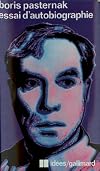
An Essay in Autobiography
by Boris Pasternak
On This Page
Tags
Recommendations




















Member Reviews
Pasternak’s second experiment in autobiography written around 1950; the first one, written in the 1920s (engl. title: ‘Safe Conduct’ ) he judges now: „Unfortunately, the book was spoiled by its affected manner, the besetting sin of those days.“ and: „I dislike my style before 1940 … I dislike the disintegrating forms, the impoverished thought and the littered and uneven language of those days.“ (84), but, so as not to repeat himself, he often refers to the earlier one, so both should be read together.
He writes what the poet Alexander Alexandrovich Blok (1880-1921) meant to him (54ff), then about the death of Tolstoy (70ff) - his father, the painter Leonid Pasternak, had been summoned by telegram and both took the night show more train to Astapovo - his views about the relationships betweenTolstoy, the Tolstoyans and Tolstoy’s wife and her demeaning ‘display of her devotion’; he remembers his friendship with the Poetess Marina Tsvetayeva - her and her family awaited a tragic fate when they returned 1939 to the USSR - and his Georgian friends, the poets Paolo Yashvili and Titsian Tabidze; Yashvili died by his own hand, Tabidze in one of the purges. He had written earlier about living through the days of the suicide of Majakowskij.
Accompanying the text are b/w reproductions of drawings and paintings by Leonid Pasternak and photographs of Marina Tsvetayeva and Pasternak, notes and a list of names with a line about each person.
About the Introduction for this edition: Crankshaw wrote extensively, speaking his own mind, so it appears to me, about Soviet affairs (obituary: https://www.nytimes.com/1984/12/04/obituaries/edward-crankshaw-is-dead-at-75-aut... ). Well worth reading in particular what he says about the fateful decision to award Pasternak the 1958 Nobel prize.
It may be time for me to return to Doctor Zhivago. show less
He writes what the poet Alexander Alexandrovich Blok (1880-1921) meant to him (54ff), then about the death of Tolstoy (70ff) - his father, the painter Leonid Pasternak, had been summoned by telegram and both took the night show more train to Astapovo - his views about the relationships betweenTolstoy, the Tolstoyans and Tolstoy’s wife and her demeaning ‘display of her devotion’; he remembers his friendship with the Poetess Marina Tsvetayeva - her and her family awaited a tragic fate when they returned 1939 to the USSR - and his Georgian friends, the poets Paolo Yashvili and Titsian Tabidze; Yashvili died by his own hand, Tabidze in one of the purges. He had written earlier about living through the days of the suicide of Majakowskij.
Accompanying the text are b/w reproductions of drawings and paintings by Leonid Pasternak and photographs of Marina Tsvetayeva and Pasternak, notes and a list of names with a line about each person.
About the Introduction for this edition: Crankshaw wrote extensively, speaking his own mind, so it appears to me, about Soviet affairs (obituary: https://www.nytimes.com/1984/12/04/obituaries/edward-crankshaw-is-dead-at-75-aut... ). Well worth reading in particular what he says about the fateful decision to award Pasternak the 1958 Nobel prize.
It may be time for me to return to Doctor Zhivago. show less
The 1959 edition of the Essay in Autobiography discussed this review is a poignant documentary exhibit of an extraordinary episode during Cold War hostilities when the CIA engaged in literary warfare and published its own edition of Doctor Zhivago in Russian and English. The Essay is a precursor and companion volume to the novel.
It was Pasternak’s second essay in autobiography. An earlier version published in a small edition in 1931 was attacked for its failure to reflect the Soviet Realism programme of the time and banned.
Pasternak wrote the Essay as an introduction to a projected edition of his poems. He had published no poems since 1946. After the death of Stalin in 1953 the ‘Kruschev Thaw’ of the mid-1950’s seemed to offer show more an opportunity to break that enforced silence. The Essay and the poems that it would introduce were intended as ‘a preparation for the novel’. In 1956 he submitted a draft of Doctor Zhivago, which had been written over the preceding decades to Novy Mir, the literary journal of the Writer’s Union of the USSR. But the editors of Novy Mir rejected the novel for its anti-Soviet tone and spirit. Pasternak courageously defied the editors and sent the manuscript to the Italian publisher and political activist Giangiacomo Feltrinelli who defied pressure from Soviet authorities and published an Italian translation in 1957 and an English translation in 1958. In a secret operation the CIA then published its own editions in Russian and English for clandestine distribution in the Soviet Union. It is unnecessary to say anything of the furore that ensued when Doctor Zhivago was awarded the Nobel Prize for Literature later in that year. The official vilification of Pasternak that followed ended any prospect of a Russian edition of the Essay and poems.
Like the first edition of Doctor Zhivago, the Essay was published in Italy by Feltrinelli. It appeared in 1959, the year before Pasternak’s death, in an English translation by Manya Harari, who had collaborated with Max Hayward in their translation of the novel. It has a preface by Edward Crankshaw (1909-84) who was pre-eminent among English journalists of the post-war period for his expertise in Russian and European governance and politics. Originally recruited by the English Secret Service, Crankshaw had been stationed in Moscow as an army liaison officer during the war. The poems were not included in this edition. It does have an extended section of Notes and an Appendix by collaborators who are identified only by their initials, ‘V.F.’ and ‘D.M.’ respectively. The text refers to many of Zhivago’s contemporaries and the notes and appendix provide essential information on their lives.
Crankshaw’s preface to the Essay is very much of its time; he is conciliatory in tone and hopeful that détente would survive the outrage expressed by Soviet authorities over the award of the Nobel Prize for Doctor Zhivago. Pasternak himself was conciliatory in his renunciation of the Nobel Prize and his decision to remain in the USSR as the ‘first effective martyr of modern times’ rather than flee to the West.
There was an alternative American edition of the Essay, also published in 1959, in a translation by David Magarshack, who was probably the ‘D.M.’ who contributed the biographical notes to the Crankshaw version. The American edition includes as well an essay on ‘Translating Shakespeare’, translated by Manya Harari. As in the Crankshaw edition, the poems do not appear.
Pasternak’s autobiographical narrative is devoted to his early development as a poet and for the most part the chronology does not go beyond the First World War. His childhood and adolescence were exceptional in their ambience of cultural privilege. He was the son of Leonid Pasternak, a successful and officially recognised painter in pre-revolutionary Russia and a celebrated pianist, Rosa Kaufman, Jews from Odessa who would flee in 1921 to settle in Berlin. Boris thought at first he might excel as a composer and showed great promise before, despairing of greatness, he turned to philosophy which he also abandoned after brilliantly completing his doctoral thesis. Once embarked on his career as a poet, he limits the account of his life for the most part to the pre-WW1 poetic milieu in which he flourished and achieved fame. In this ‘narrowest circle’ his ‘life became converted into art and art was born of life and experience’.
There are copious notes on his contemporaries and an extended discussion of his combative relationship with his most significant rival, Vladimir Mayakovsky (1893-1930), who would suicide in 1930, ‘when there was no more poetry, neither his nor anyone’s…when, to put it plainly, writing was at an end.’ They were perilous times for poets and novelists. Pasternak ends the discussion of his contemporaries with a lament for ‘Three Shadows’, the poets, Marina Tsvetayeva (1893-1941) and Paolo Yashvili (1897-1937) who took their own lives and Titsien Tabidze 1895-193, who was executed in one of the purges. There were others who failed to take refuge abroad, who met similar fates. In an illuminating and extended review of the autobiographies Sherman Paul (Salmagundi No14,1970) remarks that the names of the writers briefly remembered in the Essay ‘are meant to evoke full lives and well known fates and, together, to vividly depict a milieu. We are expected to read…in a double way; the author assumes that we will grasp the hidden meanings’. For readers without access to memory of that time of literary ferment the information in the Appendix of names must suffice.
Pasternak’s brief Conclusion of the Essay is a bitter draught. His ‘biographical sketch’ does not speak of ‘the years and circumstances, of people and of destinies contained within the framework of the revolution….To write of it one should write of it in such a way as to make the hair rise and the heart falter’. Then, he pronounces a final sentence on that dreadful era: ‘We are still far from this ideal way of writing’.
His ‘attitude to my poetic past – my own and that of many others’ was bleak: ‘I would not lift a finger to rescue more than a quarter of my writings from oblivion’. The poems worth saving that would be published with the Essay are ‘merely steps preparatory to the novel’. But Doctor Zhivago is ‘the only one of [of my works] of which I am not ashamed and for which I take full responsibility’. show less
It was Pasternak’s second essay in autobiography. An earlier version published in a small edition in 1931 was attacked for its failure to reflect the Soviet Realism programme of the time and banned.
Pasternak wrote the Essay as an introduction to a projected edition of his poems. He had published no poems since 1946. After the death of Stalin in 1953 the ‘Kruschev Thaw’ of the mid-1950’s seemed to offer show more an opportunity to break that enforced silence. The Essay and the poems that it would introduce were intended as ‘a preparation for the novel’. In 1956 he submitted a draft of Doctor Zhivago, which had been written over the preceding decades to Novy Mir, the literary journal of the Writer’s Union of the USSR. But the editors of Novy Mir rejected the novel for its anti-Soviet tone and spirit. Pasternak courageously defied the editors and sent the manuscript to the Italian publisher and political activist Giangiacomo Feltrinelli who defied pressure from Soviet authorities and published an Italian translation in 1957 and an English translation in 1958. In a secret operation the CIA then published its own editions in Russian and English for clandestine distribution in the Soviet Union. It is unnecessary to say anything of the furore that ensued when Doctor Zhivago was awarded the Nobel Prize for Literature later in that year. The official vilification of Pasternak that followed ended any prospect of a Russian edition of the Essay and poems.
Like the first edition of Doctor Zhivago, the Essay was published in Italy by Feltrinelli. It appeared in 1959, the year before Pasternak’s death, in an English translation by Manya Harari, who had collaborated with Max Hayward in their translation of the novel. It has a preface by Edward Crankshaw (1909-84) who was pre-eminent among English journalists of the post-war period for his expertise in Russian and European governance and politics. Originally recruited by the English Secret Service, Crankshaw had been stationed in Moscow as an army liaison officer during the war. The poems were not included in this edition. It does have an extended section of Notes and an Appendix by collaborators who are identified only by their initials, ‘V.F.’ and ‘D.M.’ respectively. The text refers to many of Zhivago’s contemporaries and the notes and appendix provide essential information on their lives.
Crankshaw’s preface to the Essay is very much of its time; he is conciliatory in tone and hopeful that détente would survive the outrage expressed by Soviet authorities over the award of the Nobel Prize for Doctor Zhivago. Pasternak himself was conciliatory in his renunciation of the Nobel Prize and his decision to remain in the USSR as the ‘first effective martyr of modern times’ rather than flee to the West.
There was an alternative American edition of the Essay, also published in 1959, in a translation by David Magarshack, who was probably the ‘D.M.’ who contributed the biographical notes to the Crankshaw version. The American edition includes as well an essay on ‘Translating Shakespeare’, translated by Manya Harari. As in the Crankshaw edition, the poems do not appear.
Pasternak’s autobiographical narrative is devoted to his early development as a poet and for the most part the chronology does not go beyond the First World War. His childhood and adolescence were exceptional in their ambience of cultural privilege. He was the son of Leonid Pasternak, a successful and officially recognised painter in pre-revolutionary Russia and a celebrated pianist, Rosa Kaufman, Jews from Odessa who would flee in 1921 to settle in Berlin. Boris thought at first he might excel as a composer and showed great promise before, despairing of greatness, he turned to philosophy which he also abandoned after brilliantly completing his doctoral thesis. Once embarked on his career as a poet, he limits the account of his life for the most part to the pre-WW1 poetic milieu in which he flourished and achieved fame. In this ‘narrowest circle’ his ‘life became converted into art and art was born of life and experience’.
There are copious notes on his contemporaries and an extended discussion of his combative relationship with his most significant rival, Vladimir Mayakovsky (1893-1930), who would suicide in 1930, ‘when there was no more poetry, neither his nor anyone’s…when, to put it plainly, writing was at an end.’ They were perilous times for poets and novelists. Pasternak ends the discussion of his contemporaries with a lament for ‘Three Shadows’, the poets, Marina Tsvetayeva (1893-1941) and Paolo Yashvili (1897-1937) who took their own lives and Titsien Tabidze 1895-193, who was executed in one of the purges. There were others who failed to take refuge abroad, who met similar fates. In an illuminating and extended review of the autobiographies Sherman Paul (Salmagundi No14,1970) remarks that the names of the writers briefly remembered in the Essay ‘are meant to evoke full lives and well known fates and, together, to vividly depict a milieu. We are expected to read…in a double way; the author assumes that we will grasp the hidden meanings’. For readers without access to memory of that time of literary ferment the information in the Appendix of names must suffice.
Pasternak’s brief Conclusion of the Essay is a bitter draught. His ‘biographical sketch’ does not speak of ‘the years and circumstances, of people and of destinies contained within the framework of the revolution….To write of it one should write of it in such a way as to make the hair rise and the heart falter’. Then, he pronounces a final sentence on that dreadful era: ‘We are still far from this ideal way of writing’.
His ‘attitude to my poetic past – my own and that of many others’ was bleak: ‘I would not lift a finger to rescue more than a quarter of my writings from oblivion’. The poems worth saving that would be published with the Essay are ‘merely steps preparatory to the novel’. But Doctor Zhivago is ‘the only one of [of my works] of which I am not ashamed and for which I take full responsibility’. show less
Ratings
Members
- Recently Added By
Lists

Books Read in 2020
4,379 works; 123 members
Author Information

259+ Works 15,426 Members
Pasternak was acclaimed as a major poet some 30 years before Doctor Zhivago (1955) made him world famous. After first pursuing promising careers in music and philosophy, he started to write around 1909 and published his first collection of verse in 1914. His first genuine triumph came with the collection My Sister, Life (1917), in which a love show more affair stimulates a rapturous celebration of nature. The splendid imagery and difficult syntax of this volume are a hallmark of the early Pasternak. During the 1920s, Pasternak tried to accept the reality of the new society and moved from the lyric to the epic, taking up historical and contemporary subjects. The long poem The Year 1905 (1926) is an example. While tolerated by the literary establishment, Pasternak turned increasingly in the 1930s to translation rather than original verse. He was a prolific translator; his versions of major Shakespeare plays are the standard texts used in Soviet theaters. From the start, however, prose was an important focus for Pasternak. The most notable early work is the story "Zhenia's Childhood," written in 1918, which explored a girl's developing consciousness of her surroundings. There is also his artistic and intellectual autobiography Safe Conduct (1931). But Pasternak's greatest prose achievement came later with the novel Doctor Zhivago, written over a number of years and completed in 1955. Its hero, a physician and poet, confronts the great changes of the early twentieth century including world war, revolution, and civil war, and travels a path through life that creates a parallel between his fate and that of Christ. (The theme of preordained sacrifice is strengthened by the cycle of poems included as the last section of the book.) Doctor Zhivago was rejected for publication but appeared in 1957 in the West and won its author worldwide acclaim. A Nobel Prize followed in 1958. This led the Soviet authorities to launch a major public campaign against Pasternak and to make his personal life even more difficult. So successful were they that the poet officially turned down the award. After that, he was left in relative peace and died two years later. He was but the first of many writers in the post-Stalin period to challenge the Soviet state. During the 1970s and 1980s, Pasternak's heritage was cautiously brought into public purview in the Soviet Union. The Gorbachev period saw the removal of all restrictions on his work, and publication of Doctor Zhivago followed at long last. Several major editions of Pasternak's writings have appeared. (Bowker Author Biography) show less
Some Editions
Series
Belongs to Publisher Series
Common Knowledge
- Canonical title
- An Essay in Autobiography
- Original publication date
- 1955
- People/Characters
- Boris Pasternak
Classifications
- Genre
- Biography & Memoir
- DDC/MDS
- 891.709 — Literature & rhetoric Asian Literature East Indo-European and Celtic literatures Russian and East Slavic languages Russian literature History and criticism of Russian literature
- LCC
- PG3476 .P27 — Language and Literature Slavic languages and literatures. Baltic languages. Albanian language Slavic. Baltic. Albanian Russian literature Individual authors and works 1917-1960
Statistics
- Members
- 78
- Popularity
- 404,798
- Reviews
- 2
- Rating
- (3.93)
- Languages
- 5 — English, French, German, Norwegian (Bokmål), Swedish
- Media
- Paper
- ISBNs
- 4
- ASINs
- 4