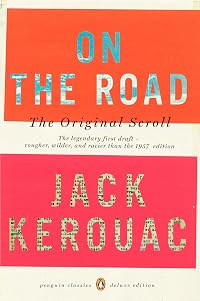
On the Road: The Original Scroll
by Jack Kerouac 
On This Page
Description
Presents the previously unpublished original scroll edition of Jack Kerouac's novel "On the Road" which Kerouac wrote over a three-week period in 1951 on eight sheets of tracing paper that he taped together to form a 120-foot scroll. Includes the real names of the friends that inspired the book's storyline.Tags
Recommendations

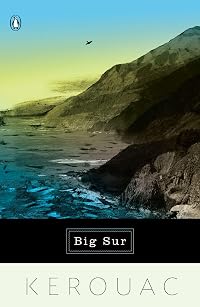
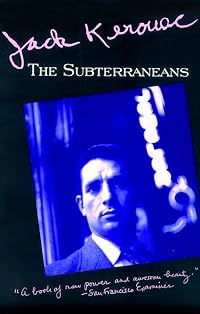
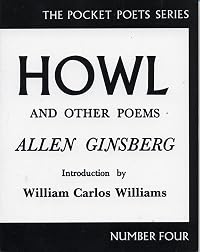
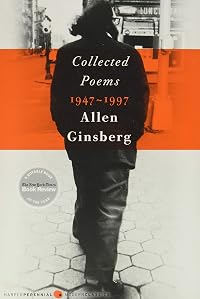
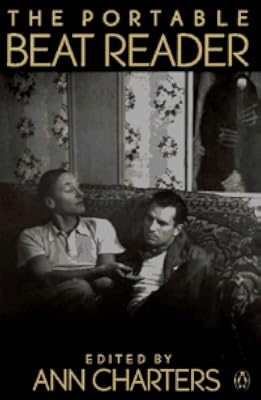
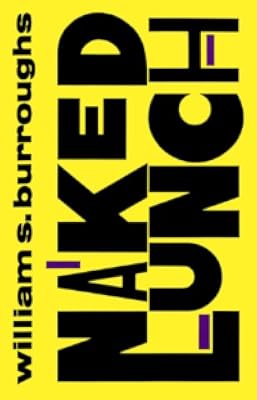
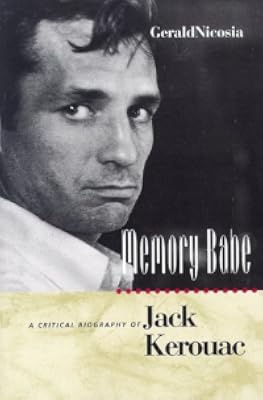
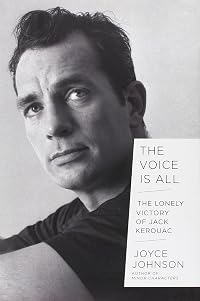



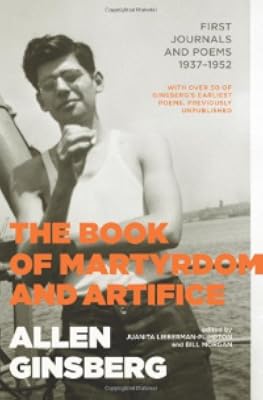
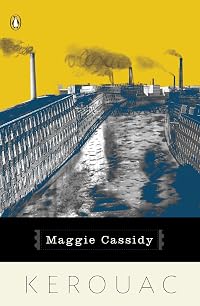
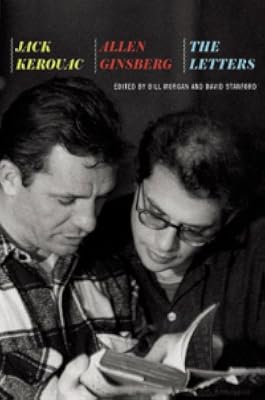
Member Reviews
Book Review- On The Road and Windblown World
Having been a New York City high school student in the mid 1960s Jack Kerouac’s On The Road has long been a literary touchstone. As a teenager I became enamored with its tale of exploration and beatnik culture. Kerouac, Ginsberg and Corso provided a trilogy of poetic vision which helped formulate my own philosophy of living.
About two years ago, while browsing the bookshelves in the Barnes and Noble in Brooklyn Heights, I came across a new publication: On The Road,The Original Scroll, edited by Howard Cunnell. Once home, it found a resting spot in my bookshelf where it remained until a few months ago. Bored between books I picked it up and started to read first the four introductory essays show more describing the process by which the scroll found a publisher; eventually, the legendary editor Robert Giroux was presented with the 120 foot long scroll Kerouac had typed out in a 30 day benzedrine haze, a single paragraph of creativity. When Giroux told him it would need to be edited, Kerouac protested insisting “the Holy Spirit” had dictated the work. After months of cajoling, the finished product was published with Chapters, names changed to protect against libel and became an instant best seller and modern classic.
I remember reading it with eyes wide open delighting in Kerouac’s adventures crisscrossing the continental United States with a side trip to Mexico. It was populated with aimless adventurers focused on living free of convention with drug induced visions of an alternative consciousness.
As I revisited the book in its original form I was astounded at the poetic flow, a rush of words and scenes depicted as if I had a backseat perch in the old Hudson or variety of other cars Kerouac and Cassidy hightailed on the roads of America…
“that magnificent car made the wind roar; it made the plains unfold like a roll of paper; it cast hot tar from itself with deference---an imperial boat.”
This was a totally different reading experience, within which I felt emerged like a diver in a deep body of water.
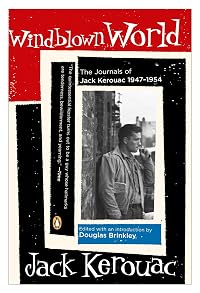
At the same time, I had the good fortune of spending considerable time in the Rose Reading Room, a research space located on the third floor of the main branch of the New York Public Library building on 42nd Street and Fifth Avenue. There, I also discovered a one-off copy of Windblown World: The Journals of Jack Kerouac 1947-1954, edited by the American historian Douglas G. Brinkley. In my hands at the library was Kerouac’s personal thoughts and notes about his process while writing On The Road and vast notes taken while he was out on the road traipsing from North Carolina where his family lived and then to Queens, New York where they relocated. His mother an inescapably key figure in supporting the author in his down and out times. Additionally, the journals noted his interactions with other writers and the key figures in the finished classic as he and Neal Cassidy spent considerable time in NYC, Denver, Colorado, San Francisco, New Orleans (hanging out with William Burroughs and family), and finally Mexico City. Within these journal pages Kerouac provides insight into his own state of mind…
“one has to learn history and the stupid study of cause and effect, to enter into an understanding of eternity so far as we may know it. Cause-and-effect is also a prurience of mind and soul, because it pettishly demands surface answers to bottomless matters, though it is not for me to deny the right of men to build bridges over voids…but why walk on such a bridge; an elephant can do that; only a man can stare at the void and know it. Only man cares, not elephants and asses.”
…and his sense of humor
“If you can’t get a girl in the
Springtime
You can’t get a girl
at all.”
...after which Kerouac notes a WC Fields line: “you’re as funny as a cry for help.”
And still from the journals, a direct link to the road trips:
“Neal and I were still dreamily uncertain of whether it was Market St. in Frisco or not – at dreamy moments. This is when the mind surpasses life itself. More will be said and must be said about the sweet, small lake of the mind, which ignores Time & Space in a Preternatural Metaphysical Dream of Life…On we went into the violet darkness up to Baton Rouge on a double highway. Neal drove grimly as the little blond dozed, I dreamed.”
The Windblown World ends with these words:
“And what a revelation to know that I was born sad-that it was no trauma that made me sad-but God-who made me that way...The Eternal Wheel is Infinite Joy…I’m really willing to be conscientious…Death…death…and nothing else. I have to be joyful or I die, because my earthly position is untenable in gloom and I betray God in spite of myself therein.
“I don’t have to go to museums, I know what’s there.”
So, there you have it. I am not so sure it would be feasible nor accessible for those reading this review to simultaneously read The Original Scroll in tandem with the Journals-Windblown World. I now consider this opportunity as being near the pinnacle of my life’s reading experience.
But, if you are interested in reading or revisiting ,On The Road, I urge you to read in its original form, the scroll; it is transformative in its poetry and pace to the edited published editions better known to the reading public. show less
Having been a New York City high school student in the mid 1960s Jack Kerouac’s On The Road has long been a literary touchstone. As a teenager I became enamored with its tale of exploration and beatnik culture. Kerouac, Ginsberg and Corso provided a trilogy of poetic vision which helped formulate my own philosophy of living.
About two years ago, while browsing the bookshelves in the Barnes and Noble in Brooklyn Heights, I came across a new publication: On The Road,The Original Scroll, edited by Howard Cunnell. Once home, it found a resting spot in my bookshelf where it remained until a few months ago. Bored between books I picked it up and started to read first the four introductory essays show more describing the process by which the scroll found a publisher; eventually, the legendary editor Robert Giroux was presented with the 120 foot long scroll Kerouac had typed out in a 30 day benzedrine haze, a single paragraph of creativity. When Giroux told him it would need to be edited, Kerouac protested insisting “the Holy Spirit” had dictated the work. After months of cajoling, the finished product was published with Chapters, names changed to protect against libel and became an instant best seller and modern classic.
I remember reading it with eyes wide open delighting in Kerouac’s adventures crisscrossing the continental United States with a side trip to Mexico. It was populated with aimless adventurers focused on living free of convention with drug induced visions of an alternative consciousness.
As I revisited the book in its original form I was astounded at the poetic flow, a rush of words and scenes depicted as if I had a backseat perch in the old Hudson or variety of other cars Kerouac and Cassidy hightailed on the roads of America…
“that magnificent car made the wind roar; it made the plains unfold like a roll of paper; it cast hot tar from itself with deference---an imperial boat.”
This was a totally different reading experience, within which I felt emerged like a diver in a deep body of water.
At the same time, I had the good fortune of spending considerable time in the Rose Reading Room, a research space located on the third floor of the main branch of the New York Public Library building on 42nd Street and Fifth Avenue. There, I also discovered a one-off copy of Windblown World: The Journals of Jack Kerouac 1947-1954, edited by the American historian Douglas G. Brinkley. In my hands at the library was Kerouac’s personal thoughts and notes about his process while writing On The Road and vast notes taken while he was out on the road traipsing from North Carolina where his family lived and then to Queens, New York where they relocated. His mother an inescapably key figure in supporting the author in his down and out times. Additionally, the journals noted his interactions with other writers and the key figures in the finished classic as he and Neal Cassidy spent considerable time in NYC, Denver, Colorado, San Francisco, New Orleans (hanging out with William Burroughs and family), and finally Mexico City. Within these journal pages Kerouac provides insight into his own state of mind…
“one has to learn history and the stupid study of cause and effect, to enter into an understanding of eternity so far as we may know it. Cause-and-effect is also a prurience of mind and soul, because it pettishly demands surface answers to bottomless matters, though it is not for me to deny the right of men to build bridges over voids…but why walk on such a bridge; an elephant can do that; only a man can stare at the void and know it. Only man cares, not elephants and asses.”
…and his sense of humor
“If you can’t get a girl in the
Springtime
You can’t get a girl
at all.”
...after which Kerouac notes a WC Fields line: “you’re as funny as a cry for help.”
And still from the journals, a direct link to the road trips:
“Neal and I were still dreamily uncertain of whether it was Market St. in Frisco or not – at dreamy moments. This is when the mind surpasses life itself. More will be said and must be said about the sweet, small lake of the mind, which ignores Time & Space in a Preternatural Metaphysical Dream of Life…On we went into the violet darkness up to Baton Rouge on a double highway. Neal drove grimly as the little blond dozed, I dreamed.”
The Windblown World ends with these words:
“And what a revelation to know that I was born sad-that it was no trauma that made me sad-but God-who made me that way...The Eternal Wheel is Infinite Joy…I’m really willing to be conscientious…Death…death…and nothing else. I have to be joyful or I die, because my earthly position is untenable in gloom and I betray God in spite of myself therein.
“I don’t have to go to museums, I know what’s there.”
So, there you have it. I am not so sure it would be feasible nor accessible for those reading this review to simultaneously read The Original Scroll in tandem with the Journals-Windblown World. I now consider this opportunity as being near the pinnacle of my life’s reading experience.
But, if you are interested in reading or revisiting ,On The Road, I urge you to read in its original form, the scroll; it is transformative in its poetry and pace to the edited published editions better known to the reading public. show less
Over the years I've made several starts on [b:On The Road|841947|On The Road|Jack Kerouac|https://i.gr-assets.com/images/S/compressed.photo.goodreads.com/books/1178825422l/841947._SY75_.jpg|1701188] but this is the first time I've finished it. This time I chose to read the scroll edition. At first, through a sense of obligation. It was a book I felt I should have read. But it was often cited in [b:Idiot Wind|46251478|Idiot Wind|Peter Kaldheim|https://i.gr-assets.com/images/S/compressed.photo.goodreads.com/books/1560187553l/46251478._SY75_.jpg|71233035] by Peter Kaldheim which I'd just read, and I felt this obligation as a way of extending my understanding of the book and I was not disappointed.
At the early stages, each time I picked it show more up (perhaps it was the text itself) I felt I should accelerate and skim a bit. Instead, I became absorbed and slowed down. I became more and more absorbed in its dimensions as the narrative progressed until I felt that once they had crossed the border into Mexico, the book became sublime. I had the sense that this was now a one-way journey out of country - out of time - out of youth.
Yesterday a friend posted a collection of photos taken by today's generation who are jumping trains and sleeping rough across the USA. After Peter Kaldheim's story set in the 1970s. Seems that every 50 years a very similar story is being retold about the underbelly of of the USA and its inhabitants. Similar in some respects to Steinbeck's [b:Travels with Charlie in Search of America|33617956|Travels with Charlie in Search of America|John Steinbeck|https://s.gr-assets.com/assets/nophoto/book/50x75-a91bf249278a81aabab721ef782c4a74.png|1024827]. But none so artful and profound as On the Road.
For me the really memorable parts are the descriptions of music and jazz players, being trapped in an all-night cinema, the Mexican brothel and the drive to Chicago.
This is great literature. The structure fits the narrative and the landscape and its depths of imagery are so complex as to warrant further reading.
Such a book certainly makes me wonder why Australia has no equivalent narrative: the journey around the centre and what that means for our national psyche.
At the early stages, each time I picked it show more up (perhaps it was the text itself) I felt I should accelerate and skim a bit. Instead, I became absorbed and slowed down. I became more and more absorbed in its dimensions as the narrative progressed until I felt that once they had crossed the border into Mexico, the book became sublime. I had the sense that this was now a one-way journey out of country - out of time - out of youth.
Yesterday a friend posted a collection of photos taken by today's generation who are jumping trains and sleeping rough across the USA. After Peter Kaldheim's story set in the 1970s. Seems that every 50 years a very similar story is being retold about the underbelly of of the USA and its inhabitants. Similar in some respects to Steinbeck's [b:Travels with Charlie in Search of America|33617956|Travels with Charlie in Search of America|John Steinbeck|https://s.gr-assets.com/assets/nophoto/book/50x75-a91bf249278a81aabab721ef782c4a74.png|1024827]. But none so artful and profound as On the Road.
For me the really memorable parts are the descriptions of music and jazz players, being trapped in an all-night cinema, the Mexican brothel and the drive to Chicago.
This is great literature. The structure fits the narrative and the landscape and its depths of imagery are so complex as to warrant further reading.
Such a book certainly makes me wonder why Australia has no equivalent narrative: the journey around the centre and what that means for our national psyche.
We stumbled down the road. Early morning traffic began, every car looking like a cruiser. Then we suddenly saw the cruiser coming and I knew it was the end of my life as I had known it and that it was entering a new and horrible stage of jails and iron sorrows, such as Egyptian Kings must know in the drowsy afternoon when the fight is up in the reeds of the mires. But the cruiser was our taxi and from that moment on we flew East and had to. (p.323)show less
Having been a New York City high school student in the mid 1960s Jack Kerouac’s On The Road has long been a literary touchstone. As a teenager I became enamored with its tale of exploration and beatnik culture. Kerouac, Ginsberg and Corso provided a trilogy of poetic vision which helped formulate my own philosophy of living.
About two years ago, while browsing the bookshelves in the Barnes and Noble in Brooklyn Heights, I came across a new publication: On The Road,The Original Scroll, edited by Howard Cunnell. Once home, it found a resting spot in my bookshelf where it remained until a few months ago. Bored between books I picked it up and started to read first the four introductory essays describing the process by which the scroll show more found a publisher; eventually, the legendary editor Robert Giroux was presented with the 120 foot long scroll Kerouac had typed out in a 30 day benzedrine haze, a single paragraph of creativity. When Giroux told him it would need to be edited, Kerouac protested insisting “the Holy Spirit” had dictated the work. After months of cajoling, the finished product was published with Chapters, names changed to protect against libel and became an instant best seller and modern classic.
I remember reading it with eyes wide open delighting in Kerouac’s adventures crisscrossing the continental United States with a side trip to Mexico. It was populated with aimless adventurers focused on living free of convention with drug induced visions of an alternative consciousness.
As I revisited the book in its original form I was astounded at the poetic flow, a rush of words and scenes depicted as if I had a backseat perch in the old Hudson or variety of other cars Kerouac and Cassidy hightailed on the roads of America…
“that magnificent car made the wind roar; it made the plains unfold like a roll of paper; it cast hot tar from itself with deference---an imperial boat.”
This was a totally different reading experience, within which I felt emerged like a diver in a deep body of water.
At the same time, I had the good fortune of spending considerable time in the Rose Reading Room, a research space located on the third floor of the main branch of the New York Public Library building on 42nd Street and Fifth Avenue. There, I also discovered a one-off copy of Windblown World: The Journals of Jack Kerouac 1947-1954, edited by the American historian Douglas G. Brinkley. In my hands at the library was Kerouac’s personal thoughts and notes about his process while writing On The Road and vast notes taken while he was out on the road traipsing from North Carolina where his family lived and then to Queens, New York where they relocated. His mother an inescapably key figure in supporting the author in his down and out times. Additionally, the journals noted his interactions with other writers and the key figures in the finished classic as he and Neal Cassidy spent considerable time in NYC, Denver, Colorado, San Francisco, New Orleans (hanging out with William Burroughs and family), and finally Mexico City. Within these journal pages Kerouac provides insight into his own state of mind…
“one has to learn history and the stupid study of cause and effect, to enter into an understanding of eternity so far as we may know it. Cause-and-effect is also a prurience of mind and soul, because it pettishly demands surface answers to bottomless matters, though it is not for me to deny the right of men to build bridges over voids…but why walk on such a bridge; an elephant can do that; only a man can stare at the void and know it. Only man cares, not elephants and asses.”
…and his sense of humor
“If you can’t get a girl in the
Springtime
You can’t get a girl
at all.”
...after which Kerouac notes a WC Fields line: “you’re as funny as a cry for help.”
And still from the journals, a direct link to the road trips:
“Neal and I were still dreamily uncertain of whether it was Market St. in Frisco or not – at dreamy moments. This is when the mind surpasses life itself. More will be said and must be said about the sweet, small lake of the mind, which ignores Time & Space in a Preternatural Metaphysical Dream of Life…On we went into the violet darkness up to Baton Rouge on a double highway. Neal drove grimly as the little blond dozed, I dreamed.”
The Windblown World ends with these words:
“And what a revelation to know that I was born sad-that it was no trauma that made me sad-but God-who made me that way...The Eternal Wheel is Infinite Joy…I’m really willing to be conscientious…Death…death…and nothing else. I have to be joyful or I die, because my earthly position is untenable in gloom and I betray God in spite of myself therein.
“I don’t have to go to museums, I know what’s there.”
So, there you have it. I am not so sure it would be feasible nor accessible for those reading this review to simultaneously read The Original Scroll in tandem with the Journals-Windblown World. I now consider this opportunity as being near the pinnacle of my life’s reading experience.
But, if you are interested in reading or revisiting ,On The Road, I urge you to read in its original form, the scroll; it is transformative in its poetry and pace to the edited published editions better known to the reading public. show less
About two years ago, while browsing the bookshelves in the Barnes and Noble in Brooklyn Heights, I came across a new publication: On The Road,The Original Scroll, edited by Howard Cunnell. Once home, it found a resting spot in my bookshelf where it remained until a few months ago. Bored between books I picked it up and started to read first the four introductory essays describing the process by which the scroll show more found a publisher; eventually, the legendary editor Robert Giroux was presented with the 120 foot long scroll Kerouac had typed out in a 30 day benzedrine haze, a single paragraph of creativity. When Giroux told him it would need to be edited, Kerouac protested insisting “the Holy Spirit” had dictated the work. After months of cajoling, the finished product was published with Chapters, names changed to protect against libel and became an instant best seller and modern classic.
I remember reading it with eyes wide open delighting in Kerouac’s adventures crisscrossing the continental United States with a side trip to Mexico. It was populated with aimless adventurers focused on living free of convention with drug induced visions of an alternative consciousness.
As I revisited the book in its original form I was astounded at the poetic flow, a rush of words and scenes depicted as if I had a backseat perch in the old Hudson or variety of other cars Kerouac and Cassidy hightailed on the roads of America…
“that magnificent car made the wind roar; it made the plains unfold like a roll of paper; it cast hot tar from itself with deference---an imperial boat.”
This was a totally different reading experience, within which I felt emerged like a diver in a deep body of water.
At the same time, I had the good fortune of spending considerable time in the Rose Reading Room, a research space located on the third floor of the main branch of the New York Public Library building on 42nd Street and Fifth Avenue. There, I also discovered a one-off copy of Windblown World: The Journals of Jack Kerouac 1947-1954, edited by the American historian Douglas G. Brinkley. In my hands at the library was Kerouac’s personal thoughts and notes about his process while writing On The Road and vast notes taken while he was out on the road traipsing from North Carolina where his family lived and then to Queens, New York where they relocated. His mother an inescapably key figure in supporting the author in his down and out times. Additionally, the journals noted his interactions with other writers and the key figures in the finished classic as he and Neal Cassidy spent considerable time in NYC, Denver, Colorado, San Francisco, New Orleans (hanging out with William Burroughs and family), and finally Mexico City. Within these journal pages Kerouac provides insight into his own state of mind…
“one has to learn history and the stupid study of cause and effect, to enter into an understanding of eternity so far as we may know it. Cause-and-effect is also a prurience of mind and soul, because it pettishly demands surface answers to bottomless matters, though it is not for me to deny the right of men to build bridges over voids…but why walk on such a bridge; an elephant can do that; only a man can stare at the void and know it. Only man cares, not elephants and asses.”
…and his sense of humor
“If you can’t get a girl in the
Springtime
You can’t get a girl
at all.”
...after which Kerouac notes a WC Fields line: “you’re as funny as a cry for help.”
And still from the journals, a direct link to the road trips:
“Neal and I were still dreamily uncertain of whether it was Market St. in Frisco or not – at dreamy moments. This is when the mind surpasses life itself. More will be said and must be said about the sweet, small lake of the mind, which ignores Time & Space in a Preternatural Metaphysical Dream of Life…On we went into the violet darkness up to Baton Rouge on a double highway. Neal drove grimly as the little blond dozed, I dreamed.”
The Windblown World ends with these words:
“And what a revelation to know that I was born sad-that it was no trauma that made me sad-but God-who made me that way...The Eternal Wheel is Infinite Joy…I’m really willing to be conscientious…Death…death…and nothing else. I have to be joyful or I die, because my earthly position is untenable in gloom and I betray God in spite of myself therein.
“I don’t have to go to museums, I know what’s there.”
So, there you have it. I am not so sure it would be feasible nor accessible for those reading this review to simultaneously read The Original Scroll in tandem with the Journals-Windblown World. I now consider this opportunity as being near the pinnacle of my life’s reading experience.
But, if you are interested in reading or revisiting ,On The Road, I urge you to read in its original form, the scroll; it is transformative in its poetry and pace to the edited published editions better known to the reading public. show less
The road is long and winding, and so is Jack Kerouac’s writing, but it doesn’t make for a very enjoyable novel. As Truman Capote famously said, “None of these people have anything interesting to say,” he observed, “and none of them can write, not even Mr. Kerouac. [What they do] isn’t writing at all—it’s typing.”
I understand what Kerouac is trying to do here: to represent life in the wandering way that life exists, and to present two characters that don’t know quite what they’re looking for and don’t find it. Does anything exemplify the post-WWII generation more? We’re still living with these consequences. Travel for the pure enjoyment of travel is good, even great. The intention of expanding yourself, and show more being with friends, and smelling the mountain and sea air, none of these are bad, but without any kind of connective tissue or narrative intention, it doesn’t make for a good book.
Partially this may be due to this version being the “original scroll” that Kerouac wrote on a single long piece of paper over three weeks. It’s barely edited, uncensored, and ugly in form. I have to assume the book is helped by the presence of an editor, otherwise I fail to see how this captured the minds and hearts of photo-hippies of the 50s and true hippies of the following decades.
The first part of the book, prior to the scroll, consists of introductions by scholars justifying this as a scholarly work. Much time is spent defending Kerouac's rampant racism and sexism - but why is it defended? Anyone who is not white is idolized in the book, yet they're idolized from a superiority point of view while neglecting the downsides of not being white in the 50s or before. Kerouac's tone-deafness leads him to imagine himself as an old Negro, without a care in the world.
Sure.
White women fare even worse - they're not at all idolized. Women in general are beings to be used sexually by men, and any female characters that appear have no personality (which isn't saying much, not many of Kerouac's characters do). Kerouac seeks humanity, yet fails to realize the enormity of humanity: he sees only the enormity of America.
If you’re looking for a road or travel book, I’d recommend The Road by Cormac McCarthy, a fictional, depressing novel set in a nuked America where almost no living thing exists, but hope glimmers at the edges of the waste. For something more in line with On the Road, I much preferred John Steinbeck’s Travels With Charley. It’s funnier, more focused, and gives more of a feel for the United States than Kerouac ever even attempts.
If you type enough some poetry will come out, and here are some lines I liked -
- And there in the blue air I saw for the first time, in hints and mighty visitation, far off, the great snowy–tops of the Rocky Mountains. I took a deep breath.
- ...air you can kiss…
- I want to marry a girl so I can rest my soul with her till we both get old.
- God exists without qualms.
- ...she won't understand how much I love her---she's knitting my doom.
- I stood poised on the great western plain and didn't know what to do.
- Things are so hard to figure when you live from day to day in this feverish and silly world.
- Women can forget what men can't. show less
I understand what Kerouac is trying to do here: to represent life in the wandering way that life exists, and to present two characters that don’t know quite what they’re looking for and don’t find it. Does anything exemplify the post-WWII generation more? We’re still living with these consequences. Travel for the pure enjoyment of travel is good, even great. The intention of expanding yourself, and show more being with friends, and smelling the mountain and sea air, none of these are bad, but without any kind of connective tissue or narrative intention, it doesn’t make for a good book.
Partially this may be due to this version being the “original scroll” that Kerouac wrote on a single long piece of paper over three weeks. It’s barely edited, uncensored, and ugly in form. I have to assume the book is helped by the presence of an editor, otherwise I fail to see how this captured the minds and hearts of photo-hippies of the 50s and true hippies of the following decades.
The first part of the book, prior to the scroll, consists of introductions by scholars justifying this as a scholarly work. Much time is spent defending Kerouac's rampant racism and sexism - but why is it defended? Anyone who is not white is idolized in the book, yet they're idolized from a superiority point of view while neglecting the downsides of not being white in the 50s or before. Kerouac's tone-deafness leads him to imagine himself as an old Negro, without a care in the world.
Sure.
White women fare even worse - they're not at all idolized. Women in general are beings to be used sexually by men, and any female characters that appear have no personality (which isn't saying much, not many of Kerouac's characters do). Kerouac seeks humanity, yet fails to realize the enormity of humanity: he sees only the enormity of America.
If you’re looking for a road or travel book, I’d recommend The Road by Cormac McCarthy, a fictional, depressing novel set in a nuked America where almost no living thing exists, but hope glimmers at the edges of the waste. For something more in line with On the Road, I much preferred John Steinbeck’s Travels With Charley. It’s funnier, more focused, and gives more of a feel for the United States than Kerouac ever even attempts.
If you type enough some poetry will come out, and here are some lines I liked -
- And there in the blue air I saw for the first time, in hints and mighty visitation, far off, the great snowy–tops of the Rocky Mountains. I took a deep breath.
- ...air you can kiss…
- I want to marry a girl so I can rest my soul with her till we both get old.
- God exists without qualms.
- ...she won't understand how much I love her---she's knitting my doom.
- I stood poised on the great western plain and didn't know what to do.
- Things are so hard to figure when you live from day to day in this feverish and silly world.
- Women can forget what men can't. show less
BOOK ONE:- Long before Snyder philosophized on a future Rucksack Revolution and introduced old Jack K. and thus an entire generation to Buddhism, turning him on to his whole post-artist bhikku phase chasing after a newly redefined IT of ecstatic joy for pure being (and yabyum—lots and lots of yabyum), and even longer before Jack abandoned everything he loved in order to drown himself in Catholicism-induced despair and alcoholism over a 10-year span right up to his ugly cross-haunted death, he was hopping along, following (the impressionable, naïve bastard) the care-free and womanizing Neal Cassady across America time after time, living and documenting from his (Neal’s) side—thankfully leaving out his own personal biases and show more Catholic beliefs, or at least keeping them subtle, on the down-low, and cetera—creating what he’d later (briefly) refer to as his pre-enlightenment story in On the Road. I almost wish now I skipped the original published edition and just waited for the scroll ed. to get an official 50th anniversary release, b/c this thing is a fucking beast, infinitely superior to the bowdlerized, boring mess (comparatively, that is; the original pub. ain’t all that bad—and am I alone on never liking Jack’s pseudonyms?) that’s held such a profound influence over American youth for the past 50 years, which dropped out much of Kerouac’s point, of bringing the reader with him, Cassady & co. “on the road,” you could say—since the text being one massive paragraph with justified alignment creating the appearance of a road, hur hur, and I know my using that for this post is like, super cheesy, but this is how I get my kicks. It's just a bummer they didn't publish the scroll initially, b/c Lucien Carr's fucking dog Potchky ate the last few pages' worth of scroll b/w rejection and final publication, leaving the scroll hanging midsentence. BOOK TWO:- I’m of the school that sees On the Road as a celebration of life and everything in it rather than a depressing elegy; I believe Kerouac was very much aware of his own naïveté, that his own romantic visions at the end of the tunnel—er, road—are always just that: romantic visions: never to be. He’ll always be building up that excitement and heading for another golden opportunity poppin’ bennies and scouring the land for faceless beauties to pick up and live off of like the sexist ‘50s icons they all were and new jobs new opportunities new faces new experiences and jazz-club freakouts, the IT he and his gang are always going on and on about before dropping everything for another dream and another escape down the road. But hey, a guy’s gotta live somehow, and THIS. IS. LIFE. The only part where I’ve always even back in high school felt his seeking of life seemed to slump and hit the rocks, just plain ol’ get boring as fuck, is when he hooks up with the sweet little Latina beauty Bea and settles down working the cotton fields for far too long and dreaming about being a Mexican himself. BOOK THREE:- This time round all the names of Jack’s friends and acquaintances are back to the REAL, the dear old aunt he was always ripping money off of is back to being his dear old mother he was always ripping money off of and all the downplayed (homo)sexuality is now THERE in our faces as much as it was in Jack’s when Neal and Allen loved one another one couch over or when Jack locked himself in a bathroom with Neal banging away from behind some stranger’s rump on the other side—and it’s these scenes I’m happy Jack’s left out his own Catholic beliefs b/c in truth, in actual life he was disgusted by it, so whew! I’m happy Jack took the backseat and just lived through these trips as a 2-dimensional body for the reader to occupy. Sometimes, knowing the future histories for these characters, the truth that’s now ringing so strongly on Jack’s words adds this eerie layer to their interactions, and perhaps I’m mostly talking about Bill Burroughs and Joan Vollmer here, this deep and psychotic love they had for one another. And yeah, yeah, yeah, the sexism is still here, and all the girls are still cardboard sex objects on the sidelines for Jack and Neal’s amusement, to marry and pop a few kids out of—b/c that’s what just how it went in the ‘50s—and I figure that makes this not the most appealing book for ladies altho still a fascinating look at a culture gone-by and the troubled mind of Kerouac before he lost it all coming down off the aptly-named Desolation Peak in ’58 and commencing his Catholic/alcoholic self-abasement and turning into a big fucking asshole of a human being, disconnecting himself from the Beats and from the hippies (and the Beats that became hippies, e.g., Ginsberg and Cassady) that were about to pop up swinging ragged copies of The Dharma Bums and adding a political edge to the Beat way of life, and this copy, this ORIGINAL SCROLL ed. of On the Road is so much jazzier than the one we’ve all known since ’57, it rolls right along so much smoother and the ups and downs of his journey and our journey zoom past and we don’t really care w/out the chapter-break interruptions of before b/c we’re just moving right along with Kerouac on to the next high.
BOOK FOUR:-
Even tho I originally read On the Road in high school and didn’t much care for it (or Kerouac) until I picked up Dharma Bums, it influenced me in such a special way as it influenced so many others, getting me to get up off my lazy bum from in front of the old computer and take the hand of whatever friend I’m near at the time and go off on some crazy hitch-hiking adventure across America once or twice a year since 2007, first waking up early one morning, having never been far from the coop on my own, and saying to a friend very seriously “Hey hey, hey, let’s go to Mexico, check out Boy’s Town?” and as a first trip it went exactly like Kerouac’s always did with a depressing anticlimax waiting for us at the end, disappointment and confusion, but any trip since like when I danced all the way to Arizona and all over getting drunk with a Polish man suffering from diarrhea and an English backpacker and a bunch of students from my college in TX at Lowell Observatory and getting stuck in Mund’s Park for hours sunburned to hell and back and getting on to the Arcosanti hippie commune et cetera, overall a much more exciting trip than my first Kerouac-inspired exploration of life and reality and naïveté, just as my last two have also been a big blast—w/ many ups and downs, yes, but a blast nonetheless. BOOK FIVE:- On the Road’s a book that’s needed to be experienced by everyone at a young age, and I’m hoping now that the ORIGINAL SCROLL v.—THE SUPERIOR VERSION—has been released, it’ll be a replacement for the orig. publication, even if the jazzy famous line about the MAD ONES is much weaker this time around we’re still getting at the TRUTH of the trip, the FREEDOM behind America, on the road, celebratory or elegiac feelings American, however you take Kerouac’s poetic journeys from coast to coast and down into the heart of his romanticism and the Mexican dream and the inevitable and incomparable Old Neal Cassady Letdowns and Breakups, the
100%
[548]
---------
I shambled after as usual as I’ve been doing all my life after people that interest me, because the only people that interest me are the mad ones, the ones who are mad to live, mad to talk, desirous of everything at the same time, the ones that never yawn or say a commonplace thing., but burn, burn, burn like roman candles across the night. show less
BOOK FOUR:-
Even tho I originally read On the Road in high school and didn’t much care for it (or Kerouac) until I picked up Dharma Bums, it influenced me in such a special way as it influenced so many others, getting me to get up off my lazy bum from in front of the old computer and take the hand of whatever friend I’m near at the time and go off on some crazy hitch-hiking adventure across America once or twice a year since 2007, first waking up early one morning, having never been far from the coop on my own, and saying to a friend very seriously “Hey hey, hey, let’s go to Mexico, check out Boy’s Town?” and as a first trip it went exactly like Kerouac’s always did with a depressing anticlimax waiting for us at the end, disappointment and confusion, but any trip since like when I danced all the way to Arizona and all over getting drunk with a Polish man suffering from diarrhea and an English backpacker and a bunch of students from my college in TX at Lowell Observatory and getting stuck in Mund’s Park for hours sunburned to hell and back and getting on to the Arcosanti hippie commune et cetera, overall a much more exciting trip than my first Kerouac-inspired exploration of life and reality and naïveté, just as my last two have also been a big blast—w/ many ups and downs, yes, but a blast nonetheless. BOOK FIVE:- On the Road’s a book that’s needed to be experienced by everyone at a young age, and I’m hoping now that the ORIGINAL SCROLL v.—THE SUPERIOR VERSION—has been released, it’ll be a replacement for the orig. publication, even if the jazzy famous line about the MAD ONES is much weaker this time around we’re still getting at the TRUTH of the trip, the FREEDOM behind America, on the road, celebratory or elegiac feelings American, however you take Kerouac’s poetic journeys from coast to coast and down into the heart of his romanticism and the Mexican dream and the inevitable and incomparable Old Neal Cassady Letdowns and Breakups, the
100%
[548]
---------
I shambled after as usual as I’ve been doing all my life after people that interest me, because the only people that interest me are the mad ones, the ones who are mad to live, mad to talk, desirous of everything at the same time, the ones that never yawn or say a commonplace thing., but burn, burn, burn like roman candles across the night. show less
Did not enjoy this. I'm sure that's because my generation is terrible, or I don't know how to have fun, or something. But the whole time I was listening to this I kept thinking things like "Really, he's going to leave his second wife for his first wife AGAIN??" and "Why are you friends with this guy, he's an asshole" and "Well maybe you would have enough money for food if you hadn't just spent ALL of your money on beer the night before."
Plus, it's some sexist shit. Jack left his first wife to roam around the country with his bat-shit-crazy friend and try to sleep with anything that moved. Then, many years later, he goes back to see his ex(?)-wife. She won't sleep with him, and he finds out that she has a boyfriend. Thus, she must be a show more whore. uuuuuugghhhhhhhhh.
The "Original Scroll" version is basically the manuscript. For some weird reason Kerouac taped all the pages together, end to end, and rolled it into a scroll. Then he left it at someone's house and their dog ate part of it. The names of the real people are not changed and there is more cursing and sex and drugs than the published version. I probably appreciated this more than if I had read the published version with the fake names, but that's not saying much.
Another one for the "Glad I read this so that I don't ever have to read it again" pile. show less
Plus, it's some sexist shit. Jack left his first wife to roam around the country with his bat-shit-crazy friend and try to sleep with anything that moved. Then, many years later, he goes back to see his ex(?)-wife. She won't sleep with him, and he finds out that she has a boyfriend. Thus, she must be a show more whore. uuuuuugghhhhhhhhh.
The "Original Scroll" version is basically the manuscript. For some weird reason Kerouac taped all the pages together, end to end, and rolled it into a scroll. Then he left it at someone's house and their dog ate part of it. The names of the real people are not changed and there is more cursing and sex and drugs than the published version. I probably appreciated this more than if I had read the published version with the fake names, but that's not saying much.
Another one for the "Glad I read this so that I don't ever have to read it again" pile. show less
I'll give Kerouac credit: On the Road has a propulsive, relentless movement. Bereft of paragraphs or chapter breaks, it just keeps churning along, dragging the reader along for the ride.
On the other hand, I was more than a little surprised at how small it made everything seem. Where I was expecting something exploring the epic grandeur of America (something more along the line of Steinbeck's Travels with Charlie), Kerouac delivers a story so obsessed with such a small fraction of the country, even as it travels from coast to coast, that I just found myself wondering about all that was omitted. He returns over and over to the same places and the same people, and while I enjoyed their kaleidoscopic bacchanal, I got no sense at all of The show more Road.
To be honest, aside from the possibility that it accurately captures the sense of what life was like for that generation (a proposition I'm by no means convinced of), I'm not exactly sure why this is considered such a classic.
I think the dirty little secret of On the Road is that Kerouac doesn't actually like the road. show less
On the other hand, I was more than a little surprised at how small it made everything seem. Where I was expecting something exploring the epic grandeur of America (something more along the line of Steinbeck's Travels with Charlie), Kerouac delivers a story so obsessed with such a small fraction of the country, even as it travels from coast to coast, that I just found myself wondering about all that was omitted. He returns over and over to the same places and the same people, and while I enjoyed their kaleidoscopic bacchanal, I got no sense at all of The show more Road.
To be honest, aside from the possibility that it accurately captures the sense of what life was like for that generation (a proposition I'm by no means convinced of), I'm not exactly sure why this is considered such a classic.
I think the dirty little secret of On the Road is that Kerouac doesn't actually like the road. show less
Members
- Recently Added By
Lists

Stream of Consciousness
87 works; 8 members

Books Read in 2012
816 works; 31 members

To read
39 works; 1 member

Blue Pyramid 1,276 Best Books of All Time
1,248 works; 32 members
Author Information

215+ Works 68,405 Members
Jack Kerouac was born in Lowell, Massachusetts, in 1922. His first novel, The Town and the City, was published in 1950. He considered all of his "true story novels," including On the Road, to be chapters of "one vast book," his autobiographical Legend of Duluoz. He died in St. Petersburg, Florida, in 1969 at the age of forty-seven. (Publisher show more Provided) show less
Jack Kerouac has a Legacy Library. Legacy libraries are the personal libraries of famous readers, entered by LibraryThing members from the Legacy Libraries group.
Some Editions
Series
Belongs to Publisher Series
Common Knowledge
- Canonical title
- On the Road: The Original Scroll
- Original title
- On the Road: The Original Scroll
- Original publication date
- 2007-08-16
- People/Characters
- Dean Moriarty; Sal Paradise
- Related movies
- On the Road (2012 | IMDb)
- Epigraph
- Camerado, I give you my hand!
I give you my love more precious than money,
I give you myself before preaching or law;
Will you give me yourself? will you come travel with me?
Shall we stick to each other as long a... (show all)s we live?
—Walt Whitman - Dedication
- Dedicated to the memory of Neal Cassady and Allen Ginsberg
- First words
- I first met met Neal not long after my father died...
- Last words
- (Click to show. Warning: May contain spoilers.)American ambulances dart and weave through traffic with siren blowing; the great worldwide fellaheen Indian ambulances merely come through at eighty miles an hour in the city streets and everybody has to get out of the way, and it does not pause for an instant
- Original language
- English
- Disambiguation notice
- "A transcription of the original draft typed as one long paragraph on sheets of tracing paper which Kerouac taped together to form a 120-foot (37 m) scroll. The text is more sexually explicit than Viking allowed to be publish... (show all)ed in 1957, and also uses the real names of Kerouac's friends rather than the fictional names he later substituted" (Wikipedia). Do not combine with the 1957 edition.
Classifications
Statistics
- Members
- 2,614
- Popularity
- 7,218
- Reviews
- 25
- Rating
- (4.08)
- Languages
- 15 — Catalan, Chinese, Czech, Danish, Dutch, English, Finnish, French, German, Hungarian, Italian, Korean, Spanish, Swedish, Portuguese (Brazil)
- Media
- Paper, Audiobook, Ebook
- ISBNs
- 36
- ASINs
- 29