The Progress of Julius
by Daphne Du Maurier
On This Page
Description
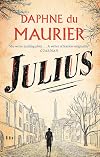
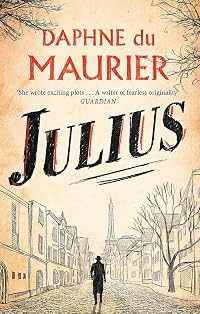
'His first instinct was to stretch out his hands to the sky. The white clouds seemed so near to him, surely they were easy to hold and to caress, strange-moving things belonging to the wide blue space of heaven ...'Julius Levy grows up in a peasant family in a village on the banks of the Seine. A quick-witted urchin caught up in the Franco-Prussian War, he is soon forced by tragedy to escape to Algeria. Once there, he learns the ease of swindling, the rewards of love affairs and the value of show more secrecy.Before he's 20, he is in London, where his empire-building begins in earnest, and he becomes a rich and very ruthless man. Throughout his life, Julius is driven by a hunger for power, his one weakness his daughter, Gabriel ... show lessTags
Recommendations



























Member Reviews
I've read most of DuMaurier's other novels over the years, but this early one had escaped me. It is brilliantly written, beginning to end, and has some things in common with [The Great Gatsby], but it lacks the love story. It is told, not from the perspective of an outsider, but by an omniscient narrator from the title character's point of view. Julius Levy was born to extremely poor parents who operated a produce stall in the market place of a small French village. As their circumstances go from bad to worse, the young boy reveals a talent for finding ways to produce "something for nothing", a phrase he learned from his maternal grandfather, and one that reverberates throughout the novel as Julius moves up and up and up in the world. show more Julius's rise is not, however, powered by pure greed; work, not money, is his overlord. He must accomplish, acquire, build, improve, save in order to expand, never wasting a moment or a cent. Eventually he spends freely to have impressive homes, to adorn his wife, to acquire valuable art, to indulge his only child in whatever her latest obsession may be---but these "things" are never his goal. He finds his wife more impressive in a single strand of pearls than another handsome woman who drips with diamonds. Power and control are supremely important to him; love and beauty are concepts he cannot get his mind around. He is, in fact, heartless and soulless. The picture is perfectly drawn, but the point of it all is missing. Julius never changes, never gets his come-uppance, never feels the ache of longing or the sting of loss. He suffers no consequences of the cruelties he heedlessly or intentionally inflicts on those he ought to love. It is as though Ebenezer Scrooge carried on without spectral visitations, and arrived at his death bed unrepentant. I must also point out that, for no good literary reason that I can fathom, DuMaurier has made Julius Levy a Jew, although he has no upbringing in the faith, and his mother is not a Jew. (The Torah forbids a Jewish man to marry a Gentile woman, but if he does, his children by that woman will not be considered Jewish.) The author and Julius himself both frequently make a point of his Jewishness, neither in a religious context, nor in any conventionally anti-Semitic fashion. The statement is just there..."I am Julius Levy. A Jew." And then chapter after chapter when Julius Levy could as easily have been named Jacques Marchand. Whatever the author intended us to take from this was lost on me. There was one brief episode in Julius' young life when he stumbled into a synagogue for the first time, and felt something...a connection, a belonging. Almost immediately, however, he found a way to use the Rabbi to teach him something useful, to gain another Something for Nothing by playing on the man's sympathy, and once Julius had taken what he needed, he left the Rabbi and the synagogue, never to return, changed in no way by the experience, except for the knowledge he had gained. Throughout the first half of the novel, I kept waiting for the smoking gun to appear---the phrase or episode that would tell me that Julius was going to embrace his heritage in a meaningful way, or, in the bleak alternative, that the author was going to reveal herself to be an insidious anti-Semite and I would feel obliged to remove all of her books from my house. Neither ever happened. I was as puzzled about her intent when I closed the book for the last time as I was when I began. So how to rate [Julius] overall? I think it suffers from the same lack as its main character---no meaning, no soul. It is, as I said, beautifully written, well structured, yet full of inevitabilities and ironies that ultimately signify nothing. Intellectually an interesting read, but not inspiring in any way. Better than "meh", but not quite "Mmmm".
Review written in April, 2015 show less
Review written in April, 2015 show less
Self centred, narrastic lead. It’s worth it to read to the end, but a hard start
‘Julius’, or as it was previously published, ‘The Progress of Julius’, is one of Du Maurier’s lesser known and most disturbing novels. It charts the progress of its central protagonist, Julius, through a life of unscrupulous business in the early 20th century (he is, among other things, a war profiteer). Most disturbingly, he is fixated on his daughter, who he moulds in his own image.
So descriptive but still so fast paced. Such fascinating characters.
It's been a long time since I've read Daphne Du Maurier and I found Julius to be a good read. Wasn't sure where it was leading so was left guessing until the end. It's quite a shocking tale.
Ratings
Members
- Recently Added By
Lists

Favourite Virago Modern Classics
183 works; 38 members
Author Information

204+ Works 57,483 Members
Daphne Du Maurier was born in London on May 13, 1907 and educated in Paris. In 1932, she married Lieutenant-General Sir Frederick Browning. She began writing short stories of mystery and suspense for magazines in 1928, a collection of which appeared as The Apple Tree in 1952. Her first novel, The Loving Spirit, was published in 1931. Her tightly show more woven, highly suspenseful plots and her strong characters make her stories perfect for adaptation to film or television. Among her many novels that were made into successful films are Jamaica Inn (1936), Rebecca (1938), Frenchman's Creek (1941), Hungry Hill (1943), My Cousin Rachel (1952), and The Scapegoat (1957). Her short story, The Birds (1953), was brought to the screen by director Alfred Hitchcock in a treatment that has become a classic horror-suspense film. She died on April 19, 1989 at the age of 81. (Bowker Author Biography) show less
Some Editions
Series
Belongs to Publisher Series
Work Relationships
Common Knowledge
- Canonical title
- The Progress of Julius
- Original title
- The Progress of Julius
- Alternate titles
- Julius
- Original publication date
- 1933
- People/Characters
- Julius Lévy
- Important places
- France; London, England, UK
- First words
- His first instinct was to stretch out his hands to the sky.
I remember exactly who I was when I first read Julius. (Introduction) - Last words
- (Click to show. Warning: May contain spoilers.)His last instinct was to stretch out his hands to the sky.
(Click to show. Warning: May contain spoilers.)I do not remember a book about a Jew. (Introduction) - Original language
- English UK
Classifications
Statistics
- Members
- 393
- Popularity
- 79,544
- Reviews
- 6
- Rating
- (3.61)
- Languages
- 6 — Czech, Dutch, English, French, German, Spanish
- Media
- Paper, Audiobook, Ebook
- ISBNs
- 22
- ASINs
- 16