
Julie Myerson
Author of Something Might Happen
About the Author
Works by Julie Myerson
Associated Works
Tagged
Common Knowledge
- Birthdate
- 1960-06-02
- Gender
- female
- Nationality
- UK
Members
Reviews
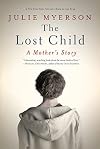
This tells the story of a mother whose son stops going to school, who becomes a different person. It takes the parents months to realize that more is going on than just teenagerhood, that their previously happy, well-adjusted son has become a drug addict. Then there's the longer stretch where they discover that love and support aren't going to help him, and finally the point, after he's stolen and lied and intimidated and hit her, that he has to leave for the sake of the remaining family show more members. Then they let him return, because they miss him, because the thought of him sleeping in a doorway or going hungry is intolerable. This story is raw and honest and powerful. It's well worth reading, whether or not you have children, just to understand a little of what so many people go through.
This is, however, a relatively small part of the book. The larger portion is where Myerson researches the life of a nineteenth century family, and especially the second youngest child, who dies young. They were an ordinary upper class family, and the details are sometimes sketchy. One gets the feeling that Myerson is using this research as a way of retreating from her son's story; it's certainly how this is used in the book. As the situation at home intensifies, she pulls the reader away to the slow process of research, dusty documents and bemused decedents. It's interesting, but in a slower, subdued way. It doesn't mesh with the wrenching drama of the modern segments.
The book ends when it ends, without resolution. Myerson's son is still out there, denying his problem. Myerson includes several of her son's poems and they are exactly what one would expect from a self-pitying teenager.
This book is flawed, but it's important, being an honest and raw account of how a parent feels and adapts to losing a beloved child to addiction. It's not a misery memoir or a how-to guidebook. It doesn't preach or whine, but simply lays out a good parent's anguish at discovering that one can provide all the love and security in the world and still be unable to protect the very person one loves the most. show less
This is, however, a relatively small part of the book. The larger portion is where Myerson researches the life of a nineteenth century family, and especially the second youngest child, who dies young. They were an ordinary upper class family, and the details are sometimes sketchy. One gets the feeling that Myerson is using this research as a way of retreating from her son's story; it's certainly how this is used in the book. As the situation at home intensifies, she pulls the reader away to the slow process of research, dusty documents and bemused decedents. It's interesting, but in a slower, subdued way. It doesn't mesh with the wrenching drama of the modern segments.
The book ends when it ends, without resolution. Myerson's son is still out there, denying his problem. Myerson includes several of her son's poems and they are exactly what one would expect from a self-pitying teenager.
This book is flawed, but it's important, being an honest and raw account of how a parent feels and adapts to losing a beloved child to addiction. It's not a misery memoir or a how-to guidebook. It doesn't preach or whine, but simply lays out a good parent's anguish at discovering that one can provide all the love and security in the world and still be unable to protect the very person one loves the most. show less
 This review was written for LibraryThing Early Reviewers.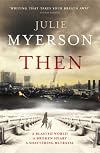
Novels featuring an unreliable narrator are a recurring theme, but “Then" must have one of the most questionable, as Izzy for most of the book, seems unable to recall her past and has problems with recognising people. The novel is as chilling as its setting – a London suffering from a cataclysmic freeze that has happened suddenly without warning and which has caused complete power failure, multiple fires and the breakdown of society, leaving the survivors picking amongst the ruins to show more find shelter and food. Izzy’s narrative consists of a complex mix of real and imagined memories, making it difficult to distinguish between the two. Julie Myerson has written a heart wrenching novel about the strength of love and a mother’s protective feeling for her children. It concludes with an agonising decision that is both moving and haunting and does much to explain Izzy’s state of mind. show less
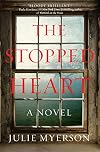
This is a hauntingly beautiful story and so well written. Mary and Graham Coles have bought a cottage in the Suffolk countryside. Though it isn’t explained until well into the book, you know that they have gone through a tragic event and are trying to make a new start. Mary does her best to try to settle in but she’s plagued by glimpses of a red-haired man and a group of children who are there one minute but gone the next. Is she going mad or is the house haunted?
Alternating with Mary show more and Graham’s story is the story of a family who lived in the house a century and a half ago. A 13-year-old girl, Eliza, lives there with her parents and younger brothers and sisters. Her little sister, Lottie, seems to know the people who live in the present-day part of the book and wants to name her kitten “Merricoles”, her version of the name “Mary Coles”. But Lottie also thinks she was once dead so no one listens to her. A mysterious red-haired man, James Dix, is discovered under a fallen tree after a storm. His entry into this family starts a disturbing escalation towards a terrible violence that you know is coming and there’s nothing you can do to stop it.
This isn’t your usual haunted house story, not at all. There are moments in this book when you wonder just who is haunting who. Can a grief be so deep that it can break through the barriers to a tragedy from the past? The two stories weave together in such a chilling way. There is also an exploration of the dark side of love and trust, both in Mary’s growing relationship with her neighbor, Eddie, and Eliza’s relationship with the venomous James. This is a terrifying story and a heart-wrenching one. There are many layers to the book and it’s one that I’m sure will reveal different layers when re-read. It’s profoundly deep and disturbing. The only fault I can find with it is that I felt parts of it went on for a bit too long. But it’s a story that I will not soon forget. Highly recommended. show less
Alternating with Mary show more and Graham’s story is the story of a family who lived in the house a century and a half ago. A 13-year-old girl, Eliza, lives there with her parents and younger brothers and sisters. Her little sister, Lottie, seems to know the people who live in the present-day part of the book and wants to name her kitten “Merricoles”, her version of the name “Mary Coles”. But Lottie also thinks she was once dead so no one listens to her. A mysterious red-haired man, James Dix, is discovered under a fallen tree after a storm. His entry into this family starts a disturbing escalation towards a terrible violence that you know is coming and there’s nothing you can do to stop it.
This isn’t your usual haunted house story, not at all. There are moments in this book when you wonder just who is haunting who. Can a grief be so deep that it can break through the barriers to a tragedy from the past? The two stories weave together in such a chilling way. There is also an exploration of the dark side of love and trust, both in Mary’s growing relationship with her neighbor, Eddie, and Eliza’s relationship with the venomous James. This is a terrifying story and a heart-wrenching one. There are many layers to the book and it’s one that I’m sure will reveal different layers when re-read. It’s profoundly deep and disturbing. The only fault I can find with it is that I felt parts of it went on for a bit too long. But it’s a story that I will not soon forget. Highly recommended. show less
Myerson's story is really two stories in one - her research into a historical girl and her family, and her life with her son who is an addict.
I did not find that the two stories were very cohesive. Myerson's personal story about her son was very compelling. She is brutally honest and I found myself caring greatly about her family and longing to know more about them. At the same time, I was not the least bit interested in learning more about her historical girl.
Myerson is a wonderful writer show more and I wish this book had just been her personal story. I find myself thinking about her family from time to time and I truly wish them well. show less
I did not find that the two stories were very cohesive. Myerson's personal story about her son was very compelling. She is brutally honest and I found myself caring greatly about her family and longing to know more about them. At the same time, I was not the least bit interested in learning more about her historical girl.
Myerson is a wonderful writer show more and I wish this book had just been her personal story. I find myself thinking about her family from time to time and I truly wish them well. show less
This review was written for LibraryThing Early Reviewers.Lists
Awards


You May Also Like


Associated Authors
Statistics
- Works
- 16
- Also by
- 7
- Members
- 1,233
- Popularity
- #20,820
- Rating
- 3.6
- Reviews
- 86
- ISBNs
- 117
- Languages
- 4
- Favorited
- 3
