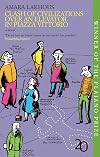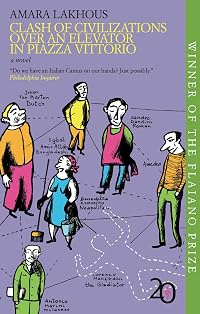
Clash of Civilizations Over an Elevator in Piazza Vittorio
by Amara Lakhous
On This Page
Description
A small culturally mixed community living in an apartment building in the centre of Rome is thrown into disarray when one of the neihgbours is murdered. An investigation ensues & as each of the victim's neighbours is questioned, the reader is offered an all-access pass into the most colourful neighbourhood in contemporary Rome.Tags
Recommendations








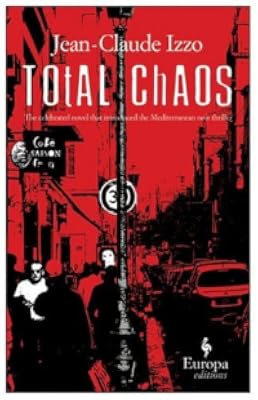
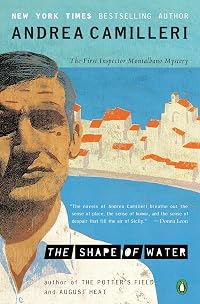

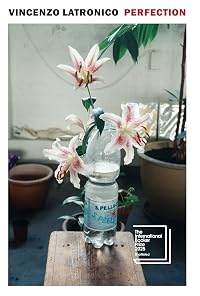


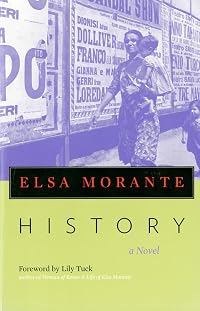













Member Recommendations
Member Reviews
This is an odd little book but one I really enjoyed. Europa Editions rarely steers me wrong.
The novella is a series of monologues from various residents and neighbors of a building in Rome, telling of their experiences and relationship with one character, Amedeo, who has disappeared after another resident is found murdered. The murder is not really the point; rather, Lakhous is painting a portrait of a multinational community, one in conflict with itself between Italians (and even they are not a unified lot) and immigrants. Sly humor is woven throughout the book, which helps to balance the more serious themes of racism, xenophonia, and Islamaphobia. As an Algerian-born writer now living in Italy, he knows of what he speaks.
4 stars
The novella is a series of monologues from various residents and neighbors of a building in Rome, telling of their experiences and relationship with one character, Amedeo, who has disappeared after another resident is found murdered. The murder is not really the point; rather, Lakhous is painting a portrait of a multinational community, one in conflict with itself between Italians (and even they are not a unified lot) and immigrants. Sly humor is woven throughout the book, which helps to balance the more serious themes of racism, xenophonia, and Islamaphobia. As an Algerian-born writer now living in Italy, he knows of what he speaks.
4 stars
Loved it - loved the format of each suspect in the Gladiator's murder getting a voice. I loved the diversity of the characters with the only unifying factor, their love of Amedeo, a powerful yet shadow-like figure. The action, such as it is, unfolds slowly - great showing of how people become "others". Lakhouse gently illuminates how these perceptions arise and just how superficial they are but also how powerful. Great characters, sly humor and social relevance.
Rating: 3.75* of five
The Book Description: A compelling mix of social satire and murder mystery.
A small culturally mixed community living in an apartment building in the center of Rome is thrown into disarray when one of the neighbors is murdered. An investigation ensues and as each of the victim's neighbors is questioned, the reader is offered an all-access pass into the most colorful neighborhood in contemporary Rome. Each character takes his or her turn center-stage, giving evidence, recounting his or her story--the dramas of racial identity, the anxieties and misunderstandings born of a life spent on society's margins, the daily humiliations provoked by mainstream culture's fears and indifference, preconceptions and insensitivity. show more What emerges is a moving story that is common to us all, whether we live in Italy or Los Angeles.
This novel is animated by a style that is as colorful as the neighborhood it describes and is characterized by seemingly effortless equipoise that borrows from the cinematic tradition of the Commedia all'Italiana as exemplified by directors such as Federico Fellini.
At the heart of this bittersweet comedy told with affection and sensitivity is a social reality that we often tend to ignore and an anthropological analysis, refreshing in its generosity, that cannot fail to fascinate.
My Review: Reading that book description isn't necessarily helpful. Social satire plus murder mystery, to most book-readin' Murrikins, is gonna call forth the specter of Murder by Death. You are not in for a satire like that. You are in for a very sophisticated and layered short novel in which a murder is committed, but frankly no one really cares who did it because it needed doing, and the perp the police have identified is a community pillar. No one believes Amedeo committed this murder, which no one calls a crime.
Amedeo steps out of the stories of ten people who all live in a small apartment building on Rome's tatty side, on the Piazza Vittorio. All ten people are displaced, not Roman, and all are made to feel more alien than guest by Rome and its Romans. Amedeo comes to the rescue of each person here, in ways practical and spiritual. He's a fixer, a born organizer, he spends his time on this earth open to and listening for the truths under the stories his neighbors tell, the truths under the facts of Rome and Italian society, the truths that not very many people will bother to learn or, quite possibly, ever realize are there.
So how can the police suspect this wonderful, soothing, special man of MURDER?! Because he, like everyone else, fought with the shit who got murdered? No...because he has disappeared. Not for the first time in his life. He has vanished, and in police work, that's as good as a confession. The novel is told in the interviews the police take with all the residents of Amedeo's building.
Interspersed with these interviews are wails, the first-person accounts of Amedeo himself. They're called wails because Amedeo, né Ahmed Salmi in Algiers, spends a lot of time locked in his wife's bathroom with a tape recorder, setting down his impressions of the people around him, and vocalizing in that uniquely Arab way...the ululating wail, used for joy, for mourning, for any access of emotion that words can't encompass. It's a wonderful way to let us into the experience of being alive in the skin of a force of nature. We're inside Amedeo, Ahmed, we're privileged to be the unseen auditors of the story of his world.
His private world. We have no sense whatever of his work, his living...he remains in a tight little box, as do all the characters, one that focuses on someone we don't meet or hear from or, frankly, care about. The victim is not the point. The murderer didn't commit a crime so much as perform clean-up on aisle two. The more we hear about him, the less we care that he's dead. It works well as a narrative technique to emphasize the almost miraculous nature of listening, and its almost total lack in the modern world.
So why 3.75 stars, when all of the above sounds like such praise? Because the Italian reviews mention an exuberance of language, a gonzo balls-out feeling that the text gives. In Italian. The translation is like the book description above, not uninteresting but nobody's idea of gonzo or balls-out writing. It's a translation. It feels like a translation. It's never going to convey the sense that the original can, of different regional voices, of different classes and different kind of Italian, because American English isn't that kind of language and American culture doesn't, at least at the level of culture where one finds readers of translated novels, like “dialect writing” because it's not Nice.
We lose. I want to read this book in Italian now. It's bound to be more fun. The translation is a good book. The original, I will bet, is a fantastic one.
*sigh* show less
The Book Description: A compelling mix of social satire and murder mystery.
A small culturally mixed community living in an apartment building in the center of Rome is thrown into disarray when one of the neighbors is murdered. An investigation ensues and as each of the victim's neighbors is questioned, the reader is offered an all-access pass into the most colorful neighborhood in contemporary Rome. Each character takes his or her turn center-stage, giving evidence, recounting his or her story--the dramas of racial identity, the anxieties and misunderstandings born of a life spent on society's margins, the daily humiliations provoked by mainstream culture's fears and indifference, preconceptions and insensitivity. show more What emerges is a moving story that is common to us all, whether we live in Italy or Los Angeles.
This novel is animated by a style that is as colorful as the neighborhood it describes and is characterized by seemingly effortless equipoise that borrows from the cinematic tradition of the Commedia all'Italiana as exemplified by directors such as Federico Fellini.
At the heart of this bittersweet comedy told with affection and sensitivity is a social reality that we often tend to ignore and an anthropological analysis, refreshing in its generosity, that cannot fail to fascinate.
My Review: Reading that book description isn't necessarily helpful. Social satire plus murder mystery, to most book-readin' Murrikins, is gonna call forth the specter of Murder by Death. You are not in for a satire like that. You are in for a very sophisticated and layered short novel in which a murder is committed, but frankly no one really cares who did it because it needed doing, and the perp the police have identified is a community pillar. No one believes Amedeo committed this murder, which no one calls a crime.
Amedeo steps out of the stories of ten people who all live in a small apartment building on Rome's tatty side, on the Piazza Vittorio. All ten people are displaced, not Roman, and all are made to feel more alien than guest by Rome and its Romans. Amedeo comes to the rescue of each person here, in ways practical and spiritual. He's a fixer, a born organizer, he spends his time on this earth open to and listening for the truths under the stories his neighbors tell, the truths under the facts of Rome and Italian society, the truths that not very many people will bother to learn or, quite possibly, ever realize are there.
So how can the police suspect this wonderful, soothing, special man of MURDER?! Because he, like everyone else, fought with the shit who got murdered? No...because he has disappeared. Not for the first time in his life. He has vanished, and in police work, that's as good as a confession. The novel is told in the interviews the police take with all the residents of Amedeo's building.
Interspersed with these interviews are wails, the first-person accounts of Amedeo himself. They're called wails because Amedeo, né Ahmed Salmi in Algiers, spends a lot of time locked in his wife's bathroom with a tape recorder, setting down his impressions of the people around him, and vocalizing in that uniquely Arab way...the ululating wail, used for joy, for mourning, for any access of emotion that words can't encompass. It's a wonderful way to let us into the experience of being alive in the skin of a force of nature. We're inside Amedeo, Ahmed, we're privileged to be the unseen auditors of the story of his world.
His private world. We have no sense whatever of his work, his living...he remains in a tight little box, as do all the characters, one that focuses on someone we don't meet or hear from or, frankly, care about. The victim is not the point. The murderer didn't commit a crime so much as perform clean-up on aisle two. The more we hear about him, the less we care that he's dead. It works well as a narrative technique to emphasize the almost miraculous nature of listening, and its almost total lack in the modern world.
So why 3.75 stars, when all of the above sounds like such praise? Because the Italian reviews mention an exuberance of language, a gonzo balls-out feeling that the text gives. In Italian. The translation is like the book description above, not uninteresting but nobody's idea of gonzo or balls-out writing. It's a translation. It feels like a translation. It's never going to convey the sense that the original can, of different regional voices, of different classes and different kind of Italian, because American English isn't that kind of language and American culture doesn't, at least at the level of culture where one finds readers of translated novels, like “dialect writing” because it's not Nice.
We lose. I want to read this book in Italian now. It's bound to be more fun. The translation is a good book. The original, I will bet, is a fantastic one.
*sigh* show less
"The Gladiator", an unpopular tenant in a Rome apartment building, is found murdered in the elevator. The most popular tenant, Amedeo is missing and is presumed to be the murderer. Through the eyes of nine other tenants, and the police inspector, we learn that Amedeo was always helping the others...with immigration, employment, and other issues large and small. As each tenant speaks, we learn about racism and anti-immigrant sentiment in modern-day Italy. No one really knows each other, or tries to. It is a sad commentary on attitudes about "others" who are different and "don't belong here". And Amedeo, beloved for his honesty, is found to be not at all what everyone thought he was.
I only wish there had been more subtlety in the views show more of the other tenants. A "clash of civilizations", to me, spoke of differing perspectives and viewpoints, but the only issue at play was immigration. A big enough issue to be sure, but surely not the only pressure point among such a diverse group. show less
I only wish there had been more subtlety in the views show more of the other tenants. A "clash of civilizations", to me, spoke of differing perspectives and viewpoints, but the only issue at play was immigration. A big enough issue to be sure, but surely not the only pressure point among such a diverse group. show less
Bello, bello davvero! Leggendo mi sono più volte stupita pensando che il libro è stato scritto da uno straniero: ci conosce davvero bene a noi italiani! Chissà, forse si identifica con Amedeo, immigrato più italiano degli italiani.
Una lettura molto gradevole, divertente ma anche illuminante, e con spunti di riflessioni ma senza parere moraleggiante.
http://www.naufragio.it/iltempodileggere/512
Una lettura molto gradevole, divertente ma anche illuminante, e con spunti di riflessioni ma senza parere moraleggiante.
http://www.naufragio.it/iltempodileggere/512
The plot of this novella revolves around a murder--"the Gladiator" is found murdered in his apartment building elevator. Amedeo, another resident of the building, has been accused. In alternating chapters Lakhous presents narration from different residents, a store owner on the square, the hotel concierge, and the accused himself. A cast of unreliable narrators!
As each person narrates we learn all about the residents, their activities--and the elevator. Through Amedeo's musings we learn more details about stories the others tell. The various immigrants--from Iran, the Netherlands, Bangladesh--are all looked down on by the Italians who largely don't know where they are from (the northerners and southerners also look down on each other). show more Names are mispronounced and friendly words misunderstood. The satire and humor is strong here. It is both funny yet completely believable and sad. All of these people mean well (maybe not the Gladiator), but through cultural and language barriers they misunderstand so much. The only thing they agree on is that Amedeo was a wonderful man and cannot be guilty. show less
As each person narrates we learn all about the residents, their activities--and the elevator. Through Amedeo's musings we learn more details about stories the others tell. The various immigrants--from Iran, the Netherlands, Bangladesh--are all looked down on by the Italians who largely don't know where they are from (the northerners and southerners also look down on each other). show more Names are mispronounced and friendly words misunderstood. The satire and humor is strong here. It is both funny yet completely believable and sad. All of these people mean well (maybe not the Gladiator), but through cultural and language barriers they misunderstand so much. The only thing they agree on is that Amedeo was a wonderful man and cannot be guilty. show less
Each of several residents of an apartment reveal themselves in statements to the police interspersed with journal entries about them by the primary suspect in a murder investigation. The immigrant experience to Rome of various Mediterranean people, where someone from Naples can be viewed as foreign.
Members
- Recently Added By
Lists

Italian Literature
558 works; 42 members

Books Set in Rome
98 works; 2 members
Author Information

7 Works 700 Members
Awards and Honors
Notable Lists
Series
Belongs to Publisher Series
Tascabili [edizioni E/O] (218)
Common Knowledge
- Canonical title*
- Scontro di civiltà per un ascensore a piazza Vittorio
- Original title
- Scontro di civiltà per un ascensore a piazza Vittorio
- Original publication date
- 2008 (English translation) (English translation); 2006
- People/Characters
- Amadeo
- Important places
- Rome, Italy; Piazza Vittorio, Rome, Italy
- Epigraph
- "Can't you have a little patience?"
"No!"
Because the southerner, my dear sir, wants to be what he was not, wants to encounter two things: the truth, and the faces of those who are absent."
The Southerner
A... (show all)mal Donkol (1940-83)
The truth is at the bottom of a well: look into a well and you see the sun or the moon; but throw yourself down and there is neither sun nor moon, there is the truth.
The Day of the Owl
Leonardo Sciascia (1921-89... (show all))
Happy people have neither age nor memory, they have no need of the past.The Invention of the Desert
Tahar Djaout (1954-93) - Dedication
- For Roberto De Angelis
With affection and gratitude - First words
- A few days ago - it was barely eight o'clock in the morning - sitting in the metro, rubbing my eyes and fighting sleep because I'd woken up so early, I saw an Italian girl devouring a pizza as big as an umbrella.
- Last words
- (Click to show. Warning: May contain spoilers.)Auuuuuuuuuuuuuuuu...
*Some information comes from Common Knowledge in other languages. Click "Edit" for more information.
Classifications
- Genres
- Fiction and Literature, General Fiction, Mystery
- DDC/MDS
- 853.92 — Literature & rhetoric Italian, Romanian & related literatures Italian fiction 1900- 21st Century
- LCC
- PQ4912 .A34 .S3613 — Language and Literature French, Italian, Spanish and Portuguese literatures Italian literature Individual authors, 2001-
- BISAC
Statistics
- Members
- 468
- Popularity
- 65,256
- Reviews
- 30
- Rating
- (3.58)
- Languages
- 7 — Danish, Dutch, English, French, German, Italian, Spanish
- Media
- Paper, Audiobook, Ebook
- ISBNs
- 19
- ASINs
- 8