
Synchronicity: An Acausal Connecting Principle
by C. G. Jung
Jung Extracts (Excerpts from Collected Works Vol. 8)
On This Page
Description
"Winner of the 2012 First Place Cover/Jacket in the Professional, Scholarly Series, New York Book Show" Sonu Shamdasani is editor of The Red Book and Philemon Professor of Jung History at University College London. Jung was intrigued from early in his career with coincidences, especially those surprising juxtapositions that scientific rationality could not adequately explain. He discussed these ideas with Albert Einstein before World War I, but first used the term "synchronicity" in a 1930 show more lecture, in reference to the unusual psychological insights generated from consulting the I Ching. A long correspondence and friendship with the Nobel Prize-winning physicist Wolfgang Pauli stimulated a final, mature statement of Jung's thinking on synchronicity, originally published in 1952 and reproduced here. Together with a wealth of historical and contemporary material, this essay describes an astrological experiment Jung conducted to test his theory. Synchronicity reveals the full extent of Jung's research into a wide range of psychic phenomena. This paperback edition of Jung's classic work includes a new foreword by Sonu Shamdasani, Philemon Professor of Jung History at University College London. show lessTags
Recommendations






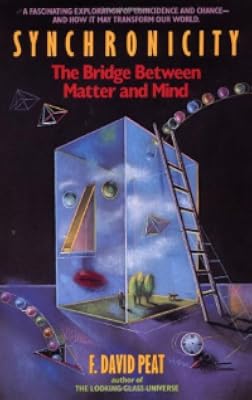
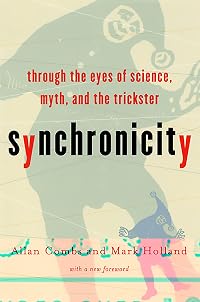












Member Recommendations


Member Reviews
It's not a long book, but it's rather difficult to understand, at least in terms of the details. In terms of the language, it's the result of being, to put it straight, a sort of ponderous Germanic intellectual sort of book, complete with Latin and Greek words in the text and German sources in the margins, and there's just something about a Teutonic intellectual that makes him difficult to understand at times.... which I over-look, because of its great thoughtfulness, open-mindedness, and its ability to be individual, and not just common Swiss, by being able to think independently and re-consider the prejudices of the mind of the average Germanic intellectual, if that makes sense....
And there are times when his aim of re-considering, show more even challenging, the assumptions of modern Western science is clear enough:
"We must remember that the rationalistic attitude of the West is not the only possible one and is not all-embracing, but is in many ways a prejudice and a bias that ought perhaps to be corrected."
And if you can't understand the details, and the mathematical proofs, and the statistics.... what are statistics? It's only the most toughminded intellectual who really needs the most difficult bits, and if you notice that the cure doesn't affect you, it might be that you don't have the disease, any-way.
(9/10) show less
And there are times when his aim of re-considering, show more even challenging, the assumptions of modern Western science is clear enough:
"We must remember that the rationalistic attitude of the West is not the only possible one and is not all-embracing, but is in many ways a prejudice and a bias that ought perhaps to be corrected."
And if you can't understand the details, and the mathematical proofs, and the statistics.... what are statistics? It's only the most toughminded intellectual who really needs the most difficult bits, and if you notice that the cure doesn't affect you, it might be that you don't have the disease, any-way.
(9/10) show less
Più che un trattato compiuto in sé, una piattaforma verso culture (la Cina) e saperi diversi (l’astronomia), in nome di un concetto che conserva intatto il suo fascino perché sicuramente parte della nostra vita quotidiana.
In sum, space and time are constants in any given system only when they are measured without regard to psychic conditions. The possibility of acausal events follows from the premise natural laws are statistical truths derived from causality and relativity. There is a strident psychological bias in the scientific method which misses aspects that cannot be grasped statistically. Chance involves situations where causality has not yet been discovered, acausal refers to situations where a causal connection appears inconceivable. Meaningful coincidence seems to rest upon an archetypal foundation, meaningless chance groupings do not; meaning is an anthropomorphic interpretation.
States synchronicity is a psychically conditioned relativity of show more space and time, where cause and effect are muted because they fall together in time, a kind of simultaneity. But unlike synchronism, which simply means the simultaneous occurrence of two events, synchronicity requires coincidence in time of two or more causally unrelated events which have the same or similar meaning. Put another way, the simultaneous occurrence of a certain psychic state with one or more objective external events which appear as meaningful parallels to the momentary subjective state - and, in certain cases, vice versa.
Moreover, in the unconscious there is something like an a priori knowledge or an immediacy of events which lacks any casual basis. For example, in an experiment where the subject is to identify the card drawn from the deck of cards, the emotional state of the subject will presently allow or block the unconscious image of the result of the card in question. [Perhaps something akin to cryptomnesia in reverse (applying to future images rather than past) when the emotional state of the subject allows the unconscious image. And conversely, perhaps something akin to paramnesia when the emotional sate of the subject blocks the unconscious image.]
Hence, synchronistic events rest on the simultaneous occurrence of two different psychic states: (a) the causally explicable, probable state and (b) the critical experience which cannot be derived casually from the first. The interconnection of meaningful coincident factors must necessarily be thought of as acausal. Here, for want of demonstrable cause, we are likely to fall into the temptation of positing a transcendental one. But a cause can only be a demonstrable quantity. A transcendental cause is a contradiction in terms, because anything transcendental cannot by definition be demonstrated. Acknowledges Ars Geomantica and the I Ching. show less
States synchronicity is a psychically conditioned relativity of show more space and time, where cause and effect are muted because they fall together in time, a kind of simultaneity. But unlike synchronism, which simply means the simultaneous occurrence of two events, synchronicity requires coincidence in time of two or more causally unrelated events which have the same or similar meaning. Put another way, the simultaneous occurrence of a certain psychic state with one or more objective external events which appear as meaningful parallels to the momentary subjective state - and, in certain cases, vice versa.
Moreover, in the unconscious there is something like an a priori knowledge or an immediacy of events which lacks any casual basis. For example, in an experiment where the subject is to identify the card drawn from the deck of cards, the emotional state of the subject will presently allow or block the unconscious image of the result of the card in question. [Perhaps something akin to cryptomnesia in reverse (applying to future images rather than past) when the emotional state of the subject allows the unconscious image. And conversely, perhaps something akin to paramnesia when the emotional sate of the subject blocks the unconscious image.]
Hence, synchronistic events rest on the simultaneous occurrence of two different psychic states: (a) the causally explicable, probable state and (b) the critical experience which cannot be derived casually from the first. The interconnection of meaningful coincident factors must necessarily be thought of as acausal. Here, for want of demonstrable cause, we are likely to fall into the temptation of positing a transcendental one. But a cause can only be a demonstrable quantity. A transcendental cause is a contradiction in terms, because anything transcendental cannot by definition be demonstrated. Acknowledges Ars Geomantica and the I Ching. show less
One of Jung's best known theories, the reader will benefit from a knowledge of statistics and astrology. This work requires a good deal of critical thinking.
Psychic phenomena provable through means or rather a language unknown
### **Resenha: *Sincronicidade* – Carl Gustav Jung (Editora Vozes)**
#### **Uma reflexão sobre conexões significativas além da causalidade**
Publicado originalmente em 1952, *Sincronicidade: Um Princípio de Conexões Acausais* é uma das obras mais instigantes de Carl Gustav Jung. Neste livro, o psicólogo suíço explora a ideia de que eventos podem estar interligados por significados profundos, sem uma relação de causa e efeito convencional. A sincronicidade é apresentada como um princípio fundamental da natureza, desafiando a visão mecanicista da realidade e aproximando a psicologia de campos como a física quântica, a filosofia e a espiritualidade.
#### **Principais ideias abordadas**
Jung desenvolve o conceito de show more sincronicidade a partir de suas pesquisas sobre o inconsciente coletivo, os arquétipos e sua colaboração com o físico Wolfgang Pauli. Ele argumenta que certos acontecimentos ocorrem de maneira simultânea ou sequencial não por mera coincidência, mas devido a uma conexão simbólica significativa. Alguns pontos-chave do livro incluem:
- **A relação entre mente e matéria**: Jung sugere que a psique pode estar conectada ao mundo externo de maneira não causal, gerando coincidências significativas.
- **Experiências sincrônicas e arquétipos**: Ele relaciona a sincronicidade ao inconsciente coletivo, sugerindo que certos símbolos e padrões universais influenciam essas conexões.
- **Casos e experimentos**: O autor apresenta relatos de eventos sincrônicos observados em sua prática clínica, como o famoso caso do escaravelho dourado, que ilustra a manifestação desse fenômeno na terapia.
- **Diálogo com a ciência**: Jung explora paralelos entre a sincronicidade e conceitos emergentes na física, especialmente a mecânica quântica, através de seu diálogo com Wolfgang Pauli.
#### **Linguagem e acessibilidade**
Embora o livro seja relativamente curto, sua leitura pode ser desafiadora, pois envolve conceitos abstratos e referências científicas e filosóficas. No entanto, sua proposta é fascinante para aqueles que buscam compreender a relação entre o inconsciente e a realidade externa sob uma perspectiva simbólica e não-linear.
#### **Para quem é indicado?**
A obra é recomendada para estudiosos de psicologia, filosofia, espiritualidade e até mesmo para aqueles interessados em física teórica. Pessoas que já têm familiaridade com os conceitos junguianos, como inconsciente coletivo e arquétipos, podem aproveitar melhor a leitura.
#### **Conclusão**
*Sincronicidade* é um livro essencial para quem deseja explorar as conexões misteriosas entre a mente e o mundo. Jung apresenta uma visão que desafia a noção tradicional de causalidade, abrindo caminho para um entendimento mais amplo das coincidências significativas que moldam nossas vidas. Apesar de exigir um certo esforço intelectual, a obra é uma peça-chave para compreender um dos conceitos mais intrigantes da psicologia analítica. show less
#### **Uma reflexão sobre conexões significativas além da causalidade**
Publicado originalmente em 1952, *Sincronicidade: Um Princípio de Conexões Acausais* é uma das obras mais instigantes de Carl Gustav Jung. Neste livro, o psicólogo suíço explora a ideia de que eventos podem estar interligados por significados profundos, sem uma relação de causa e efeito convencional. A sincronicidade é apresentada como um princípio fundamental da natureza, desafiando a visão mecanicista da realidade e aproximando a psicologia de campos como a física quântica, a filosofia e a espiritualidade.
#### **Principais ideias abordadas**
Jung desenvolve o conceito de show more sincronicidade a partir de suas pesquisas sobre o inconsciente coletivo, os arquétipos e sua colaboração com o físico Wolfgang Pauli. Ele argumenta que certos acontecimentos ocorrem de maneira simultânea ou sequencial não por mera coincidência, mas devido a uma conexão simbólica significativa. Alguns pontos-chave do livro incluem:
- **A relação entre mente e matéria**: Jung sugere que a psique pode estar conectada ao mundo externo de maneira não causal, gerando coincidências significativas.
- **Experiências sincrônicas e arquétipos**: Ele relaciona a sincronicidade ao inconsciente coletivo, sugerindo que certos símbolos e padrões universais influenciam essas conexões.
- **Casos e experimentos**: O autor apresenta relatos de eventos sincrônicos observados em sua prática clínica, como o famoso caso do escaravelho dourado, que ilustra a manifestação desse fenômeno na terapia.
- **Diálogo com a ciência**: Jung explora paralelos entre a sincronicidade e conceitos emergentes na física, especialmente a mecânica quântica, através de seu diálogo com Wolfgang Pauli.
#### **Linguagem e acessibilidade**
Embora o livro seja relativamente curto, sua leitura pode ser desafiadora, pois envolve conceitos abstratos e referências científicas e filosóficas. No entanto, sua proposta é fascinante para aqueles que buscam compreender a relação entre o inconsciente e a realidade externa sob uma perspectiva simbólica e não-linear.
#### **Para quem é indicado?**
A obra é recomendada para estudiosos de psicologia, filosofia, espiritualidade e até mesmo para aqueles interessados em física teórica. Pessoas que já têm familiaridade com os conceitos junguianos, como inconsciente coletivo e arquétipos, podem aproveitar melhor a leitura.
#### **Conclusão**
*Sincronicidade* é um livro essencial para quem deseja explorar as conexões misteriosas entre a mente e o mundo. Jung apresenta uma visão que desafia a noção tradicional de causalidade, abrindo caminho para um entendimento mais amplo das coincidências significativas que moldam nossas vidas. Apesar de exigir um certo esforço intelectual, a obra é uma peça-chave para compreender um dos conceitos mais intrigantes da psicologia analítica. show less
Feb 28, 2025Portuguese (Brazil)
Members
- Recently Added By
Lists

Nonordinary States of Consciousness
184 works; 7 members

Blue Pyramid 1,276 Best Books of All Time
1,248 works; 32 members
Author Information

901+ Works 42,838 Members
Carl Gustav Jung was born in Switzerland on July 26, 1875. He originally set out to study archaeology, but switched to medicine and began practicing psychiatry in Basel after receiving his degree from the University of Basel in 1902. He became one of the most famous of modern psychologists and psychiatrists. Jung first met Sigmund Freud in 1907 show more when he became his foremost associate and disciple. The break came with the publication of Jung's Psychology of the Unconscious (1912), which did not follow Freud's theories of the libido and the unconscious. Jung eventually rejected Freud's system of psychoanalysis for his own "analytic psychology." This emphasizes present conflicts rather than those from childhood; it also takes into account the conflict arising from what Jung called the "collective unconscious"---evolutionary and cultural factors determining individual development. Jung invented the association word test and contributed the word complex to psychology, and first described the "introvert" and "extrovert" types. His interest in the human psyche, past and present, led him to study mythology, alchemy, oriental religions and philosophies, and traditional peoples. Later he became interested in parapsychology and the occult. He thought that unidentified flying objects (UFOs) might be a psychological projection of modern people's anxieties. He wrote several books including Studies in Word Association, Flying Saucers: A Modern Myth of Things Seen in the Skies, and Psychology and Alchemy. He died on June 6, 1961 after a short illness. (Bowker Author Biography) show less
Series

Belongs to Publisher Series
Bollingen Series (20.08)
Work Relationships
Is contained in
Common Knowledge
- Canonical title
- Synchronicity: An Acausal Connecting Principle
- Original title
- Synchronizität, Akausalität und Okkultismus
- Original publication date
- 1952
- People/Characters
- Markus Fierz; Marie-Louise von Franz; Carl Jung; Gottfried Wilhelm von Leibniz; Joseph Banks Rhine
- First words
- When a young man, Jung saw a solid oak table suddenly split right across. • • • Editorial Preface
In writing this paper I have, so to speak, made good a promise which for many years I lacked the courage ... (show all)to fulfil. • • • Forward
The discoveries of modern physics have, as we know, brought about a significant change in our scientific picture of the world, in that they have shattered the absolute validity of natural law and made it relative. • • • Chapter 1 - Exposition - Last words
- (Click to show. Warning: May contain spoilers.)It will be published together with a work by Professor W. Pauli in a book called The Interpretation of Nature and the Psyche.
- Original language
- German
Classifications
- Genres
- Nonfiction, General Nonfiction, Philosophy, Religion & Spirituality
- DDC/MDS
- 133.015 — Philosophy & psychology Parapsychology & occultism Specific topics in parapsychology and occultism
- LCC
- BF1031 .J8613 — Philosophy, Psychology and Religion Psychology Parapsychology Psychic research. Psychology of the conscious
- BISAC
Statistics
- Members
- 1,100
- Popularity
- 23,164
- Reviews
- 8
- Rating
- (3.96)
- Languages
- 7 — Dutch, English, German, Greek, Italian, Portuguese, Spanish
- Media
- Paper, Ebook
- ISBNs
- 20
- ASINs
- 13