On This Page
Description
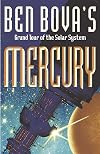
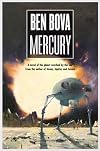
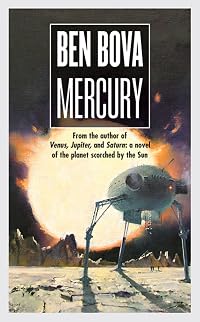
A tale of revenge and technological endeavor set on our solar system's most desolate stage Despite Mercury's desolateness, there are still those who hope to find diamonds in the rough. Saito Yamagata thinks Mercury's position will make it an ideal orbit point for satellites that could someday create enough power to propel starships into deep space. He hires Dante Alexios to bring his dreams to life. Astrobiologist Victor Molina thinks the water at Mercury's poles may harbor evidence of life, show more and hopes to achieve fame and glory by proving it. Bishop Elliot Danvers has been sent by the religious sect, "The New Morality," to keep close tabs on their endeavors, which threaten to produce results that contradict biblical teachings. show lessTags
Recommendations











Member Reviews
I thought that a book called Mercury would actually be about Mercury. But, the planet only takes a small portion of the book's length. The rest is a revenge plot, most of which unwinds in flashback. Is it a tragedy or a love story, or both? The plot has shades of twisted romantic love, career, greed, and religion gone awry. In the end, i found myself looking for the Count of Monte Christo.
[b:Mercury|768916|Mercury (The Grand Tour, #16)|Ben Bova|https://i.gr-assets.com/images/S/compressed.photo.goodreads.com/books/1317791365l/768916._SY75_.jpg|818780] is one of the better books of the Grand Tour, which is a relief after [b:Saturn|64703|Saturn (The Grand Tour, #13)|Ben Bova|https://i.gr-assets.com/images/S/compressed.photo.goodreads.com/books/1316130751l/64703._SY75_.jpg|2566821] and [b:Titan|267281|Titan (The Grand Tour, #15)|Ben Bova|https://i.gr-assets.com/images/S/compressed.photo.goodreads.com/books/1316727959l/267281._SY75_.jpg|259134].
It starts feeling like one of the more 'sciency' books, with the discovery of life on Mercury--because of course. But that feeling is short lived, as it turns out the lifeis actually show more from Mars , leaving Astrobiologist Victor Molina framed and disgraced--although the 'who' and 'why' are left unclear.
But really, Mercury is more similar to the Powersat and Asteroid Wars books, with corporate conflict and an exploration of life and revenge throughout the solar system as the primary focus. In the second part of Mercury, we go back to Earth, years (if not decades) in the past, following the story of the great Sky Tower (a space elevator) on Earth. And then... disaster. It's been hinted at in other books, but we've never really gotten details before, so when the Space Elevator falls... the feel of destruction is impressive.
The third section feels a lot like [b:The Aftermath|768917|The Aftermath (The Grand Tour, #12; The Asteroid Wars, #4)|Ben Bova|https://i.gr-assets.com/images/S/compressed.photo.goodreads.com/books/1442426245l/768917._SY75_.jpg|754977] actually, only with more of a purpose. We're following the story of an exile from Earth making his way among the miners and ore transporters out to the belt and back. It's a solid slice of life and fits a lot better with the rest of the book/series than I felt Aftermath did.
The final section brings everything together, tying the fall of the Sky Tower to the 'modern' events playing out on Mercury. It's a story of misplaced revenge and how humanity really can be our own worst enemies.
On thing in particular that was interesting to see was the contract between the Yamagatas. I really liked Saito Yamagata from what we saw of his interactions with Dan Randolph what feels like ages ago and it's interesting to see how simultaneously the same and different his son has turned out to be.
Between this book and Saturn/Titan, it really does look like we're finally building up to leaving the Solar System. I'm curious to see where we'll go from here.
Worth the read. show less
It starts feeling like one of the more 'sciency' books, with the discovery of life on Mercury--because of course. But that feeling is short lived, as it turns out the life
But really, Mercury is more similar to the Powersat and Asteroid Wars books, with corporate conflict and an exploration of life and revenge throughout the solar system as the primary focus. In the second part of Mercury, we go back to Earth, years (if not decades) in the past, following the story of the great Sky Tower (a space elevator) on Earth. And then... disaster. It's been hinted at in other books, but we've never really gotten details before, so when the Space Elevator falls... the feel of destruction is impressive.
The third section feels a lot like [b:The Aftermath|768917|The Aftermath (The Grand Tour, #12; The Asteroid Wars, #4)|Ben Bova|https://i.gr-assets.com/images/S/compressed.photo.goodreads.com/books/1442426245l/768917._SY75_.jpg|754977] actually, only with more of a purpose. We're following the story of an exile from Earth making his way among the miners and ore transporters out to the belt and back. It's a solid slice of life and fits a lot better with the rest of the book/series than I felt Aftermath did.
The final section brings everything together, tying the fall of the Sky Tower to the 'modern' events playing out on Mercury. It's a story of misplaced revenge and how humanity really can be our own worst enemies.
On thing in particular that was interesting to see was the contract between the Yamagatas. I really liked Saito Yamagata from what we saw of his interactions with Dan Randolph what feels like ages ago and it's interesting to see how simultaneously the same and different his son has turned out to be.
Between this book and Saturn/Titan, it really does look like we're finally building up to leaving the Solar System. I'm curious to see where we'll go from here.
Worth the read. show less
As I slowly work my way through Bova's Grand Tour, I really liked Mercury. Is it a tragedy or a love story, or both? What makes men and women do the things they do? Romantic love, love of career, love of money, love of a child, or love of one's god? Engineering genus Mance Bracknell has brought together (or engineered) four people to Mercury: the Japanese billionaire financing his solar power operation, the astrobiologist eager to find life on the planet, the New Morality bishop trying to save reluctant souls, and his old love. The stage is set -- let the play begin.
This was a fun read in Bova’s The Grand Tour series. I dare say, it’s probably one of my favorite titles with the planet as the name of the book. Mercury involves a lot of hard science fiction among multiple technological concepts that revolve around a tale of tragedy and sweet revenge. By the end of the story, wrongs are righted, vengeance is exposed for its hollow purpose, and a major side character in the Grand Tour series is given a starring role.
This was not quite what I expected, an almost noir style tale of revenge. Despite the title and the fact that it's set on Mercury, a lot of the story is focused elsewhere. Still entertaining.
Spawned lovers in intergalactic feud, is a potential tabloid headline for Mercury. It's science fiction elements are but a backdrop to the cast of rather unlikeable astronauts. In tone this feels more like a novel from Bova's Asteroid Wars than an entry in the Grand Tour, due to the overstretched plot and overarching coincidences that stitch the story together. Brilliant series however this entry is a little bit below par.
Rerated, as I reread it. The science is incidental, and the story is disjointed to an extent that made it hard to get through. The huge historical diversion in the middle destroyed the flow of the story, and considering the level of societal controls in Bova's Planets'verse, the entire vengeance plot was contrived at best, kludgy at worst.
Members
- Recently Added By
Lists

Isaac Arthur’s Book Recommendations
98 works; 3 members
Author Information

468+ Works 34,223 Members
Ben Bova, Ben Bova was born in Philadelphia, Pennsylvania. He began writing fiction in the late 1940's and continued to pursue his careers in journalism, aerospace, education and publishing. Bova received a bachelor's degree in journalism from Temple University, 1954, a master of arts degree in communications from the State University of New York, show more 1987, and a doctorate in education from California Coast University, 1996. Dr. Bova worked as a newspaper reporter for several years and then joined Project Vanguard, the first American satellite program, as a technical editor. He was manager of marketing for Avco Everett Research Laboratory and worked with scientists in the fields of high-power lasers, artificial hearts and advanced electrical power generators. Dr. Bova has taught science fiction at Harvard University and at the Hayden Planetarium in New York City, where he also directed film courses. He has written scripts for teaching films with the Physical Sciences Study Committee in association with Nobel Laureates from many universities. Dr. Bova has served on the advisory board of Post College and the Editorial Boards of the World Future Society. He is President Emeritus of the National Space Society and a Fellow of the British Interplanetary Society. He is also a charter member of the Planetary Society and a member of the American Association for the Advancement of Science, the Nature Conservancy, the New York Academy of Sciences and the National Space Club. He is a former President and a charter member of Science Fiction and Fantasy Writers of America. He was honored by Temple University as a Distinguished Alumnus in 1981 and in 1982 was made an Alumni Fellow. In 1994, his short story "Inspiration" was nominated for the Nebula Award. "The Beauty of Light" was voted one of the best science books of the year in 1988 by the American Librarians' Association and they hailed "Moonrise" as best science fiction novel in 1996. Other titles include "Moonwar," "Mars," and "Brothers," which all combine romance and adventure with the scientific aspect of exploring the future of technology and its effect on individuals and society. "Immortality" and "Assured Survival" deal with technology being used to solve economic, social and political problems. "Immortality" goes further in examining biomedical breakthroughs that could extend a person's life by hundreds of years while being able to always remain physically young. His works include The Aftermath, Mars Life, and Leviathans of Jupiter. Ben Bova was a prolific science fiction author. He wrote over a hundred books and short stories. He also was an editor who worked on some of science fiction's best-known publications. He died on November 29, 2020 at the age of 88. (Bowker Author Biography) show less
Some Editions
Series


Common Knowledge
- Original publication date
- 2005-02
- People/Characters
- Saito Yamagata; Victor Molina; Dante Alexios; Lara Tierney Molina; Mance Bracknell; Elliott Danvers (show all 8); Addie Farad; Nobuhiko Yamagata
- Important places
- Mercury; Earth; Quito, Ecuador
- First words
- As he had every night for more than twelve years, Saito Yamagata wearily climbed the winding dark stone stairway to the top of Chota Lamasery's tower.
- Publisher's editor
- Nielsen Hayden, Patrick
Classifications
Statistics
- Members
- 412
- Popularity
- 75,040
- Reviews
- 10
- Rating
- (3.54)
- Languages
- English
- Media
- Paper, Audiobook, Ebook
- ISBNs
- 11
- ASINs
- 6