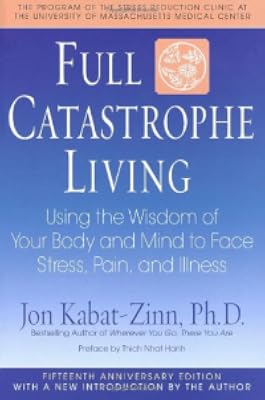
Full Catastrophe Living
by Jon Kabat-Zinn
On This Page
Description
The landmark work on how to connect your mind and body to reduce stress and lead a more fulfilling, healthy, and complete life—now revised and updatedFeaturing a preface from Thich Nhat Hanh
“This wise, deep book is essential, unique, and, above all, fundamentally healing.”—Donald M. Berwick, M.D., president emeritus and senior fellow, Institute for Healthcare Improvement
Stress. It can sap our energy, undermine our health if we let it, even shorten our lives. It makes us more show more vulnerable to anxiety and depression, disconnection and disease. Based on Jon Kabat-Zinn’s renowned mindfulness-based stress reduction program, this classic, groundbreaking work—which gave rise to a whole new field in medicine and psychology—shows you how to use medically proven mind-body approaches derived from meditation and yoga to counteract stress, establish greater balance of body and mind, and stimulate well-being and healing. By engaging in these mindfulness practices and integrating them into your life from moment to moment and from day to day, you can learn to manage chronic pain, promote optimal healing, reduce anxiety and feelings of panic, and improve the overall quality of your life, relationships, and social networks.
This revised edition features results from recent studies on the science of mindfulness, a new Introduction, up-to-date statistics, and an extensive updated reading list. Full Catastrophe Living is a book for the young and the old, the well and the ill, and anyone trying to live a healthier and saner life in our fast-paced world. show less
Tags
Recommendations
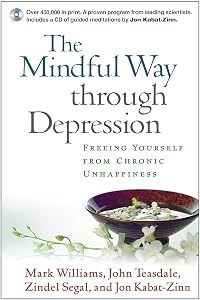
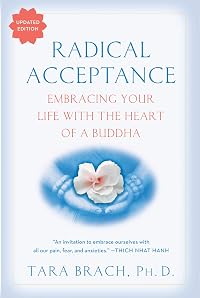
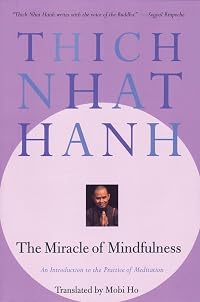

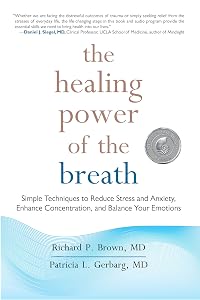
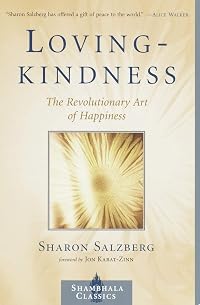
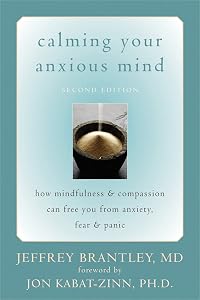
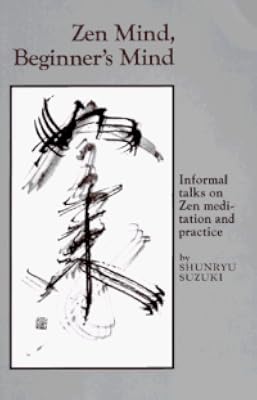
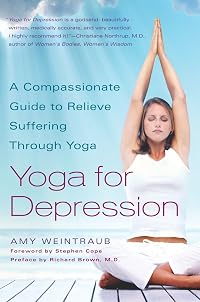


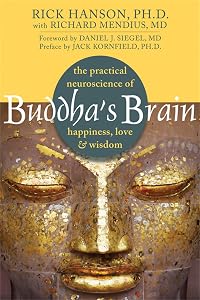
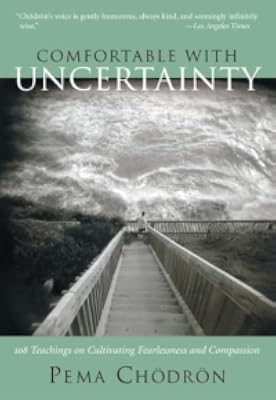
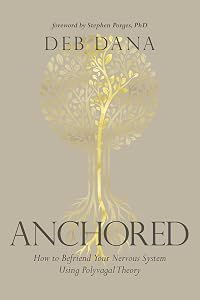
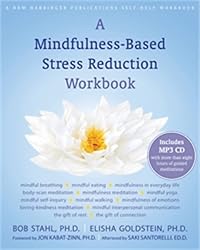
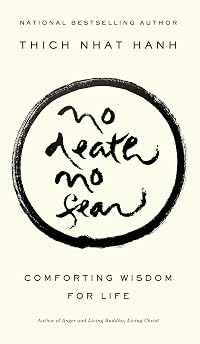


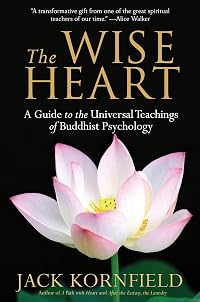
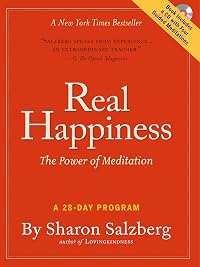
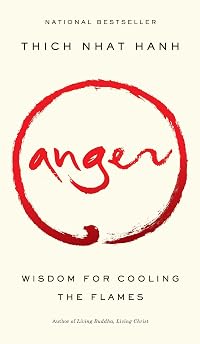

Member Reviews
I've been hearing people talking about mindfulness and seeing books about it pass through the library for years, but I never really had a good idea of what it actually is. I thought it might just be another touchy-feely trend that tells me I can choose which emotions I feel, blah blah blah, and I kind of harrumphed myself away from learning more about it.
When I was reading another book earlier this year, [b:Beyond Addiction: How Science and Kindness Help People Change|18144153|Beyond Addiction How Science and Kindness Help People Change|Jeffrey Foote|https://d.gr-assets.com/books/1392574958s/18144153.jpg|25491489], there was a reference to an informal meditation technique that I found very helpful in calming my mind when I was getting show more overwhelmed and agitated. This sparked an interest in mindfulness and meditation that eventually led to my trying out this book.
It's a book I had seen floating around for years. When I worked for Borders in Madison, Wisconsin, we stocked it by the floorstack. It's an extensive introduction to meditation practice and an outline of how meditation in its various forms can and has been used to approach health issues, both mental and physical. And the concept of mindfulness as an alternative to going through life in autopilot mode made sense to me. I don't know if I understand every nuance or am totally on board with every concept, but I was glad I read it and valued what I got out of it enough to buy a copy to keep as a reference. show less
When I was reading another book earlier this year, [b:Beyond Addiction: How Science and Kindness Help People Change|18144153|Beyond Addiction How Science and Kindness Help People Change|Jeffrey Foote|https://d.gr-assets.com/books/1392574958s/18144153.jpg|25491489], there was a reference to an informal meditation technique that I found very helpful in calming my mind when I was getting show more overwhelmed and agitated. This sparked an interest in mindfulness and meditation that eventually led to my trying out this book.
It's a book I had seen floating around for years. When I worked for Borders in Madison, Wisconsin, we stocked it by the floorstack. It's an extensive introduction to meditation practice and an outline of how meditation in its various forms can and has been used to approach health issues, both mental and physical. And the concept of mindfulness as an alternative to going through life in autopilot mode made sense to me. I don't know if I understand every nuance or am totally on board with every concept, but I was glad I read it and valued what I got out of it enough to buy a copy to keep as a reference. show less
Let's start with the bad news. I listened to this on audio while driving to and from work. Not a good idea. When the cd would finish and start again at track one I wouldn't notice for a few moments. I wouldn't notice for two reasons. One, there was nothing in the way of a fictional plot to make me say, "hey, I've heard this before" and two, the book was so repetitious I wasn't sure if the cd was starting over again or if Kabat-Zinn was just repeating himself again. The other reason why I shouldn't have listened to this on cd is the fact I wasn't paying full attention to his words. Pretty ironic since that's what his whole premise is about, being mindful of everything you do. I couldn't be 100% mindful of what I was listening to without show more giving some attention to the automobile I was operating. The good news is this - I learned something. I took away huge chunks of Kabat-Zinn's lessons. There are two parts that really resonated with me: seeing your mind as an ocean. On the surface the waves are choppy, chaotic and stressful. But, if you drill down to your very essence you will find a calmness, a serenity that should be tapped into each and everyday. Kabat-Zinn's parallel example is the ways in which we used to live by nature's rhythm. Before electricity we rose with the sun and worked for as long as there was natural light. We slept when it was dark. Modern conveniences have pushed us out of those rhythms, allowing us to keep working long past dark. The second ah-ha moment was the connection to food. I never thought about the what, where, when, why, how, and with whom aspect of eating. The psychological attachments to what we eat, when we eat, why we eat, how we eat and with whom we eat is profound and I never thought about it that way before. It changes my relationship with food. All in all, despite the repetitive nature of the book I enjoyed Full Catastrophe Living. Next time I will read the book! show less
i understand what some may like abt this, how it may help some ppl
the chapters on dealing w pain were particularly good, and its nice that it gives relatively simple and direct instructions for different sorts of meditation
but there r far better sources for such instructions, and i far prefer the traditional tibetan approach to meditating with pain
the book claims to partake in a revolution in modern science/psychology, but remains trapped in its positivistic reductive outlook, claiming that a "systems view" will save the coherence of scientism. ultimately though, it has nothing but mild platitudes to offer to the making of such a so-called "paradigm shift"
the best part by far is a single phrase from the introduction: "as long as u r show more breathing, there is more rite w u than wrong" show less
the chapters on dealing w pain were particularly good, and its nice that it gives relatively simple and direct instructions for different sorts of meditation
but there r far better sources for such instructions, and i far prefer the traditional tibetan approach to meditating with pain
the book claims to partake in a revolution in modern science/psychology, but remains trapped in its positivistic reductive outlook, claiming that a "systems view" will save the coherence of scientism. ultimately though, it has nothing but mild platitudes to offer to the making of such a so-called "paradigm shift"
the best part by far is a single phrase from the introduction: "as long as u r show more breathing, there is more rite w u than wrong" show less
Though there was a lot in this book that I skimmed over, there were a lot of true gems that will particularly be useful in developing a practice of mindfulness and meditation. Some of the information helped me to overcome some of the blocks I've formed and approach in a different way.
I will admit that the title initially made me wary -- not one I wanted to be reading in public, but in the intro, the author relates the story behind it:
In groping to describe that aspect of human condition that patients in the stress clinic and, in fact, most of us, at one time or another, need to come to terms with and in some way transcend, I keep coming back to one line from the movie of Nikos Kazantzakis;s novel Zorba the Greek. Zorba's young companion show more turns to him at a certain point and inquires, "Zorba, have you ever been married?" to which Zorba replies (paraphrasing somewhat) "Am I not a man? Of course I've been married. Wife , house, kids, everything..the full catastrophe!"
It was not meant to be a lament, nor does it mean that being married or having children is a catastrophe. Zorba's response embodies a supreme appreciation for the richness of life and the inevitability of all its dilemmas, sorrows, tragedies, and ironies. (pg 5)
That's a view of catastrophe I can live with. show less
I will admit that the title initially made me wary -- not one I wanted to be reading in public, but in the intro, the author relates the story behind it:
In groping to describe that aspect of human condition that patients in the stress clinic and, in fact, most of us, at one time or another, need to come to terms with and in some way transcend, I keep coming back to one line from the movie of Nikos Kazantzakis;s novel Zorba the Greek. Zorba's young companion show more turns to him at a certain point and inquires, "Zorba, have you ever been married?" to which Zorba replies (paraphrasing somewhat) "Am I not a man? Of course I've been married. Wife , house, kids, everything..the full catastrophe!"
It was not meant to be a lament, nor does it mean that being married or having children is a catastrophe. Zorba's response embodies a supreme appreciation for the richness of life and the inevitability of all its dilemmas, sorrows, tragedies, and ironies. (pg 5)
That's a view of catastrophe I can live with. show less
I read this book as an introduction to Mindfulness Based Stress Reduction (MBSR) as I am attending a weekend retreat taught by the person in the area who leads the MBSR clinics at a local hospital. It's all very valuable information, very well thought out, very well expressed. But, it is so very long. I faithfully read Part 1, skimmed Part 2, and couldn't ready any longer. I will instead put the information into practice as that is where I will likely gain the most now.
I picked up this book on advice from my doctor and it took months to read. While the ideas make sense somewhat I found it constantly repeating itself over and over as if he said the word "mindfulness" enough then you'd be automatically swayed into accepting everything he said. Maybe I should be and am just too much of a cynic? I am still debating whether or not to actually put into practice the mediations to the extent he wants and that could be the problem I have connecting to the material. I found it was more for those experiencing physical illness than those w/ psychological illness. It would have nice if he explored that more. The mention of people having personal robots in the future and cellphones on their body was cute as well.
Life can be crazy and hectic. It seems like there are never enough hours in the day and that 'To Do' list grows ever longer. So it sounds pretty crazy to dedicate 45 minutes of an overly scheduled day to yoga and meditation. But Kabat-Zinn gives compelling evidence that we really do need to clear our minds, not only for our sanity, but for our physical well being. I am convinced that he is right. But, still have not incorporated either into my life... Another thing to add to that To Do list.
Members
- Recently Added By
Lists

Books on Spirituality
7 works; 1 member

End of Your Life Book Club
134 works; 4 members

trauma
38 works; 1 member
Author Information

95+ Works 11,855 Members
Featured in Bill Moyer's PBS Special Healing and the Mind, Jon Kabat-Zinn, PhD. is executive director at the Center for Mindfulness in Medicine, Health Care and Society at the University of Massachusetts Medical Center. He is the founder and former director of the UMMC Stress Reduction Clinic and an associate professor of medicine in the division show more of preventive and behavioral medicine. Using mindfulness meditation, Kabat-Zinn works to help people reduce stress and deal with chronic pain, and a variety of illnesses, particularly breast cancer. He was a trainer for the 1984 U.S. Men's Olympic Rowing Team and is especially interested in reducing the stress-related problems in the inner city and in prison populations. Kabat-Zinn's books include: Full Catastrophe Living: Using the Wisdom of Your Body and Mind to Face Stress, Pain and Illness (1991); Wherever You Go, There You Are: Mindfulness Meditation in Everyday Life (1994), Everyday Blessings: The Inner Work of Mindful Parenting (1997), which was co-authored with his wife, Myla, and Meditation Is Not What You Think: Mindfulness and why it is so important. (Bowker Author Biography) show less
Common Knowledge
- Canonical title
- Full Catastrophe Living
- Original title
- Full Catastrophe Living
- Original language*
- Engels
*Some information comes from Common Knowledge in other languages. Click "Edit" for more information.
Classifications
- Genres
- Nonfiction, Religion & Spirituality, General Nonfiction
- DDC/MDS
- 155.9042 — Philosophy & psychology Psychology Differential and developmental psychology Environmental psychology Particular Topics Stress & Stress Management
- LCC
- RA785 .K33 — Medicine Public aspects of medicine Public aspects of medicine Public health. Hygiene. Preventive medicine Personal health and hygiene
- BISAC
Statistics
- Members
- 2,368
- Popularity
- 8,337
- Reviews
- 19
- Rating
- (4.15)
- Languages
- 9 — Czech, Dutch, English, Finnish, French, German, Italian, Spanish, Swedish
- Media
- Paper, Audiobook, Ebook
- ISBNs
- 40
- ASINs
- 25