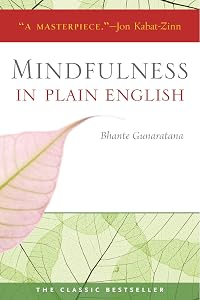
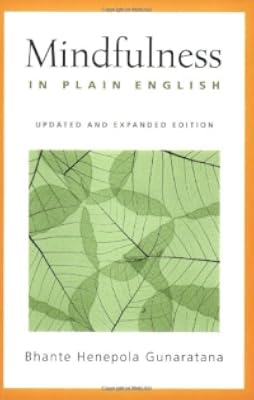
Mindfulness in Plain English
by Henepola Gunaratana
On This Page
Description
Presents an introduction to meditation according to Buddhist principles, describing the advantages of the practice and addressing some of the difficulties that can come up.Tags
Recommendations
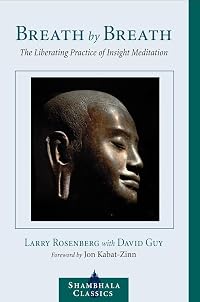
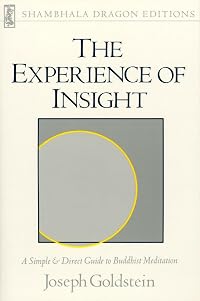
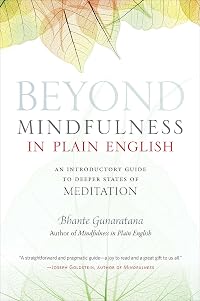
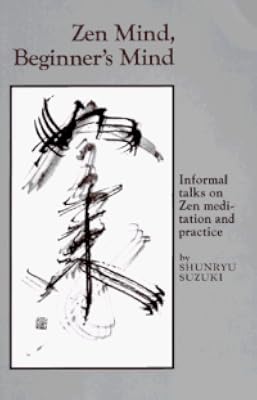




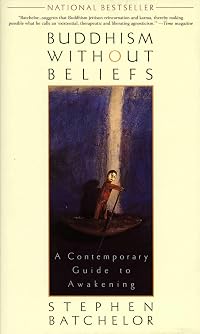
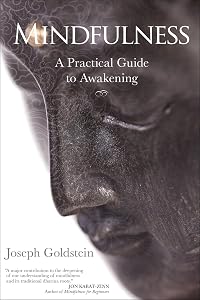
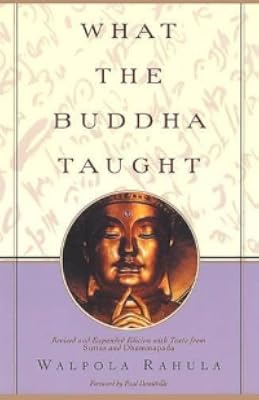
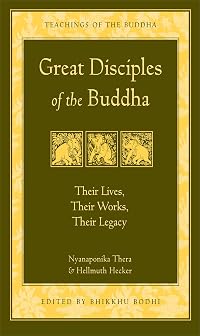






Member Reviews
The title of this book does not lie. Gunaratana offers a how-to for insight mindfulness in a straight-forward and easy-to-understand language. This is not the deeply didactic philosophy of mindfulness, but rather a deep dive into South and Southeast Asian Buddhism. The first order of business is to dispel the misconceptions surrounding mindfulness and meditation. For example, there is no magic to this vipassana style medication. You won't levitate. Instead, you become grounded in morality, concentration, and wisdom. Speaking of concentration, you learn the concept of shallow concentration which seems contrary to successful mindfulness. In other words, you won't lose yourself in mindfulness. Instead, you will train your mind to show more concentrate on a mental object, the breath being more convenient and ever-present. Despite the easy language and thin volume, Mindfulness is a treasure trove of information. show less
Despite having and constantly trying to deepen a daily meditation practice for years, I hadn't read this book. Since I'm slowly in the process of trying to reintegrate vipassana into my existing meditation practice—one rooted in the Kundalini yogic tradition—I found this book the be an invaluable resource, not only as a reintroduction of sorts to vipassana (insight meditation), but also perhaps reminding me why I've always preferred vipassana practice to zazen ("just sitting").
For those new to meditation and mindfulness practice, this book is perhaps the best place to start. With short chapters, it would be ideal to work through the ideas here slowly, reading and savoring and reflecting on each as they're presenting as one show more incorporates them into a daily practice at home. In all of my reading on meditation, yoga, Buddhism, and even some sometimes questionable, esoteric philosophical tracts on the training of the mind, I don't think I've encountered a book that has been so direct, accessible, and admirably put together.
This will help you to see why sitting daily is for everyone, not just Buddhists or those seeking enlightenment (whatever that might be). But, more importantly, this book will articulate how your practice of seated meditation carries over into your daily life, and how the point of meditation—and the most important part of meditation—begins after you have risen from your cushion.
Start or deepen your practice here... or, for those who might have fallen off the meditation bandwagon, and recall all of the positive effects it had on their daily lives (and perhaps bemoan daily something along these lines: "I wish I had more time to meditate again!"), this is the book for you to recommence your journey. show less
For those new to meditation and mindfulness practice, this book is perhaps the best place to start. With short chapters, it would be ideal to work through the ideas here slowly, reading and savoring and reflecting on each as they're presenting as one show more incorporates them into a daily practice at home. In all of my reading on meditation, yoga, Buddhism, and even some sometimes questionable, esoteric philosophical tracts on the training of the mind, I don't think I've encountered a book that has been so direct, accessible, and admirably put together.
This will help you to see why sitting daily is for everyone, not just Buddhists or those seeking enlightenment (whatever that might be). But, more importantly, this book will articulate how your practice of seated meditation carries over into your daily life, and how the point of meditation—and the most important part of meditation—begins after you have risen from your cushion.
Start or deepen your practice here... or, for those who might have fallen off the meditation bandwagon, and recall all of the positive effects it had on their daily lives (and perhaps bemoan daily something along these lines: "I wish I had more time to meditate again!"), this is the book for you to recommence your journey. show less
This was my second book on meditation. Having read its name a lot on the internet, I had high hopes for it; and, I was not disappointed.
This might be the very book that turns the course of my life towards mental fulfillment.
The book leaves no doubt about the awesome power of mindfulness. But it also cautions that to see any palpable result, one has to keep practicing for years; but all that effort is very well worth it.
I (re)started my meditation practice after reading the method described in this book. The thing that I liked the most about this book was that I found the answers to EVERY SINGLE doubt or question that I had about meditation.
It explained in a very coherent way WHY we need to meditate, even more so when you are busy. It show more explains how we live our life in a blur: chasing happiness, evading pain and ignoring the neutral moments. When we practice Vipassana meditation we become mindful of our universe: internal and external. Even a simple act of breathing or walking isn't the same when you are mindful. When you get rid of the concept of "me", the world as you know it disappears, and you perceive every moment as if for the very first time.
The last chapter that described the end-result that one could attain with meditation was mind-blowing! Just reading that part made me tingle with excitement.
I will definitely keep on meditating in the future and hope to become a better human being.
EDIT (upon the second re-read):
On the second reading, I felt some things were different with the book. Having read Siddhartha before it, I felt there were some common threads here as well.
Once again, it was a legit treat to read the last chapter. The author has put forth so eloquently the point of it all.
I have noticed that recently while meditating, I would sometimes get these really profound thoughts. For example, the other day I realized that being mindful is like breaking the fourth wall. You can see your predicament as a third person.
The most difficult part for me in my practice that I've realized would be to cultivate loving-kindness towards all beings, even those who have hurt us.
I will continue pursuing the goal of becoming able to meditate throughout my wakeful existence. show less
This might be the very book that turns the course of my life towards mental fulfillment.
The book leaves no doubt about the awesome power of mindfulness. But it also cautions that to see any palpable result, one has to keep practicing for years; but all that effort is very well worth it.
I (re)started my meditation practice after reading the method described in this book. The thing that I liked the most about this book was that I found the answers to EVERY SINGLE doubt or question that I had about meditation.
It explained in a very coherent way WHY we need to meditate, even more so when you are busy. It show more explains how we live our life in a blur: chasing happiness, evading pain and ignoring the neutral moments. When we practice Vipassana meditation we become mindful of our universe: internal and external. Even a simple act of breathing or walking isn't the same when you are mindful. When you get rid of the concept of "me", the world as you know it disappears, and you perceive every moment as if for the very first time.
The last chapter that described the end-result that one could attain with meditation was mind-blowing! Just reading that part made me tingle with excitement.
I will definitely keep on meditating in the future and hope to become a better human being.
EDIT (upon the second re-read):
On the second reading, I felt some things were different with the book. Having read Siddhartha before it, I felt there were some common threads here as well.
Once again, it was a legit treat to read the last chapter. The author has put forth so eloquently the point of it all.
I have noticed that recently while meditating, I would sometimes get these really profound thoughts. For example, the other day I realized that being mindful is like breaking the fourth wall. You can see your predicament as a third person.
The most difficult part for me in my practice that I've realized would be to cultivate loving-kindness towards all beings, even those who have hurt us.
I will continue pursuing the goal of becoming able to meditate throughout my wakeful existence. show less
Hey neat, the whole thing is available online. Anyway, this meditation book deals primarily with meditation practice with very little reference to Buddhism. The writing style is friendly and off the cuff. It gave me new ideas for my practice, but I was also a little discouraged when he wrote that you really do need to catch distractions at the beginning rather than the end - and that's really hard! Practical and interesting. (July 24, 2006)
Unrated, because the real test is whether it helps my meditation. My initial impression is that it was somewhat useful, because it provided a slightly different perspective from [b:The Mind Illuminated: A Complete Meditation Guide Integrating Buddhist Wisdom and Brain Science for Greater Mindfulness|40637204|The Mind Illuminated A Complete Meditation Guide Integrating Buddhist Wisdom and Brain Science for Greater Mindfulness|Culadasa (John Yates)|https://images.gr-assets.com/books/1529917257s/40637204.jpg|63141284] (which I began with, and am still working my way through), reinforcing some points and in other cases opening my eyes to alternatives. But compared to TMI, this is not a very detailed guidebook, nor (I think) would it have show more done such a good job of motivating me to give meditation a serious try.
It's not long, and it's quite straightforward and readable, but it's not exactly dense; unless I missed some nuanced distinctions, it's fairly repetitive. It's also rather vague in parts, though in some cases that was probably unavoidable (explaining some of this stuff is probably a bit like explaining qualia -- you can either be precise and wrong, or so vague that nobody without direct experience will get it). show less
It's not long, and it's quite straightforward and readable, but it's not exactly dense; unless I missed some nuanced distinctions, it's fairly repetitive. It's also rather vague in parts, though in some cases that was probably unavoidable (explaining some of this stuff is probably a bit like explaining qualia -- you can either be precise and wrong, or so vague that nobody without direct experience will get it). show less
I understand why the author mentions things like psychic phenomena (mostly to tell new students not to worry about it). Still, I think it will turn off folks to an otherwise brilliant introduction to vipassana meditation.
I wanted to read something, preferably practical, short and straight to the point about meditation in general, and this concept of "mindfulness" in particular, directed to westerners, without going into the religious and spiritual aspects (or at least, without primarily approaching the subject from that point of view). And every source pointed me to this book. So I read it.
Henepola Gunaratana claims to have written exactly what I wanted, and I must confess he mostly succeeds. The book is short, it gives some theory, explains what mindfulness is and what it isn't, and provides a methodology and a series of ideas and exercises aimed at beginners. It's quite repetitive in several aspects, though. It's not devoid of its share of "preaching" show more and subjective and semi-religious concepts, but it keeps them rather on the side. It's a pity that the new and revisited version of the book expands precisely on those aspects, as if the author had regretted not having gone deeper with them in the original version. In my opinion, the new edition is a step back from the original goals of the book.
Having said that, vipassana meditation comes from Buddhism, so I suppose it is impossible to study it or read about it or explain it completely isolated and detached from Buddhism, and then it's impossible to avoid completely the religious, spiritual and metaphysical aspects. show less
Henepola Gunaratana claims to have written exactly what I wanted, and I must confess he mostly succeeds. The book is short, it gives some theory, explains what mindfulness is and what it isn't, and provides a methodology and a series of ideas and exercises aimed at beginners. It's quite repetitive in several aspects, though. It's not devoid of its share of "preaching" show more and subjective and semi-religious concepts, but it keeps them rather on the side. It's a pity that the new and revisited version of the book expands precisely on those aspects, as if the author had regretted not having gone deeper with them in the original version. In my opinion, the new edition is a step back from the original goals of the book.
Having said that, vipassana meditation comes from Buddhism, so I suppose it is impossible to study it or read about it or explain it completely isolated and detached from Buddhism, and then it's impossible to avoid completely the religious, spiritual and metaphysical aspects. show less
Members
- Recently Added By
Author Information

61+ Works 3,090 Members
Bhante Gunaratana is the author of Mindfulness in Plain English, Beyond Mindfulness in Plain English, and Eight Mindful Steps to Happiness, as well as his autobiography, Journey to Mindfulness. He lives in High View, West Virginia.
Some Editions
Common Knowledge
- Canonical title
- Mindfulness in Plain English
- Original publication date
- 1991
- First words
- Meditation is not easy.
- Last words
- (Click to show. Warning: May contain spoilers.)There remains only peace, and blessed Nibbana, the uncreated, is realized.
- Blurbers
- Rosenberg, Larry; O'Keefe, Chris; Goldstein, Joseph; Kabat-Zinn, Jon
Classifications
- Genres
- Religion & Spirituality, Nonfiction, General Nonfiction, Philosophy
- DDC/MDS
- 294.3 — Religion Other religions Dharmic religions Buddhism
- LCC
- BQ5630 .V5 .G86 — Philosophy, Psychology and Religion Buddhism Buddhism Practice of Buddhism. Forms of worship Religious life Devotion. Meditation. Prayer
- BISAC
Statistics
- Members
- 1,102
- Popularity
- 23,164
- Reviews
- 23
- Rating
- (3.99)
- Languages
- English, Finnish, French, Malay
- Media
- Paper, Audiobook, Ebook
- ISBNs
- 7
- UPCs
- 1
- ASINs
- 12