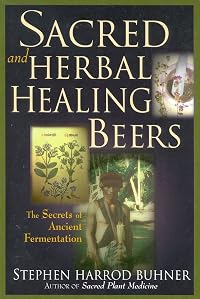
Sacred and Herbal Healing Beers: The Secrets of Ancient Fermentation
by Stephen Harrod Buhner
On This Page
Description
Fermentation and plant use-as medicine, as psychotropics, as teachers, as companions on life's path-are an inescapable part of our exploration of what it means to be human. Thus, this book conflicts with a number of popular beliefs about alcohol, plants, and the nature of material reality. It is, therefore, not politically correct. The ancient beers, created . . . between 10,000 and 30,000 years ago, were quite different from what we know as beer today. Many were sacred beers . . ., and show more hundreds contained medicinal herbs. -From the book The author's beautiful and provocative exploration of the sacredness and folklore of ancient fermentation is revealed through 200 plants and hive products. This book includes 120 recipes for ancient and indigenous beers and meads from thirty-one countries and six continents-and the most complete evaluation of honey ever published. show lessTags
Recommendations














Member Reviews
Wow, this book is wild. The essential premise is: at this time Western culture consumes only two alcoholic beverages; all beer is a watery solution of fermented barley and hops, and all wine is fermented grape juice. But many societies, including Europe before the Reformation, consumed lots of different fermented beverages made from different sugars, juices, grains, and herbs, all with varying degrees of alcoholic and nutritional content.
Those beverages are what this is about. Sage beer. Gruit ale. Mugwort. Mead. Molasses beer. Maple syrup beer. Er...even banana beer and pine ale. I think there's hundreds of these variations, and for many of them the historical background is given. There's extensive quoting of historical sources show more throughout, such as old brew cookbooks and alewife's instructions.
Many home brewing books and resources prohibitively complicate things. What this book helps you realize is that alcohol fermentation doesn't have to be hard; all you need is a sugar source and a yeast source in solution (aka water). I mean Nigerians drink the watery sap from palm trees which is already being fermented off the tree by native yeasts.
So everything else besides yeast sugar is optional and up for ideas. So look outside the confines of just hops and malt. This book can help you think about other flavors or herbs you might like to try.
What's bad:I don't trust the recipes, they're all over the place, so use them like guides.
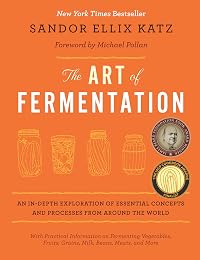
Despite being all about ancient brewing methods, he kinda distrusts wild yeast and still resorts to storebought packets of yeast for all his recipes. Using the simple instructions in Sandor Katz's "The Art of Fermentation" I've got a pretty vigorous wild yeast starter from honey that I've sustained for a few months now. I don't think our ancestors got crazy about purchasing purified yeast strains.
Several probably dangerous and strongly psychoactive herbs (e.g. wormwood and many others) are freely discussed and recommended to the reader. The author has a low regard for drug laws and a sacred regard for altered states of consciousness. I don't know much about these plants, but I'd advise caution in seeking out any ingredient you don't already use and know.
Aside from that there's a lot of sketchy herbal medicine in here. I don't have a problem with generally accepted herbal medicine—I mean, via this book I just made a chamomile ale—just quackery. One herb "shows promise in treating Reynaud's disease." What does that even mean? "Fever patients" are told to drink wormwood ale "for thirty days"—I don't know what a month of wormwood does to you, but if you have a fever for thirty days, please get yourself to the ER. It's always "scientists are discovering" and "studies are showing" that X herb works like chemotherapy or Y herb helps with pneumonia or diuresis. Many sentences are taken up with this sort of thing, and for me this stuff just gets in the way.
My recommendation? I assume if you want to brew plain-jane beer at home, you would not buy this book first. If you're looking into 'wild' and 'natural' fermentation methods, go to Sandor Katz. But either way at some point read this book for the the possible ingredients and ferments that are out there. show less
Those beverages are what this is about. Sage beer. Gruit ale. Mugwort. Mead. Molasses beer. Maple syrup beer. Er...even banana beer and pine ale. I think there's hundreds of these variations, and for many of them the historical background is given. There's extensive quoting of historical sources show more throughout, such as old brew cookbooks and alewife's instructions.
Many home brewing books and resources prohibitively complicate things. What this book helps you realize is that alcohol fermentation doesn't have to be hard; all you need is a sugar source and a yeast source in solution (aka water). I mean Nigerians drink the watery sap from palm trees which is already being fermented off the tree by native yeasts.
So everything else besides yeast sugar is optional and up for ideas. So look outside the confines of just hops and malt. This book can help you think about other flavors or herbs you might like to try.
What's bad:I don't trust the recipes, they're all over the place, so use them like guides.
Despite being all about ancient brewing methods, he kinda distrusts wild yeast and still resorts to storebought packets of yeast for all his recipes. Using the simple instructions in Sandor Katz's "The Art of Fermentation" I've got a pretty vigorous wild yeast starter from honey that I've sustained for a few months now. I don't think our ancestors got crazy about purchasing purified yeast strains.
Several probably dangerous and strongly psychoactive herbs (e.g. wormwood and many others) are freely discussed and recommended to the reader. The author has a low regard for drug laws and a sacred regard for altered states of consciousness. I don't know much about these plants, but I'd advise caution in seeking out any ingredient you don't already use and know.
Aside from that there's a lot of sketchy herbal medicine in here. I don't have a problem with generally accepted herbal medicine—I mean, via this book I just made a chamomile ale—just quackery. One herb "shows promise in treating Reynaud's disease." What does that even mean? "Fever patients" are told to drink wormwood ale "for thirty days"—I don't know what a month of wormwood does to you, but if you have a fever for thirty days, please get yourself to the ER. It's always "scientists are discovering" and "studies are showing" that X herb works like chemotherapy or Y herb helps with pneumonia or diuresis. Many sentences are taken up with this sort of thing, and for me this stuff just gets in the way.
My recommendation? I assume if you want to brew plain-jane beer at home, you would not buy this book first. If you're looking into 'wild' and 'natural' fermentation methods, go to Sandor Katz. But either way at some point read this book for the the possible ingredients and ferments that are out there. show less
Man, this book makes me want to run right out and start brewing! It's got lots and lots of recipes for making ale and beer out of any sort of plant one can think of, and even some one cannot. Mustard beer, anyone? Yeah, me neither.
It's an erudite compendium of plant lore, an interesting collection of recipes, and an intriguing collection of anthropological detail.
Recommended for people who are apt to read cookbooks like fiction.
It's an erudite compendium of plant lore, an interesting collection of recipes, and an intriguing collection of anthropological detail.
Recommended for people who are apt to read cookbooks like fiction.
Se state pesando ad un libro di tecnica birraria in senso stretto non leggete questo libro.
Leggetelo invece se amate le piante officinali, i rimedi erboristici e se volete dare alle Vostre birre una marcia in più
Leggetelo invece se amate le piante officinali, i rimedi erboristici e se volete dare alle Vostre birre una marcia in più
Ratings
Members
- Recently Added By
Author Information

Stephen Harrod Buhner is the award-winning author of 24 books on plant medicines, Earth ecosystem dynamics, emerging diseases, and the states of mind and being necessary for successful habitation of Earth. He has taught throughout the US, Canada, and the EU for over 35 years. He lives in New Mexico.
Common Knowledge
- First words
- The ancient legends tell how the goddess took pity on the miserable plight of humanity and so loved her daughters that she bestowed the gift of beer to their sole keeping.
- Last words
- (Click to show. Warning: May contain spoilers.)It is worth the cost
Classifications
- Genres
- Nonfiction, Food & Cooking, General Nonfiction, Science & Nature
- DDC/MDS
- 641.23 — Applied science & technology Home economics & family management Food, Cooking & Recipes / Meals, Picnics Drinks Brewed and malted beverages
- LCC
- TP577 .B815 — Technology Chemical technology Chemical technology Fermentation industries. Beverages. Alcohol
- BISAC
Statistics
- Members
- 308
- Popularity
- 104,374
- Reviews
- 3
- Rating
- (3.77)
- Languages
- Czech, English
- Media
- Paper, Ebook
- ISBNs
- 5
- ASINs
- 3