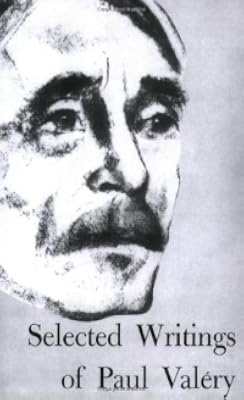
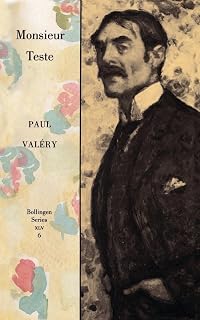
Selected Writings of Paul Valery
by Paul Valéry
240 Members (3.82)
On This Page
Description
It begins with the poetry (French and Englishen face), including such masterpieces as "Le Cimetiere Marin" and portions of "La Jeune Parque"; then ranges through Valéry's work in fields as various as architecture, logic, the dance, literature, philosophy, and painting. It concludes with excerpts from his creative writings such asMonsieur Teste and the dramaMon Faust. The list of translators for this volume is distinguished. Among them are Lionel Abel, Léonie Adams, Malcolm Cowly, James show more Kirkup, C. Day Lewis, Jackson Mathews, Louise Varese, and Vernon Watkins. show lessTags
Recommendations




Member Reviews
Members
- Recently Added By
Lists

Harold Bloom - The Western Canon: D. The Chaotic Age
833 works; 24 members
Author Information

387+ Works 3,677 Members
Harry T. Moore has written in Twentieth Century French Literature to World War II: "Paul Valery, who published his most important verse between 1917 and 1922, is the greatest French poet the twentieth century has so far produced... .Few modern poets.. .have presented richer experience through their verses. Valery.. .could handle abstractions with show more a living and always poetic concreteness, and put them into comparable verse-music." He was also a critic and aesthetic theorist, interested in art, architecture, and mathematics. His skepticism, malice, and learning brought him both admiration and hostility. Valery had been a member of the Mallarme circle in the 1890s and wrote much symbolist poetry at that time, but an unhappy love affair caused him to fall poetically silent (he earned his living as a journalist) until Gide and others persuaded him, 20 years later, to publish some of his youthful work. He had thought to add a short new poem and instead wrote La Jeune Parque (The Young Fate) (1917), several hundred lines in length. It won him instant recognition in poetic circles. Several collections of his earlier poems were published in the 1920s, as well as the great Cimetiere Marin (Graveyard by the Sea), a powerful meditation on time and mortality. From then until his death in 1945, he wrote chiefly aesthetic theory, criticism, and an unfinished play about Faust. He helped to revive lively interest in the symbolists and had a pervading influence on French culture generally, though his poetry is not easy for the casual reader. His criticism and aesthetic theory had an important influence on the structuralist critics of the 1960s. He was elected to the French Academy in 1925. His Collected Works (1971--75) have been published in expert translations by the Bollingen Foundation. (Bowker Author Biography) show less
Classifications
- Genres
- Poetry, Fiction and Literature, Literature Studies and Criticism
- DDC/MDS
- 848.91 — Literature & rhetoric French Literature French miscellaneous writings 1900- 1900-1999
- LCC
- PQ2643 .A26 .A25 — Language and Literature French, Italian, Spanish and Portuguese literatures French literature Modern literature 1900-1960
- BISAC
Statistics
- Members
- 240
- Popularity
- 135,164
- Rating
- (3.82)
- Languages
- English
- Media
- Paper
- ISBNs
- 2
- ASINs
- 2