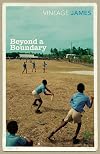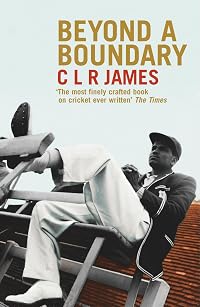
Beyond a Boundary
by C. L. R. James
On This Page
Description
This new edition of C. L. R. James's classic Beyond a Boundary celebrates the fiftieth anniversary of one of the greatest books on sport and culture ever written.Named one of the Top 50 Sports Books of All Time by Sports Illustrated"Beyond a Boundary . . . should find its place on the team with Izaak Walton, Ivan Turgenev, A. J. Liebling, and Ernest Hemingway."—Derek Walcott, The New York Times Book Review"As a player, James the writer was able to see in cricket a metaphor for art and show more politics, the collective experience providing a focus for group effort and individual performance. . . . [In] his scintillating memoir of his life in cricket, Beyond a Boundary (1963), James devoted some of his finest pages to this theme."—Edward Said, The Washington Post"A work of double reverence—for the resilient, elegant ritualism of cricket and for the black people of the world."—Whitney Balliett, The New Yorker"Beyond a Boundary is a book of remarkable richness and force, which vastly expands our understanding of sports as an element of popular culture in the Western and colonial world."—Mark Naison, The Nation"Everything James has done has had the mark of originality, of his own flexible, sensitive, and deeply cultured intelligence. He conveys not a rigid doctrine but a delight and curiosity in all the manifestations of life, and the clue to everything lies in his proper appreciation of the game of cricket."—E. P. Thompson, author of The Making of the English Working Class"Beyond a Boundary is . . . first and foremost an autobiography of a living legend—probably the greatest social theorist of our times."—Manning Marable, Journal of Sport & Social Issues"The great triumph of Beyond a Boundary is its ability to rise above genre and in its very form explore the complex nature of colonial West Indian society."—Caryl Phillips, The New Republic show lessTags
Recommendations
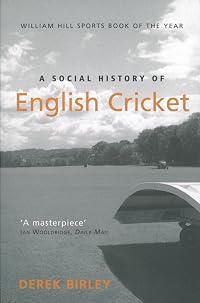
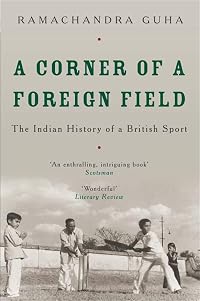
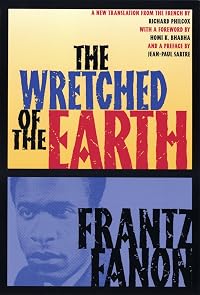
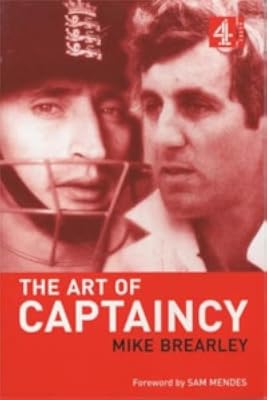













Member Reviews
Sometimes I get a bit worried about how much real estate cricket takes up in my head. At those times, I have often been reassured by the knowledge that the Trinidadian Marxist and historian C. L. R. James was afflicted with the same condition and still managed an intellectual career.
Having actually read the book now, it's clear that there were some kind of spatial contortions going on in James' head that gave him about a hundred times the mental real estate that I'm working with. The man appears to have thought more about cricket than I've thought about everything combined in my entire life. And it's been productive thinking!
We're always hearing that what you see out in the middle is a microcosm of the world, but I've never seen anyone show more spell this out in such fine detail as James. The book isn't a gimmick where he's challenged himself to draw links between the struggle for West Indian independence, English schoolboy sports etiquette, and the narcissism of small differences. The links essentially draw themselves when you lay out the history in the right way.
My ultimate takeaway from reading this is that it is immensely valuable to be constantly questioning how things are and why things are, and that this process should not be restricted to its traditional targets, but applied to basically everything. show less
Having actually read the book now, it's clear that there were some kind of spatial contortions going on in James' head that gave him about a hundred times the mental real estate that I'm working with. The man appears to have thought more about cricket than I've thought about everything combined in my entire life. And it's been productive thinking!
We're always hearing that what you see out in the middle is a microcosm of the world, but I've never seen anyone show more spell this out in such fine detail as James. The book isn't a gimmick where he's challenged himself to draw links between the struggle for West Indian independence, English schoolboy sports etiquette, and the narcissism of small differences. The links essentially draw themselves when you lay out the history in the right way.
My ultimate takeaway from reading this is that it is immensely valuable to be constantly questioning how things are and why things are, and that this process should not be restricted to its traditional targets, but applied to basically everything. show less
I first learnt of "Beyond a Boundary" when my Marxist politics lecturer recommended it to me. I was just a babe in the woods those days and may have missed some of the more esoteric references to post-colonialism but loved the cricket and James's paeans to his cricketing heroes, learning more about the great Learie Constantine (who became a Baron) and the three W's.
In the current day of poor West Indian sides and low attendances, one can forget the huge role that cricket played in West Indian history (as well as throughout the Commonwealth). Cricket was the tool local leaders used to show that they were the equal of the colonial masters, and cricket was war by other means.
I've noticed other reviews here from non-cricket fans stumped by show more the cricket terminology James uses throughout "Beyond a Boundary". He's certainly worth persevering with so can only suggest a glossary of cricket terms; soon enough you'll be an expert at post-colonial Marxist theory and terms like "silly point", "leg trap" and "googly", to name just a few. show less
In the current day of poor West Indian sides and low attendances, one can forget the huge role that cricket played in West Indian history (as well as throughout the Commonwealth). Cricket was the tool local leaders used to show that they were the equal of the colonial masters, and cricket was war by other means.
I've noticed other reviews here from non-cricket fans stumped by show more the cricket terminology James uses throughout "Beyond a Boundary". He's certainly worth persevering with so can only suggest a glossary of cricket terms; soon enough you'll be an expert at post-colonial Marxist theory and terms like "silly point", "leg trap" and "googly", to name just a few. show less
I was concerned that this book had been oversold by its many admirers, but it is truly excellent. It is neither a mere autobiography nor a history of cricket in the West Indies, though both subjects are discussed at length. Side topics include art criticism, classical civilization and Victorian education. I found most of these digressions fascinating, but if you prefer a straightforward cricket narrative, this book may not be for you. James generally states his arguments in a literate and engaging manner, though his point is sometimes obscured by the meandering course he pursues. The final chapters suffer from their focus on topical issues in 1960s Caribbean cricket that are less clear to modern readers, but in general this is a show more timeless work that deserves every plaudit. show less
I wanted to like this book, really. Up to a certain point (about the first quarter), I loved it. It's considered a classic in some circles. Cricket is something new to me and that's always interesting. The discussions about class distinctions and racism were enlightening. It's a wonderful picture of a bygone era.
After a while, however, I simply could not wade through any more dialect. I don't mean the language of Trinidad & Tobago: James' command of written English is astonishing. I mean the language of cricket.
Consider: "To score he had to get the leg-break away through two short-legs and force the off-break through two gullys." Not overwhelming; there's as much jargon in a discussion about a play in baseball or basketball. However, show more now continue that for three to five straight pages, and imagine encountering those pages in every single chapter, sometimes multiple times. That quote was chosen, not with care, but simply by flipping open the book to a random location.
Despite having spent a half hour learning the basic rules of cricket and some of the terminology, it was overwhelming. James' need to illustrate every point with ten to twelve examples was too much. I wouldn't have tolerated it in a book about baseball (where I know the terminology) unless that book advertised itself as "a book about famous baseball plays." Certainly not in a socio-historical effort.
If you're a cricket aficionado, then this might be a book for you. If not, you—like I—might have appreciated a Reader's Digest version where 75% of the cricket plays and endless lists of famous players were left out, letting the sociological insights shine through. show less
After a while, however, I simply could not wade through any more dialect. I don't mean the language of Trinidad & Tobago: James' command of written English is astonishing. I mean the language of cricket.
Consider: "To score he had to get the leg-break away through two short-legs and force the off-break through two gullys." Not overwhelming; there's as much jargon in a discussion about a play in baseball or basketball. However, show more now continue that for three to five straight pages, and imagine encountering those pages in every single chapter, sometimes multiple times. That quote was chosen, not with care, but simply by flipping open the book to a random location.
Despite having spent a half hour learning the basic rules of cricket and some of the terminology, it was overwhelming. James' need to illustrate every point with ten to twelve examples was too much. I wouldn't have tolerated it in a book about baseball (where I know the terminology) unless that book advertised itself as "a book about famous baseball plays." Certainly not in a socio-historical effort.
If you're a cricket aficionado, then this might be a book for you. If not, you—like I—might have appreciated a Reader's Digest version where 75% of the cricket plays and endless lists of famous players were left out, letting the sociological insights shine through. show less
If you want to read a great book about something you aren't interested in (in this case, if you're like me, cricket) you could do a lot worse than this book. Colonialism, racism, sport as art, and sports unheralded place in the changes in 19th century English society are among the topics addressed in this engaging, erudite book.
A good read.
A good read.
This is the classic examination of the history, culture, and politics of cricket, by the brilliant West Indian Marxist thinker. The introduction, by Sir Hilary Beckles,provides important historical and cultural context as much for the non-Caribbean reader coming fresh to the book as for the West Indian student being introduced to James for the first time.
The book is as powerful, as fresh,and as energetic as when I first read it in 1970 (was it that long ago?). Some of its urgencies are, perhaps, not as urgent today (and cricket has undergone some changes that James might have found as shocking as bodyline). It remains, nonetheless, an important reminder of the relationship of sport, class, and power. It remains, also, an important show more reminder that cricket is not just a sport, but an art, a branch of drama, as James correctly saw it, related to the tragedy of Aeschlus and Eurypides. show less
The book is as powerful, as fresh,and as energetic as when I first read it in 1970 (was it that long ago?). Some of its urgencies are, perhaps, not as urgent today (and cricket has undergone some changes that James might have found as shocking as bodyline). It remains, nonetheless, an important reminder of the relationship of sport, class, and power. It remains, also, an important show more reminder that cricket is not just a sport, but an art, a branch of drama, as James correctly saw it, related to the tragedy of Aeschlus and Eurypides. show less
I want to be a big cricket fan, but it real hard to find the passion when Windies playing the ass! However I'll rally 'round the West Indies now and forever...Thank God for C.L.R. James for keeping me focused.
Having said that, even of you're not into sports, far less for cricket, you'd love this book. James is a brilliant, beautiful writer, whose sentences stun you.
I enjoyed reading this book, but I had to read it slowly to absorb if fully...so a re-read is in my future, and I can't wait.
Having said that, even of you're not into sports, far less for cricket, you'd love this book. James is a brilliant, beautiful writer, whose sentences stun you.
I enjoyed reading this book, but I had to read it slowly to absorb if fully...so a re-read is in my future, and I can't wait.
Members
- Recently Added By
Lists

Sports Illustrated's The Top 100 Sports Books of All Time
51 works; 7 members

Read These Too
458 works; 9 members

Mustich's 1000 Books to Read Before You Die: A Life Changing List
1,001 works; 19 members

Sports Journalism and Biography
40 works; 1 member

Cricket books
4 works; 1 member
Author Information

66+ Works 3,988 Members
A native of Trinidad, C. L. R. James grew up in a very respectable middle-class black family steeped in British manners and culture. Although justifiably well-known in the British world as a writer, historian, and political activist, his contributions have been underappreciated in the United States. A student of history, literature, philosophy, show more and culture, James thought widely and wrote provocatively. He also turned his words into deeds as a journalist, a Trotskyite, a Pan-African activist, a Trinidadian nationalist politican, a university teacher, and a government official. James was a teacher and magazine editor in Trinidad until the early 1930s, when he went to England and became a sports writer for the Manchester Guardian. While in England he became a dedicated Marxist organizer. In 1938 he moved to the United States and continued his political activities, founding an organization dedicated to the principles of Trotskyism. His politics led to his expulsion from the United States in 1953, and he returned to Trinidad, from which he was also expelled in the early 1960s. He spent the remainder of his life in England. Among James's extensive writings, the two most influential volumes are Black Jacobins (1967), a study of the anti-French Dominican (Haitian) slave rebellion of the 1790s, and Beyond a Boundary (1963), a remarkable exploration of sport, specifically cricket, as social and political history. Other important works include A History of Negro Revolt (1938) and The Life of Captain Cipriani (1932). James represents an unusual combination of activist-reformer (even revolutionary) and promoter of the best in art, culture, and gentility. (Bowker Author Biography) show less
Awards and Honors
Notable Lists
Series
Belongs to Publisher Series
Common Knowledge
- Canonical title
- Beyond a Boundary
- Original publication date
- 1963
- People/Characters
- George Headley; George Challenor; Learie Constantine; George Headley; W.G. Grace; Frank Worrell
- Important places
- Tunapuna, Trinidad,West Indies; England, UK
- Important events
- James' move to England 1932; James' return to Trinidad 1958; Trinidad Independence Day 1962
- Dedication
- To Learie Constantine and W.G.Grace for both of whom this book hopes to right grave wrongs, and, in doing so, to extend our too limited conceptions of history and of the fine arts. To these two names I add that of Frank Worre... (show all)ll, who has made ideas and aspirations into reality
- First words
- preface: This book is neither cricket reminiscences nor autobiography. It poses the question What do they know of cricket who only cricket know?
main text: Tunapuna at the beginning of the twentieth century was a small tow... (show all)n of about 3,000 inhabitants, situated eight miles along the road from Port of Spain, the capital of Trinidad - Last words
- (Click to show. Warning: May contain spoilers.)main text: This hail and farewell to the ancestral creed may be of some use to them after all and in any case can do them no harm.
epilogue and apotheosis: Thomas Arnold, Thomas Hughes and the Old Master himself would have recognised Frank Worrell as their boy
Classifications
- Genres
- Sports and Leisure, Nonfiction, General Nonfiction, Biography & Memoir, History
- DDC/MDS
- 796.35809729 — Arts & recreation Recreation, sports, and performing arts Athletic and outdoor sports and games Ball sports Ball and stick sports Cricket Biography And History
- LCC
- GV928 .W47 .J35 — Geography, Anthropology and Recreation Recreation. Leisure Recreation. Leisure Sports Ball games: Baseball, football, golf, etc.
- BISAC
Statistics
- Members
- 542
- Popularity
- 54,941
- Reviews
- 13
- Rating
- (4.03)
- Languages
- English
- Media
- Paper, Audiobook, Ebook
- ISBNs
- 17
- ASINs
- 4