On This Page
Description
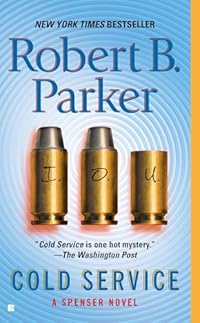
Fiction. Suspense. Thriller. HTML:When Spenser's closet ally, Hawk, is brutally injured and left for dead while protecting booking Luther Gillespie, Spenser embarks on an epic journey to rehabilitate his friend in body and soul. Hawk, always proud, has never been dependent on anyone. Now he is forced to make connections: to the medical technology that will ensure his physical recovery, and to reinforce the tenuous emotional ties he has to those around him.Spenser quickly learns that the show more Ukrainian mob is responsible for the hit, but finding a way into their tightly knit circle is not nearly so simple. Their total control of the town of Marshport, from the bodegas to the police force to the mayor's office, isn't just a sign of rampant corruption—it's a form of arrogance that only serves to ignite Hawk's desire to get even. As the body count rises, Spenser is forced to employ some questionable techniques and even more questionable hired guns while redefining his friendship with Hawk in the name of vengeance. show less
Tags
Recommendations









Member Reviews
“So if Tony buys it, all we got to do is go up to Marshport and take over the city.” — Spenser
“That be the plan.” — Hawk
“Any operational details? Like how?” — Spenser
“I already give the you the big picture. You supposed to contribute something.” — Hawk
“How about I learn to say ‘don’t shoot’ in Ukranian?” — Spenser
Even as the sun began to set on Spenser, there were a few good reads left in the series. Cold Service, despite some caveats, is one of them. Two books before Parker’s best in a very long while, Hundred-Dollar Baby, and three before the awful Now and Then, Parker returned to the plot of Small Vices. In that entry, Spenser was shot and nearly killed. He had to rehabilitate with help from show more Hawk, and of course, Susan. But more importantly he had to set things right once he was back in shape, and find redemption. In Cold Service we have that coin flipped, and it is Hawk in that same situation. The similarities in plot end there, though the Gray Man plays an integral part in this one as well.
Though the Susan factor had altered the direction of the series from Valediction onward, and hindered the literary heights Parker’s work had aspired to early on, it was still occasionally great entertainment. This one’s a quick read with a ton of interaction between Spenser and Hawk, who takes the lead in this one because of the story-line. A lot of characters in the Spenser world pass this way in this entry, including Vinnie, the Gray Man, Tony Marcus, Ives, Epstein, and the sexy Rita Fiore. It keeps moving swiftly, and there’s a plot that eventually encompasses the revenge and redemption story. That being said, there are a few strange things about this one, and a wistful caveat.
First, the strange stuff. Some of the dialog Parker gives Vinnie is very odd. It doesn’t sound at all like Vinnie, and is untrue to the character as he'd been portrayed in all the previous entries. A scene near the end when Vinnie comes to tell Hawk and Spenser that Boots is looking to ace Hawk, is glaringly awkward, and doesn’t feel right at all. Another strange thing is Hawk and Spenser ask Susan to help them plan their next move — more than once. And she does help them.
I’m not sure what was going on in these particular scenes, or what caused them to be written as they were, but they feel very un-Parker-like. I’ll leave it at that, and not speculate any further. Fortunately, all the interaction between Hawk and Spenser, and a solid story overcome those few moments of weirdness.
For anyone unfamiliar with the series, the aforementioned won’t be as glaring as it was to me, and the same might be said of my caveat. For those who’ve enjoyed this entire series over the years, however, one can’t read Cold Service and not lament the missed opportunity in Double Deuce that I talked about in my review of that book. Though that book was all about Hawk, Parker had already shifted the focus of the series — nearly completely — to the vain and pretentious Susan Silverman, making it about her and Spenser, ad nauseam. Because of that, Hawk’s younger years weren’t given their due in flashbacks that Double Deuce almost begged for, nor were poignant details of Hawk's past revealed in conversations. And it takes away from this entry.
Because Hawk’s struggles to get out of the ghetto were only alluded to in Double Deuce, and never expounded on, the resonance we might have felt in Cold Service when Hawk is temporarily stripped of that persona which he’d created in order to make it out, is muted. It’s a good story, and still entertaining, but the depth a great writer like Parker could have given this book had he not let the Susan Silverman character smother narratives, and mitigate the need for actual plotting and detecting, makes this effort more surface than substance.
Hawk gets back-shot and is in the hospital recovering. The bookie he was supposed to protect got dusted, as did the man’s wife and family. Only a very young boy survived, and Hawk knows he must do something about that once he is back to being Hawk. As in Small Vices, there is much talk about what the experience has done to Hawk — but not from Hawk himself. His current lover, Cecile, of course doesn’t understand why he doesn’t want her to see him until he’s back to being Hawk. Then she doesn’t understand why he has to keep a part of himself beyond her reach. The reader knows, of course, but the reader would feel it on another level had Parker not blown the opportunity he had in Double Deuce to make Hawk more than just Spenser’s cool and dangerous sidekick. There are flashes of what might have been, and Hawk is a great character, but once this series got back on the rails after jumping the track completely in Catskill Eagle, that kind of resonance was abandoned. It then became enjoyable entertainment, with only brief moments of what it had once been in the beginning.
The ensuing narrative when Hawk is finally back to his old self involves Ukrainians running some Afghan heroin through Marshport, a town controlled by Boots. The reason Tony Marcus is letting it all slide has to do with a daughter neither Spenser or Hawk were aware of, and her choice in men. Spenser talks with the spook, Ives, and he gives him the Gray Man to translate. The Feds have an interest too, and after talking with Epstein, it’s obvious that everyone has their own agenda concerning Marshport, Boots, and the deadly Ukrainians from Odessa. Vinnie gets involved and finally Hawk comes up with a very tricky plan to play everyone, so that he can clean up Marshport, kill the Ukrainians who shot him, and set up a trust fund for the boy, who Hawk views as his responsibility now. Action is sporadic but it’s a swiftly-moving and engaging read on the level Parker kept the series at after Catskill Eagle.
There is some crisp and funny dialog between Hawk and Spenser in this one — only some of the Susan and Vinnie stuff feels off. The story is good, the narrative entertaining. The conclusion is solid as well. After Catskill Eagle, Spenser should never have been as reticent here about the violence, however. The fact that Parker had shifted the series so much toward Silverman is highlighted by his moralizing here. In Catskill he killed a pimp and many others in order to rescue the unfaithful Silverman from a bed she had made herself. Here, however, Spenser has difficulty doing likewise for Hawk, someone of far more substance.
We get some of Susan’s psychobabble in this one, of course, though it’s kept at a minimum. Though there’s never any question that Spenser will be right there at Hawk’s side, how far he’ll go is another matter. It doesn’t ring true, not post-Catskill Eagle, and is just one more odd element that is overcome by a good story, swiftly moving narrative, and excellent exchanges between Hawk and Spenser. Though flawed, a very enjoyable read for a later Spenser. show less
“That be the plan.” — Hawk
“Any operational details? Like how?” — Spenser
“I already give the you the big picture. You supposed to contribute something.” — Hawk
“How about I learn to say ‘don’t shoot’ in Ukranian?” — Spenser
Even as the sun began to set on Spenser, there were a few good reads left in the series. Cold Service, despite some caveats, is one of them. Two books before Parker’s best in a very long while, Hundred-Dollar Baby, and three before the awful Now and Then, Parker returned to the plot of Small Vices. In that entry, Spenser was shot and nearly killed. He had to rehabilitate with help from show more Hawk, and of course, Susan. But more importantly he had to set things right once he was back in shape, and find redemption. In Cold Service we have that coin flipped, and it is Hawk in that same situation. The similarities in plot end there, though the Gray Man plays an integral part in this one as well.
Though the Susan factor had altered the direction of the series from Valediction onward, and hindered the literary heights Parker’s work had aspired to early on, it was still occasionally great entertainment. This one’s a quick read with a ton of interaction between Spenser and Hawk, who takes the lead in this one because of the story-line. A lot of characters in the Spenser world pass this way in this entry, including Vinnie, the Gray Man, Tony Marcus, Ives, Epstein, and the sexy Rita Fiore. It keeps moving swiftly, and there’s a plot that eventually encompasses the revenge and redemption story. That being said, there are a few strange things about this one, and a wistful caveat.
First, the strange stuff. Some of the dialog Parker gives Vinnie is very odd. It doesn’t sound at all like Vinnie, and is untrue to the character as he'd been portrayed in all the previous entries. A scene near the end when Vinnie comes to tell Hawk and Spenser that Boots is looking to ace Hawk, is glaringly awkward, and doesn’t feel right at all. Another strange thing is Hawk and Spenser ask Susan to help them plan their next move — more than once. And she does help them.
I’m not sure what was going on in these particular scenes, or what caused them to be written as they were, but they feel very un-Parker-like. I’ll leave it at that, and not speculate any further. Fortunately, all the interaction between Hawk and Spenser, and a solid story overcome those few moments of weirdness.
For anyone unfamiliar with the series, the aforementioned won’t be as glaring as it was to me, and the same might be said of my caveat. For those who’ve enjoyed this entire series over the years, however, one can’t read Cold Service and not lament the missed opportunity in Double Deuce that I talked about in my review of that book. Though that book was all about Hawk, Parker had already shifted the focus of the series — nearly completely — to the vain and pretentious Susan Silverman, making it about her and Spenser, ad nauseam. Because of that, Hawk’s younger years weren’t given their due in flashbacks that Double Deuce almost begged for, nor were poignant details of Hawk's past revealed in conversations. And it takes away from this entry.
Because Hawk’s struggles to get out of the ghetto were only alluded to in Double Deuce, and never expounded on, the resonance we might have felt in Cold Service when Hawk is temporarily stripped of that persona which he’d created in order to make it out, is muted. It’s a good story, and still entertaining, but the depth a great writer like Parker could have given this book had he not let the Susan Silverman character smother narratives, and mitigate the need for actual plotting and detecting, makes this effort more surface than substance.
Hawk gets back-shot and is in the hospital recovering. The bookie he was supposed to protect got dusted, as did the man’s wife and family. Only a very young boy survived, and Hawk knows he must do something about that once he is back to being Hawk. As in Small Vices, there is much talk about what the experience has done to Hawk — but not from Hawk himself. His current lover, Cecile, of course doesn’t understand why he doesn’t want her to see him until he’s back to being Hawk. Then she doesn’t understand why he has to keep a part of himself beyond her reach. The reader knows, of course, but the reader would feel it on another level had Parker not blown the opportunity he had in Double Deuce to make Hawk more than just Spenser’s cool and dangerous sidekick. There are flashes of what might have been, and Hawk is a great character, but once this series got back on the rails after jumping the track completely in Catskill Eagle, that kind of resonance was abandoned. It then became enjoyable entertainment, with only brief moments of what it had once been in the beginning.
The ensuing narrative when Hawk is finally back to his old self involves Ukrainians running some Afghan heroin through Marshport, a town controlled by Boots. The reason Tony Marcus is letting it all slide has to do with a daughter neither Spenser or Hawk were aware of, and her choice in men. Spenser talks with the spook, Ives, and he gives him the Gray Man to translate. The Feds have an interest too, and after talking with Epstein, it’s obvious that everyone has their own agenda concerning Marshport, Boots, and the deadly Ukrainians from Odessa. Vinnie gets involved and finally Hawk comes up with a very tricky plan to play everyone, so that he can clean up Marshport, kill the Ukrainians who shot him, and set up a trust fund for the boy, who Hawk views as his responsibility now. Action is sporadic but it’s a swiftly-moving and engaging read on the level Parker kept the series at after Catskill Eagle.
There is some crisp and funny dialog between Hawk and Spenser in this one — only some of the Susan and Vinnie stuff feels off. The story is good, the narrative entertaining. The conclusion is solid as well. After Catskill Eagle, Spenser should never have been as reticent here about the violence, however. The fact that Parker had shifted the series so much toward Silverman is highlighted by his moralizing here. In Catskill he killed a pimp and many others in order to rescue the unfaithful Silverman from a bed she had made herself. Here, however, Spenser has difficulty doing likewise for Hawk, someone of far more substance.
We get some of Susan’s psychobabble in this one, of course, though it’s kept at a minimum. Though there’s never any question that Spenser will be right there at Hawk’s side, how far he’ll go is another matter. It doesn’t ring true, not post-Catskill Eagle, and is just one more odd element that is overcome by a good story, swiftly moving narrative, and excellent exchanges between Hawk and Spenser. Though flawed, a very enjoyable read for a later Spenser. show less
Robert B. Parker wrote 40 novels featuring the Boston- based one-named private detective, Spenser (with an “s”, like the English poet). Cold Service is the 32nd of the series. Several of the characters in these novels appear in many of the others. Perhaps none of his characters is more riveting than Hawk, a large, somewhat enigmatic, preternaturally tough, sexually irresistible, black man who occasionally is found on the wrong side of the law, but who serves as Spenser’s companion, occasional body guard, and foil for witty repartee.
Hawk is nearly indestructible in all the other novels in which he appears, but this one begins with Hawk in the hospital recovering from three gunshot wounds he received while serving as a body guard show more for a bookie, Luther Gillespie. Not only was Hawk grievously injured and left for dead, but Gillespie, his wife, and three of his four children were murdered by the same assailants.
Needless to say, Hawk is not amused by these developments, and he vows to wreak vengeance on the Ukrainian mobsters who perpetrated the crime. Hawk enlists the aid of his very tough associate, Spenser, and our two vigilante heroes embark on a scheme that involves temporary alliances with the F.B.I., a black vice gang, the Boston Italian mafia, and a multilingual hit man who nearly killed Spenser in an earlier novel. In addition, there is a great deal of soul searching analysis, the destruction of a crime syndicate, and a lot of shooting.
The real charm in this, as in all of Parker’s oeuvre, is the snappy, terse dialog. When Spenser meets F.B.I. agent Epstein for lunch, the verbal exchange goes as follows:
Epstein drank the last of his coffee, looked sadly at the empty pudding dish, and pushed his chair back.
“Thanks for lunch,” he said.
“I gather I paying?’
“How nice of you to offer,” he said.
“I’m very patriotic,” I said."
The novel is more than a tale of vengeance. It is a study in Hawk’s motivation. It shows how a man of his stature in the tough guy universe simply cannot ignore an insult of this magnitude. Before the final action scenes, Hawk has lunch with Rita Fiore, a well-know Boston defense attorney:
“Hell, Hawk,” Rita said. She leaned forward slightly, as if, for the moment, she seemed to have forgotten her libido. “They shot you in the back; how can it be your fault?”
“I ain’t supposed to get shot in the back.”
“For crissake,” Rita said. “You’re a man, like other men. You can be hurt. You can be killed.”
“Ain’t supposed to be like other men,” Hawk said.
Rita looked at him for a moment.
“Jesus,” she said. “It must be hard being you.”
Hawk was quiet for a time, then he smiled at her, which was nearly always a startling sight.
“Worth it, though,” he said."
This book, like the other 15 or so Parker novels I have read, moves quickly. I have never taken more than 2 days to finish one. I don’t read them in order but it doesn’t matter. What is important, however, is that one not take seriously or find offensive the somewhat dated variety of what one might call: hipster, I’m white, you’re black, isn't that cool, interaction.
(JAB) show less
Hawk is nearly indestructible in all the other novels in which he appears, but this one begins with Hawk in the hospital recovering from three gunshot wounds he received while serving as a body guard show more for a bookie, Luther Gillespie. Not only was Hawk grievously injured and left for dead, but Gillespie, his wife, and three of his four children were murdered by the same assailants.
Needless to say, Hawk is not amused by these developments, and he vows to wreak vengeance on the Ukrainian mobsters who perpetrated the crime. Hawk enlists the aid of his very tough associate, Spenser, and our two vigilante heroes embark on a scheme that involves temporary alliances with the F.B.I., a black vice gang, the Boston Italian mafia, and a multilingual hit man who nearly killed Spenser in an earlier novel. In addition, there is a great deal of soul searching analysis, the destruction of a crime syndicate, and a lot of shooting.
The real charm in this, as in all of Parker’s oeuvre, is the snappy, terse dialog. When Spenser meets F.B.I. agent Epstein for lunch, the verbal exchange goes as follows:
Epstein drank the last of his coffee, looked sadly at the empty pudding dish, and pushed his chair back.
“Thanks for lunch,” he said.
“I gather I paying?’
“How nice of you to offer,” he said.
“I’m very patriotic,” I said."
The novel is more than a tale of vengeance. It is a study in Hawk’s motivation. It shows how a man of his stature in the tough guy universe simply cannot ignore an insult of this magnitude. Before the final action scenes, Hawk has lunch with Rita Fiore, a well-know Boston defense attorney:
“Hell, Hawk,” Rita said. She leaned forward slightly, as if, for the moment, she seemed to have forgotten her libido. “They shot you in the back; how can it be your fault?”
“I ain’t supposed to get shot in the back.”
“For crissake,” Rita said. “You’re a man, like other men. You can be hurt. You can be killed.”
“Ain’t supposed to be like other men,” Hawk said.
Rita looked at him for a moment.
“Jesus,” she said. “It must be hard being you.”
Hawk was quiet for a time, then he smiled at her, which was nearly always a startling sight.
“Worth it, though,” he said."
This book, like the other 15 or so Parker novels I have read, moves quickly. I have never taken more than 2 days to finish one. I don’t read them in order but it doesn’t matter. What is important, however, is that one not take seriously or find offensive the somewhat dated variety of what one might call: hipster, I’m white, you’re black, isn't that cool, interaction.
(JAB) show less
Darker than the usual Spenser, with more bodies and a bigger role for Hawk and his murky world, but superb. The intricacies of the gang war plot got me confused for a while but the real story is the relationship bewteen Spenser and Hawk. I'm afraid Susan rather functioned as the person that the slang conversations got explained to in everyday language for the reader but there were a few good moments for her, including the two days to bake a pumpkin pie. It was also the end of the relationship bewteen Cecile and Hawk but, as I don't read all the books in oder and didn't know her, it didn't seem quite as tragic as it could be. Overall, I was bothered by all the killing but made my way through it for everything else that was so good. I show more also pondered what the city of Marshport was (unless it is a real one...) and decieded it was perhaps Everett or Malden. Or maybe there is a Marshport. show less
This is the book that got me into Robert Parker's Spenser mysteries. If you like Chandler or Hammett, you will like Parker's style. One of the things I really admire is the author's spare, but specific way of writing. He gives you three lines and you can clearly visualize the characters. In this book, Hawk is shot while trying to protect a bookie and he and Spenser track down the shooters. Other strong entries in the Spenser series: Chance, Pastime, Potshot, Hush Money.
It's deja vu all over again! In (Small Vices) (Spenser novel #24), private detective Spenser is shot and is nursed back to health by Hawk, at which point the two seek revenge. In Cold Service (Spenser novel #32), the roles are reversed: Hawk is shot, Spenser nurses him back to health, at which point the two seek revenge. And the mysterious Gray Man appears in both novels.
Nonetheless, I rather enjoyed this novel as a bit of escapism, and seem to have ranked it higher than most of the (embarassingly large) number of his books that I've read. The plot has its convolutions, and the actions scenes are captivating, enough so to make up for the amateur psychologizing by Spenser's ladylove, Susan. So what if their revenge involves murder of show more perpetrators (the vicious Ukranian mob); this is morality at its most primitive. Parker fans will most likely enjoy this work, and it's a good introduction for newcomers to his ouevre. show less
Nonetheless, I rather enjoyed this novel as a bit of escapism, and seem to have ranked it higher than most of the (embarassingly large) number of his books that I've read. The plot has its convolutions, and the actions scenes are captivating, enough so to make up for the amateur psychologizing by Spenser's ladylove, Susan. So what if their revenge involves murder of show more perpetrators (the vicious Ukranian mob); this is morality at its most primitive. Parker fans will most likely enjoy this work, and it's a good introduction for newcomers to his ouevre. show less
This is a different type of Spenser story, since he isn’t really the main focus of the story. Although told in his first person narration, he plays a secondary role to his sidekick, Hawk, who was shot down while providing bodyguard services to a bookie. Spenser nurses Hawk back to health and helps him out when he plots retribution on those who gunned him down. Their investigation leads to the city of Marshport, where a gang of Ukrainians led by their boss, Boots Podolak, control the city and are in involved in trafficking heroin with Afghans. They plan to pit a group of black gangsters against Podolak and the Ukrainians, while Hawk picks his spots to kill off the men responsible for nearly killing him.
There were some good twists and show more turns in the novel. I can’t say that all of what happened here was terribly realistic. There were some plot points that worked to further the story, but wouldn’t work in real life. I enjoyed the suspense and the tension. I also thought the conversational tone of the writing worked well. I didn’t find the ending entirely satisfying. The climactic moments of the story all occur off the page. I thought it would have added to the thrill of the novel if they occurred on the page. Nonetheless, this was a fun read that I would recommend.
Carl Alves – author of Conjesero show less
There were some good twists and show more turns in the novel. I can’t say that all of what happened here was terribly realistic. There were some plot points that worked to further the story, but wouldn’t work in real life. I enjoyed the suspense and the tension. I also thought the conversational tone of the writing worked well. I didn’t find the ending entirely satisfying. The climactic moments of the story all occur off the page. I thought it would have added to the thrill of the novel if they occurred on the page. Nonetheless, this was a fun read that I would recommend.
Carl Alves – author of Conjesero show less
While trying to protect a bookie, Hawk is shot and nearly killed by the Ukrainian mob. The mob also kills the bookie and all the members of his family except for his youngest son who was in day care at the time. It will take Hawk quite a while to recover from his injuries, but when he does, he vows to kill each member of the mob, plus the ringleader. He'll have plenty of help from Spenser and some other familiar faces, but before he does, he wants to make sure the bookie's young son is taken care of financially for the rest of his life.
Robert Parker's Spenser books are fun but frustrating at times to read. The fun part comes with the witty dialogue between the characters, especially Spenser and Hawk (and there's a lot of Hawk in this show more book). The city of Boston itself is a character, and it's easy for Bostonians to imagine Hawk, Spenser and Susan actually walking down the city streets. The books are always exciting, quick reads. The frustrating part is that Spenser and his long time love, Susan Silverman, seem to have the same conversations in every Spenser book as Susan insists on analyzing both Spenser and Hawk. After so many years together, she should know by now that Spenser is who he is and Hawk is, well, Hawk is Hawk.
I have not read "Small Vices" (although it looks like I should) so I was a bit lost as to who The Gray Man was and what part he played in Spenser's past. Also, the book is a chapter too long, Parker should have ended it with the scene at the shopping mall, which would have been a perfect ending, rather than yet another conversation between Spenser and Susan about Spenser and Hawk's actions.
Fans of Robert Parker will enjoy this book, as long as they don't expect anything new. show less
Robert Parker's Spenser books are fun but frustrating at times to read. The fun part comes with the witty dialogue between the characters, especially Spenser and Hawk (and there's a lot of Hawk in this show more book). The city of Boston itself is a character, and it's easy for Bostonians to imagine Hawk, Spenser and Susan actually walking down the city streets. The books are always exciting, quick reads. The frustrating part is that Spenser and his long time love, Susan Silverman, seem to have the same conversations in every Spenser book as Susan insists on analyzing both Spenser and Hawk. After so many years together, she should know by now that Spenser is who he is and Hawk is, well, Hawk is Hawk.
I have not read "Small Vices" (although it looks like I should) so I was a bit lost as to who The Gray Man was and what part he played in Spenser's past. Also, the book is a chapter too long, Parker should have ended it with the scene at the shopping mall, which would have been a perfect ending, rather than yet another conversation between Spenser and Susan about Spenser and Hawk's actions.
Fans of Robert Parker will enjoy this book, as long as they don't expect anything new. show less
Members
- Recently Added By
Author Information

126+ Works 72,849 Members
Robert Brown Parker is an American fiction writer of mysteries. He was born in Springfield, Massachusetts and earned his BA degree from Colby College in Waterville, Maine. He went on to earn his master's degree in English literature from Boston University. He started his career working in advertising. After some years, he went back to school to show more earn his PhD in English from Boston University in 1971. He then began his writng career while teaching at Northeastern University. He decided to become a full-time writer in 1979. His most popular works were the 40 novels written about the private detective Spenser. The ABC Television Network developed the television series "Spenser: For Hire", based on the character in the mid-1980s. Parker also wrote nine novels based on the character Jesse Stone and six novels based on the character Sunny Randall. On January 18, 2010, Robert Parker died suddenly of a heart attack at his home in Cambridge Massachusetts. (Bowker Author Biography) show less
Some Editions
Series

Common Knowledge
- Canonical title
- Cold Service
- Original publication date
- 2005
- People/Characters
- Spenser; Hawk; Susan Silverman; Luther Gillespie; Ives; Tony Marcus (show all 7); Rugar, the Gray Man
- Important places
- Boston, Massachusetts, USA; Massachusetts, USA
- Epigraph
- Revenge is a dish best served cold.
- Dedication
- For Joan, far together
- First words
- It started without me.
- Last words
- (Click to show. Warning: May contain spoilers.)I believe she did.
Classifications
Statistics
- Members
- 1,462
- Popularity
- 15,874
- Reviews
- 25
- Rating
- (3.52)
- Languages
- Bulgarian, English, French, German
- Media
- Paper, Audiobook, Ebook
- ISBNs
- 28
- ASINs
- 7