On This Page
Description
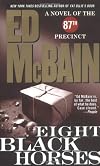
This compelling story of death and retribution skillfully combines the day-to-day action of a pricinct station house with the tense drama of the search for the Deaf Man, a particularly abhorrent villain.Tags
Recommendations




























Member Reviews
“The Deaf Man arrived, and suddenly the circus was back in town.” And I’m back for the Deaf Man vs. the 87th Precinct - Part 4! And I'm also back for the writing, like the first sentence in the book, "The lady was extraordinarily naked." and this line, "Mean, though, still as mean as a hooker's snatch." … Right? Raw, descriptive, and enjoyably unique!
This was a fun read, good crisp writing, and quickly devoured by me! Set against the 12 days of Christmas, the Deaf Man sends cryptic clues to the 87th in advance of his latest criminal escapade. And they attempt to defeat him. And so it goes...
4 good reads in a row with this lineup, and I'm looking forward to the last two!
This was a fun read, good crisp writing, and quickly devoured by me! Set against the 12 days of Christmas, the Deaf Man sends cryptic clues to the 87th in advance of his latest criminal escapade. And they attempt to defeat him. And so it goes...
4 good reads in a row with this lineup, and I'm looking forward to the last two!
I’ve read a lot of Ed McBain and since the special Kindle sale a while back that offered some 40 of his titles for .99 each, I know have a lot more to read. Not in any order.
I have often wondered about McBain’s (nee Evan Hunter) sexual experience. If you’ve read Candyland, for example, his familiarity with massage parlors struck me as coming from personal experience. Then again, his portrayal of police procedures seem quite real, also. Nevertheless, the Deaf Man’s libidic (probably not a word, but I like it) prowess in this book with a woman he has designs upon, made me a little uncomfortable. It shouldn’t have, and I hope I’ve not getting Victorian in my dotage.
Never has Isola’s characteristics been so prominently show more displayed. And it so resembles New York. “The center of the city, Isola, was an island; hence its name: isola means “island” in Italian. In actual practice the entire city was referred to as Isola, even though the other four sections were separately and more imaginatively named. Riverhead came from the Dutch, though not directly. The land up there had once been owned by a patroon named Ryerhurt, and it had been called Ryerhurt’s Farms, which eventually became abbreviated and bastardized to Riverhead. No one knew why...”
I really like McBain, but the ones which feature the Deaf Man are my least favorite. His personal animus toward Carella and brilliance seem phantasmagorical. The personal animus displayed by a criminal toward a policeman always seems very artificial, although to McBain’s credit, the Deaf Man manipulates the police department into becoming part of his schemes. “At first Carella had supposed this to be evidence of a monumental ego, but he had come to learn that the Deaf Man used the police as a sort of second pickup gang, larger than the nucleus group, but equally essential to the successful commission of the crime. That he had been thwarted on three previous occasions was entirely due to chance. He was smarter than the police, and he used the police, and he let the police know they were being used.” show less
I have often wondered about McBain’s (nee Evan Hunter) sexual experience. If you’ve read Candyland, for example, his familiarity with massage parlors struck me as coming from personal experience. Then again, his portrayal of police procedures seem quite real, also. Nevertheless, the Deaf Man’s libidic (probably not a word, but I like it) prowess in this book with a woman he has designs upon, made me a little uncomfortable. It shouldn’t have, and I hope I’ve not getting Victorian in my dotage.
Never has Isola’s characteristics been so prominently show more displayed. And it so resembles New York. “The center of the city, Isola, was an island; hence its name: isola means “island” in Italian. In actual practice the entire city was referred to as Isola, even though the other four sections were separately and more imaginatively named. Riverhead came from the Dutch, though not directly. The land up there had once been owned by a patroon named Ryerhurt, and it had been called Ryerhurt’s Farms, which eventually became abbreviated and bastardized to Riverhead. No one knew why...”
I really like McBain, but the ones which feature the Deaf Man are my least favorite. His personal animus toward Carella and brilliance seem phantasmagorical. The personal animus displayed by a criminal toward a policeman always seems very artificial, although to McBain’s credit, the Deaf Man manipulates the police department into becoming part of his schemes. “At first Carella had supposed this to be evidence of a monumental ego, but he had come to learn that the Deaf Man used the police as a sort of second pickup gang, larger than the nucleus group, but equally essential to the successful commission of the crime. That he had been thwarted on three previous occasions was entirely due to chance. He was smarter than the police, and he used the police, and he let the police know they were being used.” show less
It's Christmas and the Deaf Man returns. He is again sucessfully playing games with the 87th precinct policmen, especially the one he sees as his nemisis, Steve Carella. The letters he is sending to the 87th Precinct are his way of showing them how much smarter than them he is. In so many books this always leads to the detectives out smarting the criminal and everyone lives happily everafter. But not so at the 87th Precinct, it is fate - dumb luck that thwarts Deaf Man.So that as a police prodedural, this book falls way short of so many other great 87th Precinct books. But as an entertaining story, not many of the 87th Precinct books can match this one.
There is a rant about Christmas that Detective Parker does in chapter 9 that puts show more the "bah humbug" back into Christmas in a way that would warm the heart of even old Scrooge. There is also an Abbott and Costello "Who's On First" routine between Genero and Ms. Byrnes in Chapter 13 that would not fit into most of the 87th Precinct books but fits in really well in this one. The love between Carella and his wife, Teddy is also nicely done. Not all the touches are as well done (the pictures Deaf Man sends are easily identified as the 12 days of Christmas for the reader but takes the detectives most of the book to figure out), so that the police procedural elements that are always done so well definitely take a back seat in this book. But Eight Black Horses is still a very strong entry in this series. show less
There is a rant about Christmas that Detective Parker does in chapter 9 that puts show more the "bah humbug" back into Christmas in a way that would warm the heart of even old Scrooge. There is also an Abbott and Costello "Who's On First" routine between Genero and Ms. Byrnes in Chapter 13 that would not fit into most of the 87th Precinct books but fits in really well in this one. The love between Carella and his wife, Teddy is also nicely done. Not all the touches are as well done (the pictures Deaf Man sends are easily identified as the 12 days of Christmas for the reader but takes the detectives most of the book to figure out), so that the police procedural elements that are always done so well definitely take a back seat in this book. But Eight Black Horses is still a very strong entry in this series. show less
Just started re-reading the 87th precinct series (out of order) and this is a great one to start with. A great inventive plot and a wonderful finish with elements of drama, black humour and violence all stirred in.
The cliffhanger ending of the last book (‘Lightning’) was so good I had no choice but to jump straight into ‘Eight Black Horses’. Like all the Deaf Man books it’s quite convoluted but a lot of fun, with a particularly pleasing conclusion.
The Deaf Man is back, and is sending messages to the 87th Street Precinct, starting with a dead, nude blonde in the park across the street from the station house. As always he is plotting a sensational theft and revenge on the detectives who always seem to foil his plans. Once again, through some luck and some clumsiness, major calamity is avoided.
Steve Carella and Arthur Brown catch the murder of young white woman found in a park naked and with a bullet wound in her neck. Meanwhile, the Deaf Man has come back into their lives by sending in the mail sheets of paper of police items such as badges, hats, batons and guns plus horses. As they stew over what these hints to a big crime might mean, another woman is killed . Are the murders and Deaf Man's plans connected?
Meanwhile, the Deaf Man is planning a big robbery plus an even bigger coup against Carella and the 87th which decimate their numbers.
Meanwhile, the Deaf Man is planning a big robbery plus an even bigger coup against Carella and the 87th which decimate their numbers.
Members
- Recently Added By
Lists

#MysteryBingo2022Silver(Revised)
36 works; 1 member
#MysteryBingo2022Silver(Original)
36 works; 1 member
#JustTheFacts2022Silver
48 works; 1 member

Books - McBain, Ed: 87th Precinct
55 works; 1 member
Author Information

365+ Works 32,460 Members
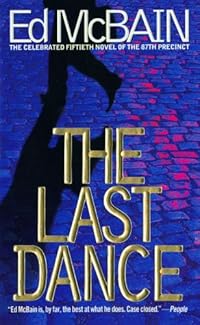
Ed McBain is a pen name for Evan Hunter who was born in 1926 in East Harlem, New York on October 15, 1926. Hunter was born with the name Salvatore Albert Lombino, and he legally adopted the name Evan Hunter in 1952. During World War II, Hunter joined the Navy and served aboard a destroyer in the Pacific. He graduated from Hunter College, were he show more majored in English and psychology, with minors in dramatics and education. He was a prolific writer who also wrote under the names of Ed McBain, Curt Cannon, Hunt Collins, Ezra Hannon, and Richard Marsten. His first major success came in 1954 with the publication of The Blackboard Jungle, which was later adapted as a film. He published the first three books in the 87th Precinct series in 1956 under the name of Ed McBain. He also wrote juvenile books, plays, television scripts, and stories and articles for magazines. He won the Mystery Writers of America Award in 1957 and the Grand Master Award in 1986 for lifetime achievement. He died of laryngeal cancer on July 6, 2005 at the age of 78. (Bowker Author Biography) Ed McBain is the only American to receive the Diamond Dagger, the British Crime Writers Association's highest award. He also holds the Mystery Writers of America's coveted Grand Master Award. His books have sold over one hundred million copies, ranging from his most recent, "The Last Dance", to the bestselling "The Blackboard Jungle", the screenplay for Alfred Hitchcock's "The Birds" & the bestselling "Privileged Conversation", written under his own name, Evan Hunter. He lives in Connecticut. (Publisher Provided) Ed McBain, aka Evan Hunter, wrote the screenplay for Alfred Hitchcock's The Birds and has written many novels. He is the only American to be awarded Britain's coveted Diamond Dagger Award, the highest honor a suspense writer can achieve. He lives in Connecticut. (Publisher Provided) show less
Some Editions
Series


Belongs to Publisher Series
Il giallo Mondadori (1954)
Work Relationships
Is contained in
Chroniques du 87eme district : Faites-moi confiance - Victime au choix - Crédit illimité - Souffler n'est pas tuer - Soupe aux poulets - Pas d'avenir - La main dans le sac - A la bonne heure by Ed McBain (indirect)
Common Knowledge
- Canonical title
- Eight Black Horses
- Original title
- Eight Black Horses
- Original publication date
- 1985
- People/Characters
- The Deaf Man; Steve Carella
- Dedication
- This is for VANESSA HOLT
- First words
- The lady was extraordinarily naked.
- Original language
- English
Classifications
Statistics
- Members
- 426
- Popularity
- 72,125
- Reviews
- 12
- Rating
- (3.66)
- Languages
- 10 — Czech, Danish, Dutch, English, Finnish, French, German, Norwegian (Bokmål), Norwegian, Swedish
- Media
- Paper, Audiobook, Ebook
- ISBNs
- 32
- ASINs
- 13