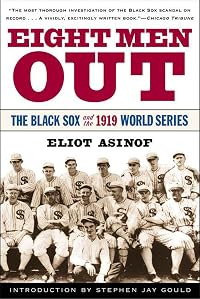
Eight Men Out: The Black Sox and the 1919 World Series
by Eliot Asinof
On This Page
Description
First published in 1963, Eliot Asinof's Eight Men Out has become a timeless classic of a scandalous world series. The headlines proclaimed the 1919 fix of the World Series and attempted cover-up as "the most gigantic sporting swindle in the history of America!" Eliot Asinof has reconstructed the entire scene-by-scene story of the fantastic scandal in which eight Chicago White Sox players arranged with the nation's leading gamblers to throw the Series in Cincinnati. Mr. Asinof vividly show more describes the tense meetings, the hitches in the conniving, the actual plays in which the Series was thrown, the Grand Jury indictment, and the famous 1921 trial. Moving behind the scenes, he perceptively examines the motives and backgrounds of the players and the conditions that made the improbable fix all too possible. Here, too, is a graphic picture of the American underworld that managed the fix, the deeply shocked newspapermen who uncovered the story, and the war-exhausted nation that turned with relief and pride to the Series, only to be rocked by the scandal. Far more than a superbly told baseball story, this is a compelling slice of American history in the aftermath of World War I and at the cusp of the Roaring Twenties. show lessTags
Recommendations




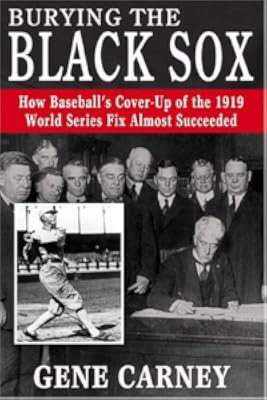
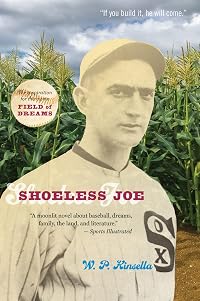








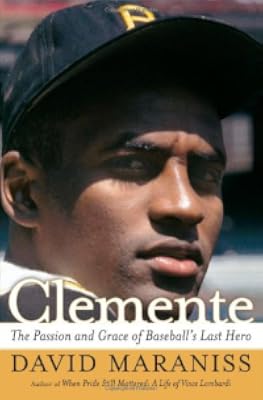
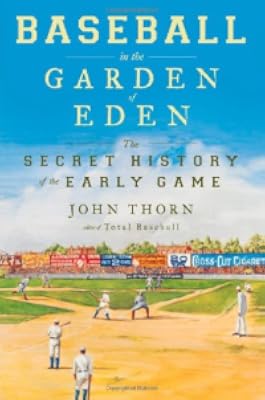


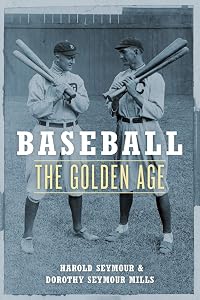

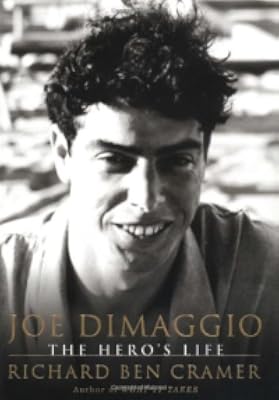
Member Recommendations

Member Reviews
As a kid, a baseball kid, when the movie Eight Men Out came out, i watched it with my dad. it was slow for a kid of about nine, but the baseball was good enough. Coming out around the time of the film Field of Dreams, it shaped my perceptions of Shoeless Joe Jackson and the 1919 Black Sox Scandal. As a lover of baseball from a baseball family, I didn't want the badness to be true, I though Jackson a maligned man, I pained for Buck Weaver. With each viewing, Eight Men Out became a better and better film, until, as an adult, I thought it a great film and a premier baseball film, and a testament to, religiously speaking, man's fallibility and tendency toward sin.
I had always wanted to read the book, but had never come across it in a show more bookstore. And, I wanted a hardcover, not a paperback, so I bit the bullet and got a nice, not first edition, hard copy on eBay. Mine is a 1977 edition by Holt, Rinehart & WInston, in good condition, now wrapped in mylar.
Eliot Asinof writes it like a novel, telling a good story in an historical and narrative fashion. Think like Shelby Foote's The Civil War. The way these early ball players were treated is so unlike the mega-stars of today, where even below average players can be set for life. And Comiskey treated the players was atrocious. You can see why they would be willing to lay down for a real payday. Asinof tells the backstory well, sets up the history, and tells of the gameplay in sparkling fashion. The underworld drama, the legal drama, and the personal drama is all well told.
Though some new details may change a few niggling facts here and there, all-in-all, it is still the best account of the 1919 Sox, and a good book to read if you like the movie, like baseball history, and like a good crime story. It was a great book and, watching the movie afterward, makes you realize how writer/director John Sayles mined the book and used it to craft an excellent film. And, good gosh, did John Sayles nail his acting role as Ring Lardner, they look like twins! A good book that I enjoyed immensely. show less
I had always wanted to read the book, but had never come across it in a show more bookstore. And, I wanted a hardcover, not a paperback, so I bit the bullet and got a nice, not first edition, hard copy on eBay. Mine is a 1977 edition by Holt, Rinehart & WInston, in good condition, now wrapped in mylar.
Eliot Asinof writes it like a novel, telling a good story in an historical and narrative fashion. Think like Shelby Foote's The Civil War. The way these early ball players were treated is so unlike the mega-stars of today, where even below average players can be set for life. And Comiskey treated the players was atrocious. You can see why they would be willing to lay down for a real payday. Asinof tells the backstory well, sets up the history, and tells of the gameplay in sparkling fashion. The underworld drama, the legal drama, and the personal drama is all well told.
Though some new details may change a few niggling facts here and there, all-in-all, it is still the best account of the 1919 Sox, and a good book to read if you like the movie, like baseball history, and like a good crime story. It was a great book and, watching the movie afterward, makes you realize how writer/director John Sayles mined the book and used it to craft an excellent film. And, good gosh, did John Sayles nail his acting role as Ring Lardner, they look like twins! A good book that I enjoyed immensely. show less
The story of the 1919 White Sox and the throwing of the World Series, this book might seem like a weird choice for me, considering I know little and care less about baseball. But I do know and love Chicago, and I am slowly building up a collection of books about my city, and this seemed like a good addition.
The book tells the story well. It digs in, gets facts that were hidden for years, and presents everything in an orderly fashion. It even explained how the baseball parts worked to me, a consummate non-baseballer. What I didn't anticipate, however, was how sad this book would make me. Based on th information available, not a single person who most deserved punishment received it. The baseball players themselves were treated poorly show more from all sides, and I had no idea how incompetent they were at the whole fix itself. They barely received any money! And given how shittily Comiskey treated them as players, it isn't surprising that they turned on him. He bullied them into contracts they didn't want to sign, and even took advantage of some players' illiteracy. It's just, ugh, you wonder how the players could ever have been so trusting, and you have to remember it was a completely different era and almost a century ago now, but it still just boggles the (modern) mind.
Asinaf should also get a special mention for being quite talented at evoking the mood of the time. I found myself using "on the square" in my internal monologue during the time when I was reading this book, so apparently I'd really gotten into the mindset of an early 20th-century-gambler. Hilariously.
This is definitely a good read if you are interested in baseball or oppressive business tactics or just an interesting bit of American history. show less
The book tells the story well. It digs in, gets facts that were hidden for years, and presents everything in an orderly fashion. It even explained how the baseball parts worked to me, a consummate non-baseballer. What I didn't anticipate, however, was how sad this book would make me. Based on th information available, not a single person who most deserved punishment received it. The baseball players themselves were treated poorly show more from all sides, and I had no idea how incompetent they were at the whole fix itself. They barely received any money! And given how shittily Comiskey treated them as players, it isn't surprising that they turned on him. He bullied them into contracts they didn't want to sign, and even took advantage of some players' illiteracy. It's just, ugh, you wonder how the players could ever have been so trusting, and you have to remember it was a completely different era and almost a century ago now, but it still just boggles the (modern) mind.
Asinaf should also get a special mention for being quite talented at evoking the mood of the time. I found myself using "on the square" in my internal monologue during the time when I was reading this book, so apparently I'd really gotten into the mindset of an early 20th-century-gambler. Hilariously.
This is definitely a good read if you are interested in baseball or oppressive business tactics or just an interesting bit of American history. show less
I was first introduced to the story of the Black Sox, like many people, through the movie Field of Dreams. That (and I read the novel several years later) highly romanticized the life of Shoeless Joe Jackson, claiming that he although he took the money he didn't do anything egregious in advance of the plan to throw the series. Yet, lollygagging on a fly to left could contribute to Chicago's loss, so there's that. Anyway, this book remains the definitive account of the plan and its aftermath. It's so ironic now that MLB now has endorsement deals with Draft Kings and other online betting platforms.
This book is the most thoroughly researched book on sports I have ever read. But thanks to the writing skills of Eliot Asinof, it reads more like a fast-paced thriller than like a non-fiction account. Ultimately, this book is as much about America in that era as it is about baseball. It's also easily the best thing to come out of the 1919 Black Sox scandal.
An interesting history of the 1919 Black Sox scandal from a journalistic perspective. It's the book that John Sayles's movie was based on.
I picked up this book (for $1!) because of my casual interest in baseball history, but baseball isn't really the point of the story at all. Instead, it's a sad reminder of the way that power protects the powerful, whatever side of the law they might be on, while pawns and servants (innocent or not) are left to take the fall. It seems clear that all of the eight banned players were present during discussions about throwing the World Series, and that at least some of them actually cheated during the games. It's also clear, though, that the gamblers who really benefited from the fix got away clean while show more cheating the players out of most of their payoff. In the end, there was a sort of unspoken agreement among the more powerful gamblers, lawyers, and baseball team owners that the easiest face-saving decision would be to treat the eight suspected players as harshly as possible — and then to do nothing else. It's even more tragic because baseball is all that guys like Shoeless Joe Jackson knew how to do.
I wonder how much has changed since 1919. Of course, with baseball players now regularly paid in the millions, they have little reason to throw games for money. They're much more powerful than they were. I believe, though, that there still exists a sort of collusion among teams, players, and the media to perpetuate a wholesome, nostalgic view of baseball. (How often did "kids" and the "national pastime" come up in contemporary discussion of the 1919 World Series? How much are they mentioned in connection with Barry Bonds?) Talking about baseball as a cultural institution is good for business, after all, and talking about it as a business, well, isn't.
Original post on "All The Things I've Lost" show less
I picked up this book (for $1!) because of my casual interest in baseball history, but baseball isn't really the point of the story at all. Instead, it's a sad reminder of the way that power protects the powerful, whatever side of the law they might be on, while pawns and servants (innocent or not) are left to take the fall. It seems clear that all of the eight banned players were present during discussions about throwing the World Series, and that at least some of them actually cheated during the games. It's also clear, though, that the gamblers who really benefited from the fix got away clean while show more cheating the players out of most of their payoff. In the end, there was a sort of unspoken agreement among the more powerful gamblers, lawyers, and baseball team owners that the easiest face-saving decision would be to treat the eight suspected players as harshly as possible — and then to do nothing else. It's even more tragic because baseball is all that guys like Shoeless Joe Jackson knew how to do.
I wonder how much has changed since 1919. Of course, with baseball players now regularly paid in the millions, they have little reason to throw games for money. They're much more powerful than they were. I believe, though, that there still exists a sort of collusion among teams, players, and the media to perpetuate a wholesome, nostalgic view of baseball. (How often did "kids" and the "national pastime" come up in contemporary discussion of the 1919 World Series? How much are they mentioned in connection with Barry Bonds?) Talking about baseball as a cultural institution is good for business, after all, and talking about it as a business, well, isn't.
Original post on "All The Things I've Lost" show less
I listened to this on Audible while driving from work and playing in the background during breaks. It's really interesting if you have any interest in baseball or even in popular culture history. I can't say it's a great read. It's a little slow in places and the characters are not always as developed as they should be. Arnold Rothstein a New York gambler more than likely had a bigger more involved role than the author gives "credit" for. You have to understand this is not modern day sports. These are not rich superstars. These are working class men trying to play a game they loved under careless treatment from the owners. No free agency. No guarantees and no long term no trade no cut contracts. They were treated like business assets show more and the bottom line was company comes first. So, the temptation to get a few thousand dollars for missing a double play or losing a fly ball in the sun was huge. Not to say they were not responsible. Just to say if you do decide to give this a try and the only thing you know of baseball is the modern era you will be surprised at the reality. It's tough for me because I grew up hearing about the "Grand Old Game." The romance of the early players who played only for the love and glory of the game. Also, being from the south and being a Braves fan I don't think this will be a really entertaining baseball season for me. So, while I technically didn't "read" it. It's a good story and a good listen which is great for me. I recommend it if you like early 20th century history or baseball. show less
A baseball book which assembles the truth of the Black Sox Scandal of 1919, the depth of investigation and completeness of Asinof's retelling is astounding. That only a bit more information has come to light since the publication of this book is testament to the job Asinof has done. A fascinating re-telling of an event in which there are villains of all kinds and few are above reproach.
Members
- Recently Added By
Lists

Best Baseball Books
42 works; 20 members

Sports Illustrated's The Top 100 Sports Books of All Time
51 works; 7 members

Matt
97 works; 1 member

Sports
37 works; 1 member

Recreation
93 works; 1 member
Author Information

17+ Works 988 Members
Writer Eliot Asinof was born in Manhattan on July 13, 1919. After graduating from Swarthmore but before joining the Army during World War II, he played minor league baseball for the Philadelphia Phillies' organization. His best-known work was Eight Men Out, which is about the 1919 Black Sox scandal and became a movie in 1988. He wrote over a dozen show more books during his lifetime including Man on Spikes, Seven Days to Sunday, and Final Judgment. He also wrote for television and the movies, but his published credits were limited, most likely because he was blacklisted in the 1950's. He died due to complications of pneumonia on June 10, 2008. (Bowker Author Biography) show less
Some Editions
Awards and Honors
Work Relationships
Has the adaptation
Common Knowledge
- Canonical title
- Eight Men Out: The Black Sox and the 1919 World Series
- Original publication date
- 1963
- People/Characters
- John "Rube" Benton; Henry Berger; Norman Boeckel; Louis D. Brandeis; Harry H. Brigham; K. O. Brown (show all 218); Michael Ahearn; Rachael Brown; John T. Brush; William Thomas "Sleepy Bill" Burns; Jimmy Callahan; Raymond J. Cannon; Grover Cleveland Alexander; Happy Chandler; Cap Anson; Abe Attell; Alfred Austrian; G. W. Axelson; Bugs Baer; George Barrett; William Barrett; Alfred Bauer; Jake Baumgarten; Curley Bennett; Charlie Chaplin; Charles Chase; Hal Chase; W. W. Chesbrough; Eddie Cicotte; Jack Cicotte; Ty Cobb; George M. Cohan; Eddie Collins; John "Shano" Collins; Charles Albert Comiskey; Charles Albert Comiskey II; John Comiskey; Joshua Cosden; James M. Cox; Robert Crowe; Jim Cruisenberry; Nick Dandolis; Jake Daubert; William Dever; Jim Devlin; Charles "Red" Dooin; Jack Doyle; Barney Dreyfuss; Jean Dubuc; Pat Duncan; Monk Eastman; Charles Ebbetts; Hod Eller; Billy Evans; Nat Evans; Urban "Red" Faber; Douglas Fairbanks; Bill Fallon; William J. Fallon; James T. Farrell; Oscar "Happy" Felsch; Ray Fischer; Horace Fogel; Benjamin Franklin; Harry Frazee; Ford Frick; Hugo Friend; A. Morgan Frumberg; Hugh Fullerton; Arnold "Chick" Gandil; Joe Gedeon; William "Kid" Gleason; George Gorman; Harry Grabiner; George Frederick Graham; Judge Gregory; Clark Griffith; Heinie Groh; George Hall; Sam Hall; Warren G. Harding; Sam Harris; Claude Hendrix; Garry Herrmann; Buck Herzog; John Heydler; James "Ducky" Holmes; Maclay Hoyne; George B. Hudnall; William Hulbert; John Hunter; Colonel Huston; Jimmy Isaminger; Dave Jackson; Katie Jackson; Shoeless Joe Jackson; Bill James; Byron Bancroft Johnson; Hiram Johnson; Walter Johnson; Fielder Jones; John Keenan; Henrietta B. Kelly; William J. Kelly; Mike Kennedy; Dickie Kerr; Stan Ketchel; Johnny Kilbane; Larry Kopf; Kenesaw Mountain Landis; Ring Lardner; Albert D. Lasker; Ben Levi; Lou Levi; Harry Lewis; Nemo Liebold; Jake Lingle; Harry Long; Fred M. Loomis; Max Lusker; Byrd Lynn; Charles MacDonald; Connie Mack; Lee Magee; Billy Maharg; Walter "Duster" Mails; Pete Manlis; Christy Mathewson; Burnet Maybank; Carl Mays; Eugene McGee; John McGraw; George McManus; Fred McMullin; Pat Moran; Sidney Mudd; Thomas Nash; Greasy Neale; Al Nichols; James "Ropes" O'Brien; Val O'Farrell; Tip O'Neill; Brick Owens; Sammy Pass; John J. Pershing; Joe Pesch; George Phair; Eddie Phelon; Mary Pickford; Edward Prindeville; Jack Quinn; Bill Rariden; Maurice Rath; Harry Redmon; Hartley Replogle; Dutch Reuther; Harry Reutlinger; Paul Richert; John Rigler; Jimmy Ring; Charles "Swede" Risberg; John D. Rockefeller; Will Rogers; Theodore Roosevelt; Sam Rosoff; Abraham Rothstein; Arnold Rothstein; Carolyn Rothstein; Harry Rothstein; Edd Roush; Damon Runyon; Jacob Ruppert; George Herman "Babe" Ruth; Harry "Slim" Sallee; Raymond William "Cracker" Schalk; Murray Seasongood; Socks Seybold; John B. Sheridan; Ben Short; Harry F. Sinclair; Ted Sloan; Alfred E. Smith; Arthur Soden; Charles W. Somers; Albert Spalding; Tris Speaker; John Spengler; Taylor Spink; H. W. Stephenson; Mitchell B. Stevens; Charles Stoneham; Horace Stoneham; Tom Stouch; Joseph "Sport" Sullivan; Tim Sullivan; Edward Swann; Robert C. Ten Eyeck; Monte Tennes; John Tyrell; William L. Veeck; Joe Vila; Oscar Vitt; Rube Waddell; "Big Ed" Walsh; W. W. Way; George "Buck" Weaver; Charles Weeghman; Roy Wilkinson; Claude "Lefty" Williams; Arthur Wilson; Woodrow Wilson; Ivy Wingo; Bill Wombsganns; Leonard Wood; Harvey Woodruff; William Wrigley; David Zelser; Carl Zork
- Important places
- Cincinnati, Ohio, USA; Chicago, Illinois, USA; Cook County, Illinois, USA
- Important events
- World Series (1919)
- Related movies
- Eight Men Out (1988 | IMDb)
Classifications
- Genres
- Sports and Leisure, Nonfiction, General Nonfiction, History
- DDC/MDS
- 364.168 — Society, government, & culture Social problems and social services Crime Criminal offenses Crimes of property Business, financial, professional offenses
- LCC
- GV875 .C6 .A8 — Geography, Anthropology and Recreation Recreation. Leisure Recreation. Leisure Sports Ball games: Baseball, football, golf, etc.
- BISAC
Statistics
- Members
- 864
- Popularity
- 31,671
- Reviews
- 15
- Rating
- (3.96)
- Languages
- English, Japanese
- Media
- Paper, Audiobook, Ebook
- ISBNs
- 15
- UPCs
- 1
- ASINs
- 16