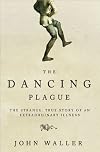
The Dancing Plague: The Strange, True Story of an Extraordinary Illness
by John Waller
On This Page
Description
A gripping tale of one of history's most bizarre events, and what it reveals about the strange possibilities of human nature In the searing July heat of 1518, Frau Troffea stepped into the streets of Strasbourg and began to dance. Bathed in sweat, she continued to dance. Overcome with exhaustion, she stopped, and then resumed her solitary jig a few hours later. Over the next two months, roughly four hundred people succumbed to the same agonizing compulsion. At its peak, the epidemic claimed show more the lives of fifteen men, women, and children a day. Possibly 100 people danced to their deaths in one of the most bizarre and terrifying plagues in history. John Waller compellingly evokes the sights, sounds, and aromas; the diseases and hardships; the fervent supernaturalism and the desperate hedonism of the late medieval world. Based on new evidence, he explains why the plague occurred and how it came to an end. In doing so, he sheds light on the strangest capabilities of the human mind and on our own susceptibility to mass hysteria. show lessTags
Recommendations












































Member Recommendations
Member Reviews
On reading this book we can, perhaps, maybe, likely let ourselves imagine what it must have, nay ought to have, been like to conceivably have experienced the Dancing Plague of 1518.
Perchance.
In The Dancing Plague, John Waller writes about an episode of dance mania (or choreomania) which affected a group of people in the city of Strasbourg (now in eastern France but in the early sixteenth century a predominantly German-speaking city) in 1518, leading them to dance ceaselessly and unwillingly in public for days on end. This is a curious historical event but one which—as you might have gathered from the mild sarcasm of my opening—one which is poorly documented, and one which Waller does not do justice to.
I frequently complain about show more books which really should have been journal articles or New Yorker essays. I'm not sure that The Dancing Plague could even be that much, at least not if it were to focus solely on the 1518 occurrence rather than any of the previous outbreaks of choreomania. Medievalists know how to do a lot with a fragmentary sourcebase, but what Waller has to work with is thin indeed. Not all the large type or the conjuring up of "must have thoughts" or "probably felts" can hide that.
As best as I can tell (because there's no bibliography, only end notes), Waller drew very heavily on secondary sources, and undertook no archival research in writing this book. To be fair, this is because a lot of the archives in Strasbourg were destroyed during the Franco-Prussian War of the 1870s. However, the fact that the Bibliothèque nationale de France has been digitising a lot of antiquarian regional journals in recent years means that I can sit right here on my couch and look at much of what Waller does cite by way of primary sources (once I compensated for the fact that some of his citations are to the wrong page numbers), and it's even more meagre than Waller admits to. He refers on several occasions to contemporary "chronicle accounts" of the 1518 outbreak. Having looked at the three he returns to the most (the Imlin’schen Family Chronicle, the Duntzenheim Chronicle, and the Annals of Sebastian Brant), and granted that sixteenth-century German isn't my strongest language, none of these "accounts" are more than a short paragraph in length. I'm pretty sure that's not going to be obvious to the average reader of this book. Those accounts which are somewhat more detailed—for instance, ones which provide the name of the supposed Patient Zero, one Frau Troffea—also date to at least several years after the events.
That's a problem.
And of course there's the fact that as best as I can tell, Waller isn't a medievalist—his primary research focus, according to his faculty profile, is the history of medicine in the nineteenth century. It's not impossible for someone to write good history outside of their primary research area, of course. But Waller clearly has a limited understanding of late medieval history, whether that's how chronicles were compiled (he seems to think that the fact that other chronicles said the same thing about the Dancing Plague is proof of the veracity of the accounts from Strasbourg, as opposed to there being a long tradition of chroniclers reworking material from other sources—chroniclers weren't investigative journalists), how the Church worked, or the existence of civic public health legislation, or sumptuary laws, and on and on.
Waller's treatment of faith and religious history is the most egregious part of the book, though—and I say this as an atheist who was raised Catholic who has no fondness for the institution of the Church. Waller clearly not only does not understand the mentalities of late medieval Christians, he doesn't care to. He shows no awareness that many of his assertions are really assumptions derived from the dominant, anti-Catholic Anglo-Protestant historiographies of the nineteenth century. Medieval Catholics were "hooked on a mystical form of piety" (14), read "works of macabre theology" (43), and professed beliefs determined by "theological casuistry" (107) and "esoteric symbolism" (164). The forms of Protestant Christianity which were to emerge in the sixteenth century were, it's heavily implied, "more conventional" (174) and rational. Medieval Christianity on the other hand was primitive, and medieval people did not think that the world was "intelligible and rationally ordered." (190)
Somewhere, Augustine of Hippo is sputtering. (Fides quaerens intellectum!)
Towards the end of the book, Waller looks at events in the nineteenth and twentieth centuries which may be parallels to the Dancing Plague of 1518, from female hysterics in Victorian Britain to shellshocked WWI veterans. His arguments here are moderately convincing, but all of that pales to his discussion of instances in Tanzanian and Malagasy history, which frankly made me suck in a breath at the racist underpinnings of his thinking.
Bad from start to finish. Avoid. show less
Perchance.
In The Dancing Plague, John Waller writes about an episode of dance mania (or choreomania) which affected a group of people in the city of Strasbourg (now in eastern France but in the early sixteenth century a predominantly German-speaking city) in 1518, leading them to dance ceaselessly and unwillingly in public for days on end. This is a curious historical event but one which—as you might have gathered from the mild sarcasm of my opening—one which is poorly documented, and one which Waller does not do justice to.
I frequently complain about show more books which really should have been journal articles or New Yorker essays. I'm not sure that The Dancing Plague could even be that much, at least not if it were to focus solely on the 1518 occurrence rather than any of the previous outbreaks of choreomania. Medievalists know how to do a lot with a fragmentary sourcebase, but what Waller has to work with is thin indeed. Not all the large type or the conjuring up of "must have thoughts" or "probably felts" can hide that.
As best as I can tell (because there's no bibliography, only end notes), Waller drew very heavily on secondary sources, and undertook no archival research in writing this book. To be fair, this is because a lot of the archives in Strasbourg were destroyed during the Franco-Prussian War of the 1870s. However, the fact that the Bibliothèque nationale de France has been digitising a lot of antiquarian regional journals in recent years means that I can sit right here on my couch and look at much of what Waller does cite by way of primary sources (once I compensated for the fact that some of his citations are to the wrong page numbers), and it's even more meagre than Waller admits to. He refers on several occasions to contemporary "chronicle accounts" of the 1518 outbreak. Having looked at the three he returns to the most (the Imlin’schen Family Chronicle, the Duntzenheim Chronicle, and the Annals of Sebastian Brant), and granted that sixteenth-century German isn't my strongest language, none of these "accounts" are more than a short paragraph in length. I'm pretty sure that's not going to be obvious to the average reader of this book. Those accounts which are somewhat more detailed—for instance, ones which provide the name of the supposed Patient Zero, one Frau Troffea—also date to at least several years after the events.
That's a problem.
And of course there's the fact that as best as I can tell, Waller isn't a medievalist—his primary research focus, according to his faculty profile, is the history of medicine in the nineteenth century. It's not impossible for someone to write good history outside of their primary research area, of course. But Waller clearly has a limited understanding of late medieval history, whether that's how chronicles were compiled (he seems to think that the fact that other chronicles said the same thing about the Dancing Plague is proof of the veracity of the accounts from Strasbourg, as opposed to there being a long tradition of chroniclers reworking material from other sources—chroniclers weren't investigative journalists), how the Church worked, or the existence of civic public health legislation, or sumptuary laws, and on and on.
Waller's treatment of faith and religious history is the most egregious part of the book, though—and I say this as an atheist who was raised Catholic who has no fondness for the institution of the Church. Waller clearly not only does not understand the mentalities of late medieval Christians, he doesn't care to. He shows no awareness that many of his assertions are really assumptions derived from the dominant, anti-Catholic Anglo-Protestant historiographies of the nineteenth century. Medieval Catholics were "hooked on a mystical form of piety" (14), read "works of macabre theology" (43), and professed beliefs determined by "theological casuistry" (107) and "esoteric symbolism" (164). The forms of Protestant Christianity which were to emerge in the sixteenth century were, it's heavily implied, "more conventional" (174) and rational. Medieval Christianity on the other hand was primitive, and medieval people did not think that the world was "intelligible and rationally ordered." (190)
Somewhere, Augustine of Hippo is sputtering. (Fides quaerens intellectum!)
Towards the end of the book, Waller looks at events in the nineteenth and twentieth centuries which may be parallels to the Dancing Plague of 1518, from female hysterics in Victorian Britain to shellshocked WWI veterans. His arguments here are moderately convincing, but all of that pales to his discussion of instances in Tanzanian and Malagasy history, which frankly made me suck in a breath at the racist underpinnings of his thinking.
Bad from start to finish. Avoid. show less
This was such an unexpectedly enjoyable book. The Dancing Plague is a fascinating exploration of the strange and uncontrollable dancing that has gripped large masses of people repeatedly throughout history. John Waller vividly paints a picture of the religious terror, starvation and hopelessness that incubated the perfect setting for such a bizarre series of events.
I had never heard of choreomania and if I had, I would have probably thought it a strange and unlikely fictional malady. More often termed Saint Vitus’ Dance, it’s victims believed they were being punished for their sins. Over the centuries many “cures” were devised including more dancing. As many of these attempts proved fatal, belief in religious pilgrimage as the show more only sure method of relief grew. Across Europe, even though customs and beliefs have changed, some still believe in “preventative dancing”. After all, why would an angry saint curse an already dancing sinner with more dancing?
Waller ends with an interesting theory on the cultural changes that have erased choreomania from our worries replacing it with several more modern ailments. This book truly took me by surprise and gripped me with an uncontrollable need to keep reading. show less
I had never heard of choreomania and if I had, I would have probably thought it a strange and unlikely fictional malady. More often termed Saint Vitus’ Dance, it’s victims believed they were being punished for their sins. Over the centuries many “cures” were devised including more dancing. As many of these attempts proved fatal, belief in religious pilgrimage as the show more only sure method of relief grew. Across Europe, even though customs and beliefs have changed, some still believe in “preventative dancing”. After all, why would an angry saint curse an already dancing sinner with more dancing?
Waller ends with an interesting theory on the cultural changes that have erased choreomania from our worries replacing it with several more modern ailments. This book truly took me by surprise and gripped me with an uncontrollable need to keep reading. show less
It is amazing what the human mind can convince the body to do under the right circumstances. In the medieval city of Strasbourg in the summer of 1518, one woman sparked an epidemic that left many people dead and injured. In the heat of mid-July under duress from years of crop failures and near starvation with no one trustworthy to turn to for guidance, Frau Troffea began to dance uncontrollably for days on end. Then a few days later, others joined her in what was to become a catastrophe of choreomania.
Many believed that these dancers were being possessed by Saint Vitus. The hysteria was referred to as Saint Vitus Dance or Saint Vitus Curse, and it was believed that those suffering from it had invoked the saint’s wrath. As the show more community of Strasbourg struggled to tame the crowds of dancers, they sought insight from the privy council XXI, the most distinguished members of the Strasbourg elite. After consulting with physicians and using scientific rather than supernatural explanations, the XXI decided to build the dancers a stage on which to dance and to hire musicians and dancers to keep the choreomaniacs moving in an effort to quell their over-heated blood. However, this only caused many more people to succumb to the illness and more died before the XXI abandoned this tack.
Eventually the XXI realized their error and decided to transport the entire dancing fleet to the nearby town of Saverne where a Saint Vitus shrine was located. In addition, the choreomaniacs were given red shoes to wear. The importance of the red shoes is highlighted by the author. “This was an age in which symbols were so much more than metaphors, when religious objects bore mystical meaning and when no one simply handed out free footwear. The shoes were somehow meant to assist the healing of the tortured dancers” (p. 161-162). Soon thereafter, the dancers recovered.
This was the last dancing plague to hit the Alsace region. There were as many as twenty instances of dancing epidemics in western Europe, particularly the border areas of France, Germany, and Switzerland, between 1000 and 1600, and possibly more that were not on record. It was the social-religious-political culture of the region combined with the historical context during the plagues that instigated these outbreaks. As Waller states, “The behavior … was also choreographed by the expectations and practices of their worlds” (p. 199). The deeply supernatural and religious nature of the population, the use of dance in the culture, the growing lack of trust in the clergy to save their souls, and the multiple years of crop failures in the second decade of the 16th century made this last plague particularly troublesome. Once placed in context, the fact of choreomania becomes much less bizarre. These plagues were contextual responses to despair, suggestion, and dogma. show less
Many believed that these dancers were being possessed by Saint Vitus. The hysteria was referred to as Saint Vitus Dance or Saint Vitus Curse, and it was believed that those suffering from it had invoked the saint’s wrath. As the show more community of Strasbourg struggled to tame the crowds of dancers, they sought insight from the privy council XXI, the most distinguished members of the Strasbourg elite. After consulting with physicians and using scientific rather than supernatural explanations, the XXI decided to build the dancers a stage on which to dance and to hire musicians and dancers to keep the choreomaniacs moving in an effort to quell their over-heated blood. However, this only caused many more people to succumb to the illness and more died before the XXI abandoned this tack.
Eventually the XXI realized their error and decided to transport the entire dancing fleet to the nearby town of Saverne where a Saint Vitus shrine was located. In addition, the choreomaniacs were given red shoes to wear. The importance of the red shoes is highlighted by the author. “This was an age in which symbols were so much more than metaphors, when religious objects bore mystical meaning and when no one simply handed out free footwear. The shoes were somehow meant to assist the healing of the tortured dancers” (p. 161-162). Soon thereafter, the dancers recovered.
This was the last dancing plague to hit the Alsace region. There were as many as twenty instances of dancing epidemics in western Europe, particularly the border areas of France, Germany, and Switzerland, between 1000 and 1600, and possibly more that were not on record. It was the social-religious-political culture of the region combined with the historical context during the plagues that instigated these outbreaks. As Waller states, “The behavior … was also choreographed by the expectations and practices of their worlds” (p. 199). The deeply supernatural and religious nature of the population, the use of dance in the culture, the growing lack of trust in the clergy to save their souls, and the multiple years of crop failures in the second decade of the 16th century made this last plague particularly troublesome. Once placed in context, the fact of choreomania becomes much less bizarre. These plagues were contextual responses to despair, suggestion, and dogma. show less
An interesting look at the year 1518, the year a woman began to dance and didn't stop for days. Others joined her and soon many many people were overtaken by this strange plague.
A look back at the ever present threat of starvation due to famine, the corruption of the church who instead of helping their people, took from them. The fire and brimstone preached, the harshness of God and the belief that God was unhappy with them. The darkness of the end of the middle ages, the superstitions ever present are all presented in this book. Therein lies my problem, yes background information was needed to understand the setting that allowed a event such as this to occur. However, I think way to much was presented over and over again, repetitious show more in some parts. The last three chapters were probably the best, research into the mind and other strange things that have occurred throughout history. The mind is a very powerful instrument indeed. show less
A look back at the ever present threat of starvation due to famine, the corruption of the church who instead of helping their people, took from them. The fire and brimstone preached, the harshness of God and the belief that God was unhappy with them. The darkness of the end of the middle ages, the superstitions ever present are all presented in this book. Therein lies my problem, yes background information was needed to understand the setting that allowed a event such as this to occur. However, I think way to much was presented over and over again, repetitious show more in some parts. The last three chapters were probably the best, research into the mind and other strange things that have occurred throughout history. The mind is a very powerful instrument indeed. show less
The title of this book makes it sound much more lively of a read than it ended up being, but if you can get past the dry narration, it's full of interesting facts and theories regarding what really caused this illness.
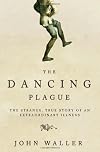
Rather disappointing book. While the cover looks intriguing, it turns out there wasn't really much to the dancing plagues other than poor people worn out by hunger and hard work, so most of the book is just a diatribe about the greed and cruelty of the upper classes, the insensitivity of the church, and the suffering of the poverty-stricken masses. Mildly interesting way to kill a couple of hours if you get off on all things medieval but nothing more.
A dancing plague hit Strasbourg in the summer of 1518, resulting in the disruption of society and the death of 400 people. The author examines some likely interpretations of the event.
Members
- Recently Added By
Lists

Weirdo Nonfiction
138 works; 3 members
Author Information
5 Works 538 Members
John Waller is an historian of medicine at Michigan State University.
Some Editions
Awards and Honors
Awards
Common Knowledge
- Original publication date
- 2008
- People/Characters
- Sebastian Brant; Frau Troffea; Joss Fritz; Wilhelm von Hohenstein; Theophrastus Paracelsus (ne Theophrastus von Hohenheim, 1493? to 1541); St. Vitus (show all 7); Jean-Martin Charcot
- Important places
- Strasbourg, Bas-Rhin, Grand-Est, France
- Important events
- plagues ('Dancing Plague', 1518); Peasants' War (1524-1525)
- Epigraph
- Madnesses of the past are not petrified entities that can be plucked unchanged from their niches and placed under our modern microscopes.
They appear, perhaps, more like jellyfish that collapse and dry up when they are ... (show all)removed from the ambient sea water.
-- H. C. Erik Midelfort,
Madness in Sixteenth Century Germany
To everything there is a season, and a time
to every purpose under the heaven:
A time to be born, and a time to die;
a time to plant, and a time to pluck
up that which is planted;
A time to kill, and a time to... (show all) heal; a time
to break down, and a time to build up;
A time to weep, and a time to laugh; a time
to mourn, and a time to dance...
-- Chapter 3, Ecclesiastes - Dedication
- To my grandparents
- First words
- Somewhere amid the narrow lanes, the congested wharves, the stable, forges, and fairs of the Medieval city of Strasbourg, Frau Troffea stepped outside and began to dance. (Introduction)
The portents for the new century did not look good. - Last words
- (Click to show. Warning: May contain spoilers.)Paracelsus, who saw choreomania as a just punishment for dancers' levity, would have had an apoplexy.
- Disambiguation notice
- Originally published: A time to dance, a time to die. Thriplow [England] : Icon Books, 2008
Classifications
- Genres
- History, Nonfiction, General Nonfiction, Religion & Spirituality
- DDC/MDS
- 362.196 — Society, government, & culture Social problems and social services Social Welfare People with physical illnesses Services to people with specific conditions Diseases
- LCC
- RC389 .W35 — Medicine Internal medicine Internal medicine Neurosciences. Biological psychiatry. Neuropsychiatry Neurology. Diseases of the nervous system
- BISAC
Statistics
- Members
- 266
- Popularity
- 122,150
- Reviews
- 10
- Rating
- (3.49)
- Languages
- English
- Media
- Paper, Ebook
- ISBNs
- 6
- UPCs
- 1
- ASINs
- 1