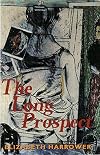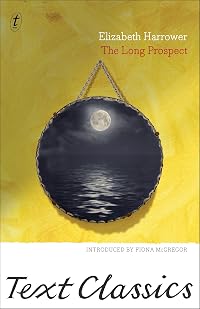
The Long Prospect
by Elizabeth Harrower
On This Page
Description
Sharply observed, bitter and humorous, The Long Prospect is a story of life in an Australian industrial town. Growing up neglected in a seedy boarding house, twelve-year-old Emily Lawrence befriends Max, a middle-aged scientist who encourages her to pursue her intellectual interests. Innocent Emily will face scandal, suburban snobbery and psychological torment. Originally published in 1958, The Long Prospect was described as ranking second only to Patrick White's Voss in postwar Australian show more literature. show lessTags
Recommendations


















Member Reviews
“Lilian was not subtle and hid nothing of herself. It could often be placed no higher than sadism [ . . . ]Living with her was practice in bloodless warfare.”
This is an incisive, finely observed piece of psychological fiction, both a coming-of-age narrative and a credible study of a cruel and destructive woman, who revels in creating dramas that damage others. The novel follows a young child, Emily, over a period of six years from the age of seven to thirteen. She lives with her forty-seven-year-old grandmother, the twice-widowed Lilian, who has been left well-off but who has little to do but party, toy with men, and bet on horses. Emily’s parents are alive but separated—her mother is in Sydney; her father, in the outback. They show more married young and never grew up. Passive and irresponsible, both are perfectly comfortable with Lilian’s taking charge of their daughter. Neither gives a thought to the neglectful and emotionally abusive situation the child has been left in.
Lilian takes in boarders, not because she has any need for the income, but because she requires an audience for the cruel dramas she instigates. One boarder, Thea, has fairly recently left Lilian’s house in the suburbs for a flat of her own, but she occasionally visits and takes Emily on outings. Eventually, Thea leaves the city of Ballowra (based on industrial Newcastle, Australia), and Lilian takes in another boarder: Thea’s former lover, Max. Lilian recognizes the potential for cruelty that such a situation promises. By having another, younger man in the house, she can make her current live-in fancy man, Rosen, jealous, and look a bit more respectable to the neighbours at the same time. She can also invite Thea to come for a visit from Sydney and then enjoy the fireworks that ensue when the former lovers encounter each other. Lilian’s timing is off, however, and things don’t develop quite as she plans. Max is sensitive and kind, and a special relationship develops between him and Emily, whom he feels he must protect from the ruthless and uncaring Lilian and her swinging friends, who resent him for his refusal to party with them. There are repercussions for this.
The reader must be willing to suspend a certain degree of disbelief about the plot. It’s difficult to accept that any reasonable adult, never mind two, would board with Lilian for any duration of time. However, Thea’s, then Max’s concern for Emily’s welfare is certainly credible, and the dilemma of leaving a child in a destructive environment rings entirely true.
Harrower’s characters are superbly drawn. Emily is sensitively, not sentimentally, depicted, and the author’s portrait of the scheming, domineering, sarcastic, and sadistic Lilian is brilliant.
It’s many years since I read another Elizabeth’s—Elizabeth Bowen’s—The Death of the Heart. I don’t recall that earlier book well, but its title would certainly suit this Australian novel: a study of the effect of a destructive personality on everyone she comes into contact with, including an impressionable child. show less
This is an incisive, finely observed piece of psychological fiction, both a coming-of-age narrative and a credible study of a cruel and destructive woman, who revels in creating dramas that damage others. The novel follows a young child, Emily, over a period of six years from the age of seven to thirteen. She lives with her forty-seven-year-old grandmother, the twice-widowed Lilian, who has been left well-off but who has little to do but party, toy with men, and bet on horses. Emily’s parents are alive but separated—her mother is in Sydney; her father, in the outback. They show more married young and never grew up. Passive and irresponsible, both are perfectly comfortable with Lilian’s taking charge of their daughter. Neither gives a thought to the neglectful and emotionally abusive situation the child has been left in.
Lilian takes in boarders, not because she has any need for the income, but because she requires an audience for the cruel dramas she instigates. One boarder, Thea, has fairly recently left Lilian’s house in the suburbs for a flat of her own, but she occasionally visits and takes Emily on outings. Eventually, Thea leaves the city of Ballowra (based on industrial Newcastle, Australia), and Lilian takes in another boarder: Thea’s former lover, Max. Lilian recognizes the potential for cruelty that such a situation promises. By having another, younger man in the house, she can make her current live-in fancy man, Rosen, jealous, and look a bit more respectable to the neighbours at the same time. She can also invite Thea to come for a visit from Sydney and then enjoy the fireworks that ensue when the former lovers encounter each other. Lilian’s timing is off, however, and things don’t develop quite as she plans. Max is sensitive and kind, and a special relationship develops between him and Emily, whom he feels he must protect from the ruthless and uncaring Lilian and her swinging friends, who resent him for his refusal to party with them. There are repercussions for this.
The reader must be willing to suspend a certain degree of disbelief about the plot. It’s difficult to accept that any reasonable adult, never mind two, would board with Lilian for any duration of time. However, Thea’s, then Max’s concern for Emily’s welfare is certainly credible, and the dilemma of leaving a child in a destructive environment rings entirely true.
Harrower’s characters are superbly drawn. Emily is sensitively, not sentimentally, depicted, and the author’s portrait of the scheming, domineering, sarcastic, and sadistic Lilian is brilliant.
It’s many years since I read another Elizabeth’s—Elizabeth Bowen’s—The Death of the Heart. I don’t recall that earlier book well, but its title would certainly suit this Australian novel: a study of the effect of a destructive personality on everyone she comes into contact with, including an impressionable child. show less
A boarding house in Newcastle, late 1950’s, the manipulative landlady, Lilian, her set of vituperative friends, her set upon lodgers and her twelve year old granddaughter, Emily. Into this household comes Max, the onetime married lover of Lilian’s lodger Thea.
Emily is a desert flower, hiding, waiting, blasted by the constant heat of Lilian’s disregard and emotional bullying. Max appears and his simple regard for Emily as a person in her own right sets Emily blossoming. Max becomes the focus of Lilian’s need for control and Emily’s thirst for knowledge and acknowledgment.
“The voices still went on. She looked gain at the man, idly with more ease, at his eyes, and saw with a shock of profound surprise that his grey eyes were show more turned on her, and more than looking-seeing her, saluting her with a kind of serious friendliness as if he knew her…No one ever looked as if they saw her. “
Elizabeth Harrower’s prose is so precise. Her observations of her characters, phrase by phrase, builds up their personalities with such clarity.
“It was only necessary, she had discovered, for a person, place, or thing to be admired by her, to become the object of hilarity and scorn. They’d even laugh at Shakespeare, Emily thought, and when Mrs Salter and the head talked the way they did there was clearly something to him. But if she so much as mentioned Mrs Salter and Mr Wills in support of an argument they minced her up with smiling sarcasm, and laughed at the teachers, and laughed till she and the teachers shrank to dwarf-size. She burned with anger hot and gusty as a bushfire-an appalled, helpless kind of anger. For no one wanted to be just, and that’s till seemed-in spite of her theory of life and age-so unaccountable and alarming that her strength evaporated. They’d even laugh at God, she thought.”
Paula, Emily’s mother is putting in one of her rare visits from Sydney. She is glancing in at Max’s room.
“Books there were indeed-hundreds of books overflowing from the startled varnished shelves, books on chairs, books on the floor.
Paula was unable to hide her reluctant admiration for their quantity, but she mistrusted the implications of their possession. They seemed excessive, and she loathed excess. “
In just a few lines we have another layer to put on Paula.
The need for Lilian to be in control escalates, rumour and innuendo become fact. No one will be the same.
This is a brilliant study of people, good, bad and ugly. There is humour here, bound in barbed wire. show less
Emily is a desert flower, hiding, waiting, blasted by the constant heat of Lilian’s disregard and emotional bullying. Max appears and his simple regard for Emily as a person in her own right sets Emily blossoming. Max becomes the focus of Lilian’s need for control and Emily’s thirst for knowledge and acknowledgment.
“The voices still went on. She looked gain at the man, idly with more ease, at his eyes, and saw with a shock of profound surprise that his grey eyes were show more turned on her, and more than looking-seeing her, saluting her with a kind of serious friendliness as if he knew her…No one ever looked as if they saw her. “
Elizabeth Harrower’s prose is so precise. Her observations of her characters, phrase by phrase, builds up their personalities with such clarity.
“It was only necessary, she had discovered, for a person, place, or thing to be admired by her, to become the object of hilarity and scorn. They’d even laugh at Shakespeare, Emily thought, and when Mrs Salter and the head talked the way they did there was clearly something to him. But if she so much as mentioned Mrs Salter and Mr Wills in support of an argument they minced her up with smiling sarcasm, and laughed at the teachers, and laughed till she and the teachers shrank to dwarf-size. She burned with anger hot and gusty as a bushfire-an appalled, helpless kind of anger. For no one wanted to be just, and that’s till seemed-in spite of her theory of life and age-so unaccountable and alarming that her strength evaporated. They’d even laugh at God, she thought.”
Paula, Emily’s mother is putting in one of her rare visits from Sydney. She is glancing in at Max’s room.
“Books there were indeed-hundreds of books overflowing from the startled varnished shelves, books on chairs, books on the floor.
Paula was unable to hide her reluctant admiration for their quantity, but she mistrusted the implications of their possession. They seemed excessive, and she loathed excess. “
In just a few lines we have another layer to put on Paula.
The need for Lilian to be in control escalates, rumour and innuendo become fact. No one will be the same.
This is a brilliant study of people, good, bad and ugly. There is humour here, bound in barbed wire. show less
My word, there are some very nasty women in this novel! Lillian is a vituperative snake who enjoys blatant cruelty for the entertainment it provides her; Billie is a vulgar flirt who doesn't care who her gossip hurts en route to getting what she wants i.e. a replacement for her unsatisfactory husband, and Paula hates all men, so her mother's advice to just get a nice divorce and find yourself someone else to give you a nice home gets this response:
Lillian does not agree. She has done very nicely out of her divorce — a whole street of properties in Sydney and the house in Bellowra where she takes in boarders as prospective next husbands —
Stuck in this snake pit of venom is poor little Emily, dumped on Lillian when her parents Paula and Harry separate, and a wretched time she has of it with Lillian as The Grandmother From Hell...
No wonder Patrick White liked Harrower's work, he was rather good at penning horrible female characters too...
To read the rest of my review please visit https://anzlitlovers.com/2025/10/31/the-long-prospect-1958-text-classics-edition... show less
'I wouldn't want anyone else if I did divorce hm. I hate them all.' (p.33)
Lillian does not agree. She has done very nicely out of her divorce — a whole street of properties in Sydney and the house in Bellowra where she takes in boarders as prospective next husbands —
As far as men wereshow more
concerned, no one would more willingly admit that they were faulty — aggressive, rough, thoughtless. And Paula had, beginning with her father and ending with Harry Lawrence, come up against some weird specimens...Still! What did it matter?
To Lillian, who had competed with and excelled them in most of their faults, and who knew how to baffle and reduce them in a peculiarly feminine way as well, it all added to the zest. No, she certainly would not agree. Pursing her mouth as she listened, she wished that Paula could see the immense possibilities for amusement in the situation. It was all right to hate men—any woman in her right mind did—but if you had any spirit at all you had to battle with them, and belittle them, and learn to enjoy it. (p.33-4)
Stuck in this snake pit of venom is poor little Emily, dumped on Lillian when her parents Paula and Harry separate, and a wretched time she has of it with Lillian as The Grandmother From Hell...
No wonder Patrick White liked Harrower's work, he was rather good at penning horrible female characters too...
To read the rest of my review please visit https://anzlitlovers.com/2025/10/31/the-long-prospect-1958-text-classics-edition... show less
A really great book - how could it have been out of print for so long? A portrait of Newcastle (in the early 1950s?). A boarding house relationship drama of the completely unexpected kind. Harrower is remarkably incisive in her use of dialogue and description of the characters' internal motivations. Sometimes it reads like theatre of pain. But there is also a fundamental, if dogged, dignity in the actions and thoughts of the characters Thea and Max that reminded me of John William's Stoner.
Ratings
Members
- Recently Added By
Author Information
6+ Works 566 Members
Elizabeth Harrower was born in 1928 in Sydney, Australia. She has worked as a reviewer for The Sydney Morning Herald, for the ABC, and in publishing. She is the author of In Certain Circles which won the 2015 Voss Literary Prize. Her other work includes Down in the City, The Long Prospect, The Catherine Wheel and The Watch Tower. She won the show more Steele Rudd Award for a Short Story Collection at the Queens Literary Awards 2016 with her title, A Few Days in the Country: And Other Stories. On July 7, 2020, she died at the age 92. (Bowker Author Biography) show less
Series
Belongs to Publisher Series
Common Knowledge
- Original title
- The Long Prospect
- Original publication date
- 1958
- Important places
- Australia; 'Ballowra' (Newcastle, New South Wales, Australia); New South Wales, Australia
- First words
- The front door of Thea's flat was ajar so Lillian gave it a push and went in, her eyes on swivels.
- Last words
- (Click to show. Warning: May contain spoilers.)Paula giggled and raised her brows, sending a woman's glance to the young girl beside her in the hope that she would respond and join her in the fascinating, necessary game of teasing Harry.
- Blurbers
- Stead, Christina
Classifications
Statistics
- Members
- 75
- Popularity
- 423,096
- Reviews
- 4
- Rating
- (4.25)
- Languages
- English
- Media
- Paper, Audiobook, Ebook
- ISBNs
- 7
- ASINs
- 5