On This Page
Description
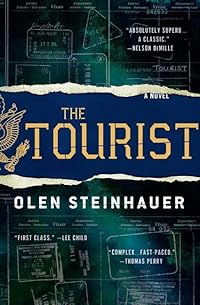
"There are tourists from all over the world. Most of them want to kill you."—The Black Book of TourismIn this contemporary international thriller that is reminiscent of John le Carré and Graham Greene, Milo Weaver has tried to leave his old life of secrets and lies behind by giving up his job as a "tourist" for the CIA—an undercover agent with no home, no identity—and working a desk at the CIA's New York headquarters. But staying retired from the field becomes impossible when the show more arrest of a long-sought-after assassin sets off an investigation into one of Milo's oldest colleagues and friends. Soon Milo is drawn into a conspiracy that links riots in the Sudan, an assassin committing suicide, and an old friend who's been accused of selling secrets to the Chinese. With new layers of intrigue being exposed in his old cases, and with the CIA and Homeland Security after him, he has no choice but to go back undercover and find out who's been pulling the strings once and for all.
In The Tourist, Olen Steinhauer—twice nominated for the Edgar Award—tackles an intricate story of betrayal and manipulation, loyalty and risk, in an utterly compelling novel that is both thoroughly modern and yet also reminiscent of the espionage genre's most touted luminaries.
. show less
Tags
Recommendations


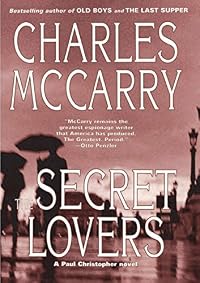
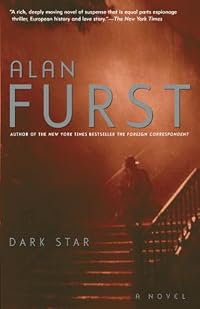

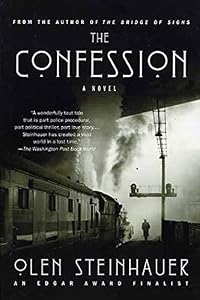
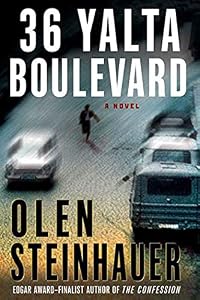
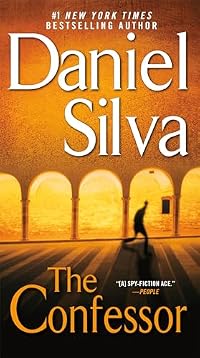

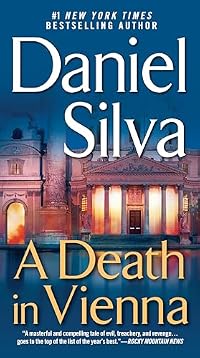
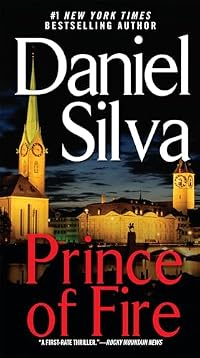
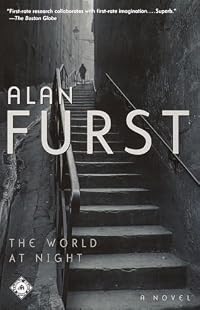
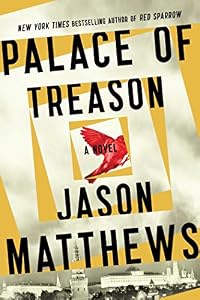



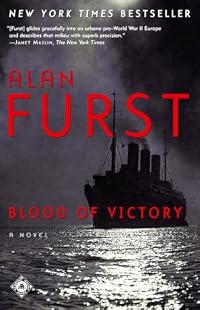
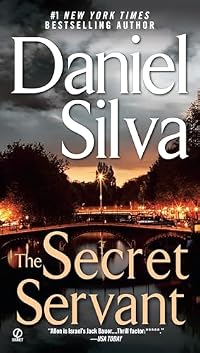

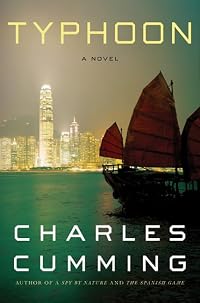
Member Recommendations

Member Reviews
Having wrapped up his five-book series of detective stories based in an unidentified country in Eastern Europe (see The Confession (Inspector Ferenc Kolyeszar)), Olen Steinhauer kicks off a new 3-book series focused on a former "Tourist" (read CIA hit man) Milo Weaver.
Weaver has retired from the field and moved to managing other tourists after he crashed and burned while on an assignment six years ago. More recently the happily married Milo has been mysteriously been leaving for long business trips. It turns out he is on the trail of a notorious free agent bad guy, The Tiger. What the Tiger tells Milo sets a chain of events in motion that turns his life upside down. At about the same time, Milo is sent to investigate whether a close show more friend has been turned and if so, by whom? The Chinese? Islamic terrorists?
Steinhauer gives us a bit of fun by exploring the interplay between US Homeland Security and the CIA. He also offers an possibility that rings true: when Homeland Security was created every one of the various spook and law enforcement agencies made sure to plant spies within the new agency. Steinhauer does spend time exploring the way the US deals with terrorist suspects: presumed guilty and tortured until proven so by their own words.
Steinhauer writes honest-to-goodness spy thrillers. It occurred to me as I burned through the pages of 'The Tourist' that for once a 'page-turner' really is. He deserves to be more widely read than he has been to date.
The book jacket claims the seemingly inevitable comparison to John Le Carre, but a more apt parallel is Robert Ludlum at the top of his game (you know, not including the books Ludlum has amazingly written after his death!). Milo Weaver reminds me much more of Jason Bourne (The Bourne Identity (Bourne Trilogy, Book 1)) than George Smiley. It would be extravagant to claim that Milo Weaver is a perfect blend of the two, but Steinhauer's Weaver is certainly a deeper, more self-aware character than Bourne. The Tourist is a highly recommended spy thriller. show less
Weaver has retired from the field and moved to managing other tourists after he crashed and burned while on an assignment six years ago. More recently the happily married Milo has been mysteriously been leaving for long business trips. It turns out he is on the trail of a notorious free agent bad guy, The Tiger. What the Tiger tells Milo sets a chain of events in motion that turns his life upside down. At about the same time, Milo is sent to investigate whether a close show more friend has been turned and if so, by whom? The Chinese? Islamic terrorists?
Steinhauer gives us a bit of fun by exploring the interplay between US Homeland Security and the CIA. He also offers an possibility that rings true: when Homeland Security was created every one of the various spook and law enforcement agencies made sure to plant spies within the new agency. Steinhauer does spend time exploring the way the US deals with terrorist suspects: presumed guilty and tortured until proven so by their own words.
Steinhauer writes honest-to-goodness spy thrillers. It occurred to me as I burned through the pages of 'The Tourist' that for once a 'page-turner' really is. He deserves to be more widely read than he has been to date.
The book jacket claims the seemingly inevitable comparison to John Le Carre, but a more apt parallel is Robert Ludlum at the top of his game (you know, not including the books Ludlum has amazingly written after his death!). Milo Weaver reminds me much more of Jason Bourne (The Bourne Identity (Bourne Trilogy, Book 1)) than George Smiley. It would be extravagant to claim that Milo Weaver is a perfect blend of the two, but Steinhauer's Weaver is certainly a deeper, more self-aware character than Bourne. The Tourist is a highly recommended spy thriller. show less
I wasn't sure what to expect when I picked up The Tourist, but I'm happy to say it was a solid read I thoroughly enjoyed! Right from the start, I really liked Milo. There's something so compelling about a character who’s incredibly good at what he does but is also burnt out, jaded, and disillusioned by it. (Okay, so this isn't a new trope in the spy thriller genre, but it really worked for me here.) Milo’s complexity, his views on the world, and, most importantly, his dedication to his family had me hooked.
Speaking of family, the story really took off for me once Milo’s wife and daughter entered the picture. His wife, Tina, is smart, strong, and capable of thinking for herself. Her viewpoint added so much to the story. I loved show more that despite how much she loved her husband, she wasn’t blindly loyal. Instead, she had had her own questions and doubts about Milo’s life. And his daughter, Stephanie, is a firecracker who stole every scene she was in.
The political intrigue and behind-the-scenes machinations were surprisingly engaging. I’m not usually big on politics, but the way Steinhauer wove the political backstory into the narrative felt natural and added an extra layer of depth to the plot. It made the stakes feel global, and that sense of a bigger picture also helped keep me invested as I read.
Overall, The Tourist is well-written, tightly plotted, and offers a central character who's easy to root for. I'll definitely pick up the next book in the series. show less
Speaking of family, the story really took off for me once Milo’s wife and daughter entered the picture. His wife, Tina, is smart, strong, and capable of thinking for herself. Her viewpoint added so much to the story. I loved show more that despite how much she loved her husband, she wasn’t blindly loyal. Instead, she had had her own questions and doubts about Milo’s life. And his daughter, Stephanie, is a firecracker who stole every scene she was in.
The political intrigue and behind-the-scenes machinations were surprisingly engaging. I’m not usually big on politics, but the way Steinhauer wove the political backstory into the narrative felt natural and added an extra layer of depth to the plot. It made the stakes feel global, and that sense of a bigger picture also helped keep me invested as I read.
Overall, The Tourist is well-written, tightly plotted, and offers a central character who's easy to root for. I'll definitely pick up the next book in the series. show less
Espionage loves its jargon and its arcane techniques. The CIA is called The Company, by those who know. Spies practice tradecraft, which encompasses everything from how to designate, mark, and carry out a drop off to how properly to evade surveillance to how to communicate in code so that correct information is being passed and--in the best of all possible worlds--disinformation is being passed at the same time.
And a tourist is an agent who has apparently flamed out and left the Company, or died, or gone rogue, but is actually working under deep cover in the darkest division of the most clandestine corner of the organization. Tourists are the guys who carry out assassinations, among other dark ops, for the Company.
Milo Weaver is a show more former tourist--now, he will discover when he gets back into the game, a legend--who has for half a decade been back in the States, working at a desk job for the Company. He's got a wife, a daughter, and a brownstone in Brooklyn. He's as content as he's ever been, so it's inevitable that he will be sucked back into the game. With a vengeance.
The action takes Weaver across the United States and Europe: from Paris to Venice to Blackdale, Tennessee. There are flashbacks to the Cold War era, and Milo Weaver, in the end, has a most delicious and surprising secret.
Spy novels, even when they're indifferently written, are good, convoluted, difficult to follow fun. Olen Steinhauer's The Tourist, I'm happy to say, is well-written, deftly plotted, intelligent, and, well, still kind of difficult to follow...but that's part of the game, now, isn't it? If it were easy to follow, then we'd all be spies. show less
And a tourist is an agent who has apparently flamed out and left the Company, or died, or gone rogue, but is actually working under deep cover in the darkest division of the most clandestine corner of the organization. Tourists are the guys who carry out assassinations, among other dark ops, for the Company.
Milo Weaver is a show more former tourist--now, he will discover when he gets back into the game, a legend--who has for half a decade been back in the States, working at a desk job for the Company. He's got a wife, a daughter, and a brownstone in Brooklyn. He's as content as he's ever been, so it's inevitable that he will be sucked back into the game. With a vengeance.
The action takes Weaver across the United States and Europe: from Paris to Venice to Blackdale, Tennessee. There are flashbacks to the Cold War era, and Milo Weaver, in the end, has a most delicious and surprising secret.
Spy novels, even when they're indifferently written, are good, convoluted, difficult to follow fun. Olen Steinhauer's The Tourist, I'm happy to say, is well-written, deftly plotted, intelligent, and, well, still kind of difficult to follow...but that's part of the game, now, isn't it? If it were easy to follow, then we'd all be spies. show less
In espionage thrillers, agents may have lovers but rarely spouses and children they love and long to spend more time with. But in Olen Steinhauer's terrific “The Tourist” (2009), Milo Weaver just wants to take his family to Disney World. He wants to be a tourist, and not a "tourist," CIA lingo for agents who wander the world doing the Company's bidding. Under the name Charles Alexander, Weaver used to be a Company tourist. Now he has a desk job and prefers to keep it that way.
But then an international assassin chooses Weaver as his audience for his dying words, which suggest that the assassin was actually working for someone in the CIA and that Weaver had better discover who that is.
Soon Weaver, forced to abandon his family in show more Florida, must travel to Paris and elsewhere, trying to find the answers upon which his life may depend. Once again he finds himself a tourist, this time working on his own.
Espionage novels are traditionally filled with complexity, sudden turns, sudden deaths and betrayals. “The Tourist” has all that, and more. show less
But then an international assassin chooses Weaver as his audience for his dying words, which suggest that the assassin was actually working for someone in the CIA and that Weaver had better discover who that is.
Soon Weaver, forced to abandon his family in show more Florida, must travel to Paris and elsewhere, trying to find the answers upon which his life may depend. Once again he finds himself a tourist, this time working on his own.
Espionage novels are traditionally filled with complexity, sudden turns, sudden deaths and betrayals. “The Tourist” has all that, and more. show less
Both plot and characterization were highly engaging. I recommend this book to anyone who enjoys reading about world-weary spies.
But one plot device falls flat, and it is utterly unworthy of this book: the "Christian Scientist" assassin. As a former CS raised in the religion, I can state unequivocally that Olen Steinhauer knows absolutely nothing about the religion. And that's a shame, because not only do the errors mar an otherwise excellent book, but a real Christian Scientist would have made a great assassin.
The basics of the CS plot device: an assassin who is a Christian Scientist is injected with HIV, and because Christian Scientists don't use medicine, the assassin dies, even though he could have lived many years by taking the show more anti-HIV drugs.
What Steinhauer gets right: He correctly states that the characters' parents were members of the "Church of Christ, Scientist" (rather than "Christian Science Church"). To quibble: real Christian Scientists would belong to a particular church, e.g., "First Church of Christ, Scientist, Somerville, Massachusetts," but maybe in the universe of the story the CIA wasn't specific. Also, Steinhauer's assassin quotes Mary Baker Eddy. Real Christian Scientists do like to quote Mary Baker Eddy.
However, Steinhauer grabbed weird MBE quotes, not passages that a Christian Scientist in extremis would actually quote. And in doing so, he distorts the entire point of CS theology.
The assassin quotes, "The Science of Christianity makes pure the fountain, in order to purify the stream," and explains that "Faith talks you into doing things you might not want to do." He continues, "I may not have lived up to the Church's tenets, but I'll certainly die by them. God has seen fit to strike me down--and why wouldn't He? If I were him, I would've done it years ago." And still later, "The power of prayer didn't save my body, but it just might save my soul."
The assassin clearly believes that his suffering and death were sent by God as punishment for sin. He hopes to be purified through prayer so that his soul can be saved. Nothing could be more foreign to a CS. A devout CS believes that sickness is just a delusion. The more you admit the reality of the delusion, the less likely that you can dispel it and claim your true existence as a healthy child of God. Hence, CSs refuse medical treatment, not because they're reluctant to interfere with God's decisions, but because accepting medical treatment requires them to believe sickness exists.
(Similarly, I've known CSs to refuse to wear seatbelts: when you wear a seatbelt, you admit that an accident can happen, and therefore make it more likely that you'll experience an accident.)
A devout CS would never intimate that God sent sickness--the "belief" of sickness is instead a human failure to recognize that God does no such thing. In fact, CSs believe that Jesus didn't have to suffer and die on the cross--He only pretended to suffer and die and be resurrected in order to demonstrate that suffering and death are unreal. A devout CS who was dying of AIDS would turn to popular MBE quotes, not random quotes, probably MBE's Scientific Statement of Being ("There is no life, truth, intelligence, nor substance in Matter . . . ") And a devout CS would go to his death expecting to be healed at any moment.
OK, so maybe the guy was just a staggeringly lousy CS, so lousy that he misunderstood the entire theology. But it's a shame--because an assassin who truly believes in the unreality of death would be an awesome character. Such an assassin could justify murdering people because "death isn't real anyway." Yes, that would be twisted--CSs don't go around murdering people--but hey, if you're going to create a CS assassin, why not take advantage of the CS "death is unreal" belief? Steinhauer missed a great opportunity.
I realize that this review concerns a teensy part of the book, but you have all these other great reviews to give you a picture of the whole thing. show less
But one plot device falls flat, and it is utterly unworthy of this book: the "Christian Scientist" assassin. As a former CS raised in the religion, I can state unequivocally that Olen Steinhauer knows absolutely nothing about the religion. And that's a shame, because not only do the errors mar an otherwise excellent book, but a real Christian Scientist would have made a great assassin.
The basics of the CS plot device: an assassin who is a Christian Scientist is injected with HIV, and because Christian Scientists don't use medicine, the assassin dies, even though he could have lived many years by taking the show more anti-HIV drugs.
What Steinhauer gets right: He correctly states that the characters' parents were members of the "Church of Christ, Scientist" (rather than "Christian Science Church"). To quibble: real Christian Scientists would belong to a particular church, e.g., "First Church of Christ, Scientist, Somerville, Massachusetts," but maybe in the universe of the story the CIA wasn't specific. Also, Steinhauer's assassin quotes Mary Baker Eddy. Real Christian Scientists do like to quote Mary Baker Eddy.
However, Steinhauer grabbed weird MBE quotes, not passages that a Christian Scientist in extremis would actually quote. And in doing so, he distorts the entire point of CS theology.
The assassin quotes, "The Science of Christianity makes pure the fountain, in order to purify the stream," and explains that "Faith talks you into doing things you might not want to do." He continues, "I may not have lived up to the Church's tenets, but I'll certainly die by them. God has seen fit to strike me down--and why wouldn't He? If I were him, I would've done it years ago." And still later, "The power of prayer didn't save my body, but it just might save my soul."
The assassin clearly believes that his suffering and death were sent by God as punishment for sin. He hopes to be purified through prayer so that his soul can be saved. Nothing could be more foreign to a CS. A devout CS believes that sickness is just a delusion. The more you admit the reality of the delusion, the less likely that you can dispel it and claim your true existence as a healthy child of God. Hence, CSs refuse medical treatment, not because they're reluctant to interfere with God's decisions, but because accepting medical treatment requires them to believe sickness exists.
(Similarly, I've known CSs to refuse to wear seatbelts: when you wear a seatbelt, you admit that an accident can happen, and therefore make it more likely that you'll experience an accident.)
A devout CS would never intimate that God sent sickness--the "belief" of sickness is instead a human failure to recognize that God does no such thing. In fact, CSs believe that Jesus didn't have to suffer and die on the cross--He only pretended to suffer and die and be resurrected in order to demonstrate that suffering and death are unreal. A devout CS who was dying of AIDS would turn to popular MBE quotes, not random quotes, probably MBE's Scientific Statement of Being ("There is no life, truth, intelligence, nor substance in Matter . . . ") And a devout CS would go to his death expecting to be healed at any moment.
OK, so maybe the guy was just a staggeringly lousy CS, so lousy that he misunderstood the entire theology. But it's a shame--because an assassin who truly believes in the unreality of death would be an awesome character. Such an assassin could justify murdering people because "death isn't real anyway." Yes, that would be twisted--CSs don't go around murdering people--but hey, if you're going to create a CS assassin, why not take advantage of the CS "death is unreal" belief? Steinhauer missed a great opportunity.
I realize that this review concerns a teensy part of the book, but you have all these other great reviews to give you a picture of the whole thing. show less
I don't mind dark and moody spy novels; after all, I love Quiller and nothing is darker or moodier. But in the course of a dark and moody spy novel, you need a hero (or anti-hero) that you care about. Milo Weaver is not that guy. Far too often Milo or another character tells the reader that Milo just isn't that special at his job and his moodiness saps energy from the story. I don't mind his reticence to provide information to the reader (especially as it adds to the story; again, see Quiller), but what Milo does tell the reader is too often in the nature of 'woe is me'. I was bored, frankly.
After five, multi-award nominated crime fiction novels, Hungary based, American born novelist Olen Steinhauer has turned his hand to contemporary espionage in THE TOURIST.
The action in this book centres around Milo Weaver - CIA Agent, Tourist, father and husband. Starting out in 2001, Milo, nursing a serious pill-popping addiction and a strong desire to suicide in the line of duty, is in the middle of a botched attempt to stop a hitman. Flash forward 7 years and Milo's got a wife, a child, and a personal interest in tracking down the hitman behind that nearly fatal, and life changing encounter. Out of active duty and in a desk job since then, Milo wasn't expecting the "Tiger" to hand himself over voluntarily. A deathbed conversation show more with the Tiger turns Milo's perceptions upside down, and set him on a path unexpected.
There are a number of elements in THE TOURIST that stand out. Milo, as a highly flawed, complicated central character in what is after all, an espionage novel, seems very realistic. A man with faults and flaws, he is poignantly aware of his own limitations - particularly when it comes to the ease with which he lives his professional life, compared to the way that he handles the personal. Obviously the situations in which he finds himself are not those which the average person is going to have to deal with, so a certain suspension of disbelief is going to be required on the part of the reader. There are some downsides to this characterisation however, the most notable one being the difficulty of focusing a great sense of moral and personal outrage, when the enemy is a little closer to home than would normally be the case. THE TOURIST gets into interesting territory in this area, a direction I found quite fascinating, but then I prefer the enemy to be less than straightforward. There's also a good sense of pace, with a nice sprinkling of rushing around, without it being too over the top. Mostly, however, there is a very elegant balancing of the tension, and the threat with some nice touches of reality, delivered with some very tongue in cheek humour. (What would be more hairy for your average burnt-out, long term spy - an encounter with a shadowy enemy or Disneyworld. Still can't decide!)
Where THE TOURIST may be slightly less satisfying for some readers is in the area of plot, where things are very busy. Lots of things happen, lots of characters (good and bad) come and go, and there's some question marks frequently on whether or not everything is / could / needs to be connected. Other readers may appreciate exactly this aspect. A spies life doesn't seem like one that would be tidy and neat, with one job wrapped up nicely and the paperwork done, before the next bad situation comes along. I liked the approach, and I particularly liked the way that Milo often had no idea what was happening, as well as me!
The element that ticked the biggest box for me, and the one that made THE TOURIST an interesting book was the portrayal of the mindsets of officialdom. Alongside the concept of the enemy within, perhaps more prevalent than an external threat, this gave considerable pause for thought. show less
The action in this book centres around Milo Weaver - CIA Agent, Tourist, father and husband. Starting out in 2001, Milo, nursing a serious pill-popping addiction and a strong desire to suicide in the line of duty, is in the middle of a botched attempt to stop a hitman. Flash forward 7 years and Milo's got a wife, a child, and a personal interest in tracking down the hitman behind that nearly fatal, and life changing encounter. Out of active duty and in a desk job since then, Milo wasn't expecting the "Tiger" to hand himself over voluntarily. A deathbed conversation show more with the Tiger turns Milo's perceptions upside down, and set him on a path unexpected.
There are a number of elements in THE TOURIST that stand out. Milo, as a highly flawed, complicated central character in what is after all, an espionage novel, seems very realistic. A man with faults and flaws, he is poignantly aware of his own limitations - particularly when it comes to the ease with which he lives his professional life, compared to the way that he handles the personal. Obviously the situations in which he finds himself are not those which the average person is going to have to deal with, so a certain suspension of disbelief is going to be required on the part of the reader. There are some downsides to this characterisation however, the most notable one being the difficulty of focusing a great sense of moral and personal outrage, when the enemy is a little closer to home than would normally be the case. THE TOURIST gets into interesting territory in this area, a direction I found quite fascinating, but then I prefer the enemy to be less than straightforward. There's also a good sense of pace, with a nice sprinkling of rushing around, without it being too over the top. Mostly, however, there is a very elegant balancing of the tension, and the threat with some nice touches of reality, delivered with some very tongue in cheek humour. (What would be more hairy for your average burnt-out, long term spy - an encounter with a shadowy enemy or Disneyworld. Still can't decide!)
Where THE TOURIST may be slightly less satisfying for some readers is in the area of plot, where things are very busy. Lots of things happen, lots of characters (good and bad) come and go, and there's some question marks frequently on whether or not everything is / could / needs to be connected. Other readers may appreciate exactly this aspect. A spies life doesn't seem like one that would be tidy and neat, with one job wrapped up nicely and the paperwork done, before the next bad situation comes along. I liked the approach, and I particularly liked the way that Milo often had no idea what was happening, as well as me!
The element that ticked the biggest box for me, and the one that made THE TOURIST an interesting book was the portrayal of the mindsets of officialdom. Alongside the concept of the enemy within, perhaps more prevalent than an external threat, this gave considerable pause for thought. show less
Members
- Recently Added By
Lists

Best Espionage (Fiction)
55 works; 20 members

ALA The Reading List
490 works; 28 members
Ultimate Thriller Guide
52 works; 4 members
Author Information

23+ Works 5,507 Members
Olen Steinhauer was born in Baltimore, Maryland on June 21, 1970. He received an MFA in creative writing from Emerson College in Boston. After college, he spent a year in Romania on a Fulbright Grant. This experience helped provide the inspiration for his first five books. His works include The Bridge of Sighs, The Cairo Affair, All the Old show more Knives, and the Milo Weaver Series. In 2010, he received the Hammett Prize for best literary crime novel for The Nearest Exit. (Bowker Author Biography) show less
Awards and Honors
Series

Common Knowledge
- Canonical title
- The Tourist
- Original publication date
- 2009-03
- People/Characters
- Milo Weaver
- Related movies
- The Tourist (2012 | IMDb | This is not the Milo Weaver story. Milo is still listed as in development)
- Dedication
- For Margo
- First words
- Four hours after his failed suicide attempt, he descended toward Aerodrom Ljubljana.
- Last words
- (Click to show. Warning: May contain spoilers.)The Suzuki turned the corner. They were gone.
- Disambiguation notice
- Please take care NOT to combine this novel by Olen Steinhauer with the movie/film of the same name! Thank you!
Classifications
Statistics
- Members
- 1,507
- Popularity
- 15,250
- Reviews
- 63
- Rating
- (3.61)
- Languages
- 13 — Danish, Dutch, English, Finnish, French, German, Hungarian, Italian, Norwegian (Bokmål), Polish, Portuguese, Russian, Spanish
- Media
- Paper, Audiobook, Ebook
- ISBNs
- 38
- ASINs
- 10