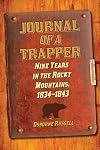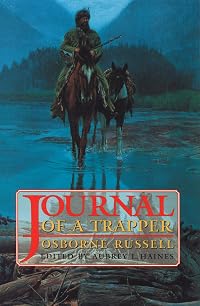
Journal of a Trapper
by Osborne Russell
On This Page
Description
In 1834, Osborne Russell joined an expedition from Boston, which proceeded to the Rocky Mountains to capitalize on the lucrative salmon and fur trade. Beginning at the age of twenty, he detailed the life of a trapper in his journal and recorded his adventures through treacherous terrain, encounters with dangerous wildlife, and confrontations with the natives of the Rockies.Osbourne would remain there—hunting, trapping, and living off the land—for the next nine years. Journal of a show more Trapper is his remarkable account as he developed into an experienced trapper and a seasoned mountain man of the Rockies.
. show less
Tags
Recommendations






















Member Reviews
I can’t get enough of the mountain man era. It seems to be widely accepted this is one of the better journals that has been published. I enjoyed it and especially this version with the copious notes the editor added to help with context. I am not sure why the editor didn’t edit the journal a bit more. I think some headings and breaks would help.
This is four-star for me, but your mileage may vary. Spelling and punctuation are not edited for flow, but Russell's orthographic currents are far easier to navigate than the Lewis & Clark Journals. Still, I like the journals of my explorers unvarnished.
This journal runs from 1834 to 1843. The Little Big Horn is still a river. Russell is mainly trapping beaver. What I love about this book is how closely it brings me into an unimaginable life. It's all there. Days of looking for places to trap, hunting meat, maintaining horses. Not easy. They break down and need to eat. They get shot out from under you. The journal is a masterpiece of this mix of dailiness, then all of a sudden being face to face with a grizzly bear or crawling 2 days show more to the main camp because you took an arrow in the hip and can't walk. Someone's looking for you too. But you didn't lose the journal or the stub of pencil.
That Russell kept a journal says he knew he was somewhere special and that it was fleeting. Trapping beaver in the Rockies didn't last very long. Nor did much else.
"We travelled up about 40 mls and arranged an encampment in a beautiful valley as the weather began to grow cold--In the year 1836 large bands of Buffaloe could be seen in almost every little Valley on the small branches of this Stream at this time the only traces which could be seen of them were the scattered bones of those that had been killed. Their trails which had been made in former years deeply indented in the earth were over grown with grass and weeds. The trappers often remarked to each other as they rode over these lonely plains that it was time for the White man to leave the mountains as Beaver and game had nearly disappeared."
Russell is not a frustrating journal-keeper. He is a keen observer of landscape, Indian life, the oddities of Yellowstone, and the perils of civilization.
Since all of my memories of Yellowstone are faded segments from 'The Wonderful World of Disney' replete with tourists pointing Brownies at Old Faithful, loveable black bears and Air Streams; this more detailed view is appreciated.
"It would be natural for me to suppose that after escaping all the danger attendant for upon nearly nine years residence in a wild inhospitable region like the Rocky Mountains where I was daily and a great part of the time hourly anticipating danger from hostile Savages and other sources, I should on arriving in a civilized and enlightened community live in comparative security free from the harassing intrigues of Dames Fortunes Eldest daughter but I found it was all a delusion for danger is not always the greatest when most apparent..."
He settled in that place, the Willamette Valley, after the melancholy task of saying good-bye to his trapping partner of many years who decided to make his way back to Vermont. One of my favourite passages is his description of the Great Salt Lake from the top of a mountain, but before I return to the sounds of Saturday's lawn mowers, I'll go with this account of the dangers of the buffalo hunt.
"The most general mode practiced by the Indians for killing Buffaloe is running upon horseback and shooting them with arrows but it requires a degree of experience for both man and horse to kill them in this manner with any degree of safety, particularly in places where the ground is rocky and uneven. The horse that is well trained for this purpose not only watches the ground over which he is running and avoids the holes ditches and rocks by shortening or extending his leaps but also the animal which he is pursuing in order to prevent being 'horned' when tis brot suddenly to bay which is done instantaneously and if the Buffaloe wheel to the right the horse passes as quick as thought to the left behind it and thereby avoids its horns but if the horse in close pursuit wheels on the same side with the Buffaloe he comes directly in contact with its horns and with one stroke the horses entrails are often torn out and his rider thrown headlong to the ground."
This edition edited by Aubrey L. Haines has more biographical material, excellent footnotes, and maps tracing Russell's routes. show less
This journal runs from 1834 to 1843. The Little Big Horn is still a river. Russell is mainly trapping beaver. What I love about this book is how closely it brings me into an unimaginable life. It's all there. Days of looking for places to trap, hunting meat, maintaining horses. Not easy. They break down and need to eat. They get shot out from under you. The journal is a masterpiece of this mix of dailiness, then all of a sudden being face to face with a grizzly bear or crawling 2 days show more to the main camp because you took an arrow in the hip and can't walk. Someone's looking for you too. But you didn't lose the journal or the stub of pencil.
That Russell kept a journal says he knew he was somewhere special and that it was fleeting. Trapping beaver in the Rockies didn't last very long. Nor did much else.
"We travelled up about 40 mls and arranged an encampment in a beautiful valley as the weather began to grow cold--In the year 1836 large bands of Buffaloe could be seen in almost every little Valley on the small branches of this Stream at this time the only traces which could be seen of them were the scattered bones of those that had been killed. Their trails which had been made in former years deeply indented in the earth were over grown with grass and weeds. The trappers often remarked to each other as they rode over these lonely plains that it was time for the White man to leave the mountains as Beaver and game had nearly disappeared."
Russell is not a frustrating journal-keeper. He is a keen observer of landscape, Indian life, the oddities of Yellowstone, and the perils of civilization.
Since all of my memories of Yellowstone are faded segments from 'The Wonderful World of Disney' replete with tourists pointing Brownies at Old Faithful, loveable black bears and Air Streams; this more detailed view is appreciated.
"It would be natural for me to suppose that after escaping all the danger attendant for upon nearly nine years residence in a wild inhospitable region like the Rocky Mountains where I was daily and a great part of the time hourly anticipating danger from hostile Savages and other sources, I should on arriving in a civilized and enlightened community live in comparative security free from the harassing intrigues of Dames Fortunes Eldest daughter but I found it was all a delusion for danger is not always the greatest when most apparent..."
He settled in that place, the Willamette Valley, after the melancholy task of saying good-bye to his trapping partner of many years who decided to make his way back to Vermont. One of my favourite passages is his description of the Great Salt Lake from the top of a mountain, but before I return to the sounds of Saturday's lawn mowers, I'll go with this account of the dangers of the buffalo hunt.
"The most general mode practiced by the Indians for killing Buffaloe is running upon horseback and shooting them with arrows but it requires a degree of experience for both man and horse to kill them in this manner with any degree of safety, particularly in places where the ground is rocky and uneven. The horse that is well trained for this purpose not only watches the ground over which he is running and avoids the holes ditches and rocks by shortening or extending his leaps but also the animal which he is pursuing in order to prevent being 'horned' when tis brot suddenly to bay which is done instantaneously and if the Buffaloe wheel to the right the horse passes as quick as thought to the left behind it and thereby avoids its horns but if the horse in close pursuit wheels on the same side with the Buffaloe he comes directly in contact with its horns and with one stroke the horses entrails are often torn out and his rider thrown headlong to the ground."
This edition edited by Aubrey L. Haines has more biographical material, excellent footnotes, and maps tracing Russell's routes. show less
Outdated already when first published so I'm guessing no one is reading this for practical information about grizzlies or Indian tribes. It's an amazing window into a human from 200 years ago, very modern by my view. He approaches things very scientifically, makes observations, realises his limits. Was a refreshing read.
Compare to Tough Trip Through Paradise: Montana 1878 where a trader finds area Indians subjugated and almost comically impoverished. Here bookish Russell has to have running battles with Blackfeet and Crow to do some trapping. This book is a largely as-is journal including spelling errors and pet abbreviations but lacking chapter or paragraph breaks. Editor Aubrey L. Haines includes many helpful maps and speaks to the same terrain that he knows. I wish the maps had indications of current state lines and major cities. The extensive notes of the 1830s travels in Snake River territory include many amplifying primary source details and should be read along.
A very entertaining read. Very fun to read the day to day adventures of one of the first white men in the Rockies. Also fascinating to read his descriptions of some of the places that are very familiar to me, though vastly changed since his account.
This journal covers life in the Rocky mountains prior to most of the pioneer movement and settlement. In that framework it provides an accurate description of both the lives of the few mountain men and the various much more abundant Indian tribes who were living on the land at the time.
Most surprising to me was the degree of spontaniety of the Indian, precluding expected behavior, and also precluding the chief's control of his own tribal members. The author found friendship, murder, theft and help, all from the very same individual Indians at various encounters without any logical explanation why behavior was so unpredictable.
The descriptions of the lifestyle of the mountail men is very good and detailed. The documentation of continual show more occasional death among fellow trappers and hunters fit in with the danger of the daily lives described. The land is often portrayed as a beautiful place and that beauty is convayed to the reader.
Most journals simply stop. This journal is different. The last page contains an entry that explains why it ends there. The last few paragraphs end in a poem that is very telling of the the changes the author has witnessed in the mountains and in the author's belief he will leave the area never to return. This author knew how to get his emotions to the reader and ends the journal in a very effective way.
Possible weaknesses of this book are the tight dense font of the photocopied text and the lack of illustrations. I believe the stregths of the book, its accurate portrail of lifestyles and the landscape during that period greatly outweigh the weaknesses just mentioned. I recommend reading this journal if you are interested in knowing the lifestyles of mountain men and Indians, and the land as it was back during the early 1800s. show less
Most surprising to me was the degree of spontaniety of the Indian, precluding expected behavior, and also precluding the chief's control of his own tribal members. The author found friendship, murder, theft and help, all from the very same individual Indians at various encounters without any logical explanation why behavior was so unpredictable.
The descriptions of the lifestyle of the mountail men is very good and detailed. The documentation of continual show more occasional death among fellow trappers and hunters fit in with the danger of the daily lives described. The land is often portrayed as a beautiful place and that beauty is convayed to the reader.
Most journals simply stop. This journal is different. The last page contains an entry that explains why it ends there. The last few paragraphs end in a poem that is very telling of the the changes the author has witnessed in the mountains and in the author's belief he will leave the area never to return. This author knew how to get his emotions to the reader and ends the journal in a very effective way.
Possible weaknesses of this book are the tight dense font of the photocopied text and the lack of illustrations. I believe the stregths of the book, its accurate portrail of lifestyles and the landscape during that period greatly outweigh the weaknesses just mentioned. I recommend reading this journal if you are interested in knowing the lifestyles of mountain men and Indians, and the land as it was back during the early 1800s. show less
I probably should have given this book three stars as it was interesting to read a first hand account from that time period (one in which I have some interest). I just found the actual reading of it a bit of a battle. But don't let me put you off reading it - you will certainly learn about many of the characters and lifestyles from that time.
Members
- Recently Added By
Author Information

6+ Works 408 Members
Some Editions
Awards and Honors
Notable Lists
Common Knowledge
- Original publication date
- 1955
- Epigraph
- I envy no man that knows more than myself and pity them that know less: Sir T. Brown
- First words
- At the town of Independence Missouri on the 4th of April 1834 I joined an expedition fitted out for the Rocky Mountains and mouth of the Columbia River, by a company formed in Boston under the name and style of the Columbia R... (show all)iver Fishing and Trading Company.
- Last words
- (Click to show. Warning: May contain spoilers.)That one I was offered one thousand dollars for last week but my reply was 'my youngest sister has the copyright.'
Classifications
- Genres
- Nonfiction, History, Biography & Memoir, Travel, General Nonfiction
- DDC/MDS
- 917.8 — History & geography Geography & travel Geography of and travel in North America Western U.S.
- LCC
- F597 .R94 — Local History of the United States, Canada and Latin America United States local history The Northwest
- BISAC
Statistics
- Members
- 401
- Popularity
- 78,027
- Reviews
- 9
- Rating
- (3.27)
- Languages
- English, Italian
- Media
- Paper, Audiobook, Ebook
- ISBNs
- 26
- ASINs
- 19