
LeRoy R. Hafen (1893–1985)
Author of Mountain Men and Fur Traders of the Far West: Eighteen Biographical Sketches
About the Author
Series
Works by LeRoy R. Hafen
Mountain Men and Fur Traders of the Far West: Eighteen Biographical Sketches (1982) — Editor — 114 copies
Western America; the exploration, settlement, and development of the region beyond the Mississippi (1941) 30 copies
To the Rockies and Oregon 1839-1842; With diaries and accounts by Sidney Smith et al... (1955) 9 copies
Colorado Gold Rush: Contemporary Letters and Reports, 1858-59 (The Southwest historical series, 10) (1984) 5 copies
Powder River Campaigns of 1865, The Far West and the Rockies — Editor — 4 copies
Captain John R. Bell's Journal Of His Tour To the Rockies In 1820, The Far — Editor — 3 copies
William Henry Jackson's Diaries, 1866-67 and 1873-74, the Far West and the — Editor — 3 copies
Far West and the Rockies, Vol. V: Rufus B. Sage - His Letters and Papers, 1836-1847 (1956) — Editor — 3 copies
Gwin Harris Heap's Central Route To the Pacific and Related Documents, The — Editor — 3 copies
Far West and Rockies Series :Powder River Campaigns and Sawyers Expedition, 1865, vol. XII (1961) 2 copies
Far West and Rockies Series: The Fremont Disaster 1848-1849 By the Participants vol. XI (2012) 2 copies
Fort Vasquez 2 copies
Reports from Colorado; the Wildman letters, 1859-1865, with other related letters and newspaper reports, 1859 (1961) 2 copies
Reports from Colorado. 1 copy
Colorado Magazine 1 copy
Colorado and Its People: a Narrative and Topical History of the Centennial State: Vol III, Personal and Family History (1948) 1 copy
Far West and Rockies Series: Index to the Series, Supplement to Journals of Forty-Niners vol.XV 1 copy
Life in the Far West 1 copy
The Indians of Colorado 1 copy
Colorado gold rush. 1 copy
Fremont's fourth expedition. 1 copy
Associated Works
Utah Historical Quarterly - Vol. 42, No. 4, Fall 1974 - Matters of Politics (1974) — Contributor — 1 copy
Tagged
Common Knowledge
- Legal name
- Hafen, LeRoy Reuben
- Birthdate
- 1893-12-18
- Date of death
- 1985-03-02
- Gender
- male
- Education
- University of California, Berkeley (PhD)
University of Utah (MA)
Brigham Young University (BA)
St. George Stake Academy - Occupations
- professor of history
teacher
high school principal
Colorado State Historian - Organizations
- The Church of Jesus Christ of Latter-day Saints
Brigham Young University
Colorado State Museum (director)
Colorado Magazine (editor)
University of Denver
University of Glasgow (show all 9)
Western History Association (co-founder)
Virgin Valley High School (principal)
Utah State Historical Society (fellow) - Awards and honors
- Huntington Library fellow
Colorado State Historian
Fellow of the Utah State Historical Society - Relationships
- Hafen, Ann W. (wife)
Bolton, Herbert E. (professor) - Nationality
- USA
- Birthplace
- Bunkerville, Nevada, USA
- Places of residence
- Provo, Utah, USA
Cedar City, Utah, USA
Colorado, USA - Place of death
- Palm Desert, California, USA
- Burial location
- Fairmount Cemetery, Denver, Colorado, USA
- Associated Place (for map)
- USA
Members
Reviews
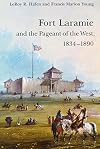
Fort Laramie wasn’t the crossroads of the American West, but it certainly was a major way station for those journeying there. The Oregon Trail passed by it as did the Mormon Trail to Utah, traveled by American and European Saints on their way to Deseret.
It was also a place where peace treaties were concluded and wars and massacres provoked.
The Pony Express passed through the fort and so did its replacement, the transcontinental telegraph line which was partially maintained and operated by show more soldiers. The transcontinental railroad, though, bypassed the fort.
As far as I know, this is the first book solely on Fort Laramie, and Hafen barrages us with quotes from primary sources: emigrant journals, reminisces, fur company and government records, and newspaper articles. (Hafen was the founder of the Western History Association and wrote many books and edited a ten volume biographical series on Rocky Mountain fur trappers and traders. I’ve been unable to find out anything about Young.) “Pageant” is the operative word here. We don’t get much in the way of personal stories in a book which is 409 pages of fairly large print, and we cover the years before the founding of the fort all the way up to 1938.
Fort Laramie was founded in 1834 at the junction of the Platte and Laramie Rivers. Though it had some defensive features, it wasn’t a military installation but a private trading post owned by William L. Sublette and Robert Campbell. (Trading posts were often called forts.) And it wasn’t called Fort Laramie but Fort William and, later, Fort John – though it was frequently known by its current name even before it became an actual United States Army fort in 1849.
The area around the fort was a favorite hunting ground for Indian tribes, mostly the Arapaho, Cheyenne, and Sioux and, thus, a good place to trade with them. During the days of the Rocky Mountain Rendezvous, it was a shipping point for supplies and furs though the Platte River’s water volume could sometimes make transport of furs by water difficult. In those days, besides traders and trappers, the only visitors were missionaries.
But that started to change in 1841 when the first group headed to the Oregon Territory passed through. It was just a party of about 80 people. In 1850, an estimated 55,000 emigrants came through and many times that in livestock. Both when it was a trading post and military post, Fort Laramie provided materials to resupply the pilgrims and blacksmith services. And there was the matter of medical care. The old computer game Oregon Trail didn’t lie about the dangers of dysentery aka cholera. It was a major killer on the eastern part of the trail though it was far less of a problem west of the fort. How to avoid cholera was known even at the time, but the precautions were often ignored.
By 1851, the Indians were tired of this traffic.. It wasn’t just the junk abandoned on the trail – guns, furniture, wagon parts. It was the emigrants driving off the game and their livestock overgrazing the land. The occasional wheedling of “gifts” from emigrants or petty thievery developed into more hostility. It was this increasing tension that led the military to buy the fort. Something had to be done.
The result, covered in detail in a whole chapter, was the Fort Laramie Treaty Council of 1851. The greatest gathering of Indian tribes in American history, at least 10,000 individuals, was there, such a large body that the actual negotiations were held in a camp miles outside the fort. It was a pivotal moment in American-Indian relations. The Indians made territorial concessions, agreed to boundaries, in exchange for stipulated annual annuities. But it was also based on the dubious premise that a chosen chief of a tribe had any real and lasting authority over i.t
The promised annuities were sometimes delayed, and things came to a head in 1854. It all started with a cow from a Mormon wagon train. Accounts vary. Maybe it was given to some Indians. Maybe it was stolen, wounded, or killed by them. Young Army Lieutenant Fleming decided to make a name for himself and assert American authority – the 1851 treaty required restitution be paid for that cow – and entered an Indian camp of about 1,500 people with 29 soldiers and two cannon. The result was one Indian dead and all the soldiers. What became known as the Grattan Massacre set off an Indian war on the plains which lasted through 1855 and included the infamous Harney Massacre.
In 1857, the US Army wasn’t contemplating war against Indians but against whites – the polygamous theocracy with its illegal governor taking root in Utah Territory. Fort Laramie was a staging area for that invasion which ended up, partly through the actions of Porter Rockwell, being stymied. However, I must say that Hafen, a Mormon who taught at Brigham Young University, depicts the viability of Mormon threats to launch a scorched-earth policy and guerilla warfare against the US a bit too optimistically. The Saints ended up with a negotiated settlement.
In 1868, another treaty council was held at Fort Laramie to put an end to American-Indian conflict on the plains. The book does a nice job depicting the clever negotiating strategies of Chief Red Cloud. He was the only Plains Indian leader who dealt a strategic defeat to the United States when he forced it to abandon military posts on the Bozeman Trail.
After the Great Sioux War of 1876-1877, the fort’s days were numbered. Oddly, though its closing was proposed in 1886, it didn’t happen until 1890. Money was spent on extensive repairs in those final years. The fort got gaslit streets and had many social activities for officers and their wives.
But this history doesn’t really end in 1890. There is an appendix of the property and buildings auctioned off and purchased for salvage by the locals. Eventually, though, the idea the fort should be preserved took hold. The site was bought by the State of Wyoming in 1927, and, shortly after the book’s publication, it became a national monument.
The book isn’t quite devoid of personal stories. There is the famous tale of the teenage Indian girl Ah-ho-ap-pa. She was the daughter of a renowned Sioux chief who doted on her. She visited the fort several times and was enamored of all things white and announced she would only marry a white man. She died of disease at in 1864. She had requested burial at Fort Laramie. So, in winter, her father took her body he 260 miles to the fort where he asked she be buried. And so she was with great ceremony.
The book does cover some of the social aspects of life at the fort as well as its physical aspects which included adobe and wooden construction and a bakery and jail.
The book has plenty of footnotes but no bibliography. It does have an extensive index and a nice map of the areas mentioned and, unusually for Bison Books, it has no gutter loss in its depiction. However, most of the black and white illustrations are too light to be very useful.
Still, if you’re interested in one of the most crucial places in America’s western expansion, this is quite a useful book. show less
It was also a place where peace treaties were concluded and wars and massacres provoked.
The Pony Express passed through the fort and so did its replacement, the transcontinental telegraph line which was partially maintained and operated by show more soldiers. The transcontinental railroad, though, bypassed the fort.
As far as I know, this is the first book solely on Fort Laramie, and Hafen barrages us with quotes from primary sources: emigrant journals, reminisces, fur company and government records, and newspaper articles. (Hafen was the founder of the Western History Association and wrote many books and edited a ten volume biographical series on Rocky Mountain fur trappers and traders. I’ve been unable to find out anything about Young.) “Pageant” is the operative word here. We don’t get much in the way of personal stories in a book which is 409 pages of fairly large print, and we cover the years before the founding of the fort all the way up to 1938.
Fort Laramie was founded in 1834 at the junction of the Platte and Laramie Rivers. Though it had some defensive features, it wasn’t a military installation but a private trading post owned by William L. Sublette and Robert Campbell. (Trading posts were often called forts.) And it wasn’t called Fort Laramie but Fort William and, later, Fort John – though it was frequently known by its current name even before it became an actual United States Army fort in 1849.
The area around the fort was a favorite hunting ground for Indian tribes, mostly the Arapaho, Cheyenne, and Sioux and, thus, a good place to trade with them. During the days of the Rocky Mountain Rendezvous, it was a shipping point for supplies and furs though the Platte River’s water volume could sometimes make transport of furs by water difficult. In those days, besides traders and trappers, the only visitors were missionaries.
But that started to change in 1841 when the first group headed to the Oregon Territory passed through. It was just a party of about 80 people. In 1850, an estimated 55,000 emigrants came through and many times that in livestock. Both when it was a trading post and military post, Fort Laramie provided materials to resupply the pilgrims and blacksmith services. And there was the matter of medical care. The old computer game Oregon Trail didn’t lie about the dangers of dysentery aka cholera. It was a major killer on the eastern part of the trail though it was far less of a problem west of the fort. How to avoid cholera was known even at the time, but the precautions were often ignored.
By 1851, the Indians were tired of this traffic.. It wasn’t just the junk abandoned on the trail – guns, furniture, wagon parts. It was the emigrants driving off the game and their livestock overgrazing the land. The occasional wheedling of “gifts” from emigrants or petty thievery developed into more hostility. It was this increasing tension that led the military to buy the fort. Something had to be done.
The result, covered in detail in a whole chapter, was the Fort Laramie Treaty Council of 1851. The greatest gathering of Indian tribes in American history, at least 10,000 individuals, was there, such a large body that the actual negotiations were held in a camp miles outside the fort. It was a pivotal moment in American-Indian relations. The Indians made territorial concessions, agreed to boundaries, in exchange for stipulated annual annuities. But it was also based on the dubious premise that a chosen chief of a tribe had any real and lasting authority over i.t
The promised annuities were sometimes delayed, and things came to a head in 1854. It all started with a cow from a Mormon wagon train. Accounts vary. Maybe it was given to some Indians. Maybe it was stolen, wounded, or killed by them. Young Army Lieutenant Fleming decided to make a name for himself and assert American authority – the 1851 treaty required restitution be paid for that cow – and entered an Indian camp of about 1,500 people with 29 soldiers and two cannon. The result was one Indian dead and all the soldiers. What became known as the Grattan Massacre set off an Indian war on the plains which lasted through 1855 and included the infamous Harney Massacre.
In 1857, the US Army wasn’t contemplating war against Indians but against whites – the polygamous theocracy with its illegal governor taking root in Utah Territory. Fort Laramie was a staging area for that invasion which ended up, partly through the actions of Porter Rockwell, being stymied. However, I must say that Hafen, a Mormon who taught at Brigham Young University, depicts the viability of Mormon threats to launch a scorched-earth policy and guerilla warfare against the US a bit too optimistically. The Saints ended up with a negotiated settlement.
In 1868, another treaty council was held at Fort Laramie to put an end to American-Indian conflict on the plains. The book does a nice job depicting the clever negotiating strategies of Chief Red Cloud. He was the only Plains Indian leader who dealt a strategic defeat to the United States when he forced it to abandon military posts on the Bozeman Trail.
After the Great Sioux War of 1876-1877, the fort’s days were numbered. Oddly, though its closing was proposed in 1886, it didn’t happen until 1890. Money was spent on extensive repairs in those final years. The fort got gaslit streets and had many social activities for officers and their wives.
But this history doesn’t really end in 1890. There is an appendix of the property and buildings auctioned off and purchased for salvage by the locals. Eventually, though, the idea the fort should be preserved took hold. The site was bought by the State of Wyoming in 1927, and, shortly after the book’s publication, it became a national monument.
The book isn’t quite devoid of personal stories. There is the famous tale of the teenage Indian girl Ah-ho-ap-pa. She was the daughter of a renowned Sioux chief who doted on her. She visited the fort several times and was enamored of all things white and announced she would only marry a white man. She died of disease at in 1864. She had requested burial at Fort Laramie. So, in winter, her father took her body he 260 miles to the fort where he asked she be buried. And so she was with great ceremony.
The book does cover some of the social aspects of life at the fort as well as its physical aspects which included adobe and wooden construction and a bakery and jail.
The book has plenty of footnotes but no bibliography. It does have an extensive index and a nice map of the areas mentioned and, unusually for Bison Books, it has no gutter loss in its depiction. However, most of the black and white illustrations are too light to be very useful.
Still, if you’re interested in one of the most crucial places in America’s western expansion, this is quite a useful book. show less
Flickering glimpses of the shadowy lives of French-surnamed fur trappers and traders of the West in the first half of the nineteen century. The biographical information on these men is scant and it is hard to distinguish one life from another, but together they yield a fragmentary mosaic of life on the fringe of civilization.
This is a reprinting of an older collection and the pieces are written in a folksy style free of sociological editorializing. While it is impossible to conceive of any show more reputable historian using this manner today, I can't help but think that the figures chronicled here would recognize themselves more clearly in these texts than they would in the thickets of jargon that plague much of contemporary historiography. show less
This is a reprinting of an older collection and the pieces are written in a folksy style free of sociological editorializing. While it is impossible to conceive of any show more reputable historian using this manner today, I can't help but think that the figures chronicled here would recognize themselves more clearly in these texts than they would in the thickets of jargon that plague much of contemporary historiography. show less
This is the first book I have read that was put together by the Hafens. The text and the selected extracts are well put together and kept me reading. It will be interesting to see how some of his other volumes are put together.

This is the second book I have read by Le Roy Hafen. It's a summary of US Postal Service mail activities prior to the start of the Transcontinental Railroad. It is a good read as long as one doesn't try to read all the footnotes. Having read several of the Survey volumes for the route of the transcontinental railroad helped me to understand the various mail routes and post roads. One should open the map at the rear and this will help you better understand the book.
Lists
You May Also Like


Associated Authors
Statistics
- Works
- 79
- Also by
- 11
- Members
- 730
- Popularity
- #34,782
- Rating
- 3.9
- Reviews
- 6
- ISBNs
- 41